button in Safari
The Poker Shrink, Vol 22 - Problem Poker: Part II: What is It Exactly?

{Ed Note: To read the introduction of this series, check out Problem Poker: Part I: An Introduction}
So the question arises: Are Problem Poker and problem gambling not the same issue? Even more specifically, don't most gamblers have multiple problems? Aren't they betting on sports and playing craps or blackjack and playing poker?
In many cases the answer is, of course, yes. However, would you say that someone who has an alcohol problem has the same addiction as someone who compulsively overeats?
Or even more pointed, is the abuse of alcohol the same if its "only on the weekends" by someone with a job and a family versus someone who is an "on the street" wino?
The subtleties that surround any addiction are worth noticing when treatment and care or cures are the goals. So let's take a detailed look at some of the basic information on problem gambling and see how Problem Poker is the same and how it is different.
The key component that distinguishes poker from other forms of gambling is simply that when you play poker you are not playing against the house. Poker may not legally be a game of skill but does not have an inherent "edge" to the house. In casino, cardroom or online poker the "house" collects a fee for running the game but the competition is among the players seated at the table. It is this key factor in poker that makes the issues of Problem Poker different from other forms of gambling.
Problem gambling is gambling behavior which causes disruptions in any major area of life: psychological, physical, social or vocational. The term "problem gambling" includes, but is not limited to, the condition known as "pathological", or "compulsive" gambling, a progressive addiction characterized by increasing preoccupation with gambling, a need to bet more money more frequently, restlessness or irritability when attempting to stop, "chasing" losses, and loss of control manifested by continuation of the gambling behavior in spite of mounting, serious, negative consequences. [derived from the American Psychological Association definition]
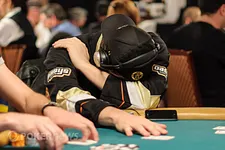
Live poker is different. Other players (other people) must witness your losses; there is more than a mere betting slip to toss away. To lose consistently and heavily at a poker table requires making bad decisions in public over and over again and going into our wallet over and over again. There is a very public face to playing poker, which is why many Problem Poker players encounter their biggest losses online.
The internet has brought problem gambling into our homes and offices and has made it faceless. Pushing a button is much easier and addictively anonymous. For the action junkie, even being a maniac in a poker room means only 30 hands an hour. On the internet players can enter 10 or 20 games simultaneously. The adrenaline high of multiple tables is a fascinating and frightening addiction to behold. Problem Poker is almost never seen as an isolated live action phenomenon; there are either other gambling aspects, such as sports betting and other table games or there is an online component.
Many experts think that pathologic gambling is an addiction because of the "rush" you feel when you win and lose money. In tournament poker even the best players in the world lose more than 95% of the time. In hand for hand live action games, you can play every hand but it's a guaranteed losing proposition and still may never be enough action. But beyond the "rush" of winning and beyond the cash of winning, poker now offers another addictive prize. With the advent of television, poker now offers celebrity. Other than Jimmy the Greek, name a famous gambler? OK, now name fifteen famous poker players. If you have come to PokerNews.com and you have read this far — name ten more famous poker players. No problem, right! Fame, celebrity as well as fortune are now there for anyone to have, simply by playing poker and even if you don't actually win the World Series, you can play at the table with Johnny Chan or Chris Moneymaker or Greg Raymer.
Its fame, its fortune, its drug, sex, rock-n-roll, its poker! Addiction behavior needs a goal and a focus. The "rush" is clearly one type of drug, so is fortune, and so too is fame.
Next week, more on the unique characteristics of Problem Poker.