Talking HORSE with Lou Krieger, Vol. 4: Reading Your Opponents


One of the first things every successful poker player learns to do is get a read on his opponents. Who plays well? Who’s tight and passive? Who’s selective and aggressive? Who’s overly aggressive? Which players call too frequently with weak hands and will pay you off when you bet for value? Which players are prone to release their hands in the face of heavy aggression and allow you to steal pots by bluffing, particularly when you are willing to fire once on the flop and once again on the turn into a board that does not appear to help your adversary.
You’ve heard the old saying, “If you don’t know who the fish is after 15 minutes at the table, it’s you.” There’s a lot of truth to that adage, and in addition to its obvious message, it also speaks to the need to characterize your opponents’ playing styles when you first join a game.
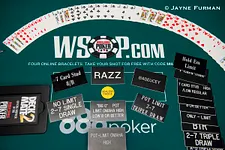
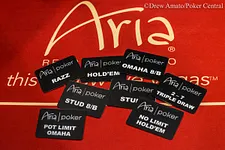
But HORSE is not just a single game. It’s five games in one, and the reads you get from an opponent during a hold’em round might be quite different than your read on that very same opponent during orbits of Omaha/8, razz, 7-card stud, and 7-stud/8. Sometimes it’s almost as though you are facing entirely different opponents during each HORSE orbit.
That stems, quite naturally, from the fact that many players do not perform equally well at each game in the HORSE rotation, and that’s where much of a good all-around player’s edge comes from. Because opponents vary in skill from game to game, they tend to approach each game differently. Some differences are the result of a player lacking understanding about the nuances of a given game. And even when a player realizes he is not skilled in one or more of the HORSE components, his coping strategy might lead him to play an overly cautious game — or an overly aggressive one.
To take advantage of your opponents, you have to realize that the guy who seems on top of things during the hold’em round might not have a clue about what’s going on during a round of 7-stud/8. To give yourself the best winning edge, you’ll need to build a book on each opponent during each orbit played. As a result, you won’t have a thorough fix on an opponent’s skill — unless he is completely dense and displays not even a basic awareness of poker strategy — until each of HORSE’s five unique games have been played.
This means you’ll have to study each of your opponents during each orbit of play, and examine their skill levels as though completely different players are competing at each game.
Begin at the beginning. Determine what kind of starting hands your opponents play. Do they only play big cards in hold’em? Do they think any two decent hold’em starting hands make one good Omaha/8 hand? Will they play third nut low draws in Omaha/8? Are they willing to take the worst of it in razz, simply in hopes of drawing out? Will they take a smaller pocket pair against a larger one in 7-card stud, even when their hand is not bolstered by a bigger side card than their opponent’s highest board card and the knowledge that all their outs are live? Will they take a high hand against a low one in 7-stud/8? Will they draw for half the pot?
That’s just a sample of the kinds of questions you’ll have to answer during each round of play. And it’s only the beginning. Once the flop is exposed in hold’em and Omaha/8, and once fourth and fifth street are exposed in the three board games, you need to see how willing your opponents are to draw for the winning hand. It’s an exercise in determining if your opponents are willing — if not downright eager — to draw for a win even if the presumptive payoff for hitting the winning hand does not offset the probability of catching the card or cards needed to win.
In games such as razz and 7-stud/8 — where the exposed cards that comprise a player’s board can point to strong possibilities of victory or defeat — you’ll have to determine whether your opponent is willing to release hands on sixth street that might have been in the lead earlier in the fray. Some players, who caught bricks while their opponents were catching babies, have a hard time releasing hands like these, and that’s a major leak in their game.
You need to avoid the tendency to categorize a player based on how well he plays in any one of the HORSE games. Many players give too much credit to an opponent’s play just because they know him to be a good hold’em or Omaha/8 player.
The truth of the matter is, you just don’t know until you assess your opponent during each orbit of play. That terrific hold’em player may not have played 7-card stud more than three or four times in his life, and as a result, might only be able to play no-decision hands, such as a big pocket pairs or three starting cards with no pair and no draw. But when confronted with a tough borderline decision, that opponent might find himself lost in a hand with no good idea about whether he is the favorite or an underdog, and that kind of adversary is prone to making big mistakes because he doesn’t quite know what to do about it.
That’s the beauty of HORSE. A tough opponent might morph into a fish right before your very eyes with the onset of a new orbit. But to know which opponents are dead meat, you’ve got to read them all, and read them all the time. That’s the only way to identify your best money-making targets, and the only way to know when they are easy and when they play tough.
So keep studying your opponents and build a book on each of them during each round. Then take it easy … but take it!
# # #
Lou Krieger is the editor of Poker Player Newspaper. He’s the author of more than 400 articles on poker strategy and 11 books on poker. He can also be heard on the internet radio show, “Keep Flopping Aces” which airs Thursday night at 9 p.m. Eastern Time (6 p.m. Pacific) on www.roundersradio.com.