
 button in Safari
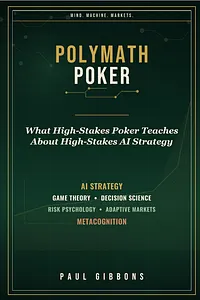
AI strategy fails less often because the model is weak than because the organisation cannot turn intelligence into disciplined action.
High-stakes poker used to be sold as bravado: colourful characters, trash talk, soul reads, and televised theatre. That game is mostly gone. The best players now rely on game theory, probability, bankroll discipline, emotional control, population reading, and ruthless review of their own mistakes.
Those are no longer just poker habits. They are the habits AI strategy now requires.
The AI era is not chess. It is poker: incomplete information, adaptive rivals, shifting incentives, and no clean separation between skill and luck.
Polymath Poker translates the language of the modern game into a sharper decision vocabulary for leaders, founders, investors, operators, and serious competitors.
Inside the book
- why smart is only the ante—and why intelligence needs a harness
- how to separate decision quality from outcome quality
- how expected value, Bayesian updating, equity realisation, risk of ruin, ICM, and the metagame clarify business decisions
- what poker solvers teach about tools, learning rates, and reading the population
- why most moats dissolve when the field learns faster than the firm
- what poker's staking economy reveals about circular capital, correlated risk, and incentives
- how to call consultants' bluffs by reading interests and hidden information
The central argument is simple: smart is only the ante. The edge belongs to people who build the harness around intelligence—tools, memory, permissions, feedback, evaluation, governance, trust, workflow, and judgement.
This is not a poker memoir or an AI book with cards sprinkled over the cover. It is a strategy book for people who allocate scarce capital, talent, attention, and trust under uncertainty.