
 button in Safari
Fibonacci Strategy for Roulette: How It Works & When to Use It


What if we told you that one of the most famous mathematical sequences in history might just help you win at roulette? The Fibonacci roulette strategy combines number sequences with tactical betting, in an attempt to give you an edge when playing roulette.
Whether you're a casual spinner or a strategic player, understanding how to use Fibonacci in roulette could be a game-changer. Let’s break it down together: what it is, how to use it, and whether it's one of the best roulette strategies or just another way to chase your losses.
Play online roulette with a bonus at the best casino in your location.


What Is the Fibonacci Strategy in Roulette?
The beginnings of the Fibonacci betting system are based on the famous Fibonacci sequence. This is a string of numbers where each is the sum of the two before it. The sequence (and the ideas behind it) were developed by Leonardo of Pisa, a.k.a. Fibonacci in the 13th century.
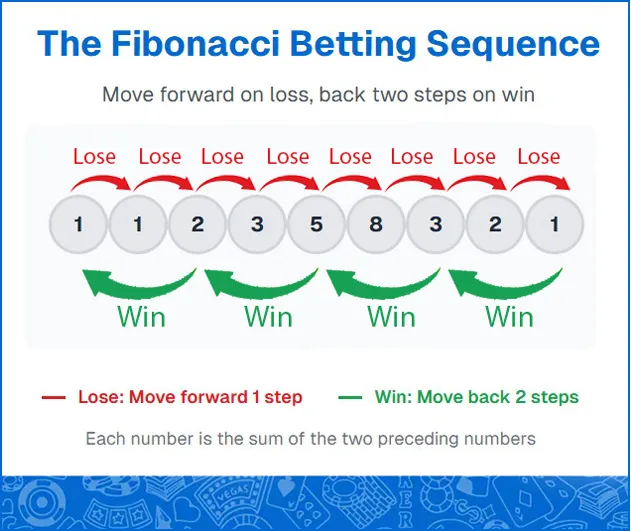
The sequence goes:
1, 1, 2, 3, 5, 8, 13, 21, 34... and so on.
Applying this sequence to roulette means that:
- Each time you lose, you increase your next bet following this sequence.
- When you win, you move two steps back in the sequence.
This might sound like the Martingale system, but there’s a crucial difference. With Martingale, you double your bet after every loss. With Fibonacci, the increase is more gradual and based on the sequence. That makes it less aggressive and often easier on your bankroll.
Getting confused between a Corner Bet and a Street Bet?
You need our full Beginners Guide to Roulette, with full details on roulette bets, odds, and payouts. Plus, where to play online for real money or for free!
Read moreHow to Use the Fibonacci Betting System in Roulette
So, how can you actually use the Fibonacci sequence at the roulette table or playing online roulette?
Don’t worry about the sequence itself, as the strategy is easy to follow with a series of simple roulette bets.
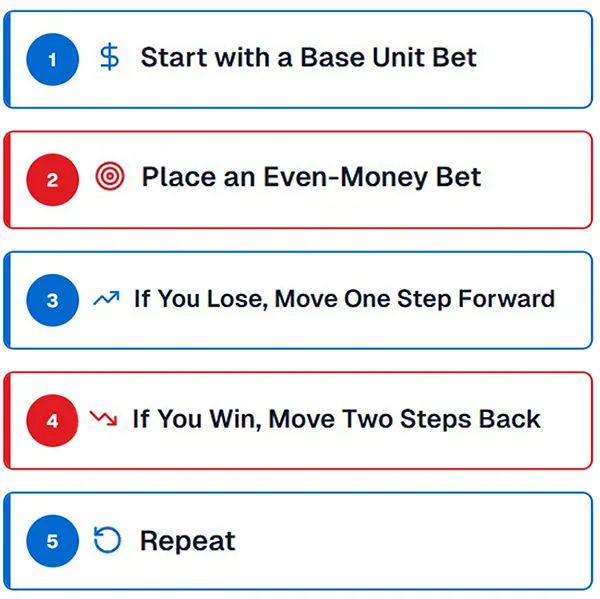
Step-by-Step Guide to Using the Fibonacci Strategy:
- Start with a Base Unit Bet: Usually the table minimum (e.g., $1).
- Place an Even-Money Bet: Choose red/black, odd/even, or high/low.
- If You Lose, Move One Step Forward: Increase your next bet to the next number in the Fibonacci sequence.
- If You Win, Move Two Steps Back: This helps recover losses over time.
- Repeat: Until you’re ahead or hit your limit.
Fibonacci Betting Sequence Table
Let's take this a stage further with a number of bets, starting with an opening bet of $1:
| Bet Number | Fibonacci Number | Bet Size | Win/Loss | Overall Profit/Loss |
|---|---|---|---|---|
| 1 | 1 | $1 | Loss | -$1 |
| 2 | 1 | $1 | Loss | -$2 |
| 3 | 2 | $2 | Loss | -$4 |
| 4 | 3 | $3 | Loss | -$7 |
| 5 | 5 | $5 | Loss | -$12 |
| 6 | 8 | $8 | Win | -$4 |
| 7 | 3 | $3 | Win | -$1 |
| 8 | 2 | $2 | Win | +$1 |
| 9 | 1 | $1 | Win | +$2 |
This progression continues as long as you keep losing. Once you win, jump back two steps in the sequence.
The Pros and Cons of the Fibonacci Strategy
Like every roulette betting strategy, the Fibonacci system has its advantages and drawbacks. Once you've understood the fundamentals of the strategy, it's smart to weigh up these pros and cons before you make any bets.
Pros of the Fibonacci Strategy
✅ More conservative than Martingale: You won’t double your bet every time.
✅ Easy to learn and track: The sequence is simple and intuitive.
✅ Good bankroll management: Less risky compared to some other negative progression systems.
✅ Psychologically rewarding: Recovering losses two steps at a time can feel empowering.
Cons of the Fibonacci Strategy
❌ Doesn’t change the house edge: The odds remain the same; no strategy can beat math.
❌ Long losing streaks hurt: While less punishing than Martingale, they still add up.
❌ Potentially slow profit growth: Requires patience, not suitable for players looking for fast wins.
Fibonacci Strategy vs. Other Roulette Betting Systems
So, how does the Fibonacci betting system stack up against its peers? Let’s compare it to other popular roulette systems like Martingale, D’Alembert, and Paroli.
Roulette Strategy Comparison Table
Of course, the Fibonacci roulette strategy is just one of many roulette systems you can use to play roulette online or in the casino. Each strategy has its own advantages and drawbacks, and the right one for you will depend on your experience level and attitude to risk.
The table below details the key features of some of the more popular roulette strategies. Tap the links to read more about these strategies and how they work:
| Roulette Strategy | Type | Progression | Risk Level | Suitable For Beginners? | Ideal Bet Type |
|---|---|---|---|---|---|
| Fibonacci | Negative progression | Adds based on sequence | Medium | Yes | Even-money bets |
| Martingale | Negative progression | Doubles after loss | High | Yes, but risky | Even-money bets |
| D'Alembert | Negative progression | Adds/subtracts 1 unit | Low | Yes | Even-money bets |
| Paroli | Positive progression | Doubles after win | Low-medium | Yes | Even-money bets |
'Progression' in roulette refers to how a player proceeds with their bets following either a win or a loss. A negative progression means you should decrease your bet size after a win, and increase it following a loss. A positive progression does the opposite.
Tips for Using the Fibonacci System in Roulette
Despite its name and betting pattern, mastering the Fibonacci system isn't just about numbers. It’s about playing smart. Here are my essential tips for applying the Fibonacci strategy in your next game of online roulette:
Choose the Right Bets
Stick to even-money bets, such as:- Red or Black.
- Odd or Even.
- High (19–36) or Low (1–18).
These bets have close to 50/50 odds (actually slightly less than 50% due to the presence of the green zero pockets), which aligns perfectly with the Fibonacci system’s need for frequent wins to reset.
Set Limits and Manage Your Bankroll
Even with its slower progression, losses can spiral if you’re not disciplined. Set:- A maximum loss limit for your session.
- A target profit to walk away with.
- Know When to Walk Away
The key to using the Fibonacci strategy for roulette isn’t chasing the next win, even if you are getting lucky. Overall, it’s about knowing when to stop. Winning a few steps back in the sequence? Great, but keep an eye on your bankroll and walk away when you have hit your target.



 Never chase losses
Always set limits
Take regular breaks
Never chase losses
Always set limits
Take regular breaks
Fibonacci Rioulette Strategy: The PokerNews Verdict
So, is the Fibonacci strategy for roulette worth trying? If you’re after a controlled, structured, and relatively safe system, it’s a solid option, just as long as you keep in mind that, like all roulette strategies, it doesn't guarantee winning.
It is, however, a smart way to make bets when playing roulette, whether you're online or on the casino floor.
Just remember: even the simplest sequence can’t change the random nature of the roulette wheel and the results that it generates, so always play sensibly and within your means with the Fibonacci roulette strategy.
Fibonacci Roulette Strategy FAQs
Does the Fibonacci system guarantee winnings in roulette?
No. While it can help manage losses and offer a logical betting progression, it doesn’t change the house edge. Roulette is still a game of chance.
What happens if I reach the end of the Fibonacci sequence?
Technically, the sequence goes on forever. But in practice, your bankroll or table limit might stop you. At that point, either reset or walk away.
Is the Fibonacci strategy better than Martingale?
It depends on your risk tolerance. Fibonacci is less aggressive and generally safer than Martingale, which can wipe out your bankroll fast during losing streaks.
Can I use the Fibonacci system in online roulette?
Absolutely. In fact, many online roulette platforms make it easier by letting you track bets, reset sequences, and even use play-money modes to practice.
What is the best bet type for Fibonacci in roulette?
Stick with even-money bets like red/black or odd/even. They offer the highest chance of winning each spin and work best with the Fibonacci system.
Can the Fibonacci system be used in American roulette?
You can, but it's less effective. American roulette has an extra “00” slot, which increases the house edge. European roulette (single zero) is better suited for Fibonacci.
Is Fibonacci a long-term roulette strategy?
It's better used as a short-term strategy. The longer you play, the more the house edge affects your results, no matter the system.