button in Safari
Top Stories of 2025, #10: Cheating Technology Fears Rise


As long as there have been games of poker, there have been players willing to cheat to gain an edge. In 2025, we saw that edge increasingly coming from technology, with new sophisticated cheating schemes emerging, both in live rooms and online.
The known dangers of collusion, marked cards, or real-time assistance (RTA) no longer tell the whole story. Over the past year, the poker world has read news of RFID-enabled cards, concealed scanning devices, and even compromised shuffling machines, methods that would have felt more at home in a James Bond plot not so long ago.
As poker and wider society confront the risks associated with rapid technological progress, this was one of the biggest stories of the year, showing how tech in the wrong hands is potentially a massive threat to the integrity of the game.
Cheater Banned From Texas Poker Room For Card Reader
There was controversy in Houston, Texas this summer as a high-stakes poker night at JokerStars Poker Room was rocked by scandal after three players, including a former club employee, were caught using RFID technology and a concealed card reader to cheat.
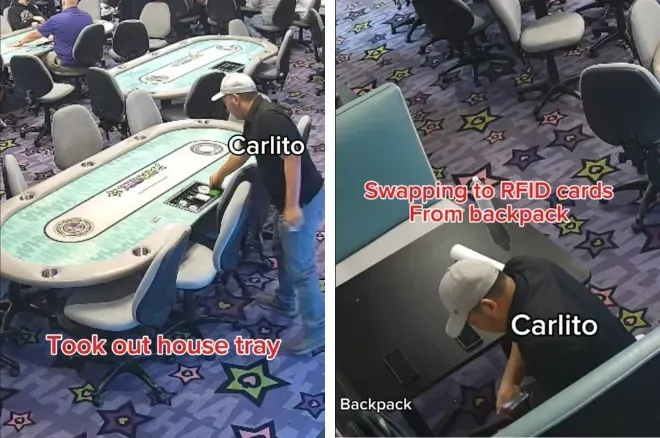
The three fraudsters, men named Carlito, Marcelo, and Ivan, were exposed after a security review led by the club’s owner, Jerry Yen, and General Manager Jason Marshall. CCTV footage, combined with a search of Carlito’s backpack, showed a swap of the regular playing cards in use for a deck of RFID-enabled cards hidden in a bag. When used alongside a concealed card-reading device, the special cards gave the trio an edge over other unsuspecting players in the room.
While the other two alleged co-conspirators fled the premises, Carlito was confronted with the evidence and banned for life, leading to a statement from JokerStars Social Club that said, “All money lost from this incident was returned and given back to the players affected.” The club added, “We are deeply saddened by Carlito’s actions […] This is a huge disappointment not just to us, but to the entire poker community.”
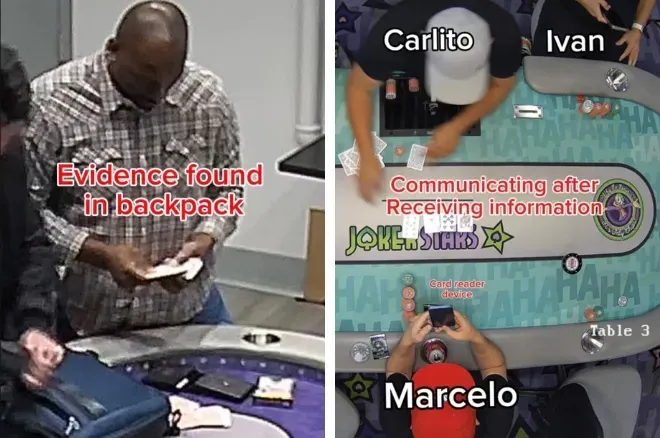
Alleged private messages from Carlito later surfaced in which he said, “I just got dragged into the system. I admitted that I made the wrong decision. I apologize to Jerry [the club owner] and everyone else. I owned up to my mistake and am ready to pay penance.”
While Carlito claimed the winnings from the cheating operation were relatively minor, around $400, JokerStars staff confiscated $2,700 from him as compensation, with Carlito finally adding, “At the end of the day, I know I shouldn’t have done what I did and will never do it again.”
Journalist Hacks Card Shuffling Machine
Back in October, WIRED Senior Writer Andy Greenberg set out to discover if automatic shuffling machines could be hacked to cheat in poker. The video, titled "I Cheated At Poker By Hacking A Casino Card Shuffling Machine," gathered more than 100,000 views in less than 24 hours, and at the time of writing has just under 900,000 views on WIRED's YouTube channel.
In it, Greenberg employs the skills of security consultant and hacking expert Joseph Tartaro to rig a card shuffling machine, common in poker rooms worldwide, before testing the fraudulent machine in a real-world experiment.
Tartaro explains in the video, "This device [the shuffling machine] has a Bluetooth model, and it will wirelessly connect to this phone, and every time a deck gets shuffled, it will get the exact order from the camera (in the shuffler) and send it to me."
With the machine successfully rigged, Greenberg arranged a private game among himself, Tartaro, and two other unsuspecting players to prove the efficacy of the scam. Greenberg, a relative novice at poker, received signals from Tataro, who had access to the shuffler on his phone, on whether to fold, call, or raise by playing with his chips.
The result was eye-opening as the journalist was able to play perfectly, easily winning the sit-and-go match against more experienced players thanks to the information he was fed by Tartaro.
Also appearing in the video, Doug Polk, a three-time WSOP bracelet winner and owner of The Lodge in Texas, warned that while it was possible to rig card shuffling machines, the main danger came from playing in private and unregulated games rather than casinos.
"The Deckmate 2 [the machine used in the video] in a casino location, you shouldn't be too scared of... The problem is once somebody has a Deckmate 2 on a black market or a secondary market, they are now no longer being upkept by the company itself. Some guy is just basically in the back fixing the machine and then putting it on the table," said Polk.
The popular content creator added, "I have heard so many cheating stories of people using these to cheat players out of their money when it's not happening at a casino location."
Operators & Tournaments Rally Against RTA
However, as concerns around technology-driven cheating grew, so too did the response from tournaments and operators determined to protect the integrity of the game. The use of RTA was not new to 2025, particularly online, but this year saw a number of visible efforts from across the poker world to fight back.
For any players or spectators at the WSOP this year, it was impossible not to see the placards displaying Rule 64 - Approved Electronic Devices; Prohibited Filming and Streaming, introduced to curb the use of electronic tools and potential Real Time Assistance (RTA), at the entrance to every tournament area at Horseshoe & Paris Las Vegas. PokerStars and the European Poker Tour (EPT) announced very similar integrity changes at EPT Barcelona in August 2024.
Applied to all present in the tournament room, the official WSOP rules stated "Participants and spectators are not allowed to use charts, apps, artificial intelligence, or any other form of electronic assistance" and that “by entering the tournament room they [players and spectators] agree to abide by Rule 64.”
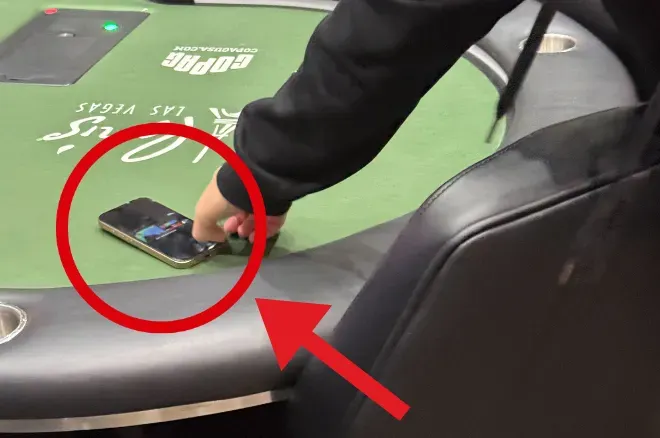
While there were no high-profile misdemeanours related to that rule this summer, it was enforced as Taiwan's Chih Fan received a penalty for allegedly watching a Doug Polk video in the WSOP Main Event, which contained a screenshot of a GTO chart.
Similarly, back in March, GGPoker Integrity Ambassador Fedor Holz warned online poker cheaters that any use of RTA on the platform would lead to a ban from the WSOP, in response to 31 player accounts being closed for violating fair play rules.
Despite the continued battle against RTA from tournaments and operators, 2025 still saw a number of high-profile allegations of cheating. Nacho Barbero and Ebony Kenney both came under fire for displaying a GTO Wizard chart while playing on ACR Poker, while Tony "Ren" Lin was disqualified on Day 2 from the World Series of Poker Super Circuit Cyprus Main Event for online poker violations.
All was not lost for banned players, however, as GGPoker announced The Olive Branch Initiative in September, giving previously removed users a path to redemption, with a "secondary review for players who feel wrongly accused."
In a statement, the world's largest online poker site would write, "The Olive Branch Program reflects our belief that redemption is possible when genuine change occurs. We understand circumstances can be complex, and sometimes, players deserve the opportunity to demonstrate their growth."