button in Safari
Top Stories of 2025, #9: Trump's Tax Bill Detrimental to Poker Industry

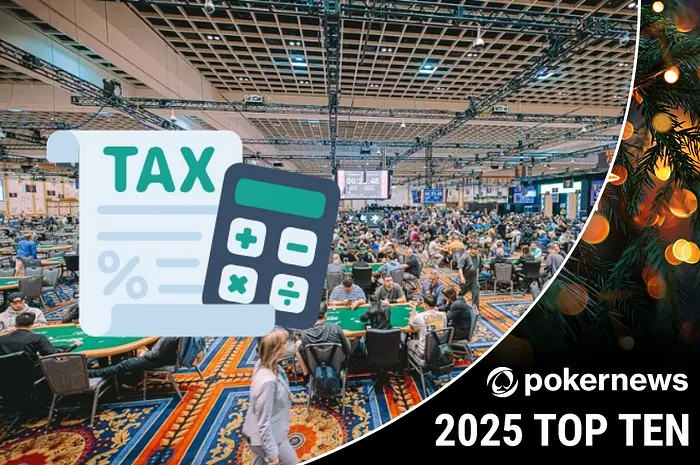
Table Of Contents
The tournament poker industry in the United States took a major hit in 2025 thanks to new gambling tax laws, but any potential damage won't be felt until next year's tax returns are filed.
Congress passed the landmark One Big Beautiful Bill Act (OBBA), President Donald Trump's signature spending bill, earlier this year. Deep in that bill was a hidden measure that could negatively impact the poker community starting in 2026, and that sentiment has been bipartisan. Even staunch conservatives such as Sen. Ted Cruz (TX), a friend of Poker Hall of Famer Phil Hellmuth, spoke out about the damage a small provision could do to poker, a game he enjoys.
The gambling tax changes ahead have caused many poker players to wonder if they can continue playing the game professionally for much longer, which is why this was one of the biggest poker stories in 2025.
What's the Big Deal?
Professional gamblers have grown accustomed to deducting gambling losses against gambling wins on their tax returns. If, say, a gambler hits a $100,000 jackpot on January 1 but then goes on to lose $100,000 gambling throughout the rest of the year, they can claim $0 in profits come tax time.
But that's all about to change thanks to a policy added to the OBBA, which some politicians admitted they didn't even notice until the bill had passed. Going back to the above example, when gamblers file 2026 tax returns, they'll only be permitted to deduct 90% of gambling losses. So, instead of reporting a net profit of $0, the professional gambler would be required to claim $10,000 in profits (90% of $100,000).
How does this impact poker pros? It means there will be an added tax burden, which will mean that they'd be required to pay taxes on gambling winnings in years they didn't even turn a profit, which happens from time to time in the high-variance nature of tournament poker, even for the best players in the world.
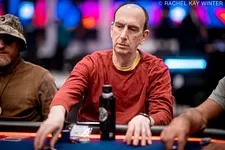
Poker legend Erik Seidel, who has played at poker's highest levels for decades, even said the tax change could push him into semi-retirement.
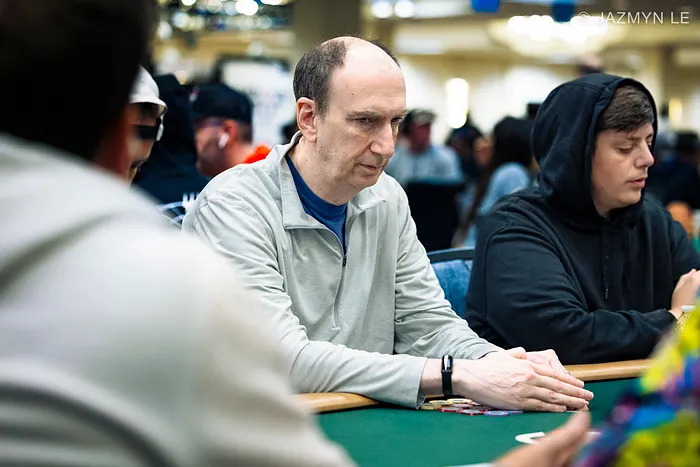
"I expect that I'll be playing much smaller if I play (next year)," Seidel told PokerNews in an interview. "I might play some WPT $3ks or something, which I generally don't play except for in Florida," Seidel said. "I'll still play the Main Event, but I would imagine I'm probably going to spend maybe 10% or 15% of what I normally do for buy-ins. I don't expect I'll be playing many $10ks or higher. No High Rollers, for sure."
It remains to be seen just how many poker pros will quit playing tournaments in the U.S. or just quit playing poker for a living altogether. But the new tax laws will certainly discourage growth in the industry, and gambling in general.
What the Experts are Saying
Ray Kondler of Kondler CPA, a Las Vegas-based CPA firm specializing in gambling taxation, told PokerNews he expects the "Big Beautiful Bill" will "have a major effect on the industry," both for recreational and professional poker players.
“It will negatively affect the recreational player," he told PokerNews' Keith Becker in an interview during Day 1a of the 2025 WSOP Main Event. "Because in the past, where you could deduct 100% of your losses, now you can deduct 90%. So basically you’re paying income tax on phantom income you might not have ever have made.”
Kondler added that the professional poker players will be hit the hardest, both due to their play volume and other taxes and premiums they may owe on Social Security and Medicaid. “So it’s a much bigger hit for professionals.”
It wasn't just the tax experts who criticized the gambling tax policy. Hellmuth, a 17-time World Series of Poker (WSOP) bracelet winner who has made a living out of playing tournaments for decades, referred to it as the "poker players death tax," and urged his pal, Sen. Cruz, to push to have the provision removed from the bill. Cruz, an avid poker player, had the following to say about the tax policy:
"The One Big Beautiful Bill changed how gambling losses are counted in taxes," Senator Cruz, a 2016 presidential candidate, told his podcast audience. "And what it did for people like professional poker players is it ended up putting in place a rule that is wildly unfair, that punishes them, that taxes them on income they didn't earn."
Cruz was joined in a bipartisan effort with Nevada Senators Jacky Rosen (D) and Catherine Cortez Masto (D), and Rep. Dina Titus (D), in pushing to have that provision removed. But the efforts were unsuccessful and the OBBA passed as-is, meaning professional gamblers will only be permitted to deduct 90% of their gambling losses starting in 2026.