button in Safari
Should Poker Fans Be Concerned with Low WSOP TV Ratings on ESPN?

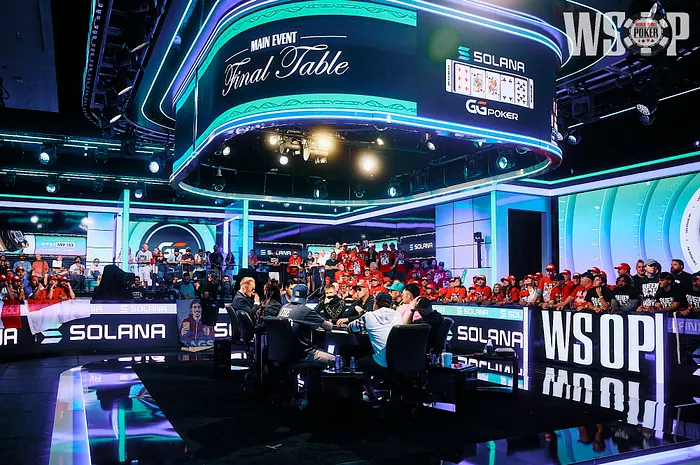
The announcement a few months back that the WSOP Main Event would return to ESPN for the first time since COVID generated some excitement around the poker industry.
Poker on the biggest sports network in the U.S. was going to bring back the casuals like it did during the Chris Moneymaker era. The three-week delay between Day 8 and the final table would help build interest in the players. But the final table numbers are in, and as Lance Bradley reports, the TV ratings don't match the pre-WSOP enthusiasm.
Bradley, who covered the series on ESPN.com, revealed the data in his Saturday Substack column. He said the first final table night on Aug. 3, which aired on ESPN2, didn't crack the top 100 cable shows watched, so viewership data isn't available on the Nielsen report.
The second day, on main ESPN and with seven players remaining, had 451,000 viewers, while 593,000 were tuned in to catch Lucas Jumalon defeat Lauri Saaskilahti heads-up to win $10 million and the bracelet. Those numbers aren't great when compared to 2000s WSOP Main Event coverage on ESPN. As Bradley points out, more than 2 million people watched Joe Cada become the youngest World Champion ever in 2009.
A year earlier, 1.9 million households watched Peter Eastgate capture the Main Event title. But the numbers don't paint the full picture.
Cable Isn't What it Was in 2009
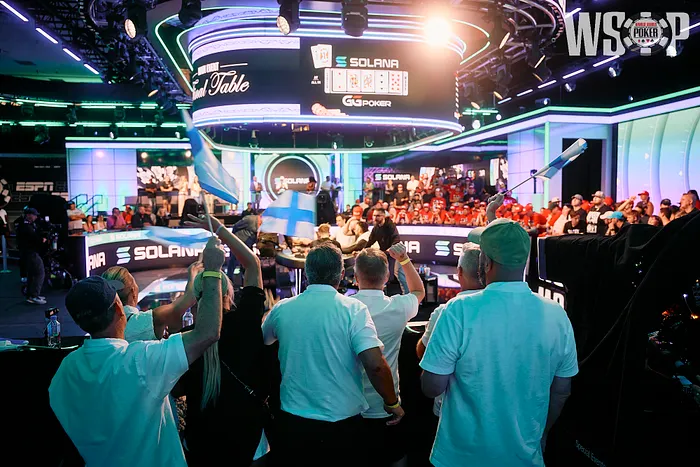
If you're disappointed in the WSOP viewership, you shouldn't be. The 2026 WSOP Main Event had significantly higher viewership than during the CBS Sports Network era.
Not only that, you must take into consideration that cable TV simply isn't what it was during the Poker Boom. According to the Pew Research Center, cable TV subscriptions have dropped by 40% since the 2010s, with only about 32% to 36% of U.S. households currently maintaining a traditional cable or satellite subscription.
Many households have replaced cable with streaming services like YouTube TV, or just dumped cable programming altogether in favor of Netflix and Hulu. People consume media in different ways these days, especially the younger generation.
Some won't tune in for an entire livestream and prefer getting poker in shorter clips. The WSOP posted daily highlight videos on YouTube from the final table that got nearly 1 million views. Those videos gave poker fans who didn't care to watch the full livestream enough to satisfy their cravings. Not to mention, you don't have to look hard to find clips of WSOP hands and interviews all over social media.
So, while WSOP viewership on ESPN was down compared to the 2000s, it was expected. On top of that, the final table lacked mainstream star power. There wasn't a Michael Mizrachi or Phil Ivey, who finished ninth and headlined the TV coverage in 2009, at the final table.
Does Main Event TV viewership even matter in the current era? You can decide for yourself, but what should matter most to poker players is that card rooms around the world are thriving and tournaments such as the WSOP, World Poker Tour (WPT), and even your local daily tournaments, are bringing in players.
The casual and recreational players may not be tuning in to ESPN like they did in 2006, but they're still showing up at the WSOP and in Texas or California to play some $1/$3 No-Limit Hold'em.
Poker had a big summer once again, proving massive interest in the game is still there. More than 9,200 players competed in the 2026 WSOP Main Event, the fourth-largest turnout ever. No need to worry about low TV ratings.
*Images courtesy of the WSOP.