
 button in Safari

Billy Baxter: A Hall of Fame Career Built on Lowball Mastery and Quiet Excellence

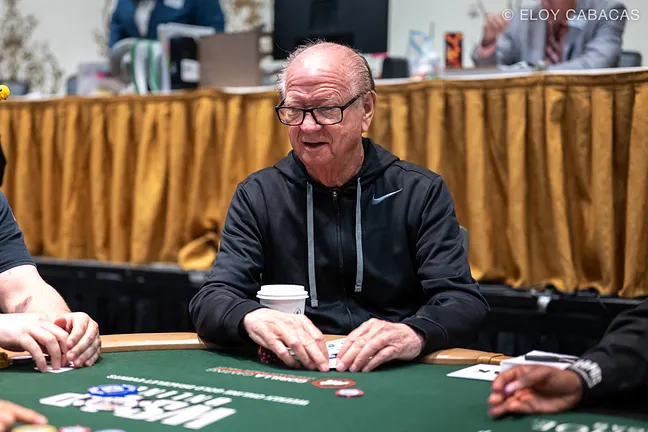
There’s no debate, Billy Baxter is a poker legend. Inducted into the Poker Hall of Fame in 2006, his name is etched into the fabric of the game. But for Baxter, the journey to poker greatness wasn’t exactly planned. His first love was sports betting, and for years, he was known as one of the biggest sports bettors in the world.
It wasn’t until the 1970s, when poker surged in popularity, that Baxter decided to give the game a serious shot, simply because, as he put it, “that’s what everyone was doing.”
Despite poker not being his original focus, Baxter’s resume speaks for itself. With seven World Series of Poker (WSOP) bracelets, all in lowball variants, including Razz, Deuce-to-Seven, and California Lowball, he’s carved out a unique legacy in the non-Hold’em arena. He ranks second all-time in non-Hold’em bracelets, behind only Phil Ivey.
With over $3 million in live tournament earnings, Baxter is proud of what he’s achieved, even if a spot in the Hall of Fame wasn’t something he ever chased. “I’m honored by the recognition,” he says, reflecting on his unexpected but undeniable impact on the game.
Baxter is also remembered for his role behind the scenes of one of poker’s most iconic moments. In 1997, he staked Stu Ungar into what would become Ungar’s legendary third WSOP Main Event victory. That decision not only helped bring Ungar back to the spotlight, but it also sealed Baxter’s status as one of the most respected figures in poker’s inner circle.
More than two decades later, Baxter nearly claimed his first Hold’em bracelet. In the 2023 WSOP $1,000 Seniors Championship, he finished runner-up to Lonnie Hallett, earning $473,212, a remarkable score at age 83.
While Baxter admits that stamina is more of a challenge now at 85, his results prove he still has the chops to compete with players half his age, or younger. This June alone, he cashed in five tournaments in Las Vegas.
Over the years, Baxter has battled against some of poker’s greatest icons, including Doyle Brunson, Fred Ferris, and Johnny Moss. When asked about his toughest opponents, he smiled and said, “They’re all tough.”
As for unusual table stories? There are too many to count, but one moment stands out. He recalls an incident where a man grabbed another player’s hand and stuck it to the felt with a knife, a vivid reminder of poker’s grittier, wilder days.
Baxter’s path to poker greatness may have started by chance, but his career has been defined by unmatched skill, consistency, and class. At 85, he continues to defy expectations, one lowball hand at a time.