button in Safari
What Legal Expert Says About Tom Goldstein Taking the Stand


Table Of Contents
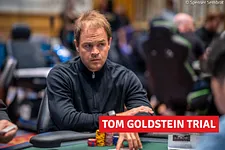
Tom Goldstein has never been afraid to take risks. His friend Dan Bilzerian once described the superstar lawyer and high-stakes poker player as "my maniac bluff-happy attorney" who would make wild plays with large sums of money on the line.
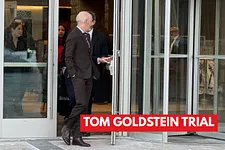
And, this week, Goldstein took a risk by making the unusual decision to testify in his own criminal tax fraud trial in Maryland. The decision, which opened him up to being grilled by prosecutors during cross-examination, surprised some of those in the legal world following the case, including a white collar criminal defense attorney who gave his reaction and analysis to PokerNews.
"I was surprised. I'm always surprised when a defendant testifies, because there's always bad stuff out there (that can come up)," Andrew Bernstein of Fox Rothschild told PokerNews in an interview on Thursday. "But this may be the right decision, especially if he gets an acquittal."
Why Testify?
Bernstein said criminal defendants have a constitutional right to take the stand but are often advised against doing so. In the case of Goldstein, who is accused of tax and mortgage fraud related to high-stakes poker matches, Bernstein said testifying is risky because "the government has this guy's tax returns, they have all his documents ... If he gets up there, they can cross-examine him on any of this stuff."
The US Department of Justice's called over a dozen witnesses and painted Goldstein as a lavish spender and a reckless gambler. Bernstein said Goldstein and his legal team likely decided he needed to "get up there and give a narrative" to make himself "likable" and relatable to the jury.
"I think the testifying in this case is going to be huge, because I think a lot of the tax evidence ... that tax stuff may not resonate with the jury. The tax law is complicated, tax law at that level can be very complicated, so the whole testifying situation — is he likable, is he credible, did he give himself a theory that the jury understands? I think that's what this comes down to."
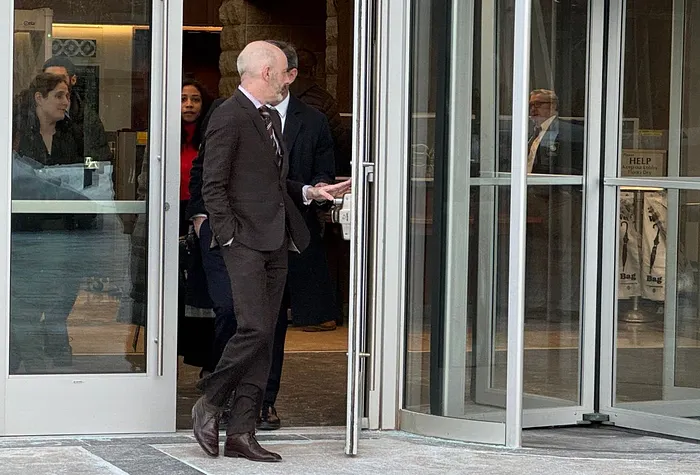
In his defense testimony on Wednesday, Goldstein denied ever cheating on his taxes but told jurors that he downplayed his $15 million in gambling debts on mortgage applications, stating that he "did not want my wife to know about the scope of my gambling debts."
During cross-examination on Thursday, prosecutors pressed Goldstein about lying to his wife, as well as to his backer Stewart Resnick and his heads-up opponent Alec Gores. According to Bloomberg Law, Goldstein admitted that he "may have understated" the identity of his poker coach Keith Gipson when Gipson attended their heads-up matches.
Prosecutors also brought up Goldstein's lavish spending despite owing taxes, Bloomberg Law reported, including a $225,000 Bentley and a $190,000 Hollywood apartment he rented in 2017, apparently to spend more time in California playing against Gores.
What's Ahead in the Trial
"I can't imagine a universe where his attorneys were okay with that."
Testifying wasn't the first move by Goldstein that caught Bernstein off guard. He said "it surprised me a lot" when Goldstein gave a tell-all interview to legal analyst Jeffrey Toobin for a New York Times Magazine story right before the trial began — some excerpts of which were read to the jury.
"I can't imagine a universe where his attorneys were okay with that," said Bernstein. "I don't like to speculate and put myself in the shoes of other attorneys when I don't know all the facts, but this is one of those situations where I don't see the benefit. It's not like he was going on there to say 'I never played poker. I was just there carpooling because I'm a good samaritan.' I was surprised that he did that."
"Why have a self-inflicted gunshot wound? Why say anything?"
Bernstein described the prosecution's case against Goldstein as a "strong case," though he acknowledged a "big weakness" after Goldstein's accountant admitted during cross-examination to making some errors.
"I think the summations should be fascinating."
"That is obviously a potential huge misstep in the sense that if the jury really thinks that the accountant made some mistakes, they might feel there's reasonable doubt as to whether Tom understood what was going on," Bernstein said.
The prosecution wrapped up its case earlier this week and the defense will resume presenting on Monday. Berstein said he expected the closing arguments from both parties to be a major highlight of a high-profile trial that has included "a lot of stuff with poker, a lot of stuff with celebrities, a lot of embarrassing stuff."
"I think the summations should be fascinating," Bernstein said, noting that he expected closing arguments to include "poker analogies and fireworks."
Goldstein has pleaded not guilty to all charges, which include tax evasion, falsifying tax returns, failing to pay taxes, and making false statements to two separate mortgage lenders.