button in Safari
Is It Truly Private? The Legal Gray Area That Led to The Lodge Raid


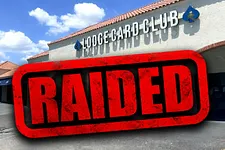
On March 10, the poker world was rocked by news that the largest card club in Texas had been raided. Authorities from both the Texas Alcoholic Beverage Commission (TABC) and the IRS raided The Lodge while seizing evidence and freezing assets.
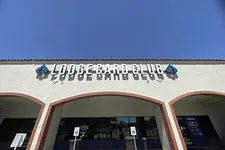
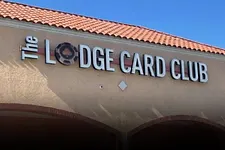
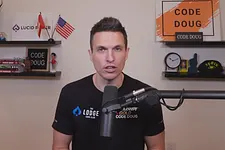
The card club in Round Rock, Texas – co-owned by Doug Polk, Jake Abdalla, and Jason Levin, as well as, minority owners such as Andrew Neeme and Brad Owen – has been closed since the raid and will remain so for the foreseeable future.
Initially, details were scarce until the Search and Seizure Warrant surfaced about a week later. In it, there are alleged violations that include engaging in organized criminal activity, money laundering, promotion of gambling, keeping a gambling place, and possession of a gambling device.
Card clubs in Texas have long been the subject of speculation regarding their legitimacy. Are they legal? It's a gray area without firm answers; in fact, how card clubs are viewed seems to vary from county to county (remember this raid in Tarrant County in 2022?), and authorities have never really weighed in on a statewide basis.
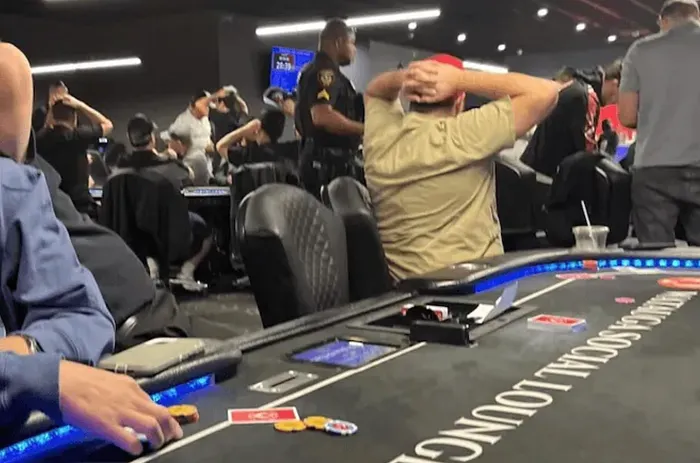
Charges have yet to be filed against Polk or anyone associated with The Lodge, so what exactly state authorities hope to accomplish remains unknown (i.e., are they challenging the legality of card clubs? Is it a tax or banking situation? Etc.). If the goal was to shut down all card rooms in Texas, why not go after others as well? Why not raid The Lodge Card Club in San Antonio?
Like a good poker player, authorities are playing their cards close to their chest when it comes to what they hope to accomplish and how they’ll go about it. What is known is how the TABC was able to obtain, at least in part, a warrant from a judge.
On Page 4 of the 22-page affidavit, there is a seemingly innocuous paragraph that, when explored, explains a lot. It reads:
“A public complaint (#3824166) was filed with TABC on 04/03/2024, which referenced a 2005 opinion written by then Attorney General Greg Abbott that stated a business that holds an On-Premise alcoholic beverage permit could not hold poker tournaments where real money was at risk by participants.”
So, what exactly is the 2005 opinion written by Abbott, who is now the Governor of Texas?
Opinion No. GA-0335 weighs in on the topic of “Whether a business that holds an on-premises alcoholic beverage permit may host a poker tournament” and was written to the Honorable John W. Smith of Ector County District Court.
The seven-page opinion was written long before Texas cardrooms sprang up and, at the time, was geared more toward bar games. Even so, what it had to say, which was summarized below, would likely apply today.
“A holder of an on-premises alcoholic beverage permit may not, without violating both section 47.04(a) of the Penal Code and Rule 35.31 of the Alcoholic Beverage Commission, host a poker tournament in which participants risk money or any other thing of value for the opportunity to win a prize.
A holder of an on-premises alcoholic beverage permit may, without violating either section 47.04(a) of the Penal Code or Rule 35.31 of the Alcoholic Beverage Commission, host a poker tournament in which participants do not risk money or any other thing of value for the opportunity to win a prize.”

There’s no doubt that The Lodge held an on-premises alcoholic beverage permit. As the affidavit laid out, “the club had been issued a Wine and Malt Beverage Retailer's On-Premise Permit (BG - 200070438) in September 2022 from the Texas Alcoholic Beverage Commission (TABC), and later renewed in September 2024 as a mixed Beverage permit (MB) - #200139615, which is current and active."
Additionally, “On August 29, 2024, TABC issued an alcoholic beverage permit to The Lodge Card Club in Round Rock, TABC recorded the owner of the mixed beverage permit, #200139615, that was issued to the Lodge Card Club, as Sleamond's Ice, LLC, an associated entity with Tempus Holdings, Inc., and whose managing members are Jake Abdalla and Douglas Polk.”
All that said, the opinion includes a footnote setting out three criteria that would be a “defense to prosecution,” and it is these criteria that most businesses rely on for protection when operating.
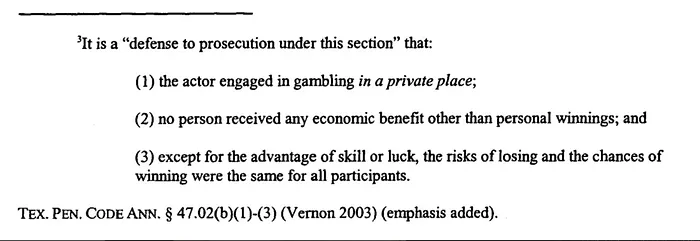
Section 1 is the most important component – “the actor engaged in gambling in a private place.”
Now, whether or not Texas card rooms are considered a “private place” is a gray area. Theoretically, operating as a private club and requiring a membership would satisfy the classification as a private place.
When it comes to The Lodge, a reason for the raid could be that the TABC is hanging their case on the fact that they were able to enter the building and wander the premises without showing a membership card, and therefore, it didn’t constitute a private place. If that’s the case, the gambling could be considered illegal, and any funds associated with an illegal operation could be considered money laundering.
The affidavit describes several instances of undercover agents entering The Lodge, with one of them alleging he did so without having to show proof of membership.
“Agent Teague informed that he continued into the club without showing proof of a membership, ID, or purchasing a membership. He stated he freely entered the gaming floor unimpeded and walked to the rear of the club where the bar was located.”
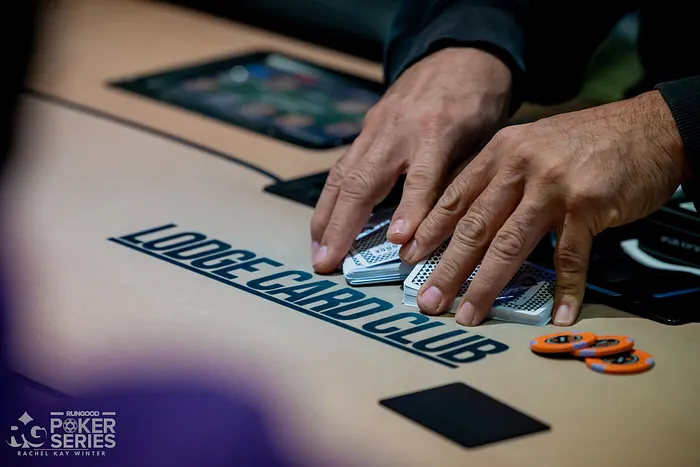
According to the statutes and the aforementioned opinion, that would not constitute a “defense to prosecution,” which appears to be what the TABC and/or IRS seek. At the very least, it was their foot in the door. What exactly they’ll prosecute is now the lingering question.
It's worth noting that Polk and other Texas operators have tried to work with lawmakers to pass bills (such as H.B. 2345 in 2023) to better define card clubs as legal, rather than relying on loopholes like the one described above. Unfortunately, such efforts have gained little momentum in the Texas House.
Until charges are filed, assuming they are (it took months in the instance of the 2022 raid), the poker world may not know the government’s true aim in raiding The Lodge. In the meantime, the venue will remain closed, and more than 200 employees will be affected, not to mention players with outstanding chips and tournament payouts.
For more on The Lodge affidavit, check out the episode below of the PokerNews Podcast.
PokerNews will continue to monitor the situation in Texas and report updates if and when they happen.