button in Safari
Poker Player Says No to Chop, Battles Back to Win Main Event Poker Title


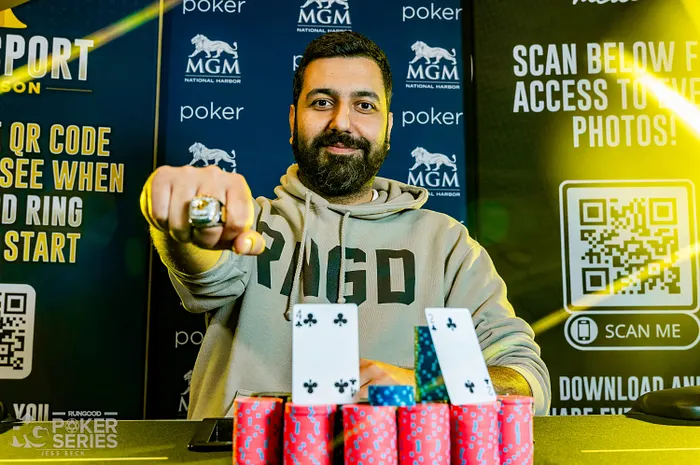
Table Of Contents
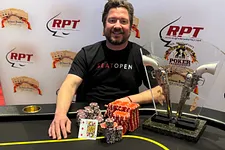
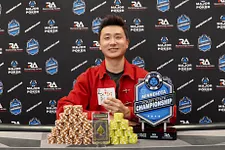
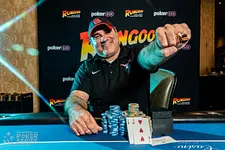
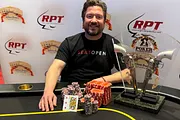
After three Day 1 starting flights and a lengthy Day 2 battle on the felt, the RunGood Poker Series Passport Maryland Main Event has officially come to a close with Arash Asadabadi claiming victory to earn a payday of $73,037, along with his first RGPS ring.
The event marked the return of the RGPS to MGM National Harbor Hotel & Casino, with the inaugural stop held back in the fall for the Grand Prix series. The spring edition featured a $1,300 buy-in and drew 307 entries, with only 40 players returning to Oxon Hill, just outside the nation’s capital, for the final day of action.
Asadabadi defeated John Major after a lengthy back-and-forth heads-up match to earn the lion’s share of the $349,980 prize pool.
The win left him both drained and satisfied after a long grind. "Exhausted, but I'm really happy," Asadabadi said. "I felt that I was due this one and from the start of playing, I felt that I'm gonna win it. I don't know why, even when we were discussing the chop heads-up, I was like, nah, I'm pretty sure I'm gonna win it. Sometimes it's like that, you have to believe it."
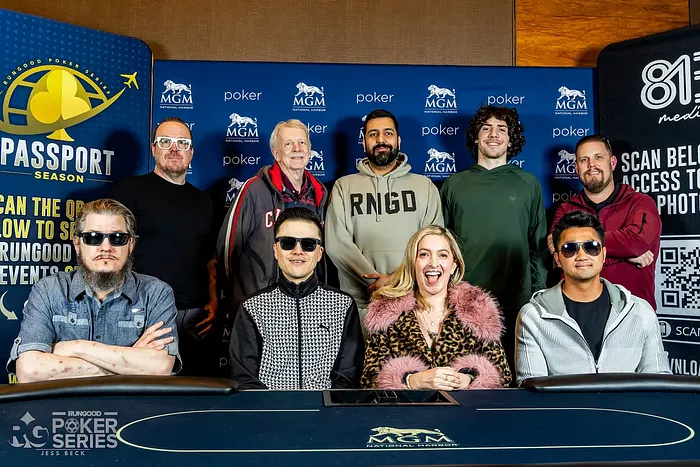
2026 RGPS Passport Season Maryland Main Event Final Table Results
| Place | Player | Country | Prize (USD) |
|---|---|---|---|
| 1 | Arash Asadabadi | United States | $73,037 |
| 2 | John Major | United States | $50,326 |
| 3 | Brian Mahler | United States | $33,241 |
| 4 | Julie Cornelius | United States | $21,751 |
| 5 | Yuan Ting | United States | $16,782 |
| 6 | Tyson Warren | United States | $13,894 |
| 7 | Jeffrey Proctor | United States | $11,672 |
| 8 | Clint Houck | United States | $9,589 |
| 9 | Ake Ngamsaard | United States | $7,605 |
Turning Point Before the Final Table
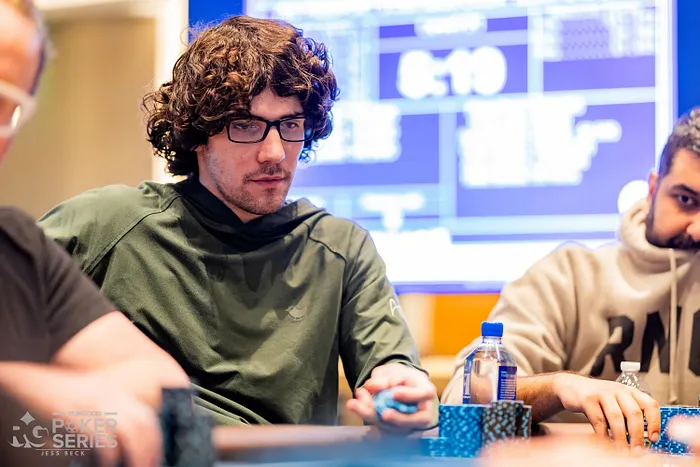
Asadabadi ascended to the top of the counts not long before the final table commenced, when he went toe-to-toe with aces against Nick Rigby to scoop a massive pot.
Having played with Rigby before and watched him on stream, Asadabadi felt he had a good read on the situation.
"I played with him a couple of times and of course I saw him on stream, so I know him a little bit, but also I'm afraid to play big pots with him. But that one, I knew where I was at and I knew he had like a top pair, king-queen, something like that, and I knew he doesn't like folding."
"So, I just put the maximum pressure, bet, bet, bet, three streets. He called me off, doubled up. That was the pot, that was the one that actually made my stack something that I could carry on after that. Thanks to him," said Asadabadi with a chuckle.
That hand proved to be the springboard that allowed Asadabadi to continue accumulating chips and enter the final table with a commanding chip lead, 160 big blinds, to be exact.
Switching Gears and Applying Pressure
With a massive stack in play, Asadabadi remained composed as the final table unfolded, picking his moments to apply pressure.
"I was very comfortable because at some point I had like 60%, 70% of the chips, and I've been around poker, so I know how to navigate and maneuver a big stack."
As stacks around him began to shrink, he recognized the opportunity to lean into his positional advantage.
"At some point everyone got short. I was the biggest stack and everyone else had like 15 to 20 bigs. The one I was most afraid of, John, who I played heads up against, he was on my right and he had chips, but everyone else to my left had less than 15 bigs, so I just went for it. They were handcuffed because of the pay jumps, so I had a good table position, everything was perfect."
Dealing with Adversity Short-Handed
Everything was perfect until it wasn’t, and Asadabadi’s smooth day at the office began to unravel when his pocket kings were cracked in a three-way all-in that would have given him a huge chip lead entering heads-up play.
Instead, stacks became nearly even during three-handed play. Still, he didn’t let the setback shake his mindset.
"With that pot, I think I [would have had] like 80% of the chips and been heads up against him (John), which would have made it easier. But honestly, that was okay because I didn't have that many coolers in this event, so I took that one."
Finishing the Job
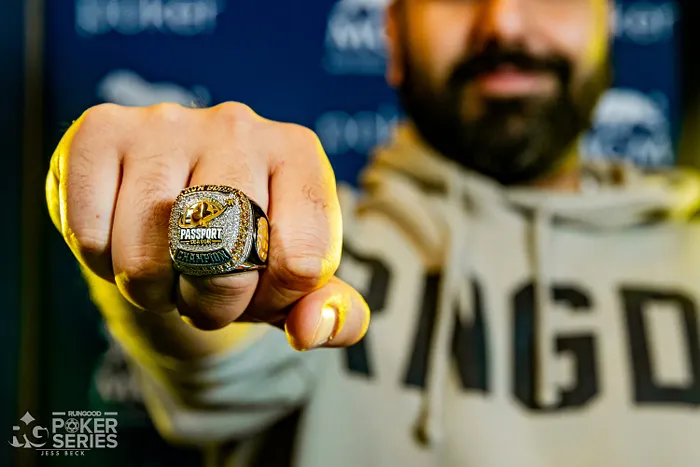
That steady mindset paid off during the lengthy heads-up duel against Major. Asadabadi began the match at a two-to-one deficit and found himself on the ropes multiple times before clawing his way back.
"It was a grind," he said. "We played for like two hours and I was down actually to a turn card and we chopped the pot. After that it was back and forth, and before the last hand for like five to six hands I got back my lead. And then that was the [final] hand, that was sick."
Even on the final hand, where he turned a full house, Asadabadi felt he understood exactly where he stood.
"I knew he had a straight probably, the way the hand was played. I mean, it's a hand that he couldn't get away, it's just a cooler," Asadabadi said, relieved to be on the right side of it.