button in Safari
Master the Poker Skill Everyone Loves but Few Actually Study


Every poker player has a favorite bluff. It's usually a hand they've told their friends about a dozen times, where they put a load of chips in the middle with absolutely nothing and somehow got their opponent to fold.
Perhaps they even windmilled their cards over, just to let the rest of the table know what they'd got away with.
But was it actually a good bluff? And what about all those other occasions when they tried something similar and were sent to the rail? Were those necessarily bad bluffs?
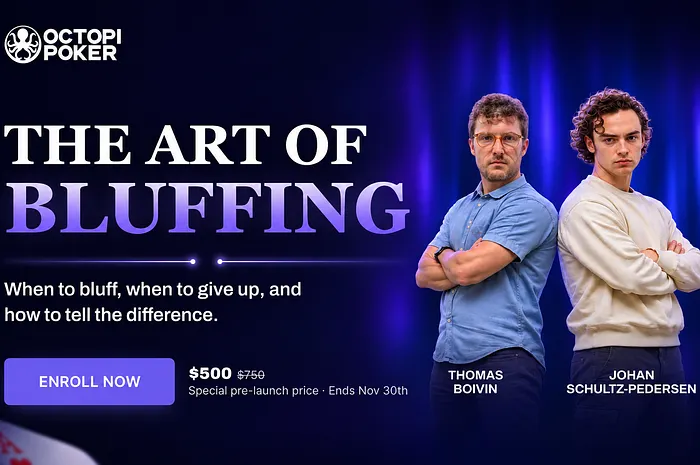
Bluffing is arguably the most entertaining part of poker, yet it's also one of the least understood. It's something that Belgium's all-time money list leader Thomas Boivin and World Series of Poker (WSOP) bracelet winner Johan Schultz-Pedersen are looking to address with their new Octopi Poker training course, The Art of Bluffing.
Why Are We So Bad at Bluffing?
Most poker players have a reasonable idea of what to do when they're dealt pocket aces or flop a set. Getting paid with a big hand is one of the first things you learn when you take up the game.
But what happens when you've got absolutely nothing?
Some players will immediately wave the white flag, while others see a missed draw as an invitation to empty the clip. Neither approach makes much sense without considering what's happened throughout the hand.
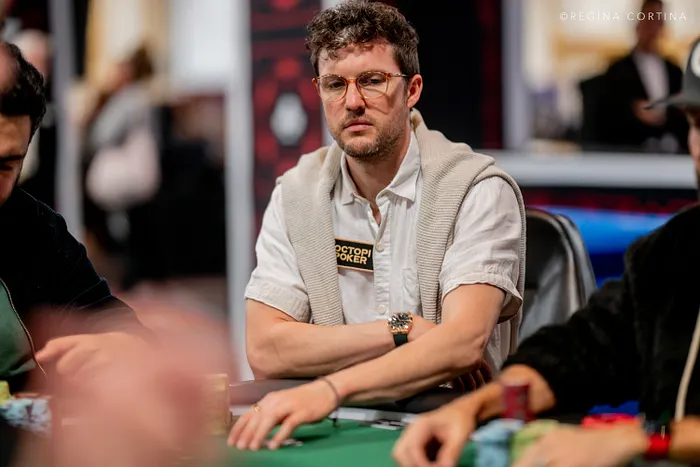
Boivin, who has close to $20 million in live tournament earnings, says bluffing is an area of the game that doesn't receive nearly enough attention.
"Most players understand value betting. Bluffing is less studied as a topic in itself, and that's exactly where the real edge of this course lives."
"What we built is not a list of spots to bluff. It's a way of thinking that lets you compute the right answer in any spot you'll face. The GTO baseline gets you to the starting line. The exploits get you paid."
One of the biggest traps players fall into is judging their bluffs purely on whether they work. A poorly thought-out bluff can get through, just as a well-constructed one can run into the top of an opponent's range. The player who gets caught isn't necessarily the one who made the mistake.
Are You Telling a Believable Story?
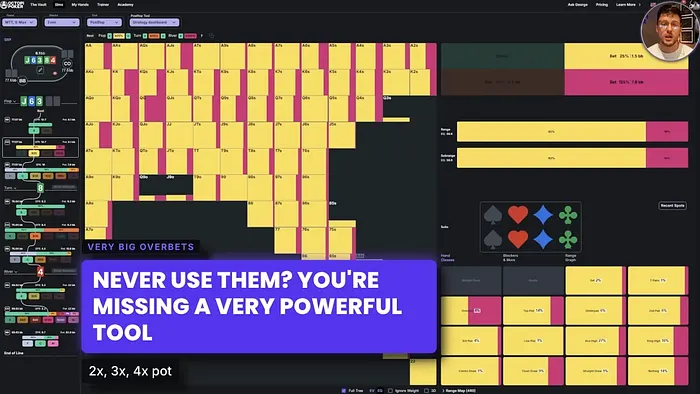
There's an old saying in poker that a bluff needs to tell a story, but it's surprisingly easy to forget that when you're staring at a missed flush draw on the river.
Would you really have taken the same line with a strong hand? Would you use that particular bet size if you had the nuts? And does your opponent even care what you're trying to represent?
There's little point in telling a convincing story to someone who isn't listening.
One of the lessons encourages players to consider four questions before committing chips to a bluff:
- Will your opponent defend?
- How does your opponent perceive you?
- How does your opponent think about bluff catching?
- How do real players typically defend in this spot?
There's a difference between what a solver says someone should do and what the player sitting across from you is actually going to do.
A recreational player who hates folding top pair is a very different bluffing target from a regular who is desperate to make the next pay jump. The cards might be identical, but the circumstances surrounding the hand can completely change the decision.
The Best Bluffs Start Before the River
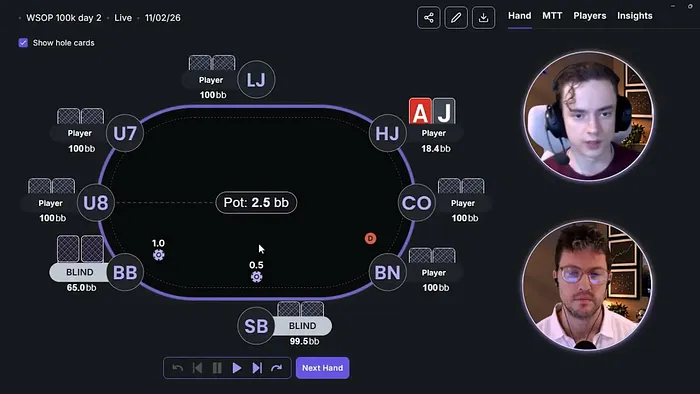
Imagine you've missed your draw on the river. You've invested a decent chunk of your stack already, and checking back feels like surrendering all those chips. So, you reach for another bet.
Sound familiar?
Rather than arriving at the river and desperately searching for a way to win the pot, Boivin and Schultz-Pedersen explore how players can plan their bluffs from earlier streets.
The first half of the course establishes the game theory optimal (GTO) fundamentals of bluffing, covering everything from selecting the right combinations and understanding blockers to choosing bet sizes that make sense alongside your value hands.
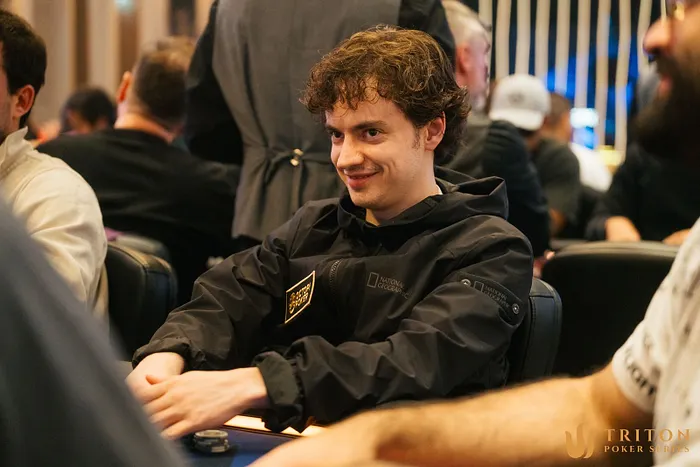
It also explores how bluffing changes depending on position, stack depth and how the board develops.
The second half sees the instructors look at where real opponents deviate from solver-approved strategies and how those tendencies can be exploited.
There's also a section dedicated to ICM, exploring how the pressure of pay jumps and elimination can influence bluffing opportunities, as well as why big stacks can often get away with more than their shorter-stacked opponents.
Bluff catching receives its own treatment, too. After all, understanding what makes a good bluff should also help you recognize when someone might be trying one against you. The course rounds things off by examining real hands from recognizable poker streams and final tables.
Learning to Bluff From Some of Poker's Best
The Art of Bluffing is Boivin's second course since joining Octopi Poker as Head of Academy in April, following the release of Beyond the Solver.
He's joined by Schultz-Pedersen, a WSOP bracelet winner, Triton ONE champion and Octopi co-founder who works on the platform's solvers and simulation libraries.
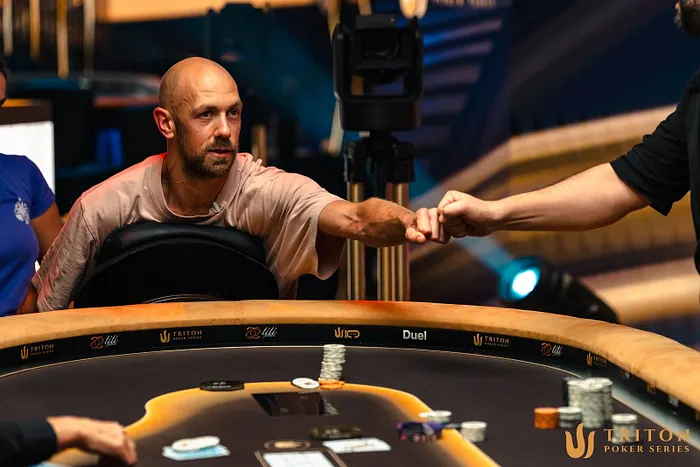
The course also has the backing of fellow Octopi co-founder Stephen Chidwick, one of the most successful tournament players in poker history.
"Thomas is one of the most driven people I know. He puts a lot of effort into not only his game but his ability to communicate ideas to his students," Chidwick said.
"I anticipate this course being hugely valuable for anyone wanting to understand bluffing at a deeper level."
Across 72 lessons, players will get the opportunity to put what they've learned into practice through quizzes and pre-built exercises in Octopi's GTO Trainer. Some of the quizzes are even deliberately designed to catch players out before explaining why their decision was a mistake.
What's Included in The Art of Bluffing?
Those who are completely new to solvers are encouraged to start with Octopi's My First Solver course. The course is aimed at tournament players who already have a grounding in poker strategy and includes:
- 12 chapters and 72 self-paced lessons
- Approximately 11 hours of video content
- Quizzes accompanying every lesson
- Pre-built GTO Trainer drills
- 30 days of Octopi Professional plan access
- A full refund for dissatisfied students who have completed less than 20% of the course
The Art of Bluffing is available to pre-order for $500 until November 30, with the price increasing to $750 when the course launches on December 1.
You can find out more about The Art of Bluffing on Octopi Poker.