button in Safari
Slot Volatility
Slot volatility refers to how often a slot machine pays out and how big those payouts are likely to be. Also known as slot variance, it gives players an idea of the level of risk involved when playing a game.
Some casino slots are designed to deliver regular, smaller wins, while others may go through long dry spells before landing a much larger payout. Understanding volatility can help you choose games that suit your bankroll and the type of experience you're looking for.
How Slot Volatility Works
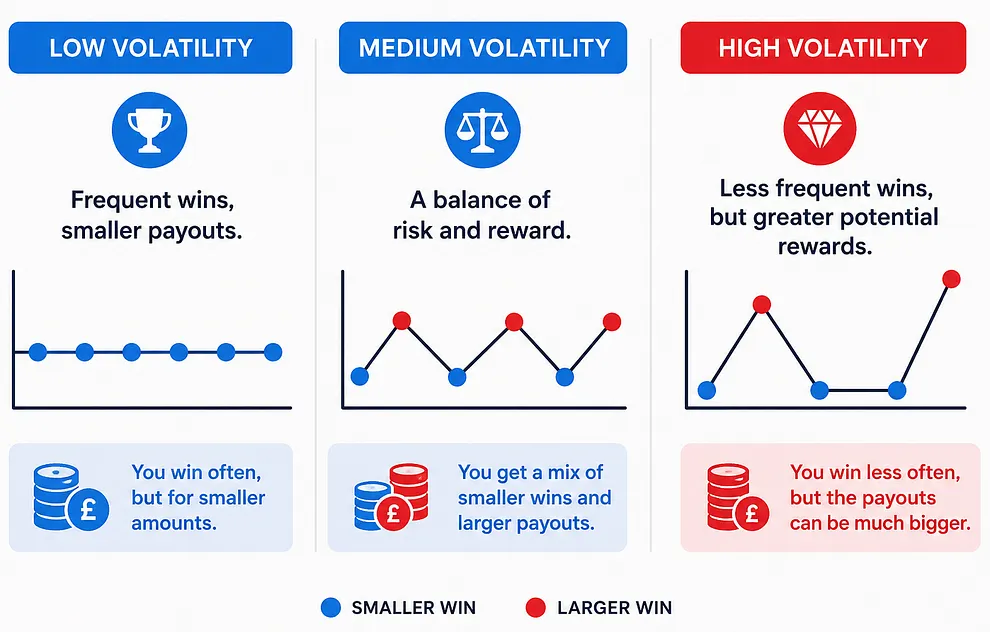
Every slot falls into one of three categories: low, medium or high volatility. The difference lies in how wins are distributed over time.
Low Volatility Slots
Low volatility slots tend to pay out more often, but the wins are usually smaller. They're popular with players who prefer longer sessions and a steadier stream of payouts.
For example, if you're playing at £1 per spin, you might regularly hit wins between £2 and £10. While you're unlikely to land a life-changing jackpot, your balance is likely to last longer.
Medium Volatility Slots
Medium volatility games sit somewhere in the middle. They offer a balance between regular wins and the chance of bigger payouts, making them a good all-round option.
High Volatility Slots
High volatility slots are aimed at players who don't mind taking on more risk. These games may go many spins without paying much at all, but when they do hit, the rewards can be substantial.
For instance, a player staking £1 per spin on a high volatility slot might experience a long losing streak before triggering a bonus feature worth several hundred pounds. This "boom or bust" style of gameplay is what makes high variance slots so appealing to some players.
What does volatility mean in slots gaming?
Why Slot Volatility Matters
Volatility plays a big role in the overall experience of playing online slots.
If you enjoy seeing regular wins and want your bankroll to stretch further, low volatility slots are likely to be the better choice. They're particularly popular with casual players and those playing with smaller stakes.
On the other hand, if you're willing to accept longer periods without winning in exchange for the chance of landing a much bigger payout, high volatility slots may be more your style.
In simple terms:
- Low volatility – Frequent wins, smaller payouts.
- Medium volatility – A balance of risk and reward.
- High volatility – Less frequent wins, but greater potential rewards.
Choosing the right volatility level won't improve your odds of winning at slots, but it can make a huge difference to how enjoyable a game feels.
Volatility vs RTP: What's the Difference?
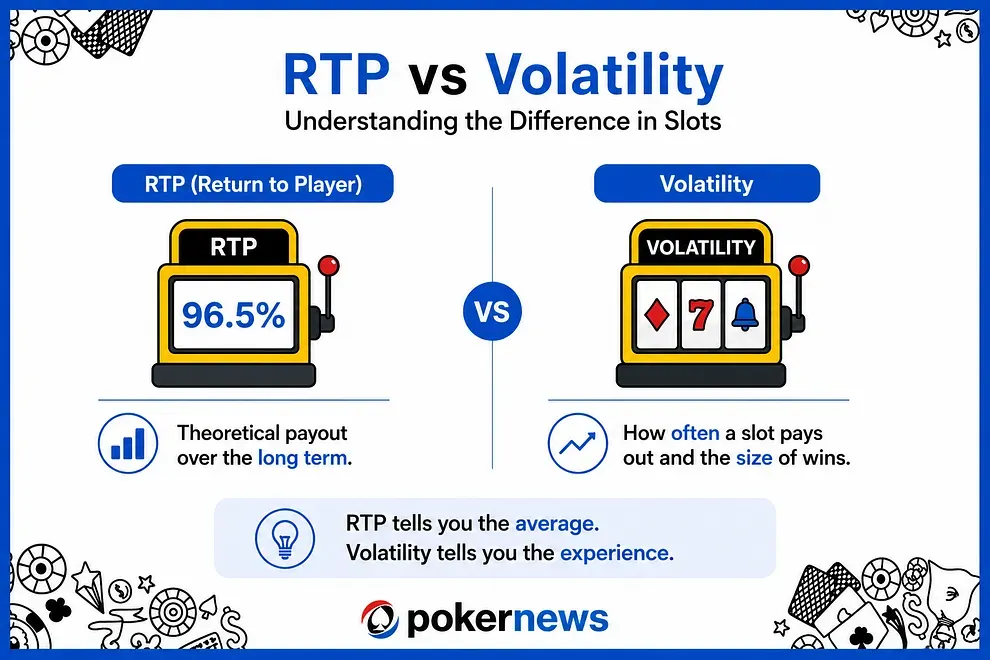
Slot volatility and RTP (Return to Player) are often confused, but they measure two completely different things.
RTP tells you how much a slot is expected to return to players over millions of spins, expressed as a percentage. Volatility, meanwhile, describes how those returns are paid out.
Let's imagine there are two high-RTP slots. Both have RTPs set at 96%, but they might have different volatility levels. This would mean one provides lots of smaller wins, while the other delivers fewer wins with the potential for much bigger payouts.
| Feature | Slot Volatility | RTP |
|---|---|---|
| Measures | The risk level of a slot | Theoretical long-term return |
| Indicates | Size and frequency of wins | Percentage returned to players |
| Expressed As | Low, Medium or High | Percentage (e.g. 96%) |
| Impacts | Gameplay experience | Overall value of the game |
| Short-Term Results | Can vary significantly | Less noticeable over shorter sessions |
| Can Two Slots Share the Same Value? | Yes | Yes |
Both are important, and understanding how they work together can help you make more informed decisions when choosing a game.
Best Low Volatility Slots

Low volatility slots are ideal for players who enjoy regular payouts and longer gaming sessions. They may not offer the huge win potential of high variance games, but they can provide a more relaxed playing experience.
Some of the most popular low volatility slots include:
Slot Volatility - FAQs
What is slot volatility?
Slot volatility is a measure of how often a slot pays out and how large those payouts are likely to be. Low volatility slots tend to produce smaller, more frequent wins, while high volatility slots pay out less often but can offer bigger rewards.
Is high volatility better than low volatility?
Neither is better than the other. It depends on the type of experience you're after. Players who enjoy chasing bigger wins often prefer high volatility slots, while those who want more regular payouts may favour low volatility games.
How can I tell if a slot is high or low volatility?
Some game providers include volatility information in the paytable or game rules. If it's not listed, slot review sites and expert guides often classify games as low, medium or high volatility.
Can two slots have the same RTP but different volatility?
Yes. Two games can have identical RTP percentages but very different payout patterns. One may reward players with frequent small wins, while the other might produce fewer wins with the chance of larger payouts.
Which slots are best for beginners?
Low volatility slots are generally considered the most beginner-friendly. Their frequent payouts can help make your bankroll last longer and provide a smoother overall experience.