button in Safari
Why Mario Mosböck Says Triton Is ‘The Pinnacle of Poker’

Table Of Contents
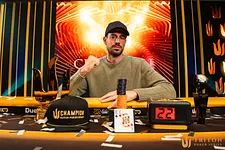
By just about anyone’s standards, September has been a pretty spectacular month for Mario Mosböck.
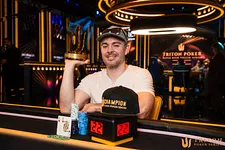
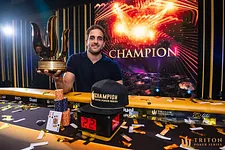
From chopping a Triton Super High Roller in Jeju for $3 million, to becoming an ambassador for poker’s most prestigious tour, and marrying his partner Amanda, the ex-footballer turned poker star has had a dream start to the fall.
And although Mosböck had to settle for second in the $150K NLH 8-Handed at Jeju II, narrowly losing out to Kayhan Mokri, the three-time Triton winner cut a relaxed figure as he caught up with PokerNews on the rail at Landing Casino to talk on a range of topics.
From why he keeps returning to Triton events and the mindset he brings to high-stakes play, to how a background in professional sports provides the perfect preparation for poker, and keeping pace with friendly rivals Fedor Holz and Matthias Eibinger on the Triton tour, Mosböck had plenty to share as he reflected on a few weeks to remember.
Competing at the Pinnacle
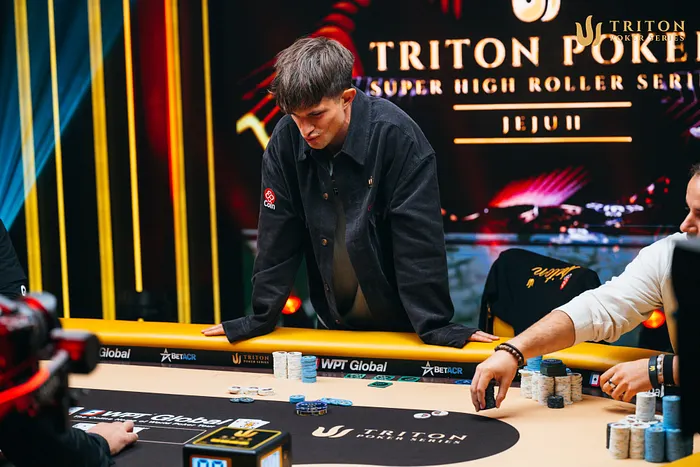
"It's by far the best tournament experience in the world. It's incomparable to any other live stop," Mosböck says when asked what keeps pulling him back to Triton events.
The Austrian, who has 22 cashes on the tour in under three years, explains that "on one side the tournaments are the biggest in the world and also the players. You have the toughest players in the world. Four times a year, everyone meets, and you play basically the pinnacle of tournament poker. It's just such a unique feeling that you play against the best."
"Four times a year, everyone meets, and you play basically the pinnacle of tournament poker."
There's no doubt that Mosböck himself has firmly earned his place among that elite group. Having graced his fair share of TV tables, he's well-qualified when he says there’s something special about a big performance at a Triton event.
"If you make a deep run you get to the stage and it's just the way they set it up—the stage, the coverage, and the event itself just makes it so special. It's an experience I just love coming back to."
A graduate of the Pokercode Grindhouse, Mosböck has gone on to phenomenal success, but friendly rivalry remains intense, especially among friends and former classmates. He laughs when asked if he is keen to join Holz and Eibinger as four-time Triton champions.
“I would love to join them on four, and I felt actually really bummed when I got second the day before, just because you put so much energy and so much passion into the game,” he admits.
"So when you get really close to the trophy, the money is incredible. Of course, if I'm wrong, it's an important part. But the Triton Trophy just means something more."
Bringing a Pro Athlete’s Mindset to Poker
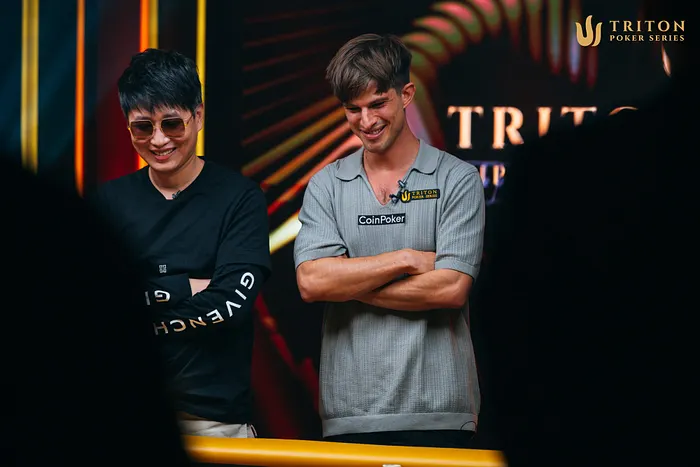
Mosböck approaches poker with the mindset of a professional athlete, having made a well-documented retirement from professional football at 21 to pursue a career on the felt.
"I try to be in a relaxed state, because if I feel stressed or some other thing influencing me, I'm not in a state to make the most comfortable and most confident decisions, which I think is very important," he says.
Being confident and mentally grounded allows him to make tough calls and occasionally deviate from the default play when he sees a better opportunity.
"Being in a really good state and preparing also off the tables so you have confidence coming in is very crucial. Just being in a good state and enjoying the gameplay. If you don't enjoy it, I think you don't really have a shot," he adds.
"If you don't enjoy it, I think you don't really have a shot."
Mosböck says his football career laid the foundation not only for handling poker’s highs and lows, but for his overall philosophy at the table.
"Absolutely. I think generally a sports or athlete background or mentality is very helpful for success in poker because you have characteristics, behaviors, or beliefs that help you in poker. Mainly being disciplined, mainly having a routine, having a training routine. All those things are natural for athletes," he explains.
He stresses that talent can only take a player so far, and it’s work ethic that separates the very best. "Just because to become an elite poker player you have to be talented of course, but that's only to a limited extent. Everything else is the work ethic and being okay to put in the work is crucial to become number one," Mosböck says.
Finally, he reflects on how years of high-pressure moments on the football pitch also shaped his approach to stress and emotional swings at the poker table.
"I played football for quite a long time and there was a lot of high-pressure situations, ups and downs, and you just get emotionally used to it. High-stress situations now I quite enjoy rather than they scare me, and I think that's crucial, especially in the late game of high-stakes tournaments," he adds.