button in Safari
Rep. Dina Titus on Status of FAIR BET Act – “Optimistic We'll Get It Done”

Table Of Contents
One of the biggest poker stories last year surrounded a provision in President Trump’s "One Big Beautiful Bill" (OBBA) Act that limited gambling deductions to 90%. The gambling tax change caused many poker players to wonder if they could continue playing the game professionally.
Enter Nevada Rep. Dina Titus, who in July of last year introduced the FAIR BET Act (H.R. 4304), which aims to restore the 100% tax deduction for gambling losses. The legislation is designed to ensure bettors aren't taxed on money they haven't won.
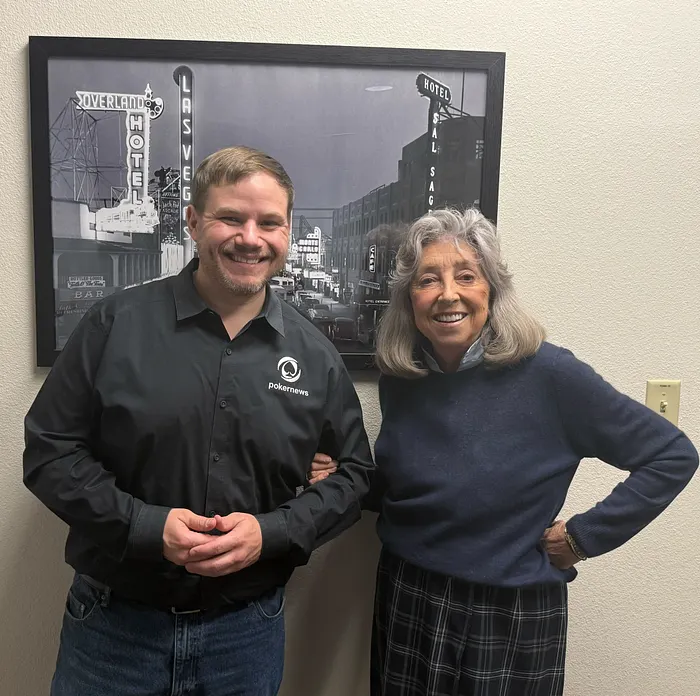
“This is an issue that's very dear to some of my constituents,” Rep. Titus told PokerNews Chad Holloway in a sit-down interview in her Las Vegas office. “But, you know, it's not just professional poker players. It’s the industry itself. It's like the casual bettor.”
Rep. Titus continued, “Let me give you a little history. When the bill passed out of the House, it did not have this provision in it. It was added in the Senate, kind of in the dark of night. But it came out of the committee that our senator sits on, and I thought she would have caught it, but she didn't.
“So, when it came back to the house, we always go through bills that deal with taxes and money very carefully because gaming, there's still a stigma to gaming, and there's always some little hook in there that comes after us. So, we were going through it and found that provision and said, we got to get this out of here.”
Indeed, it came to light that the provision was snuck in by Republican Idaho U.S. Senator Mike Crapo, much to the surprise of politicians on both sides of the aisle. As a result, Rep. Titus’s bill has garnered bipartisan support, including the chair of the Appropriations Committee, and three members of Ways and Means on there.
“I've got my co-chair for the gaming caucus, who is a Republican from Pennsylvania,” Rep. Titus explained. “So, it says a lot who is supporting it. And when the Ways and Means had a committee hearing out here in Las Vegas, we got the chair. I sat in on that hearing to say this needs to be fixed. So, he is on the record of saying it.”
Meeting with Seidel
Someone else Rep. Titus sat with to discuss the situation was Poker Hall of Famer Erik Seidel.
“Well, he's an icon,” Rep. Titus said of the poker legend. “I was very excited to meet him and talk to him. He seems more like a sociology professor than a poker player. You wouldn't pick him out of a crowd, but it was great to talk to somebody who knows the game, who makes a living from the game, but is also attuned to some of the problems. So, he could talk about it from a personal perspective as well as a policy one. He was able to just talk about people that he's already been in communication with who are changing their habits in the professional poker world because of this statute.”
Where Do Things Stand?
Unfortunately, the FAIR BET Act failed to pass in 2025, so the new provision is currently law and in effect. Poker players won’t feel the effect until they file taxes for 2026, which means there’s still time – until the end of the year, in fact – to change things.
“A lot of people were afraid it had to be passed by the end of the year, but that's not true,” Rep. Titus explained. “It has to be passed by the end of [2026]. But that doesn't mean we want to wait. We want to get busy and get it done because people are planning things. What tournaments are going to go to, how much money they're going to spend on gaming, and planning things out for the year.
"I'm remaining optimistic we'll get it done.”
“So, the sooner you visit it, the better. Now we have used every means possible, and that's what we're going to continue to do. My bill has been introduced. It's gotten bipartisan support, I'm happy about that, and some other people have introduced bills that do the exact same thing. We have tried to attach it to the NDAA as an amendment to the appropriations bill, as an amendment to the continuing resolution.
“I have said all along, I don't care how we get it done, as long as we get it fixed. And so right now, the next thing that will come up may be another CR (Continuing Resolution), or it may not be until the end of the year, but it's a very active issue. It's not sitting on a shelf somewhere. And at the end of the year, there are always these bills that are kind of like tax extender bills or clean-up bills. They're kind of like Christmas trees you can hang a lot of things on. So, we'll have a chance there, especially. And I'm remaining optimistic we'll get it done.”
What Can You Do to Help?
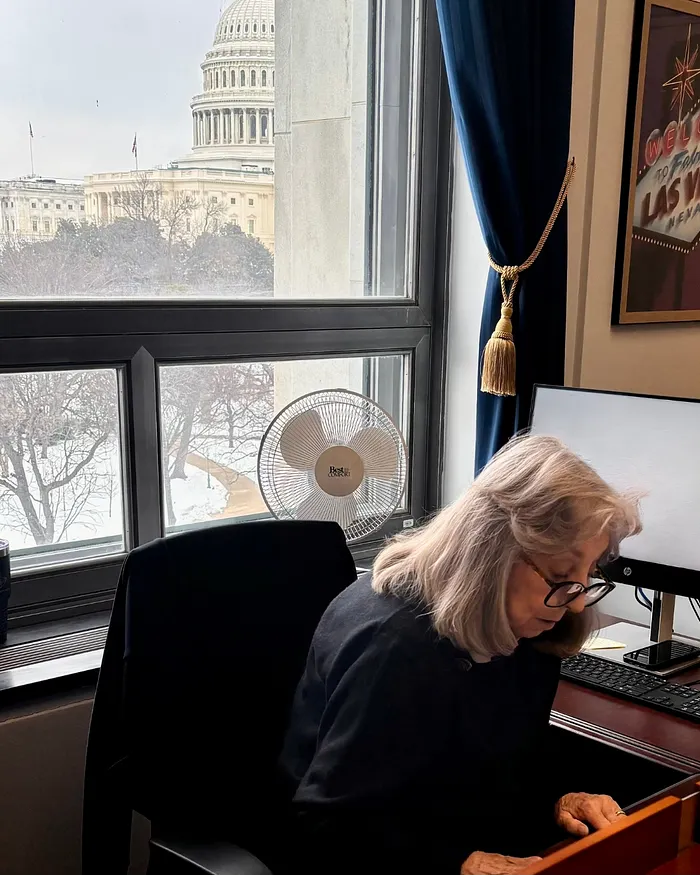
Rep. Titus encourages all poker players to contact their local representative, no matter their locale, and help get the word out.
“The first step really is education. So, that's helpful, to let people know this is just unfair taxation. The way this change works is that if you win $100,000 and you lose $100,000 in the old days for 50 years, you got to write that off. Now, if you win $100,000 and lose $100,000, you got to pay tax on $10,000 because you can only deduct 90%. Now that you didn't get that $10,000, that's phantom ghost money. So, it's just not a fair tax policy. So, we got to explain that to people.
“Gaming is in every state except Utah and Hawaii. So, people are affected by this everywhere. They need to write their congressperson and say, ‘Get on board and let's pass this.’ And, you know, it's not just the player, professional or just for a hobby. It's also the local government that won't get the tax revenue if these gamers go offshore or go to some black markets or go to Kalshi or something like that.”
To find your local representative and how you can contact them, visit house.gov.