button in Safari
Kalshi’s Bonkers Billion-Dollar Bracket Challenge


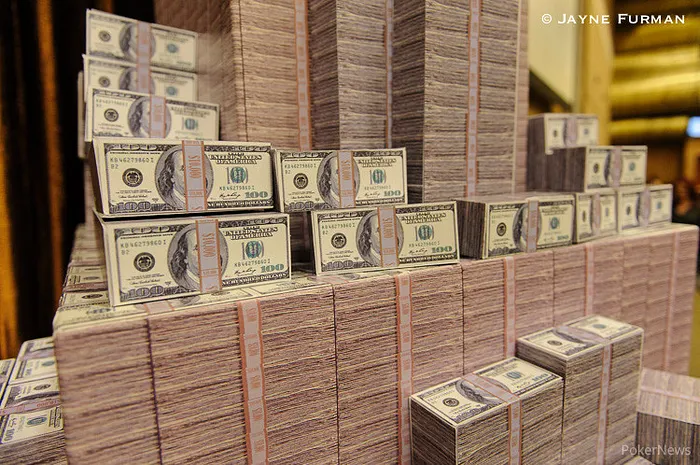
Table Of Contents
Let’s take a second to sit with the number. One billion dollars. That’s 1,000 metric tons of $1 bills. Roughly 189 million Big Macs. Enough to buy a mansion in nearly every country on Earth and still have room left over for an F-35 fighter jet in the garage. However you want to frame it, a billion dollars is a bloodline-changing amount of money.
And that’s exactly what Kalshi put on the table for its 2026 March Madness bracket challenge.
Kalshi was founded in 2018, and launched its prediction market platform three years later, quickly becoming one of the standout names in the industry.
Read our full Kalshi review to find out more.
What was Kalshi's Billion-Dollar Bracket Challenge?
As the name suggests, Kalshi's Billion-Dollar Bracket Challenge awarded a staggering $1 billion to any trader that successfully predicted the outcome of all 63 March Madness games. Failing that, there was a measly million dollars to the best bracket if no perfect bracket emerged.
The exchange also included a charitable component tied to the contest, committing $500,000 to iMentor, which focuses on student mentorship, and another $500,000 to Starting Five, a foundation backed by Devin Booker.
- $1 billion to anyone correctly predicting all 63 games.
- $1 million to the best bracket if the main prize isn't won.
- $500,000 to iMentor and Starting Five charities.
How to Win the Billion-Dollar Bracket Challenge
As mentioned, all you had to do to win it was predict the outcome of 63 basketball games correctly. On the surface, that doesn’t sound easy, but it also doesn’t sound impossible. With enough research and effort, it feels like something that could be done.
It isn’t.
Even with skill, the odds of a perfect bracket sit around 1 in 120 billion. Treat every game as a coin flip and it drops to 1 in 9.2 quintillion. The structure of the tournament doesn’t allow for perfection. And the way this year played out made that clear almost immediately, with most brackets effectively eliminated in the first round.
The biggest early hit came when Wisconsin, sitting around an 81 percent implied probability, lost to High Point at roughly 19 percent. (rough day to be a Badgers fan, dear reader). That single result wiped out a large share of entries right away.
The last brackets didn’t last much longer. In the Round of 32, Iowa, priced around a 16 percent underdog, knocked off Florida. That was the lowest-probability win in the dataset, and it ended the final remaining perfect brackets.
By Sunday, March 22nd, before the Sweet 16 had even tipped off, every perfect bracket was already dead. The billion-dollar prize was no longer in play.
Other Billion-dollar Challenges
Surprisingly, this is not a new concept. Not only have we seen a similar challenge before, but we’ve also seen the same result. In 2014, Warren Buffett backed a similar billion-dollar challenge, but the best bracket didn’t make it out of the first round.
The format consistently produces the same outcome. That outcome being no perfect brackets, but one big promotional win for the firm that underwrites the challenge. In that regard Kalshi did win.
Kalshi: The Overall Winner
The scale of the promotion showed up in the trading data. Kalshi reported record-breaking activity during the 2026 tournament, with total March Madness-related volume landing somewhere between $1.8 billion and $1.97 billion. The first weekend alone accounted for over $800 million in contracts traded, nearly doubling the platform’s entire March Madness volume from the year prior.
Activity was especially concentrated early. The opening day of the tournament saw $645.7 million in trading, and across the first four days the platform reported $2.34 billion in total volume when including other high-interest sports markets. That surge translated directly into revenue, with roughly $25.5 million in commissions generated over that same four-day stretch. March 19th ended up as the second-highest trading day in the prediction market platform's history, trailing only the Super Bowl.
Along with a promotional win for Kalshi the contest did also produce a best bracket win for one player. A user named Jackie finished with that best overall bracket, correctly picking UCLA to win the championship and earning $1 million.
Despite rapid advances in areas like vaccine development, commercial space travel, and artificial intelligence since the original billion-dollar bracket challenge in 2014, predicting 63 consecutive basketball games remains out of reach, and statistically, it is likely to stay that way.
Prediction markets involve risk and are not suitable for everyone. While many platforms offer tools to make informed trades, outcomes are never guaranteed, and users should never risk more than they can afford to lose. Always trade responsibly. Additionally, platform availability and legal status vary by region. It is your responsibility to check local laws and verify that you are legally allowed to use a given platform before participating.
Read our full affiliate & risk disclosure.