button in Safari
Manhattan Bar Owner Uses Kalshi to Hedge Knicks Promotion


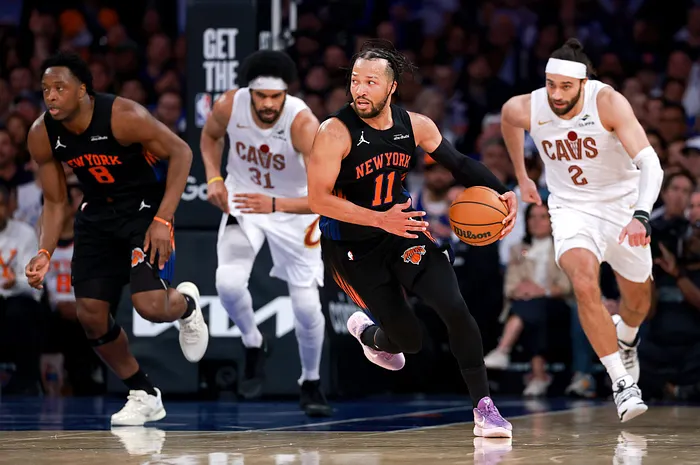
Table Of Contents
For years, supporters of prediction markets have argued that their value extends far beyond speculation. The industry's strongest advocates contend that prediction markets generate actionable information through forecasting while also giving individuals and businesses a way to hedge real-world risks.
Critics, however, have often argued that sports prediction markets fall outside that framework. Unlike election markets, commodity futures, or even weather contracts, sports markets have frequently been portrayed as little more than another form of gambling, offering little in the way of meaningful economic utility.
This week, that criticism received an answer, albeit a highly niche one.
How a Manhattan Bar Owner Hedged a Knicks Promotion
A Manhattan bar owner used sports prediction market exchange Kalshi to hedge the cost of a promotion offering customers free drinks if the New York Knicks won.
According to Semafor, The Jeffrey owner Andrew Freedman placed a $5,000 trade on Kalshi ahead of Game 1 of the NBA Finals after a previous Knicks promotion cost the bar roughly $3,700 in free drinks. If the Knicks won, the position would pay out approximately $8,000, helping offset a portion of the expected tab.
The idea reportedly came from Kalshi itself. After the Eastern Conference Finals promotion, which left Freedman covering thousands of dollars in drinks, the exchange reached out and suggested using its sports contracts to hedge the financial risk associated with future promotions.
While few businesses are likely to find themselves hedging a free-drinks promotion tied to the outcome of an NBA Finals game, the trade nonetheless demonstrates a real-world use case for sports prediction markets beyond speculation.
From Speculation to Risk Management
Businesses have long used financial markets to hedge risks ranging from commodity prices and currencies to weather events. Prediction market advocates have argued that event contracts can serve a similar purpose, allowing individuals and businesses to offset financial exposure tied to uncertain future events.
"I've written before that I think the real value of Kalshi and Polymarket is as clearinghouses for real economic risks, not as playgrounds for YOLO-ing retail investors," Semafor's Liz Hoffman wrote in her newsletter covering the trade.
As of publication, Kalshi traders give the Knicks roughly a 37% chance of defeating the San Antonio Spurs in the NBA Finals. For Freedman, those odds are more than just a forecast. They are a way to manage the financial risk associated with being both a Knicks fan and a bar owner.
Whether sports prediction markets ultimately become a widely used hedging tool remains to be seen. But for at least one Manhattan business owner, they have already moved beyond speculation and into practical risk management.
Prediction markets involve risk and are not suitable for everyone. While many prediction market platforms offer tools to make informed trades, outcomes are never guaranteed, and users should never risk more than they can afford to lose. Always trade responsibly. Additionally, platform availability and legal status vary by region. It is your responsibility to check local laws and verify that you are legally allowed to use a given platform before participating.