button in Safari
Teach MeeMaw How to Check-Raise This Thanksgiving: Your Poker Home Game Guide



Table Of Contents
- Set the Table (And Not Just for Thanksgiving Dinner)
- Teach MeeMaw the Basics Before She Starts Taking Your Chips
- From Knitting to Nit-Rolling: Grandma's First Poker Strategy Lesson
- Finally, Teach MeeMaw How to Check-Raise
- Watch Out, Grandpa: Three More Tips for Your Thanksgiving Game
- Don't Let a Bad Beat Ruin Thanksgiving
Thanksgiving is a time for family, good food and making memories. And what better way to spend the holiday than teaching Grandma how to check-raise her grandchildren out of their pocket money?
Once the turkey has been eaten, the dishes are cleared and everyone has had enough pumpkin pie, there's no better time to bring out the poker chips and get a family home game going.
Maybe Dad thinks he's the next Phil Ivey. Perhaps your cousin has been watching poker streams all year and won't stop talking about his GTO Wizard membership. Or maybe MeeMaw has never played a hand of Texas Hold'em in her life.
Whatever the case, Thanksgiving is the perfect opportunity to introduce your family and friends to poker, teach them a few tricks and find out who really has the best poker face.
And who knows? By the end of the night, Grandma might be the one running the biggest bluffs at the table.
PokerNews has everything you need to get your Thanksgiving home game up and running, from the best cards, chips and tables to beginner-friendly strategy guides that could have the grandparents check-raising like pros by dessert.
Set the Table (And Not Just for Thanksgiving Dinner)
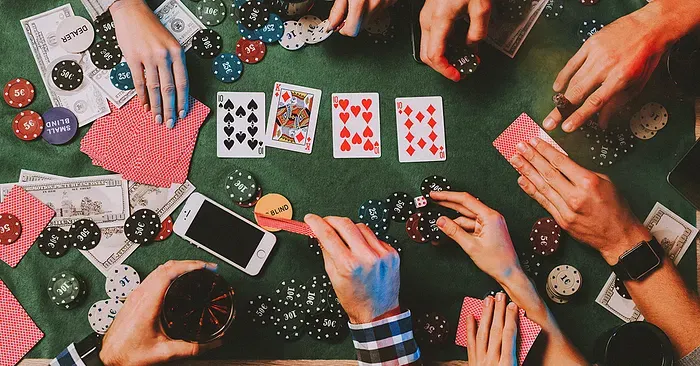
Before Grandma can start putting the family under pressure, you'll need somewhere to play.
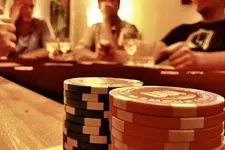
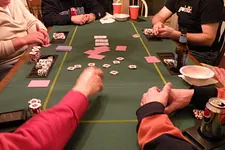
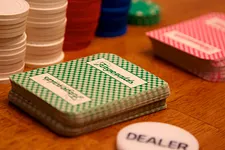
The good news is that you don't need a professional poker setup to host a great home game. A dining table, a couple of decks of cards and some poker chips are more than enough to get started.
Of course, if you're planning to make poker a regular family tradition, investing in some decent equipment isn't a bad idea. Nobody wants to spend half the evening chasing chips across the kitchen floor or wondering whether the cards are marked with cranberry sauce.
Here's what you'll need:
- Playing cards: At least two decks, preferably plastic or plastic-coated, so they can survive the occasional spilled drink. Check out the best playing cards for poker.
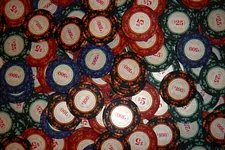
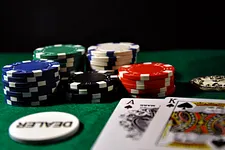
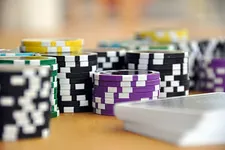
- Poker chips: A 300 to 500-piece set should be enough for most family games. Our best poker chip sets will help you choose.
- Poker table: Your dining table will do just fine, but a poker mat or folding table can make things feel a little more official. See our picks for the best poker tables.
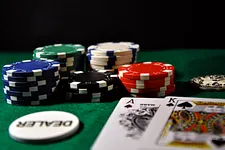
- Dealer button: An easy way to keep track of who's dealing and where the blinds are, particularly when you've got beginners at the table.
- Snacks and drinks: Leftover turkey sandwiches, pumpkin pie and whatever else survived Thanksgiving dinner. Just keep the gravy away from the felt.
For a complete rundown, the PokerNews home game guide covers everything from setting up your table to choosing the right equipment.
Teach MeeMaw the Basics Before She Starts Taking Your Chips
There's no point teaching Grandma how to check-raise if she doesn't know what a check is.
For a family game with plenty of beginners, Texas Hold'em is the obvious place to start. It's easy enough to learn in a few minutes, and you don't need to explain complicated tournament strategy before dealing the first hand.
Each player gets two cards, followed by five community cards dealt across the flop, turn and river. Players try to make the best five-card hand, although they can also win by betting and getting everyone else to fold.
Start by explaining the four basic actions:
- Check: Pass the action to the next player without betting, provided nobody has bet before you.
- Bet: Put chips into the pot when no bet has been made on that betting round.
- Call: Match an opponent's bet to stay in the hand.
- Raise: Increase the size of an existing bet.
And, of course, there's folding. Something Grandpa might want to consider instead of calling every bet because he's already put chips in the pot.
It's also worth keeping the Texas Hold'em rules and poker hand rankings handy. That way, nobody needs to argue about whether a flush beats a straight when the first big pot goes to showdown.
If you've got complete beginners joining the game, play a few practice hands with everyone's cards face up. It's a simple way to explain how the betting works without anyone feeling embarrassed about asking questions.
From Knitting to Nit-Rolling: Grandma's First Poker Strategy Lesson
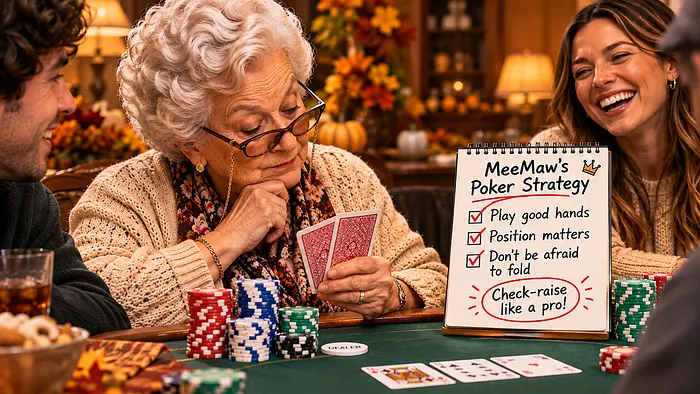
Now that everyone knows the rules, it's time to introduce a little strategy.
Lesson One: You don't have to play every hand.
New players often get excited about seeing their cards and want to stay involved, even when they're holding something like seven-deuce offsuit. Explain that folding bad hands is just as important as betting good ones.
Start by encouraging Grandma to play stronger starting hands, particularly big pairs, strong aces and good broadway combinations.
Then introduce the idea of position. Players acting later in a betting round have the advantage of seeing what their opponents do first, making it easier to decide whether to bet, call or fold.
You don't need to introduce complicated poker range charts but, a few simple tips will go a long way, and the PokerNews home game strategy section has plenty more advice for players looking to improve.
Just don't be surprised if Grandma starts asking why you opened king-nine offsuit from under the gun.
Finally, Teach MeeMaw How to Check-Raise
This is what we've all been waiting for.
Grandma knows the rules, understands which hands are worth playing and has figured out that your cousin bluffs far more often than he should. It's time to introduce her to the art of check-raising.
A check-raise happens when you check, allow an opponent to bet and then raise when the action comes back around to you.
It's a great way to build a bigger pot when you've got a strong hand, and it can also be used as a bluff against opponents who are capable of folding.
Let's give Grandma a chance to put her new skills to the test.
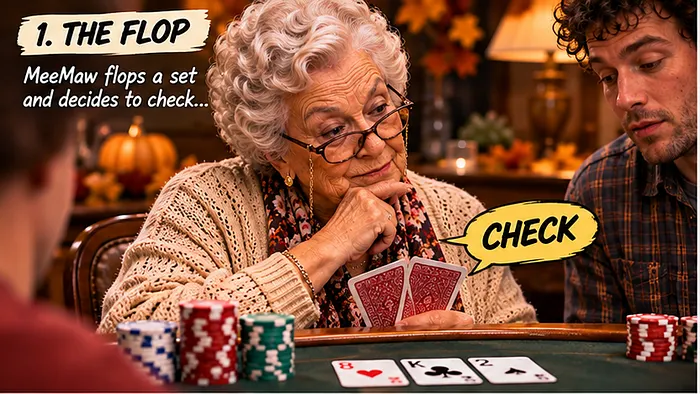
You're playing a friendly $0.10/$0.20 cash game. Grandma is in the big blind holding 8♠8♥, and her second favorite grandchild raises to $0.60 from the button. Grandma calls.
The flop comes 8♦K♣2♠.

Bingo. Grandma has flopped a set of eights, and rather than betting straight away, Grandma checks. Grandchild #2 bets $0.80 into the $1.30 pot, and now it's her chance to strike.
Grandma raises to $2.50.
That's a check-raise.

If her opponent has a king, they might call and give Grandma the chance to win an even bigger pot on the turn and river, or she might win the pot right there.
Either way, she's just pulled off her first check-raise.
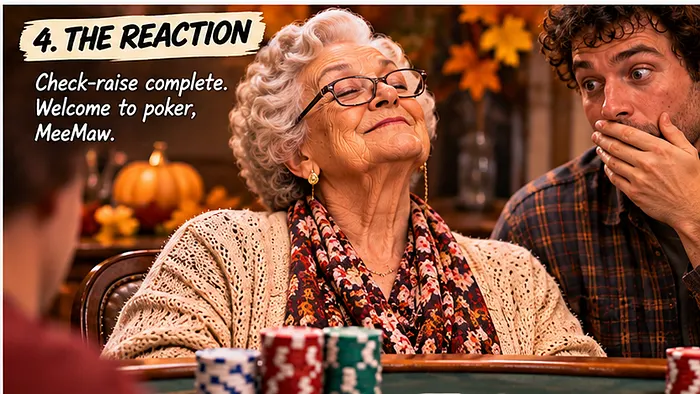
Naturally, there's a chance Grandma gets a little carried away and starts check-raising every flop. That's when you explain that the move works best when there's a good reason behind it.
For more on the move, PokerNews has a guide to check-raising that explains why and when players use it.
Watch Out, Grandpa: Three More Tips for Your Thanksgiving Game
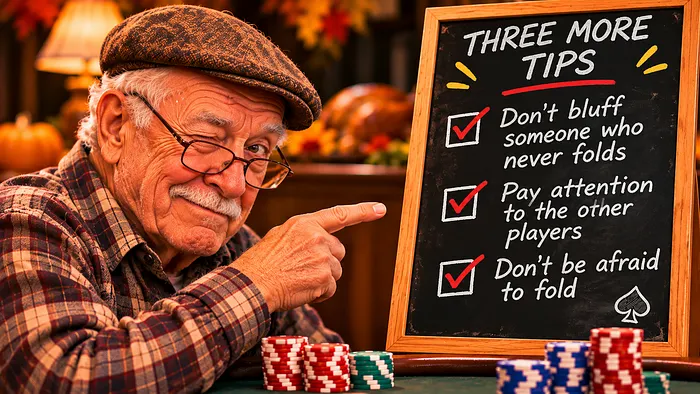
Once everyone has got the hang of things, you can start introducing a few more ideas. You don't want to overwhelm the beginners, but there's nothing wrong with giving them a little ammunition before the next family gathering.
- Don't bluff someone who never folds: Every home game has at least one player who simply refuses to let go of a pair. Rather than trying to push them off their hand, wait until you've got something strong and make them pay to see more cards. We've got a guide on beating calling stations that covers this type of opponent.
- Pay attention to the other players: Is Uncle Dave only raising when he has pocket aces? Does your cousin bet every flop regardless of what he's holding? Learning to spot these habits is one of the easiest ways to improve your decisions.
- Don't be afraid to fold: There's no shame in letting a hand go, even if you've already put a few chips in the pot. Sometimes the smartest play is admitting you're beaten and waiting for a better opportunity.
Don't Let a Bad Beat Ruin Thanksgiving

As much fun as it might be watching Grandma drag in a massive pot, remember that Thanksgiving poker should be about enjoying time together.
Keep the stakes small, make sure everyone is comfortable with the amount they're playing for and don't pressure anyone into joining. Playing for chips, bragging rights or the last slice of pumpkin pie works just as well if you want to leave money out of it.
Set the rules before the first hand, including buy-ins, rebuys and when the game will finish.
And remember, not everyone at the table is going to understand poker etiquette. Be patient with beginners, explain the rules when needed and don't turn every mistake into a lecture about GTO.
After all, the goal is to get everyone excited about playing again, not have them swear off poker until next Thanksgiving.