button in Safari
Supercomputer Predicts 2026 WSOP Main Winner After 1 Million Simulations


The 2026 WSOP Main Event is now just days away, and while nobody knows who will be crowned poker's next world champion, the team at Advanced Poker Training believes its AI-powered supercomputer has a better chance than most of making the right call.
That's because the company has run an astonishing 1,000,000 simulations of the entire WSOP Main Event final table, producing some eye-catching results.
Steve Blay, the Florida academic and software developer behind Advanced Poker Training, has history when it comes to forecasting the outcome of poker's biggest tournament. Back in 2016, the last time there was a break between the final table being set and the champion being crowned, Blay's model correctly identified Qui Nguyen as the most likely winner despite him not holding the chip lead.
Remarkably, that prediction was based on just 100 simulations. A decade later, with computing power leagues better than it once was, Advanced Poker Training's latest model has analyzed the final table 10,000 times more extensively. Here are the results...
2026 WSOP Main Event Final Table Simulation Results (1 Million Sims):
| Player | 1st | 2nd | 3rd | 4th | 5th | 6th | 7th | 8th | 9th |
|---|---|---|---|---|---|---|---|---|---|
| Lucas Jumalon | 40.4% | 20.4% | 13.1% | 9.0% | 6.4% | 4.6% | 3.1% | 2.0% | 1.0% |
| Rami Hammoud | 13.2% | 15.3% | 14.2% | 13.2% | 11.8% | 10.5% | 8.9% | 7.5% | 5.4% |
| Jamie Shaevel | 11.3% | 13.4% | 13.7% | 13.2% | 12.2% | 11.2% | 10.1% | 8.4% | 6.5% |
| Greg Mueller | 10.9% | 13.5% | 13.5% | 13.0% | 12.4% | 11.3% | 10.1% | 8.6% | 6.7% |
| Michael Gagliano | 7.0% | 10.0% | 11.3% | 11.9% | 12.6% | 12.7% | 12.4% | 11.8% | 10.3% |
| Mario Boos | 6.5% | 9.4% | 10.9% | 11.7% | 12.1% | 12.6% | 12.9% | 12.5% | 11.4% |
| Lauri Saaskilahti | 5.2% | 7.9% | 9.8% | 10.9% | 12.0% | 12.7% | 13.5% | 13.9% | 13.9% |
| Han Feng | 3.0% | 5.3% | 7.2% | 8.9% | 10.6% | 12.5% | 14.4% | 17.3% | 20.8% |
| Evagoras Evagorou | 2.5% | 4.7% | 6.3% | 8.2% | 10.0% | 11.9% | 14.5% | 17.9% | 24.0% |
Average $ Won
| Player | Seat | Starting Chips | ICM $ | Avg $ Won (Sim) | Difference |
|---|---|---|---|---|---|
| Lucas Jumalon | 9 | 194,000,000 | $6,188,930 | $6,306,953 | +1.91% |
| Rami Hammoud | 7 | 79,000,000 | $4,054,198 | $3,862,553 | -4.73% |
| Jamie Shaevel | 5 | 56,000,000 | $3,414,290 | $3,605,675 | +5.61% |
| Greg Mueller | 4 | 48,500,000 | $3,177,214 | $3,568,945 | +12.33% |
| Michael Gagliano | 2 | 46,500,000 | $3,111,062 | $2,996,098 | -3.70% |
| Mario Boos | 3 | 44,000,000 | $3,026,466 | $2,899,613 | -4.19% |
| Lauri Saaskilahti | 1 | 37,500,000 | $2,795,602 | $2,673,088 | -4.38% |
| Han Feng | 6 | 25,000,000 | $2,296,565 | $2,231,290 | -2.84% |
| Evagoras Evagorou | 8 | 22,500,000 | $2,185,672 | $2,105,788 | -3.65% |
Interpreting the Data
You can judge what you make of the numbers yourself, but Blay has handily pointed out a few results of particular interest...
Jumalon is Powerful, But Not Invincible

"It's no surprise that Jumalon dominated the simulations," says Blay. "Holding roughly 35% of the chips, he won the tournament over 40% of the time. Why? Mathematics. The other players simply can't fight back as aggressively because every confrontation carries enormous ICM consequences."
That said, a victory is far from guaranteed for the 22-year-old from Spokane, Washington. "What surprised me was that all of this translated into only about 2% more prize money than his ICM expectation. I expected the chip leader's ability to bully the table to create a larger edge than that," Blay adds.
And yes, as unlikely as it sounds, Jumalon could still bust in 9th place—a disaster that played out in 1% of the simulations.
Simulator Says Hammoud to Underperform
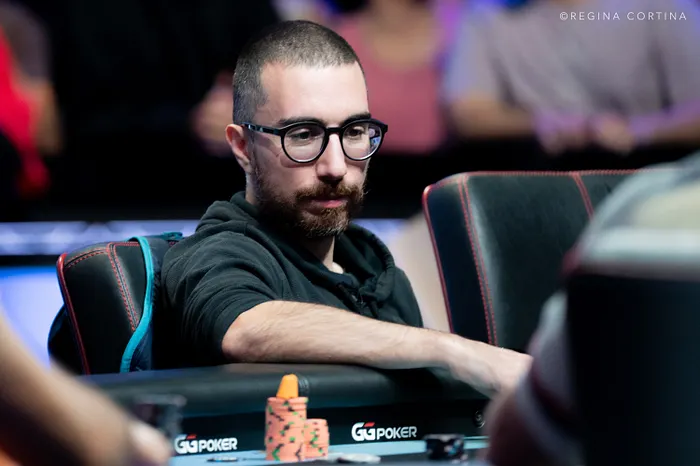
"The biggest disappointment in the simulation was Hammoud, whose average finish came in nearly 5% below his ICM value," says Blay, offering several potential reasons for the dip.
"First, while Hammoud is an excellent player, he's still technically an amateur. Second, scouting reports suggest he can be a little overaggressive."
However, the computer points to seat draw as the main culprit. "Hammoud has the unfortunate luck of having Jumalon two seats to his left. Whenever Hammoud reaches the cutoff or button—the two best opportunities to steal blinds—Jumalon is waiting in the blinds with a massive stack and maximum leverage. That's about as awkward a seating arrangement as you can get."
Shaevel and Mueller: The Final Table Sleepers
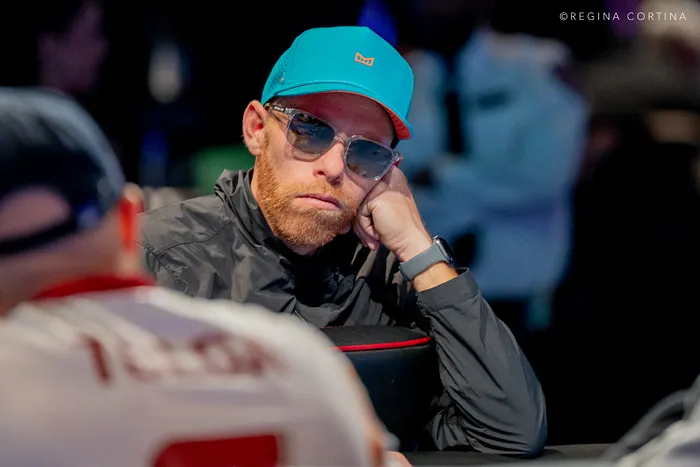
Looking for an underdog to root for? Shaevel and Mueller could be your best bets.
"The two biggest overperformers were Shaevel and especially Mueller. Both have decent table position and extensive experience," says Blay.
"Shaevel has eight Main Event cashes and is a respected cash-game regular in Los Angeles... Mueller may be the fan favorite. He owns three WSOP bracelets, has accumulated dozens of WSOP cashes dating back to before Jumalon was even born, and is a former professional hockey player. Competing under pressure in front of large crowds is nothing new for him."
It's a Rich Man's World
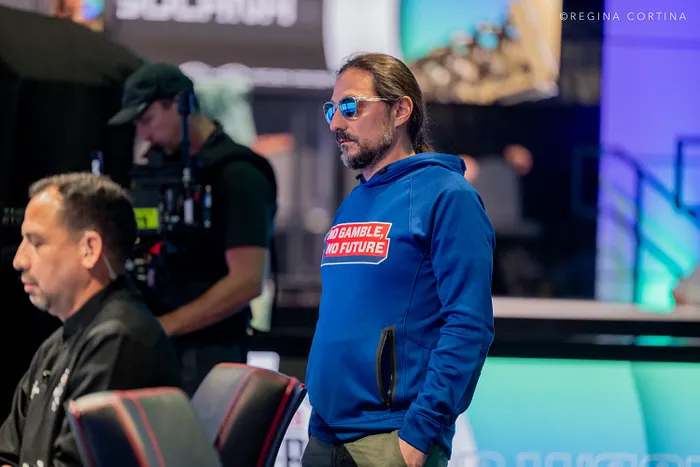
The simulation revealed that all five of the shortest stacks underperformed their ICM expectations, although Blay says that result was hardly surprising.
"Every pay jump represents life-changing money, which makes finding profitable spots much more difficult," he explains. "You're constantly weighing the value of preserving your tournament life against taking the risks necessary to accumulate chips."
"It's an incredibly difficult balancing act, and the simulations suggest just how unforgiving that environment can be."
The Science Behind It All
"The big question on everyone's mind is going to be how scientific is this simulation?" Blay admits. "There is no one that can do a more scientific study than this. I've taken all the data that we can possibly get."
"I won't reveal all of the knobs and dials—those are trade secrets—but each bot has behavioral characteristics that can be adjusted. How does this player react to ICM pressure? How reluctant are they to put their tournament life at risk? Which hands will they use to steal blinds? How stubborn are they after getting called? There are 7 different configuration options just on continuation betting in different situations," he laughs.
"There is no one that can do a more scientific study than this. I've taken all the data that we can possibly get."
All in all, it amounts to over 40 configurable characteristics applied to each player. It's a modeling framework the Advanced Poker Training team has been building for decades. Feed all that data into a computer that can simulate three entire WSOP Main Event final tables per second, and voila, you have a remarkably solid model.
"I'm probably better than anyone at taking a limited amount of data and trying to mold a bot out of it that'll play something like what their real personality is," he says. "It comes down to my expertise and a little bit of poetic license in there, so to speak."
"If it sounds a little far-fetched, think about election forecasting. Pollsters don't interview every voter in America. Instead, they combine demographics, historical trends, economic indicators, and even social media sentiment to build predictive models. Those models are far from perfect, but they're often surprisingly accurate. Building poker bots isn't all that different."
The Expert's Official Winner Prediction
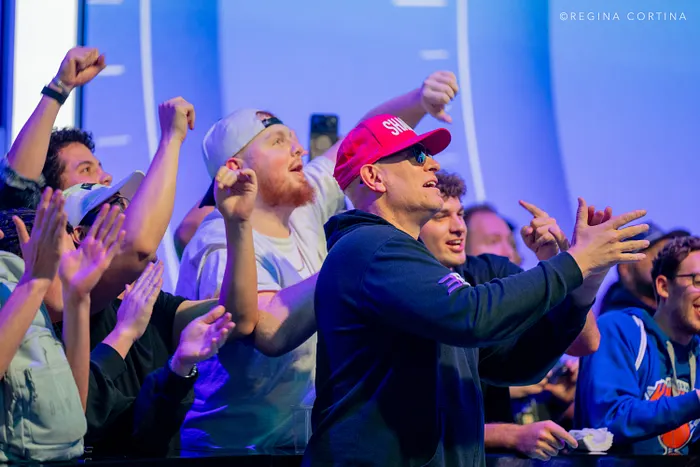
So, who is the expert picking? After correctly predicting Nguyen’s victory in 2016, Blay isn't sitting on the fence; he's backing Greg Mueller to become poker's next world champion.
"Nobody is going to accuse me of making the 'safe' pick," says Blay. "If you're betting purely by the numbers, Jumalon is the clear favorite. He starts with more than a third of the chips, and my simulations had him winning over 40% of the time. Picking anyone else is, mathematically speaking, swimming upstream."
"But where's the fun in simply predicting the favorite? The player who kept jumping off the page in my simulations was Greg Mueller. Time after time he found a way to outperform his chip stack, and there's a reason for that. Experience matters, especially under the brightest lights in poker."
"The player who kept jumping off the page in my simulations was Greg Mueller."
"Would I be shocked if Jumalon wins? Of course not. The numbers say he probably will. But if I'm planting my flag on one player to beat the odds, I'm going with the player who quietly crushed my simulations. So here's my official prediction: Greg Mueller for the win, baby!"
2026 WSOP Main Event Final Table Player Profiles
- Lucas Jumalon → Click Here
- Rami Hammoud → Click Here
- Jamie Shaevel → Click Here
- Greg Mueller → Click Here
- Michael Gagliano → Click Here
- Mario Boos → Click Here
- Lauri Saaskilahti → Click Here
- Han Feng → Click Here
- Evagoras Evagorou → Click Here
Train With Realistic Bots on Advanced Poker Training
If you'd like to train against bots built with the same tools and expertise used in this WSOP Main Event simulation, head over to pokertraining.com.
By offering human-like bots that deviate from GTO lines and make the same real-world mistakes we all do in home games (or I do, anyway), it's a great option for sharpening your skills against AI opponents trained on real poker data.
For more information, check out our full review, or click the button below to head over to the site and get started.