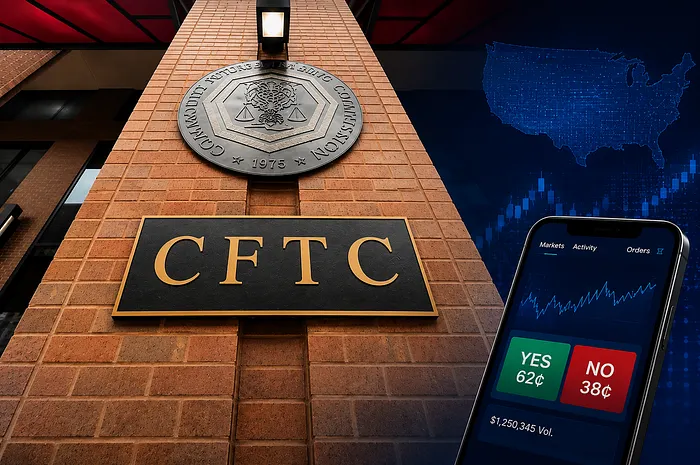
The Commodity Futures Trading Commission’s newly constituted Innovation Advisory Committee concluded its inaugural meeting on Aug. 20 with an unusually broad discussion of prediction markets. The approximately hour-long session brought together operators of regulated event-contract exchanges, traditional derivatives-market executives, cryptocurrency firms, academic researchers and leaders from the sports-betting industry.
The discussion was not organized around a single pro- or anti-prediction-market position. Instead, it exposed a more technical set of disagreements: how quickly new contracts should reach the market, what degree of susceptibility to manipulation should prevent a contract from being listed, whether federal regulation displaces state gaming law, and what protections should apply when retail customers access event contracts.
There was also substantial common ground. No participant defended manipulative trading, and speakers generally recognized that at least some event contracts can produce useful forecasts or permit more direct forms of hedging. The harder question was where regulators should draw the boundary between those products and contracts whose informational value is limited because one person, or a very small group, can determine the outcome.
Who Participated in the Prediction-Market Discussion?
Before turning to the substance of the discussion, it is worth identifying who was at the table. Regular followers of the prediction-market industry will likely recognize many of them, but for readers who do not, the following overview lays out the principal participants and the backgrounds that help explain their respective horses in this regulatory race.
Name
Role / Background
Walt Lukken
President and CEO of the Futures Industry Association and a former acting CFTC chairman
Michael S. Selig
CFTC chairman and former chief counsel of the SEC’s Crypto Task Force
Michael Passalacqua
Senior adviser to Selig and the committee’s designated federal officer; previously a financial-regulatory lawyer focused on digital assets
Luke Hoersten
Founder and CEO of Bitnomial, a CFTC-regulated crypto derivatives exchange and clearing business now owned by Kraken parent Payward
Luana Lopes Lara
Co-founder of Kalshi; an MIT-trained computer scientist and mathematician who previously worked at Bridgewater, Citadel and Five Rings Capital
Craig Donohue
CEO of Cboe Global Markets, former CEO of CME Group and former chairman and CEO of the Options Clearing Corporation
Terry Duffy
Chairman and CEO of CME Group, one of the world’s largest derivatives marketplaces
Harry Crane
Rutgers University statistics professor and co-director of graduate programs in financial statistics and data science, with nearly two decades of work involving prediction markets
Vlad Tenev
Co-founder, chairman and CEO of Robinhood, a major retail broker and prediction-market distributor
Brian Armstrong
Co-founder and CEO of Coinbase
Don Wilson
Founder and CEO of quantitative trading firm DRW
Jason Robins
Co-founder and CEO of DraftKings
Matt King
CEO of Fanatics Betting & Gaming and former CEO of FanDuel
Tom Farley
CEO of digital-asset exchange Bullish and former president of the New York Stock Exchange
Shayne Coplan
Founder and CEO of Polymarket, the on-chain prediction market launched in 2020
Christian Genetski
President of FanDuel and a longtime legal and regulatory strategist in U.S. online gaming
Selig Outlines a Three-Part Regulatory Roadmap
The meeting took place as prediction-market volume and product variety have expanded sharply. In its June proposal to amend CFTC Rule 40.11, the Commission reported that trading volume on CFTC-registered prediction markets exceeded $25 billion in 2025, while also acknowledging that event contracts remained small relative to the wider futures market.
Selig used his opening remarks to outline a three-part policy program. First, the CFTC has proposed defining terms and public-interest criteria used when reviewing contracts involving gaming, war, terrorism, assassination or unlawful activity. Second, the Commission has proposed a modernized reporting framework for fully collateralized event contracts. Third, Selig said the agency expects to propose amendments to Parts 38 and 40 of its regulations governing contract listings, product governance, market design, incentive programs and consumer protection.
Summary of the Three-Part Policy Program
Defining terms and criteria used when reviewing contracts on sensitive topics.
A modernized reporting framework for collateralized event contracts.
Amendments to Parts 38 and 40 of its regulations.
That framework supplied the institutional backdrop for the later discussion. Selig’s approach treats event contracts as derivatives within the CFTC’s established system of federally regulated designated contract markets, or DCMs. Several states and gaming regulators continue to dispute the extent to which that federal framework preempts their own laws, particularly when the underlying event is a sporting contest.
Lukken, who moderated the session, approached the issue from a longer historical perspective. He noted that the CFTC first approved a prediction market in 2004 and issued a concept release on event contracts in 2008. He asked whether prediction markets should be understood as substitutes for conventional derivatives or as complementary instruments capable of addressing risks for which traditional contracts are poorly suited.
Federal Regulation and the Speed of Self-Certification
Hoersten opened the participant discussion by emphasizing market structure. Bitnomial provides exchange, clearing and other infrastructure to outside businesses, giving Hoersten an interest in rules that do not assume every prediction market will follow the same vertically integrated, direct-to-consumer model. He urged the CFTC to preserve flexibility for multiple ways of connecting exchanges, clearinghouses and intermediaries.
Lopes Lara then described Kalshi’s decision to seek federal regulation from the company’s inception in 2018. In her account, the firm’s experience demonstrated both the value and the cost of regulation: Kalshi spent years obtaining CFTC approval and later sued the agency over election contracts, while offshore platforms grew without the same constraints. She argued that U.S. consumers subsequently moved toward regulated domestic platforms because they valued oversight and consumer protection.
Self-certification emerged as the first major point of disagreement. The process permits a DCM to certify that a new contract complies with the Commodity Exchange Act and CFTC regulations without waiting for affirmative preapproval. Lopes Lara argued that speed is essential because news-driven markets can lose much of their value if they are introduced only after a lengthy review.
Duffy presented the opposing concern. He said approximately 2,500 event contracts had been self-certified since January 2025 and that none had been opposed by the CFTC. In his view, some violated Core Principle 3, which requires a DCM to list only contracts that are not readily susceptible to manipulation. He also contrasted the rapid introduction of some event contracts with the longer review applied to proposed CME products, arguing that inconsistent treatment could weaken both competition and market integrity.
Donohue introduced a related but distinct legal problem. Although generally supportive of self-certification, the Cboe chief argued that contracts tied to individual securities or securities indexes may fall within definitions administered by the Securities and Exchange Commission rather than the CFTC. His point was narrower than a general objection to prediction markets: innovation still has to respect statutory boundaries between the two federal regimes.
Insider Trading, Mention Markets and Contracts Controlled by One Person
The sharpest exchange followed Duffy’s reference to three recent controversies: alleged trading based on classified information about the U.S. operation to capture Venezuelan leader Nicolás Maduro, suspicious trading by a White House teleprompter operator on words President Donald Trump would say, and sports contracts whose outcomes could be materially affected by a single participant.
Selig interjected that the products Duffy cited had not been listed in the United States and called the characterization “fake news.” The distinction between the examples is important. The Maduro trades occurred on Polymarket’s international platform; the Justice Department has charged a U.S. soldier with using classified information to earn more than $400,000 from those positions. The teleprompter-related trades, however, reportedly occurred on the CFTC-regulated Kalshi platform. Kalshi said its surveillance systems detected the activity, froze the account and referred the matter to the CFTC.
When Lopes Lara asked whether CME had ever experienced manipulation, the exchange became personal. Duffy replied that CME employed more regulatory personnel than Kalshi’s entire staff; Lopes Lara answered that the difference might demonstrate Kalshi’s efficiency, and Duffy questioned the credibility of its markets. Robins later urged the committee to avoid attacks on competitors’ business models, arguing that they distracted from substantive policy formation.
Tenev offered a less categorical criticism of mention markets, in which traders take positions on whether a person will say a particular word or phrase. He acknowledged their entertainment value but observed that audience members can intentionally or unintentionally prompt a speaker, while insiders may possess advance access to prepared remarks. Tenev therefore argued that the CFTC had not yet identified an appropriate boundary for the category.
Armstrong proposed a more general three-part test for novel contracts: whether a market produces a specific public harm, whether the market has a direct causal relationship to that harm, and how readily its outcome can be manipulated. He favored a presumption that contracts should be allowed unless a concrete harm could be identified, but accepted that single-person control should weigh heavily in the analysis.
Wilson applied that reasoning to the CFTC’s enforcement action against former Congressman George Santos. The agency found that Santos traded a Kalshi contract on whether he would attend the 2026 State of the Union while publicly signaling that he might attend and privately controlling the decisive outcome. Wilson credited Kalshi and the CFTC with detecting and policing the conduct, but argued that a contract offering little public value and near-total control to one person should not have been listed at all.
Crane pushed in the opposite direction on some sensitive categories. The Rutgers statistician agreed that contracts involving war, terrorism and assassination require special care, yet argued that their potential economic exposure and informational value make categorical prohibition costly. For Crane, the sensitivity of a subject may create a need for better product design and oversight rather than automatically eliminating the market.
Are Prediction Markets Useful or Merely Novel?
Despite disagreement over particular contracts, several participants distinguished economically meaningful prediction markets from novelty products.
Lopes Lara pointed to elections, Brexit and other discrete events that can affect portfolios but are difficult to hedge directly through conventional instruments. She also argued that most visitors to Kalshi consume market probabilities without placing a trade, giving contract prices a broader informational function.
Wilson similarly cited Brexit and Federal Reserve decisions as examples of useful contracts. In his assessment, a binary market on whether the Fed will change interest rates can coexist with federal-funds futures because the simpler product serves a different group of users. He contrasted those contracts with the Santos market, which he placed in a lower-value category that the industry would benefit from excluding.
Farley argued that financial innovations have historically enlarged markets rather than merely shifting activity between incumbent firms. He accepted that mistakes would occur during product development, but warned that excessive domestic restriction could push activity toward offshore platforms that remain accessible to Americans using virtual private networks.
Coplan likewise described prediction markets as an experimental asset class whose early implementation would inevitably be imperfect. Responding to concerns surrounding the Maduro case, he said Polymarket had cooperated with the Commission and law enforcement and had invested in proprietary on-chain surveillance. He argued that public blockchain records provide an unusually complete trading history for anomaly detection, while acknowledging that the industry should be held accountable for mistakes and weaknesses.
The session showed that the most important regulatory question is not whether prediction markets have value. It is whether a contract’s design creates information and hedging benefits that justify its risks of manipulation, insider trading and consumer harm.
The final area of broad concern was the treatment of retail customers.
Tenev noted that customer-identification requirements may differ depending on whether an individual accesses a DCM directly or trades through a futures commission merchant, or FCM. Because employer information can be relevant to identifying conflicts and potential insider trading, he favored consistent standards across both routes rather than allowing regulatory arbitrage based on the customer’s chosen intermediary.
Robins agreed that comparable retail activity should receive comparable protection. His principal intervention, however, was procedural: a committee containing traditional exchanges, prediction-market startups and sportsbook operators would be more productive if it focused on policy standards instead of commercial rivalries.
King drew on his experience leading both Fanatics Betting & Gaming and, previously, FanDuel. He argued that most customers may use event contracts for information, profit or entertainment without serious harm, but that a smaller group will develop problematic behavior. Minimum standards for responsible trading, he said, could protect those customers while reducing the likelihood of a later political backlash driven by preventable cases of financial harm.
Genetski, speaking from the perspective of FanDuel, reached a similar conclusion. As a comparatively new participant in prediction markets but a longstanding operator in regulated sports betting, he emphasized clear rules, equal competitive conditions, advertising standards, market integrity and consumer trust.
A Debate Over the Threshold, Not the Existence, of Regulation
The session ended without a formal recommendation, but it clarified the structure of the policy dispute. The principal division was not between regulation and deregulation. It concerned the threshold a contract must meet before it may be listed, the amount of discretion exchanges should exercise through self-certification, and whether the same federal framework can govern products ranging from macroeconomic hedges to highly specific cultural or speech-related events.
Selig closed by emphasizing cooperation between industry and government and the need to defend the CFTC’s jurisdiction in ongoing litigation. Passalacqua then reminded the public that written comments connected to the meeting could be submitted through Aug. 27 and formally adjourned the inaugural session.
The CFTC’s forthcoming rules, and the courts considering state challenges, will determine how much of the committee’s emerging consensus becomes law. For now, the meeting suggests that prediction markets have moved beyond the preliminary question of whether regulators should take them seriously. The more difficult inquiry is how to separate their forecasting and risk-management functions from contracts whose design creates disproportionate opportunities for manipulation, insider trading or consumer harm.
Prediction markets involve risk and are not suitable for everyone. While many of the best prediction platforms offer tools to make informed trades, outcomes are never guaranteed, and users should never risk more than they can afford to lose. Always trade responsibly. Additionally, platform availability and legal status vary by region. It is your responsibility to check local laws and verify that you are legally allowed to use a given prediction market platform before participating.

 button in Safari