button in Safari
Trump to Meet Prediction Market Executives at White House

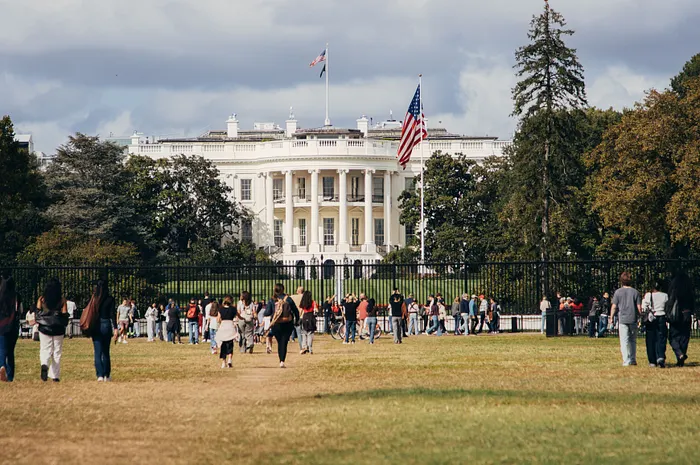
Table Of Contents
President Donald Trump is expected to meet with executives from the cryptocurrency and prediction market industries at the White House on Wednesday, August 19, marking the administration's most visible engagement yet with the rapidly expanding event-contract sector.
Politico first reported the planned gathering, citing three people familiar with the preparations. Subsequent reporting indicated that Trump and Commodity Futures Trading Commission Chair Michael Selig are expected to participate.
The meeting is reportedly scheduled for 2:30 p.m. at the Eisenhower Executive Office Building, adjacent to the White House. Invitees include representatives from Kalshi, Coinbase, Ripple, Chainlink, Andreessen Horowitz, Paradigm, and the digital-asset trade association, The Digital Chamber. Securities and Exchange Commission Chair Paul Atkins is also expected to attend.
The inclusion of Kalshi places prediction markets alongside substantially larger segments of the financial technology industry. It also reflects the increasingly close relationship between the sector and a Trump administration that has generally favored expanding federally regulated event markets.
What Are Prediction Markets?
Prediction markets allow users to trade contracts based on the outcome of future events. A contract typically pays $1 if a specified event occurs and nothing if it does not. The trading price is therefore commonly interpreted as the market's estimate of the probability of that outcome.
Platforms now offer contracts covering elections, economic data, sporting events, court decisions, and other public developments. Kalshi operates as a federally regulated designated contract market under the CFTC, the same agency that oversees futures and derivatives markets.
The industry's rapid growth has created a dispute over how these products should be classified. Prediction market companies generally describe event contracts as financial derivatives that aggregate information and help users manage risk. State gaming regulators and tribal organizations have argued that at least some contracts, especially those based on sports, function more like conventional wagers and should comply with state gambling laws.
The Trump administration has generally adopted the former interpretation. Federal regulators have supported the argument that CFTC-regulated exchanges fall primarily under federal commodities law, including in litigation brought by states seeking to restrict prediction market operations. PBS described the administration's intervention earlier this year as a significant development in the jurisdictional dispute.
CFTC Meeting Will Follow White House Gathering
The White House gathering will take place one day before the inaugural meeting of the CFTC's Innovation Advisory Committee.
According to the CFTC's official agenda, the August 20 meeting will examine cryptocurrency regulation, artificial intelligence in financial markets, and prediction markets. Its final session is titled "Prediction Markets: Innovation, Jurisdiction, and the Future of Event Contracts."
The committee is expected to discuss the use of event contracts for price discovery, information aggregation, and risk management. It will also examine the respective authority of federal and state regulators, recent litigation, market surveillance, manipulation risks, and customer protections.
Scheduling the White House gathering immediately before that meeting gives industry executives an opportunity to speak with senior administration officials as the CFTC considers the principles that could govern future event contracts.
A More Established Place in Federal Policy
The meeting does not itself alter federal law or guarantee a favorable regulatory outcome. It does, however, demonstrate how far prediction markets have moved into mainstream policy discussions.
Only a few years ago, political event contracts faced significant resistance from federal regulators. Prediction market executives are now being included in White House discussions alongside major cryptocurrency companies, financial regulators, and venture capital firms.
For the Trump administration, the sector fits within a broader policy agenda that emphasizes financial innovation and competition with offshore markets. For prediction market companies, the relationship offers access to policymakers at a consequential stage in the industry's development.
The ultimate regulatory framework will still be determined through CFTC rulemaking, federal litigation, and potentially congressional legislation. The White House meeting nevertheless indicates that prediction markets are no longer being treated as a peripheral experiment. They have become an identifiable constituency within the administration's emerging financial technology policy.
Prediction markets involve risk and are not suitable for everyone. While many of the best prediction platforms offer tools to make informed trades, outcomes are never guaranteed, and users should never risk more than they can afford to lose. Always trade responsibly. Additionally, platform availability and legal status vary by region. It is your responsibility to check local laws and verify that you are legally allowed to use a given platform before participating.