button in Safari
Would You Find This Huge Bluff Against Jacks at a $10K Final Table?


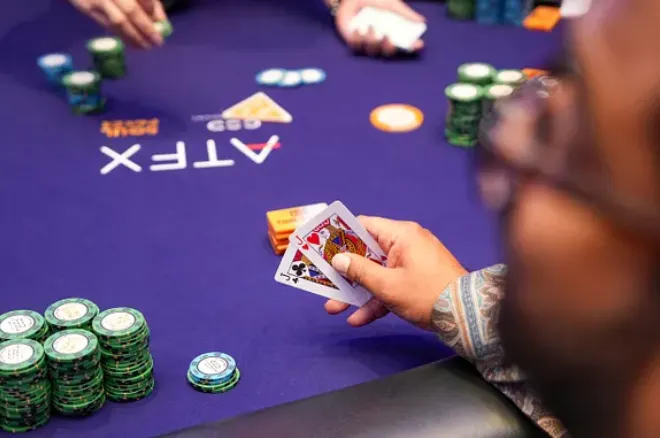
There are few tougher places to pull the trigger on a bluff than a $10,000 final table with hundreds of thousands of dollars on the line.
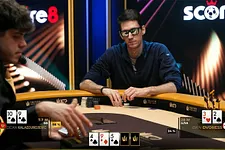
But that's exactly what Andrii Derzhypilskyi did against Tamas Adamszki in the $10,000 GGMillion$ final table, turning ace-high into a river bluff that put his tournament life at risk.
With nine players remaining and $409,882 awaiting the winner, Derzhypilskyi turned A♦4♣ into a bluff on the turn before jamming the river into Adamszki's J♦J♠.
Adamszki eventually found the fold, but did both players get it right?
With the help of GTO Wizard, the hand has been broken down street by street to see why Derzhypilskyi's bluff works, how ICM shaped the action and whether Adamszki was right to lay down his hand.
The Hand
Blinds were 30,000/60,000 with a 7,500 ante. Adamszki began the hand with 3,217,354 (53.6 BBs), in the small blind, while Derzhypilskyi had 1,921,868 (32BBs), in the big blind.
Adamszki looked down at J♦J♠ and opened to 210,000. Derzhypilskyi called with A♦4♣.
The K♦8♦2♠ flop saw Adamszki continue for 243,750 into 487,500, and Derzhypilskyi called.
Adamszki checked the 6♥ turn before Derzhypilskyi fired 390,000 into 975,000. Adamszki called, swelling the pot to 1,755,000.
The 2♦ completed the board. Adamszki checked for a second time and Derzhypilskyi went for it, moving all-in for his remaining 1,078,118.
After going into the tank, Adamszki folded his pocket jacks.
Did Derzhypilskyi Get Out of Line Preflop?
Not at all.
GTO Wizard approves Adamszki's raise with pocket jacks, although the solver actually mixes between raising and calling from the small blind.
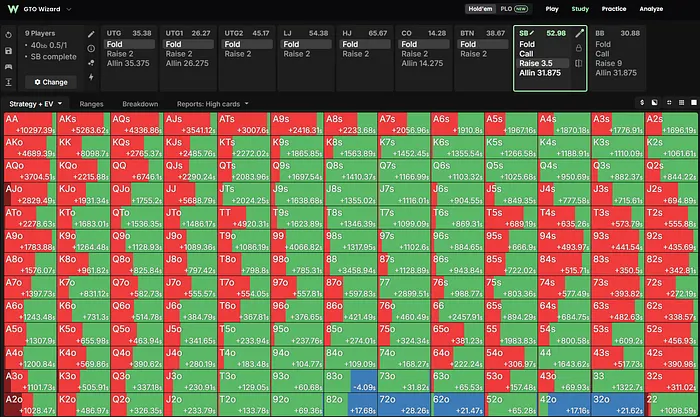
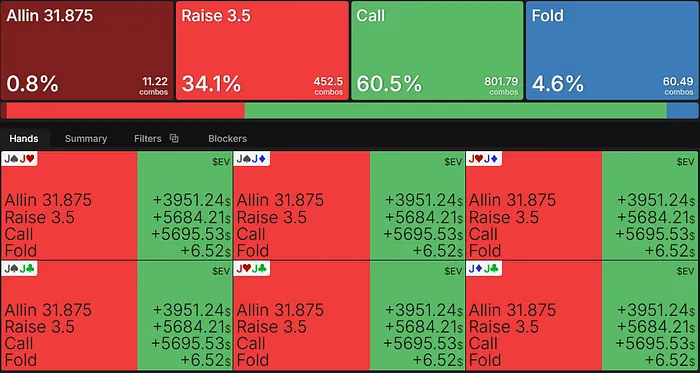
Calling generates slightly more $EV, but the difference is small enough that both options feature in the strategy.
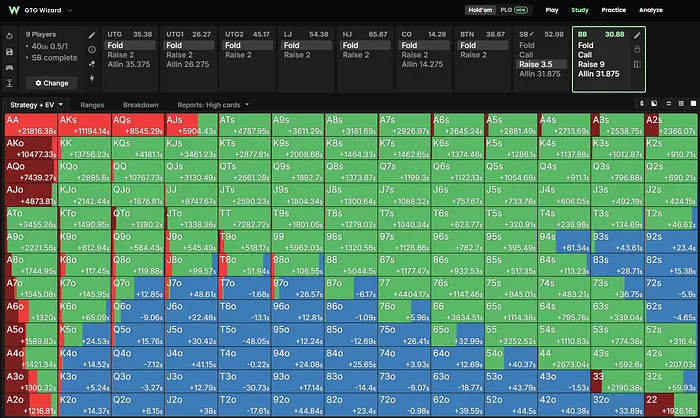
Derzhypilskyi's decision with ace-four offsuit is similarly close. No AxXx hands are folded from the big blind in this spot, with A♦4♣ mixing between calling and moving all-in.
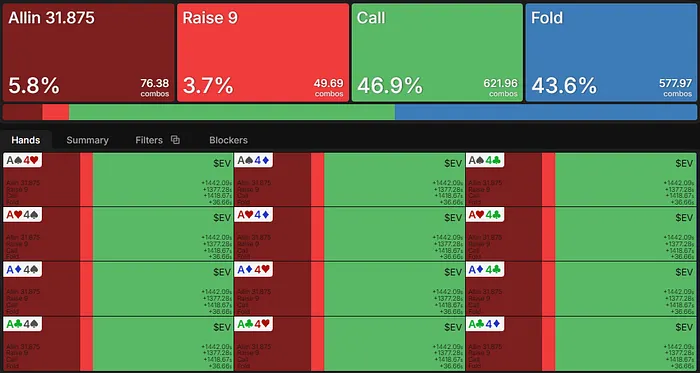
The shove produces slightly more $EV, but calling remains firmly within the solver's strategy.
So far, so good for both players.
Why Doesn't the Big Blind Raise the Flop?
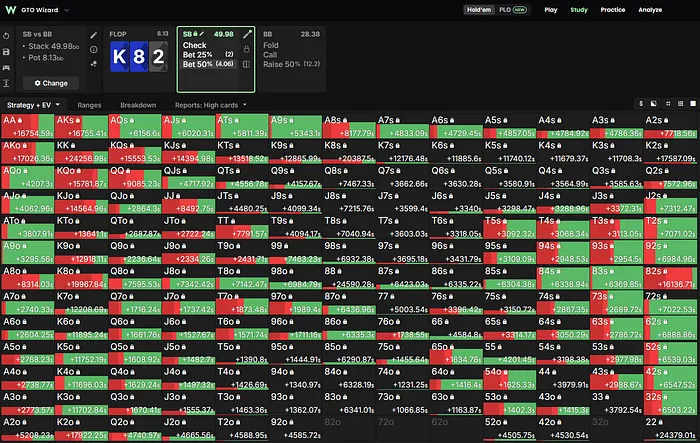
The K♦8♦2♠ flop is where things start getting more interesting. Despite Adamszki being the preflop aggressor, it is actually Derzhypilskyi in the big blind who holds many of the important range advantages. His range contains significantly more KxXx and 8xXx combinations than Adamszki's.
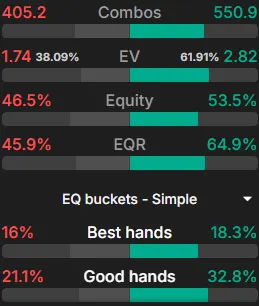
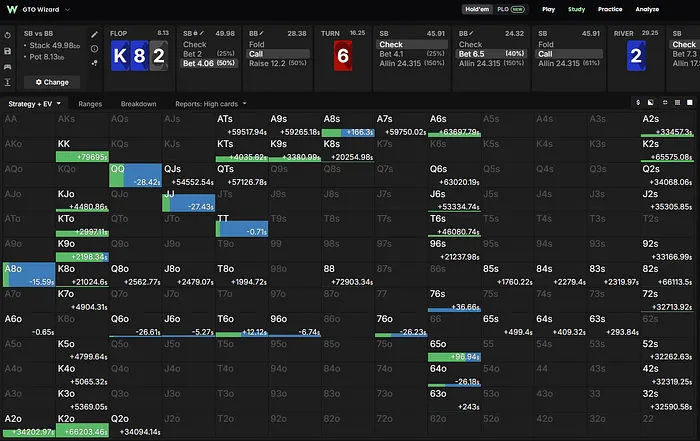
That means the small blind cannot simply fire away. GTO Wizard checks 65.6% of Adamszki's range on this flop. When betting, the solver generally prefers a 25% pot sizing with medium-strength hands such as pocket jacks. Adamszki instead bet 50% pot.
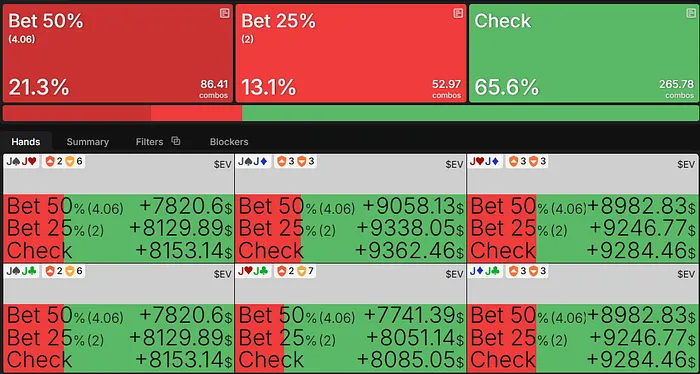
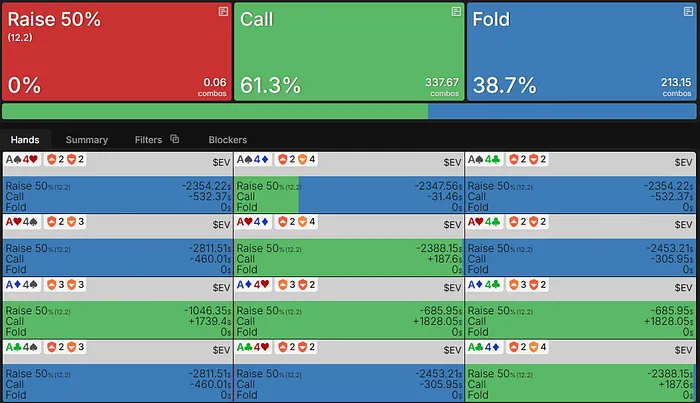
The bet itself is solver approved, but the sizing isn't ideal. Both checking and betting 25% generate more $EV with J♦J♠ than the larger sizing Adamszki chose. Derzhypilskyi's call with A♦4♣, however, is right on the money.
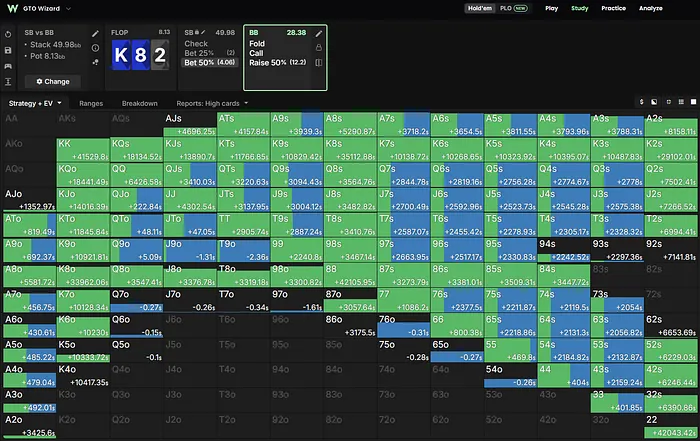
Interestingly, the solver doesn't raise anything against the half-pot bet despite the big blind's range advantage. And that's down to ICM.
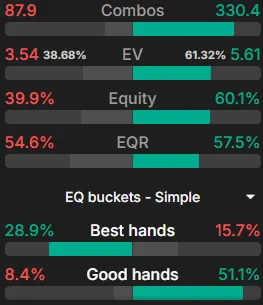
Derzhypilskyi has a 1.72 Bubble Factor against Adamszki, who covers him. In simple terms, losing chips is approximately 1.72 times more costly than gaining the same number.
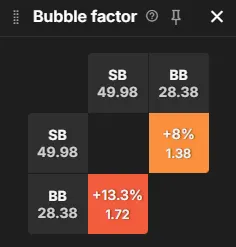
That forces the shorter stack to avoid high-variance raises and continue with a call-or-fold strategy instead.
The diamond also matters. Ace-four combinations without a diamond prefer folding, while every A4o combination containing a diamond is a profitable call.
The Bluff Begins on the Turn
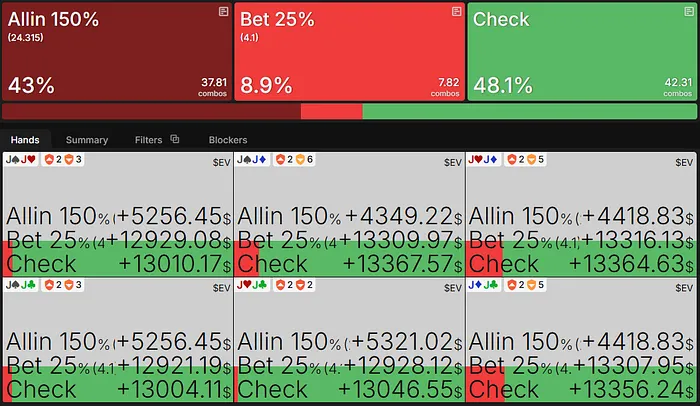
The 6♥ doesn't dramatically change the board, and Adamszki checks his pocket jacks, which GTO Wizard completely agrees with.
All combinations of pocket jacks generate the most $EV by checking, while the big blind continues to hold many of the overall range advantages.
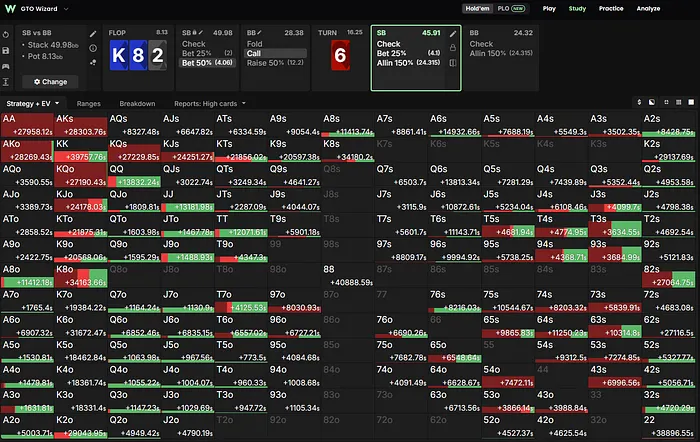
Adamszki's check also removes some of the strongest hands from his range and that gives Derzhypilskyi the green light to become more aggressive. He bets 390,000, exactly 40% of the pot, with his ace-high.
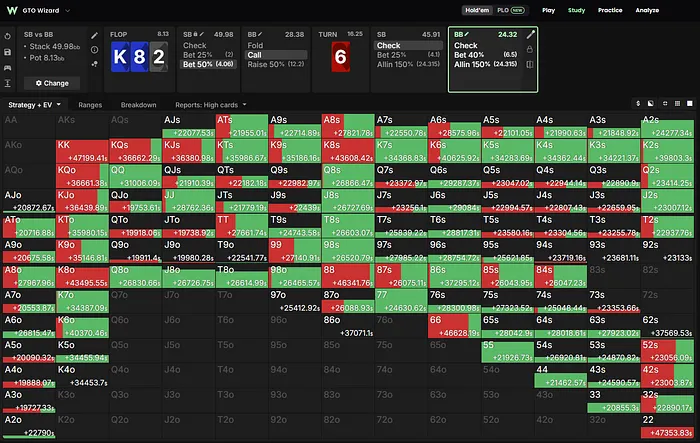
This isn't simply an ambitious stab as GTO Wizard prefers the 40% sizing with A♦4♣, with betting producing more $EV than checking.
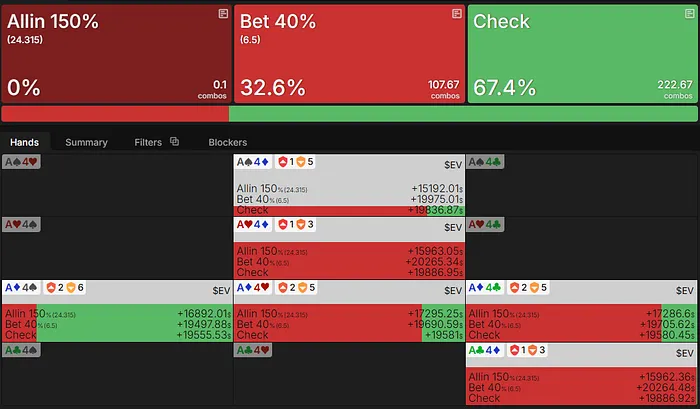
Adamszki isn't going anywhere yet. Pocket jacks are a pure call against this sizing, with all third-pair-or-better hands continuing.
Would You Pull the Trigger on the River?
The 2♦ is the river and Adamszki checks, as the solver recommends with pocket jacks and the majority of his remaining range.
Derzhypilskyi has ace-high and 1,078,118 remaining, with 1,755,000 already sitting in the middle. This is where Derzhypilskyi's line comes together
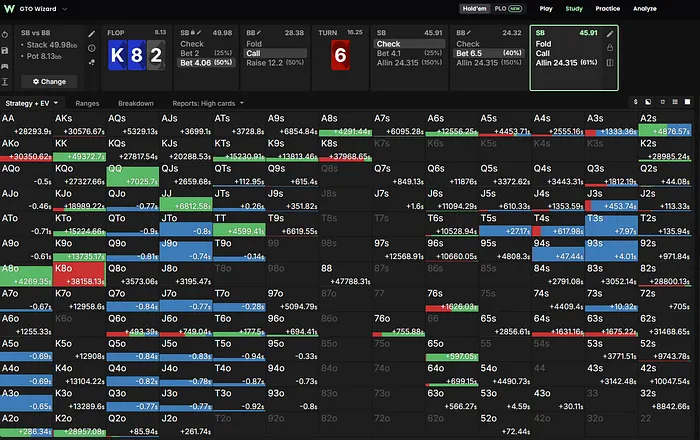
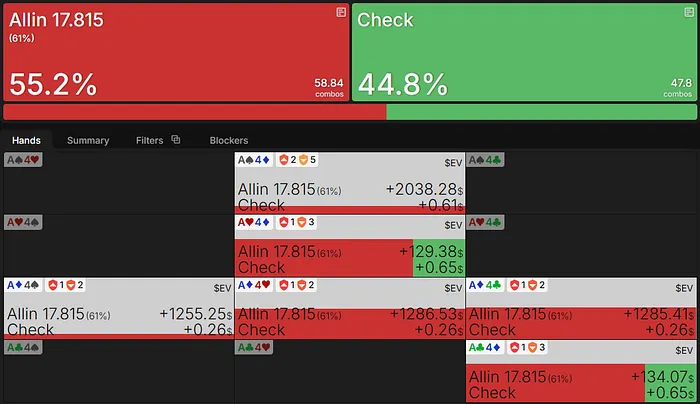
The solver wants the big blind to move all-in with a massive 55.2% of its range and the reason is the third diamond.
Derzhypilskyi arrives at the river with significantly more flushes than Adamszki. That advantage in nutted hands allows the big blind to apply maximum pressure with a polarized range containing both strong value hands and bluffs.
The A♦ blocks some of Adamszki's strongest possible calls while providing no showdown value of its own. GTO Wizard shows that moving all-in generates significantly more $EV than checking. Thus, Derzhypilskyi pulled the trigger.
Was Folding JJ Too Tight?
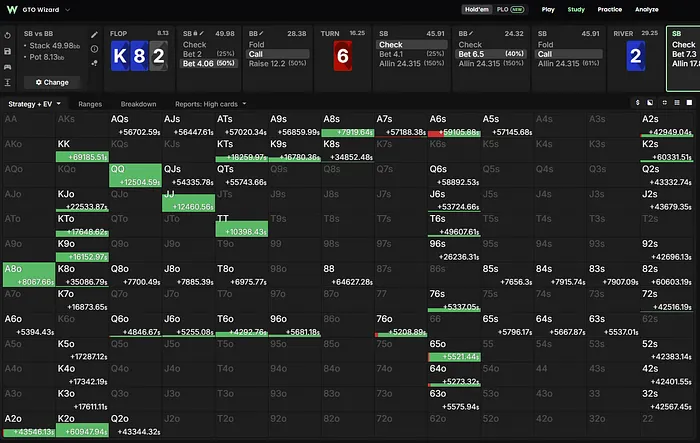
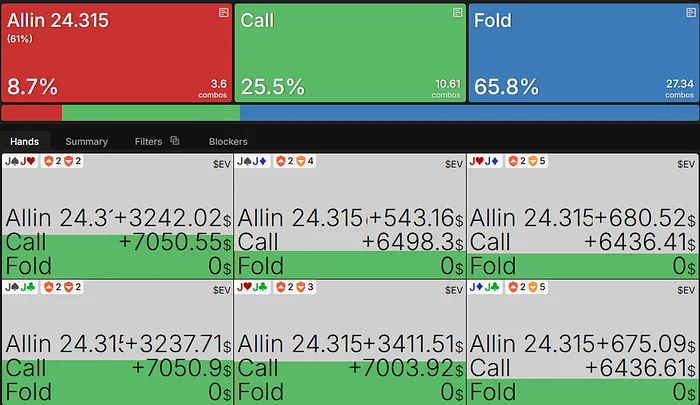
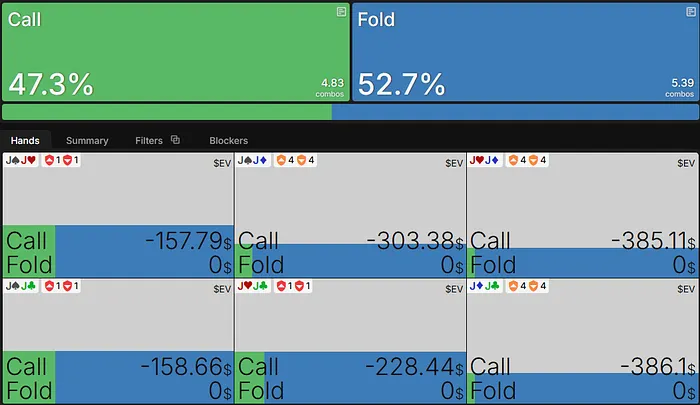
With more than 2.8 million chips in the middle after the shove, folding the jacks was correct.
GTO Wizard has Adamszki calling 47.3% of his range, largely with flushes, trips and top-pair hands. Pocket pairs below the king don't make the cut.
In fact, 10x10x through QxQx all lose $EV by calling the shove, making Adamszki's tank-fold with J♦J♠ the solver-approved decision. It's what makes the hand particularly impressive from both sides.
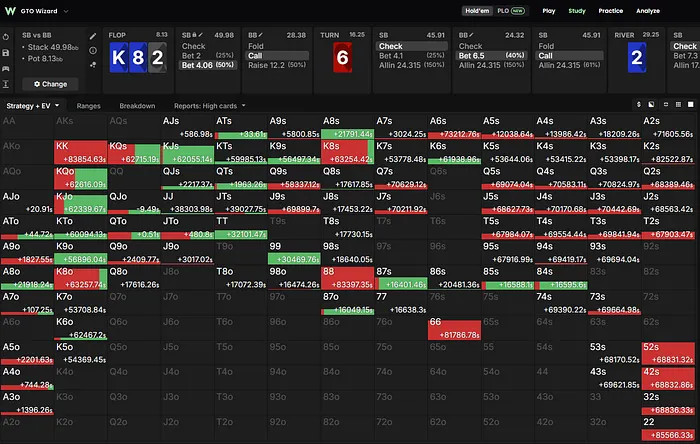
Derzhypilskyi recognized a river where his range could exert enormous pressure and found the all-in with ace-high.
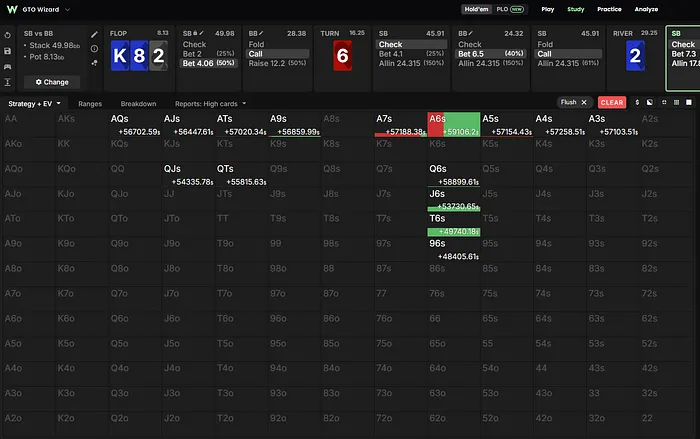
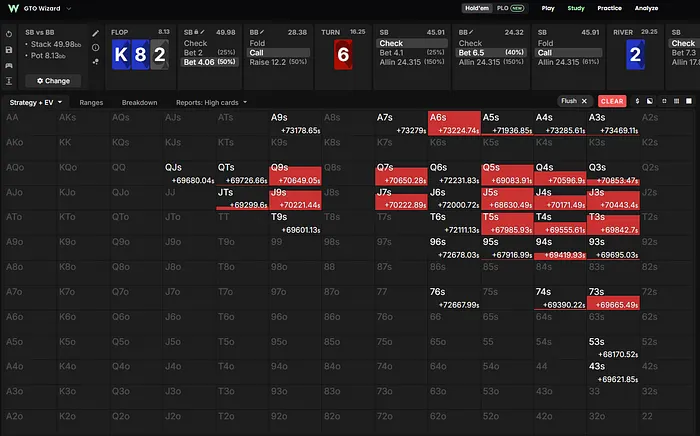
Adamszki, despite holding an a decent hand after calling the turn, recognized that he had slipped too far down his range to pay it off.
What Can We Learn From the Hand?
The hand is a great example of why final-table poker cannot be viewed purely through the strength of two hole cards.
Derzhypilskyi held the range advantage on several streets, but the 1.72 Bubble Factor prevented him from attacking aggressively on the flop. Once Adamszki checked the turn, that changed, allowing the big blind to start applying pressure.
The river diamond then shifted things even further in Derzhypilskyi's favour. His range contained considerably more flushes, giving him the value hands needed to support an aggressive all-in strategy.
His A♦4♣ became an excellent bluff candidate, while Adamszki's pocket jacks became a bluff-catcher that simply wasn't strong enough to continue.
Both players ultimately navigated a complicated final-table ICM spot extremely well.