button in Safari
Was Saaskilahti's Monster Main Event Hero Call GTO Wizard Approved?


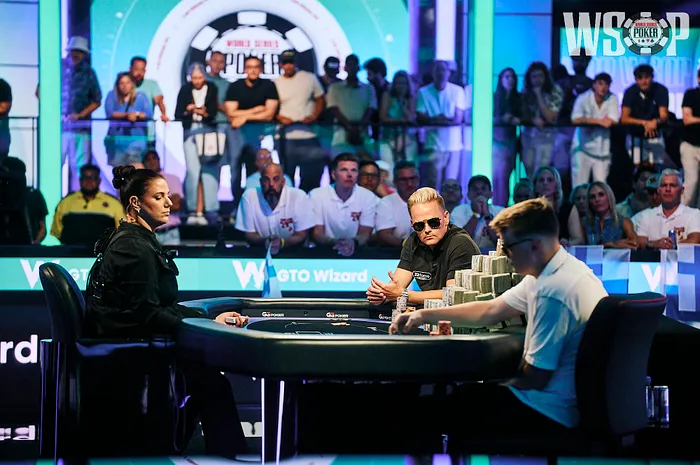
Table Of Contents
We've had the pros give their takes on Lauri Saaskilahti's hero call at the 2026 WSOP Main Event final table, but what does GTO Wizard think?
And were Lucas Jumalon's overbets GTO Approved en-route to winning $10,000,000 and being crowned poker's new world champion?
Let’s now use GTO Wizard to break down every street and see whether the solver agrees with how both players approached one of the biggest hands of the 2026 WSOP Main Event.
Pre-Flop Analysis
Heads-up with $10,000,000 on the line, Jumalon holds a slender chip lead over Saaskilahti.
- Lucas Jumalon (SB/BTN): 287M (71.8bb)
- Lauri Saaskilahti (BB): 266M (66.5bb)
Lucas Jumalon kicks off the hand by limping with Q♠5♦
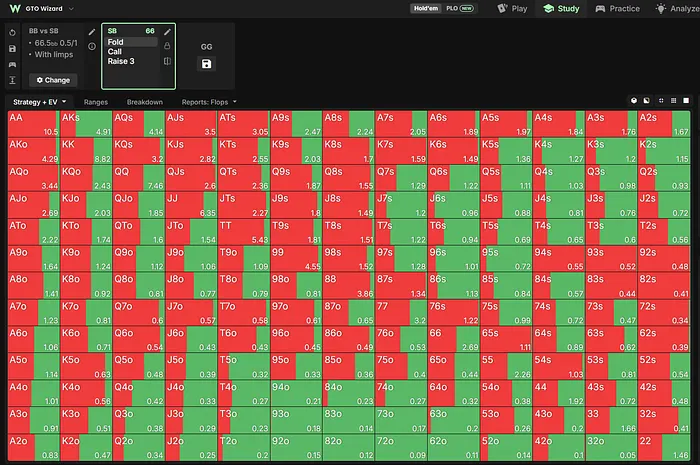
Q5o mixes between calling and raising to three big blinds, with both options generating the same EV.
The solver recommends three big blinds as the optimal open size. With the additional 1bb BB ante increasing the size of the initial pot, the SB is incentivised to enter with its entire range, resulting in zero folds in this spot.
Lauri Saaskilahti then checks back from the big blind with J♦3♦
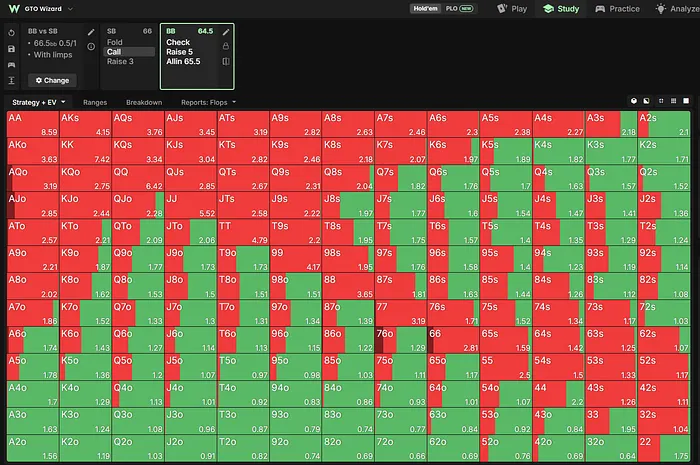
J3s mixes between checking back and raising to 5bb, with both options generating the same EV.
The solver prefers the larger 5bb raise size here, again because the BB ante increases the amount of dead money in the pot and rewards a larger isolation size.
Post-Flop Analysis
On a A♠K♠4♣ flop, let's take a look at the range comparison between the small and big blinds.
BB vs SB Flop Range Comparison:
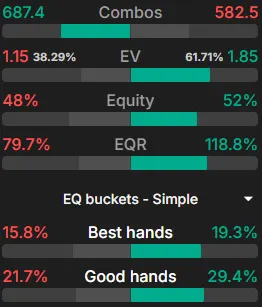
Saaskilahti checks with J♦3♦. The BB has no donk-betting strategy on this flop, as the SB holds the overall range advantage on this specific board.
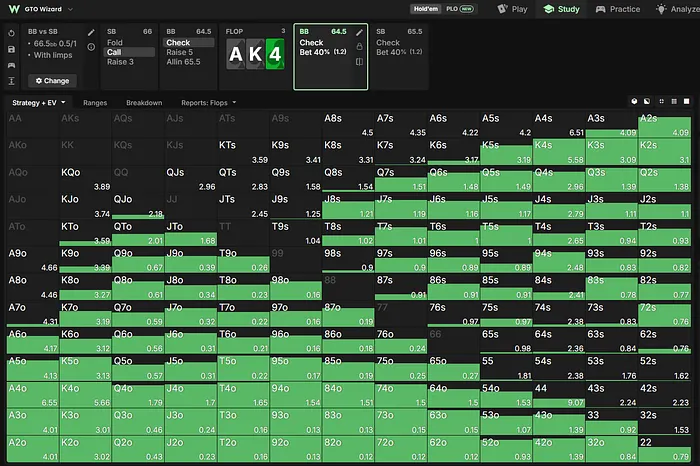
Jumalon then bets 4,000,000 with Q♠5♦. You can see that the SB still contains all of the strongest Ax and Kx hands that are missing from the BB’s range on this flop. This gives the SB a clear range advantage, with a much higher concentration of the strongest hands overall, allowing it to bet at a high frequency.
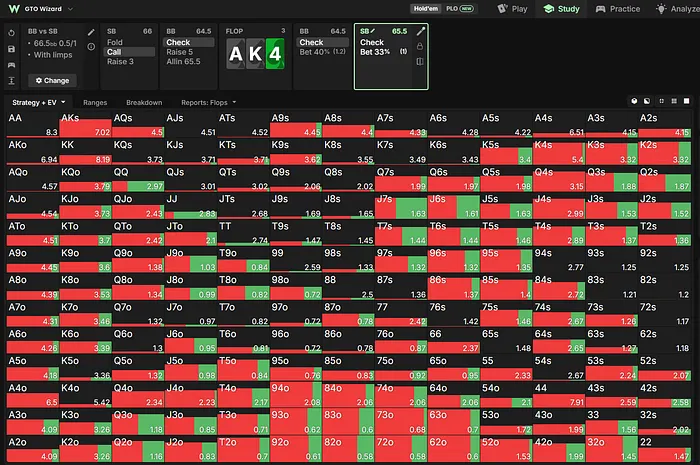
Recommended Strategy and EV for Q5o:
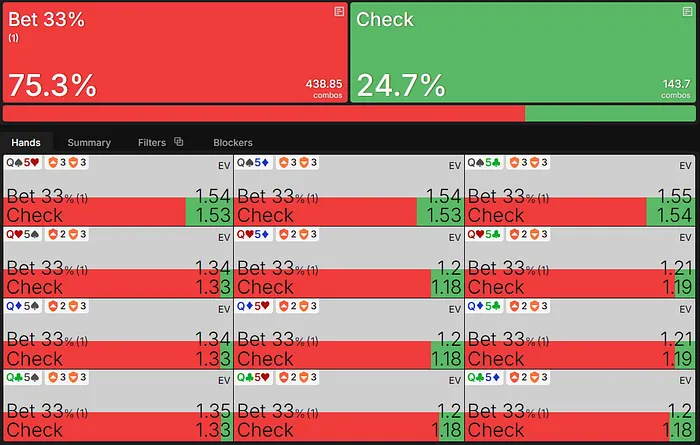
The solver bets 75% of its range using the 1bb sizing that Jumalon chose in game. All Q5o combos prefer betting at a high frequency, although the solver does mix in some low-frequency checks.
Saaskilahti then calls the bet. Unfortunately for Saaskilahti, his first major mistake of the hand comes on the flop, with the solver preferring to fold J♦3♦ vs Jumalon’s c-bet.
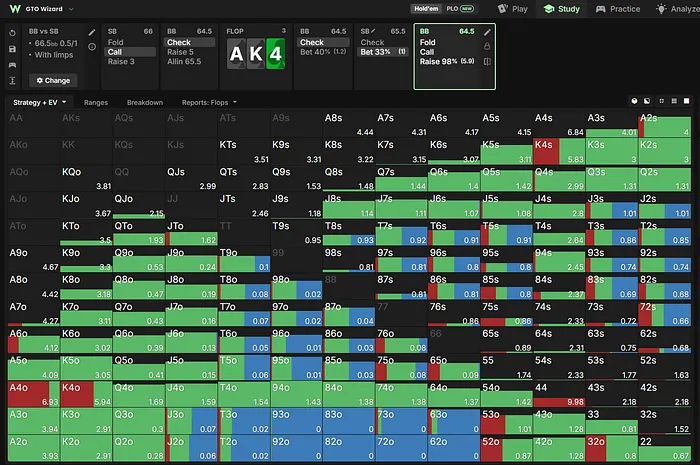
Recommended Strategy and EV for J3s:
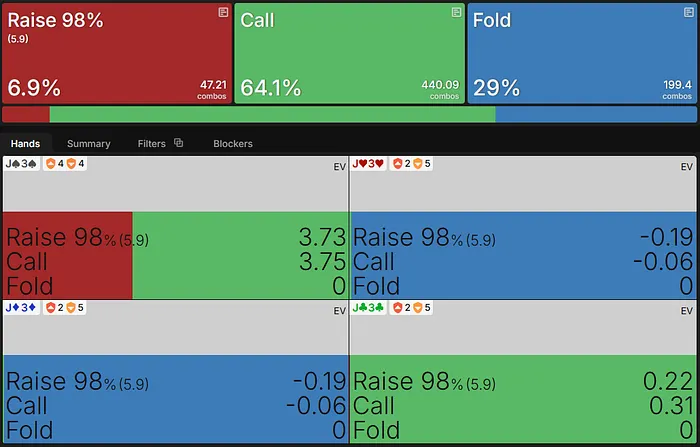
Above, you can see thatJ♠3♠ continues because it has a flush draw, while J♣3♣ can also continue due to the backdoor flush draw. However, the two J3s combos without any backdoor flush potential are pure folds vs this flop sizing.
I will need to nodelock Saaskilahti’s range to continue analyzing the rest of the hand, but first, let’s test whether J♦3♦ would still be a fold if Jumalon were c-betting his entire range using this size.
BB Strategy vs SB 100% C-Bet Range on This Flop:
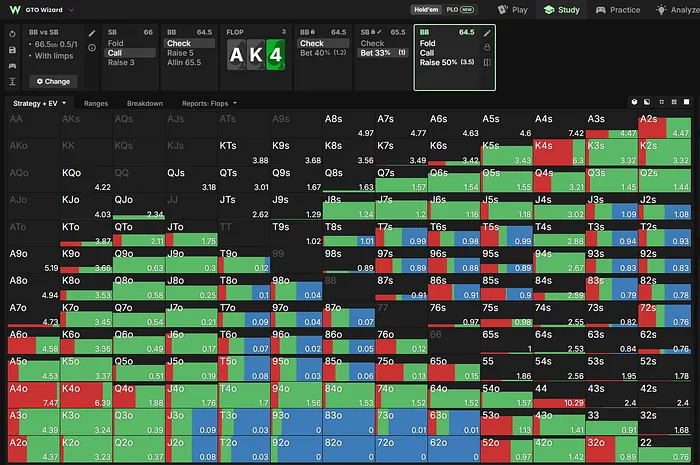
Recommended Strategy and EV for J3s:
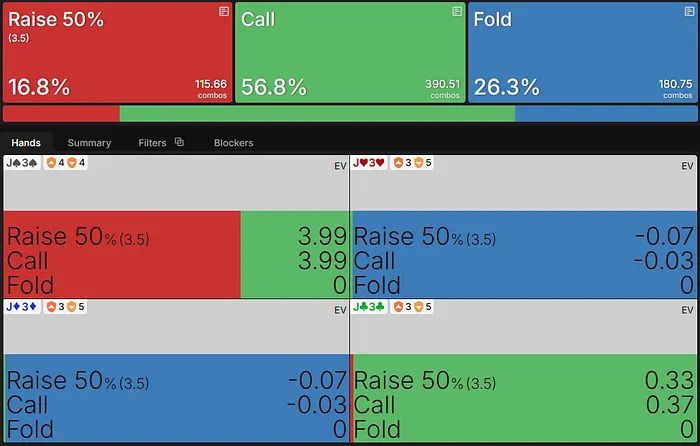
You can see that the big blind folds less frequently against a 100% c-bet range, but unfortunately for Saaskilahti, calling with J♦3♦ is still a losing play.
To analyze the rest of the hand using ranges that more accurately reflect what happened in game, I will nodelock Saaskilahti to continue more often overall, including with combos such as J♦3♦.
The turn brings the J♠ with 20,000,000 chips in the middle.
BB vs SB Turn Range Comparison:
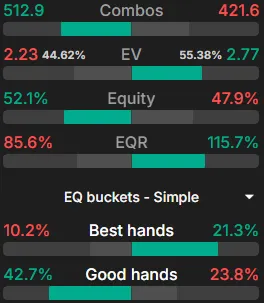
Saaskilahti checks. This is GTO Approved. Although this turn card shifts the equity advantage towards the BB, it is not enough for the solver to introduce any donk-bets. The SB still retains both the EV and EQR (Equity Realisation) advantage, allowing the BB to continue checking its entire range.
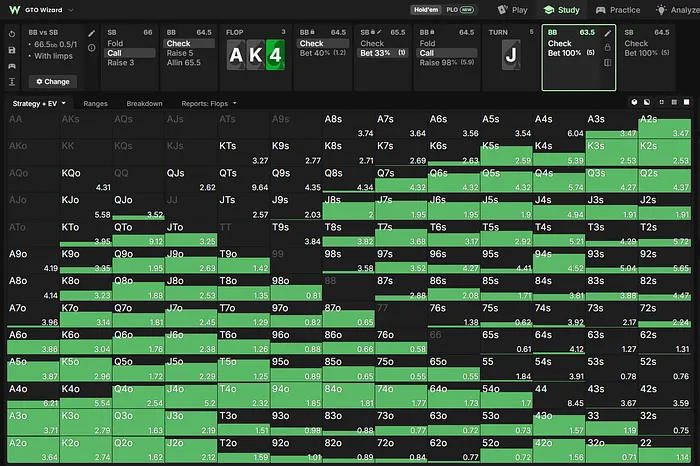
Jumalon then bets 40,000,000. The solver does not recommend using the 200% overbet sizing that Jumalon chose in game, with the 100% pot size being the preferred option on this turn card.
However, let’s take a deeper look at why the solver prefers the smaller sizing and how much EV Jumalon’s overbet actually sacrifices.
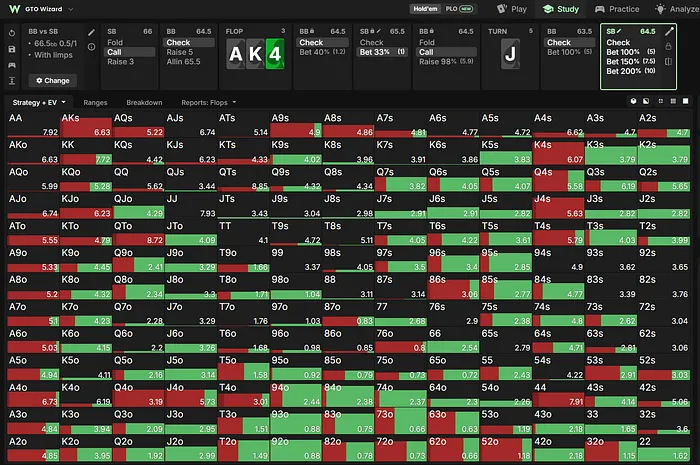
Recommended Strategy and EV for Q5o:
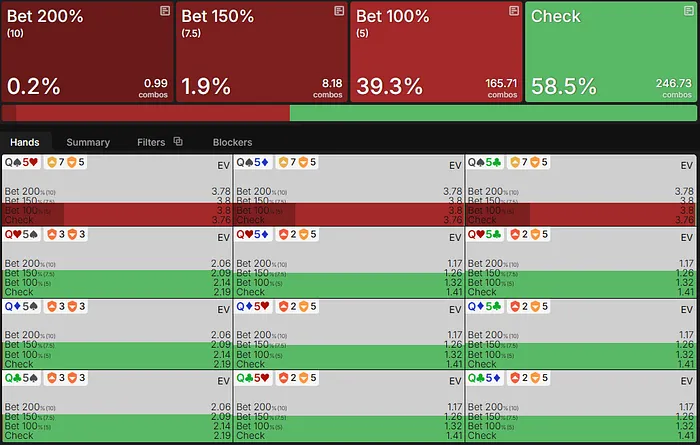
Above, you can see that all Q5o combos without the Q♠ prefer to pure check this turn, while the three Q5o combos containing the Q♠ want to pure bet.
Although the 100% and 150% sizings generate the highest EV overall, the 200% sizing that Jumalon used in game only sacrifices a small amount of EV and still performs better than checking.
I will therefore nodelock the SB range to use a mix of the 100% and 200% sizings, which should more closely reflect the strategy Jumalon was using in game.
Saaskilahti calls the bet. Unfortunately for Saaskilahti, this is another costly mistake.
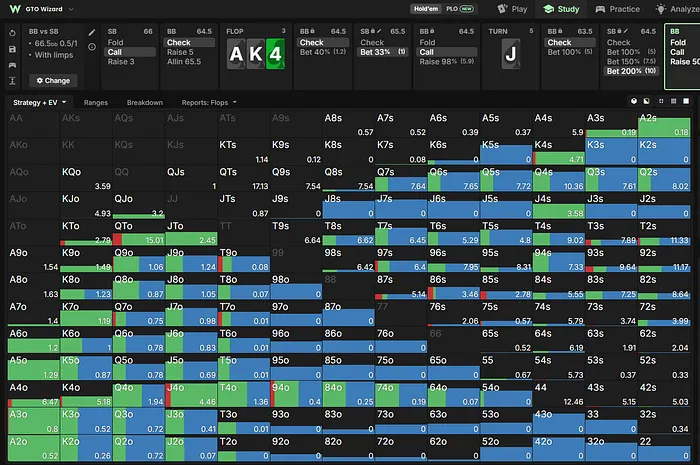
Recommended Strategy and EV for J3s:
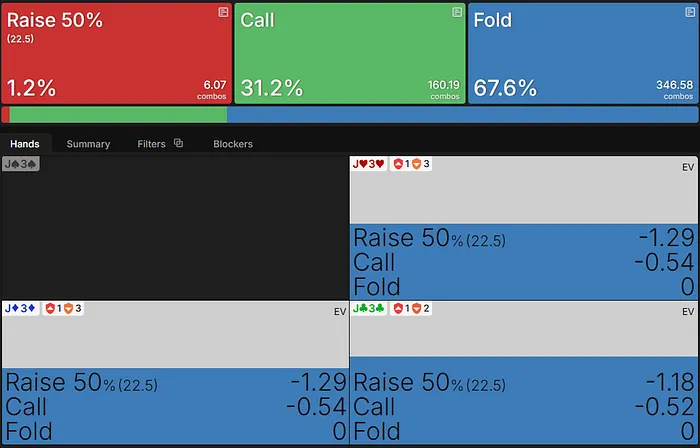
J♦3♦ is once again a pure fold vs this bet size, marking a second major mistake in the hand for Saaskilahti.
I’ll therefore nodelock his range again to include more calls with hands such as J♦3♦, allowing us to continue analyzing the hand using the strategy he actually employed in game.
The 6♠ completes the board and Saaskilahti checks. The solver now introduces some donk-betting on this river, primarily with flushes that improve when the off-suit combos complete their draws.
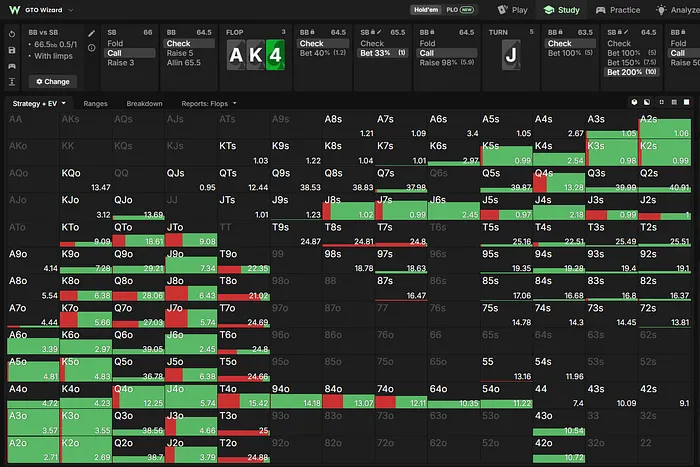
Recommended Strategy and EV for J3s:
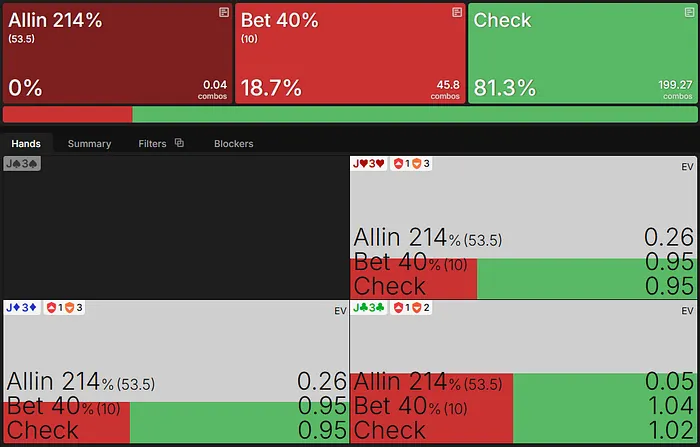
All J3s combos mix between checking and betting on the river, with some combos being used as bluffs to try and fold out hands such as Kx and Ax.
Jumalon then bets 180,000,000.
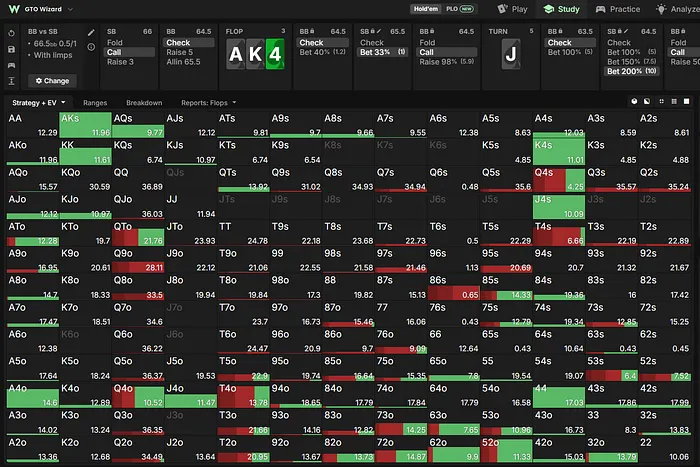
The solver recommends mostly mixing between checking and betting 67% pot on this river. However, it also incorporates the much larger 180% and 214% overbet sizings at a low frequency.
Recommended Strategy and EV for Q5o:
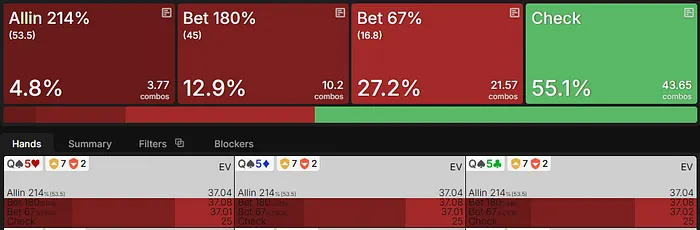
Lucas Jumalon shows exactly why he became the 2026 WSOP Main Event champion, finding the highest-EV play with Q♠5♦ by using the massive 180% pot overbet on the river.
Saaskilahti ultimately calls and loses the hand.
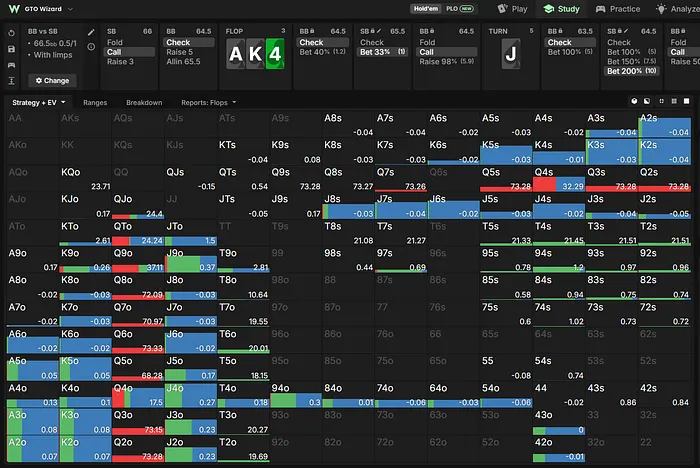
Recommended Strategy and EV for J3s:
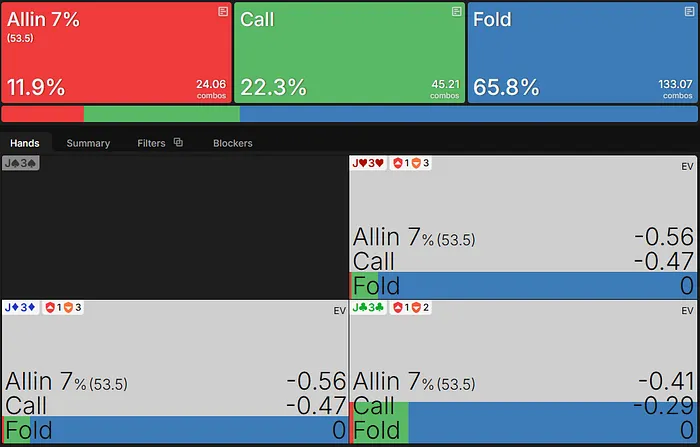
Three strikes and you’re out! Unfortunately for Saaskilahti, his third major mistake of the hand proved extremely costly, not only in game but also according to the solver.
Jumalon tables the nut flush, scooping the enormous pot and taking a commanding lead in the heads-up battle. It would prove to be the defining hand on his way to becoming the 2026 WSOP Main Event champion and claiming the $10,000,000 first-place prize.
Key Takeaways
- Preflop: Both players’ actions were GTO-approved, with Q5o limping and J3s checking both part of the optimal strategy.
- Flop: Jumalon correctly c-bet small with Q♠5♦, while Saaskilahti’s call with J♦3♦ was the first major mistake of the hand.
- Turn: The Q♠ makes Q5o a strong betting candidate. Jumalon’s 200% overbet wasn’t the solver’s preferred size, but still generated strong EV.
- Turn Call: Saaskilahti’s J♦3♦ was once again a pure fold vs the huge overbet, making this his second major mistake.
- River: Jumalon found the highest-EV play, using the 180% pot overbet with the nut flush.
- River Call: Saaskilahti’s final call was his third major mistake, completing an extremely costly sequence across all three postflop streets.
Overall, Jumalon applied maximum pressure and found the optimal river play, while Saaskilahti’s repeated over-defending ultimately cost him the defining pot of the 2026 WSOP Main Event.
Full Hand: (https://www.youtube.com/watch?v=OjAlvTqwQuc 11:56 Q5 vs J3)