button in Safari
Hit Frequency
Hit frequency is a metric used to show how often a spin of a slot game will end up in a winning combination.
This does not take into account how much is paid out when winning combinations land, but simply just how often a win can be theoretically expected. Hit frequency is commonly displayed as a percentage.
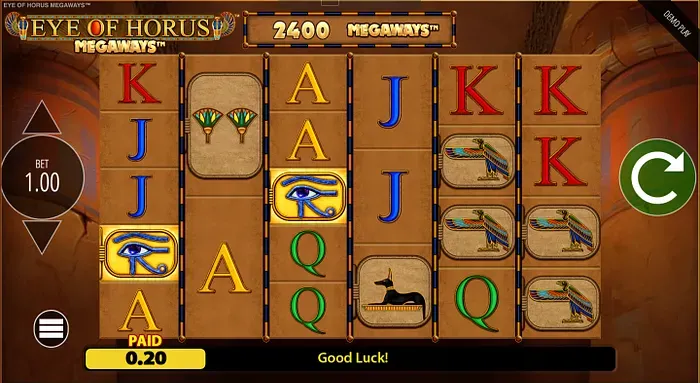
How Hit Frequency Works
Hit frequency, similar to slot payout percentage, for slots is a simple concept to understand. Players might want to know how often they can expect to win, regardless of how much is actually won. Shown as a percentage, hit frequency gives players a clear measure of how frequently they should win while playing a slot.
The calculation used to measure it is winning spins divided by total spins. Like return to player or slot volatility, hit frequency is calculated over hundreds of thousands of spins, and is not a direct payout metric that will be accurately represented in short-term sessions (for instance, over 50 spins).
Example of Hit Frequency
Let's say you're playing Fishin' Frenzy - one of the most popular and best online slots. The hit frequency is around 20%, meaning the symbols on the reels will theoretically match a winning combination once every five spins.
As said before, this is not a direct rule, but rather a long-term average. So, you could play through 20 spins without winning a dime, or land winning combinations in 10 consecutive spins. However, the longer you play and more spins you make, the closer you'll get to that 20% hit frequency.
To calculate the theoretical hit frequency, if you play 100 spins on Fishin' Frenzy, the formula would be 100 (total spins) x 0.2 (20% hit frequency) = 20. This means you can expect to have 20 winning spins out of your total 100 spins.
To calculate your actual hit frequency, the formula would be: Number of winning spins (E.g. 30) / 100 (total spins) = 0.3 (30%).
Why Does Hit Frequency Matter?
Ultimately, RTP is more important as that directly measures how much you are expected to win over time. Hit frequency's purpose is different. It measures how frequently wins occur, without taking into account the size of the payouts.
Let's say you play 100 spins all staked at $1 on a game with a hit frequency that's hypothetically 99%. It sounds like you'd win a lot, but each payout might just be a minimum win (E.g. $0.10), leaving you having spent $100 and getting back just $9.90. Alternatively, another slot might have a hit frequency of just 2%. But if you play through those 100 $1 spins and each win is $500, you'll end up $900 in profit - considerably more than the other slot, despite a huge disparity in hit frequencies.
These numbers are obviously exaggerated to highlight the point that hit frequency doesn't relate directly to payout amounts, so why does it matter?
It's largely down to player sentiment and appetite for the game. If you play through 30 spins without a win, naturally players will start losing interest. If you win once every five spins, regardless of the amount, it's going to feel like a more positive gaming experience.
Hit Frequency, Volatility & RTP: What's the Difference?
All three terms are closely related, but each measures different aspects of a slot. The values of these metrics can heavily impact not only how much you win, but how often you win and also the all-round gaming experience to players. Below is a direct comparison of hit frequency, volatility and RTP with slots.
| Feature | Hit Frequency | Slot Volatility | RTP |
|---|---|---|---|
| Measures | How often a slot will pay out | The risk level of a slot | Theoretical long-term return |
| Indicates | Only frequency of wins | Size and frequency of wins | Percentage returned to players |
| Expressed As | Percentage | Low, Medium or High | Percentage (e.g. 96%) |
| Impacts | Win rate | Gameplay experience | Overall value of the game |
| Short-Term Results | Will vary heavily | Can vary significantly | Less noticeable over shorter sessions |
| Can Two Slots Share the Same Value? | Yes | Yes | Yes |
Hit Frequency vs RTP
Interestingly, these two metrics are almost a combination of the slot volatility metric, but RTP is the more significant measure. It shows how much a player can expect to win back in the long term. An RTP of 95%, for instance, means however much you stake, you'll theoretically earn back 95% of that in winnings.
Alternatively, hit frequency doesn't take into account the size of wins whatsoever. Instead, it purely measures how often a win (of any payout amount) will occur.
So with a high-RTP slot (E.g. 98%), staking $100 will theoretically return players $98. That is a set average across a large sample size of spins. Hit frequency cannot tell you how much you'd expect to win. If the hit frequency of a slot is 25%, this instead tells you that you should win on average once every four spins, but the payout amount isn't a relevant factor in this metric.
Summary - Hit Frequency vs RTP The main difference between hit frequency and RTP is that RTP measures the total amount players can expect to win over a long period of time, while hit frequency doesn't take into account the size of payouts.
Hit Frequency vs Volatility
These two metrics are similar, but the main difference is that slot volatility takes into account the size of the wins, whereas hit frequency doesn't.
For example, a high volatility slot will typically have a low hit frequency, but when it does hit the payouts tend to be larger on average. A low volatility slot will have a higher hit frequency, but wins will usually be smaller.
So volatility does incorporate hit frequency into its calculations, but also determines the size of wins, whereas hit frequency is solely about how often a slot will pay out.
Summary - Hit Frequency vs Volatility The main difference between hit frequency and volatility is that volatility combines hit frequency with the size of any win, whereas hit frequency only takes into account how often a win will occur.
Highest Hit Frequency Slots

It's difficult to pinpoint exactly the slots that have the highest hit frequency (due to this information not always being readily available). But instead, we can find low volatility slots and filter those based on the games with the highest RTPs. That will give us the slots that pay back the most, and pay out the most often.
Therefore, the following slots not only pay out frequently, but also have high RTP rates that will pay out the most over time.
Low Volatility - High RTP Slots
| Slot Game | RTP | Volatility | Play |
|---|---|---|---|
| #1. Blood Suckers | 98.0% | Low | Play |
| #2. Big Bass Bonanza | 96.71% | Low | Play |
| #3. Starburst | 96.10% | Low | Play |
| #4. Starburst Galaxy | 96.0% | Low | Play |
Check out our full list of low volatility and high RTP slots by clicking the links below: >> Best Low Volatility Slots >> Best High RTP Slots
Hit Frequency FAQs
What is hit frequency?
A slot's hit frequency is a percentage figure given to a game based on how often a win is expected to occur.
How does hit frequency work?
If a slot has a hit frequency of 20%, this means that 20% of spins will be wins and payout returns to the player.
Does hit frequency matter with slots?
Hit frequency has no relevance to the size of payouts that are expected on a slot game, but it does matter as slots that don't 'hit' frequently can be less engaging to players.
How can you find the hit frequency of a slot?
Hit frequency is a lot more difficult to find compared to other slot metrics like volatility or RTP. Our advice is to go direct to a slot's provider website to find exact percentages for slot games' hit frequencies.
Which slot has the highest hit frequency?
NetEnt's Blood Suckers slot is widely considered as one of the slots with the highest hit frequency - reportedly set at around 45%. This means on average nine out of every 20 spins will theoretically result in a win.
Does every casino game have a hit frequency?
In theory, every casino game indirectly has a hit frequency. It works the same for formats like bingo, keno and other instant win games, but is more difficult to calculate for table games like blackjack and video poker - where players' decisions impact each hand.