button in Safari
7 Common Slot Myths (Debunked)


Table Of Contents
Whether you're playing sports, poker or slot machines, everyone has their own theories or habits they adopt. These superstitions are often not logical, nor based on reason, but we swear they make a difference.
Hit the jackpot? Maybe it was the right timing, or the way you clicked the spin button. Or was it just blind luck?
We've rounded up seven of the most common myths about online slots that many players believe, but is there any weight behind the theories?
We'll go through each one and determine whether it's a fact - backed up by mathematical, scientific or even logical reasoning, or complete fiction that has no effect on the outcome of games.
1. Waiting Between Spins
MYTH: Waiting a certain number of seconds between spins positively impacts your win rate.
Verdict: MYTH ❌
Any frequent slots player can relate to the feeling - you're mindlessly spinning away at a slot, not fully concentrating on the outcomes. Then suddenly, you have a eureka moment. Rather than continuously hitting the spin button or worse, putting the slot in autospin mode, you wait a moment. Count down from five and then hit spin with a fresh sense of renewed optimism and expectation.
Then the reels stop spinning and it's another loss.
The truth is, it doesn't matter if you wait exactly one second, five seconds or 10 minutes between spins. Each spin is independent of one another, and wait time between spins has no impact on the outcome.
EVIDENCE
To be certified to provide online slot games to regulated casinos, slot providers must submit their source code to an accredited lab to prove their compliance with local regulations.
For instance, using New Jersey as an example, local law mandates that under N.J.A.C. 13:69E-1.28G(b)(4), RNGs which utilize a mathematical algorithm to generate outcomes shall be: 4. Designed to continually cycle in the background between games;
This means that because the RNG continually generates values (even between spins), the precise moment a spin is initiated may affect which random value is selected. However, waiting longer doesn't improve the probability of winning.
2. Results are Determined Before the Reels Stop Spinning
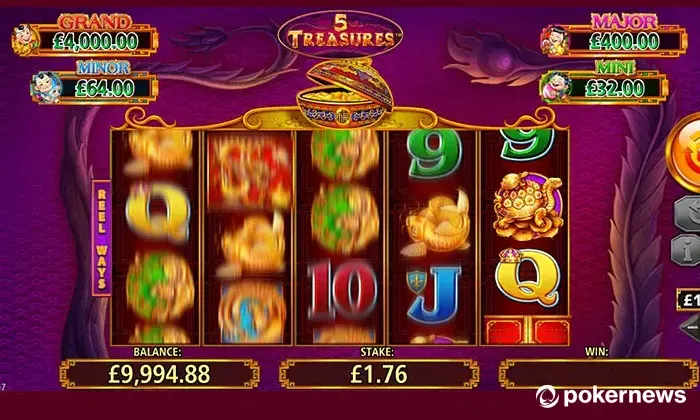
MYTH: The result of a spin is already determined the second the spin button is hit, even before the reels stop spinning.
Verdict: FACT ✅
We like to think that the gameplay matters in slots. When symbols land, disappear, connect, slide down the reels and cluster together, the anticipation of what could happen next is the exciting part.
But the truth is, the outcome has already been decided, and the actual gameplay is just theatre - a visual explanation on how the already-determined outcome has come to be.
This might seem fishier than Big Bass Splash, but it's legitimate. Before you hit spin, the outcome has not been determined. But the second you hit that button, you've already committed your stake amount and nothing can or will change the outcome. The reels are irrelevant from that point onwards. There's no longer an aspect of randomization.
EVIDENCE
In the UK, the UK Gambling Commission's Remote Gambling and Software Technical Standards (RTS 7) require RNG-based games to generate acceptably random outcomes and implement results fairly according to the game's rules.
This requires the mapping of random inputs to game outcomes to follow the prevailing probabilities and pay tables, while RTS 7E requires results to be displayed clearly and accurately.
For conventional online slots, this means the result is determined before the reel animations finish displaying it. The animations cannot arbitrarily change the selected outcome.
3. Slots Are More Likely to Pay Out After Dry Spells
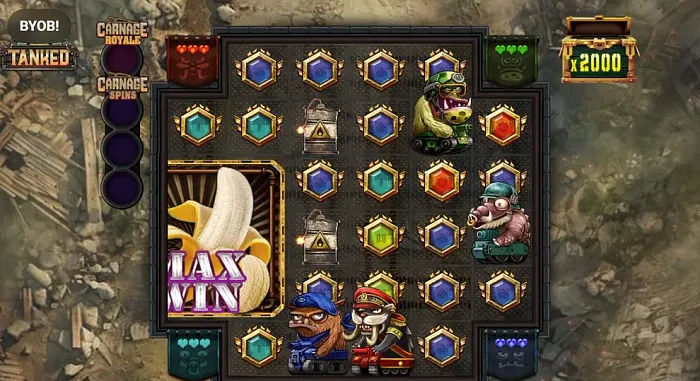
MYTH: If a big win has not occurred for an elongated period of time, a game is more likely to pay out or is 'due' a big win.
Verdict: MYTH ❌
Ever heard the saying 'don't chase your losses?' It's a sound piece of advice in any form of gambling, but perhaps even more so with online slots.
Just as securing a big win doesn't mean you won't hit a jackpot the very next spin, the reverse is also true. If a slot has produced 100 consecutive losing spins, the next spin is no more likely to produce a win than if the ten previous spins paid out large winnings.
Online slots use random number generators that mean each spin is independent of the last and has no bearing on the outcome of future spins. So if you're in a hole and are experiencing sustained, long-running losses, there's no guarantee the game will provide a shovel to dig you out!
EVIDENCE
Most regulators don't allow games to be influenced by past outcomes, wins or losses, and must make each spin independent from one another.
In the US, under GLI-19: Standards for Interactive Gaming Systems (v3.0), Chapter 4, Section 4.6.1(d): d) Except as provided for by the rules of the game, events of chance shall be independent and shall not correlate with any other events within the same game, or events within previous games:
i. A game shall not adjust the likelihood of a bonus/feature occurring, based on the history of awards obtained in previous games;
ii. A game shall not adapt its theoretical return to the player based on past outcomes.
This proves that any winning or losing streak on a conventional slot with independent spins is purely down to chance, and no machine is 'due' to pay out at any specific point.
4. Casinos Set Win Rates
MYTH: Individual casinos can set win rates and determine how and when a player wins.
Verdict: MYTH ❌ & FACT ✅
This one is a little less straightforward than some of the other theories on this list, because you can interpret it in different ways. Is there a sadistic overlord, sitting behind a computer at the casino's headquarters, stroking a white cat and clicking a big red button that decides when or when not to pay a player out? Absolutely not - no regulator would allow it and PETA might have something to say about it as well.
But can online casinos change a game's RTP? Now that's a different matter.
Return to player (RTP) is a metric given for casino games that implies the theoretical returns a player might receive. It's a long-term average though, so if a high-RTP slot has a return to player of 99%, it doesn't mean your returns will reflect that percentage exactly each session.
Casinos can sometimes choose from different RTP configurations offered by a slot provider. For example, if a slot's standard RTP is 96%, but the provider also offers approved versions with RTPs ranging from 94% to 97%, a casino could choose to offer the 94% version.
While this doesn't mean casinos can directly control when individual players win or lose, it can influence the game's long-term returns.
EVIDENCE
The UK Gambling Commission's RTS 7A prohibits adaptive behaviour that changes outcome probabilities during play. Meanwhile, RTS 7D regulates changes to game rules, payouts and probabilities, including requirements to suspend games and notify customers where applicable.
5. Closing or Switching Games After Wins
MYTH: Many people believe slots won't pay out again after a big win. Therefore, by switching or reloading the same game, it will 'reset' the payout mechanics of the slot, 'forget' that it previously paid out and be more likely to pay out a large amount again.
Verdict: MYTH ❌
I've been guilty of this one myself. I'm playing a game, let's say Rainbow Riches. I finally get a sizeable win, and instantly close the game, incorrectly believing I'll experience a subsequent downswing if I were to continue playing. I load up another slot and feel satisfied that the previous win was in another game. It will be forgotten by the casino and I'll be free to win big again in a different slot.
This is, of course, nonsense. Reload a game or changing slots completely after a win doesn't improve your chances of winning.
You could continue playing for 10 more spins and hypothetically land a big win on every single one. It's unlikely, but as mentioned before, past results don't influence future outcomes!
EVIDENCE
Each spin is independent to one another, and casinos or slots aren't allowed to implement adaptive behavior that impacts payout rates based on past outcomes.
Universal Industry Standard (GLI-11, Section 3.3.2) is adopted by many U.S. state gaming commissions and tribal regulators, GLI-11 Gaming Devices Standard mandates that an RNG's selection of game symbols or outcomes must 'be statistically independent' and 'be unpredictable.'
So there will always be a house edge in favor of casinos, but this is different. It refers to games not being able to manipulate results, meaning restarting a game or choosing a different slot has no influence on results.
6. Near Misses are Manufactured
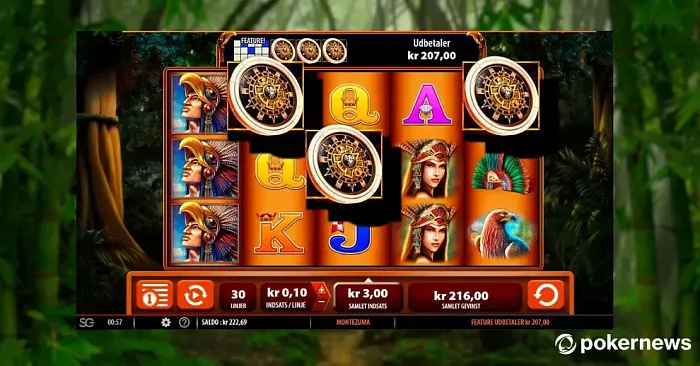
MYTH: Games deliberately curate in-play states that make players believe they are close to triggering a bonus or big win, only to just miss out.
Verdict: MYTH ❌
The carrot-and-the-stick analogy springs to mind when talking about this common slot belief. Slots dangle the carrot of a big win or land two scatter symbols on the first two reels, making you certain a bonus feature is coming. Only for that elusive third scatter to never appear.
As frustrating as it can be, we should refer back to the second point in this list and remember that results are already determined as soon as you hit spin. Therefore, the game has already determined if you've won big or hit the bonus before all the theatrics show it on the reels.
So this one is a myth, but it's not black or white. Games aren't allowed to artificially manufacture scenarios where a losing spin looks like you were just one position or symbol away from a big win. This can (and does) happen naturally, but ultimately the RNG (random number generator) decides what symbols land and that cannot be impacted or swayed. What is legal for slots to do, though (in most jurisdictions) is create animations, slow down reels, highlight positions or intensify the music to add more drama to the spin when, for instance, two scatter symbols have landed.
EVIDENCE
In the US, Gaming Laboratories International's GLI-19: Standards for Interactive Gaming Systems (v3.0), Section 4.5.2(c), specifically prohibits games from replacing an RNG-selected losing outcome with a different losing outcome to simulate a near miss.
This means games cannot artificially change an already-selected result simply to make players believe they narrowly missed out on a jackpot or bonus. Genuine near misses can still occur through the game's normal outcome-generation process.
7. How you Press the Spin Button Makes a Difference
MYTH: Pressing the spin button in a specific way can impact results.
Verdict: MYTH ❌
Some on this list are more complex, this one is not. Despite what logic tells us, I'm sure we've all pressed the 'spin' button meaningfully, with purpose and conviction, in the hope that it somehow generates a win.
Unsurprisingly, this is a myth. Whatever elaborative or basic technique you use to initiate a spin, it has no bearing on its outcome.
EVIDENCE
There's no specific law to quote with this one. It's just common sense - a game doesn't understand how we press a virtual button. But it still won't stop us from trying various methods!


 Never chase losses
Always set limits
Take regular breaks
Play Real Money Slots Online
If you want to put the new-found knowledge you've gained from this article into practice, you've got loads of options. Almost every casino site offers a wide range of hundreds, if not thousands of online slot games for real money.
Select from the listed casinos below, which are our picks for the online sites with the best range of slots. Just click the links in the widget, create an account and start playing. Be careful, though. You will theoretically lose in the long run regardless of which site or game you play.