button in Safari
Top Stories of 2025, #4: Return of Poker Villains; Does Poker Need Kabrhel & Kassouf?

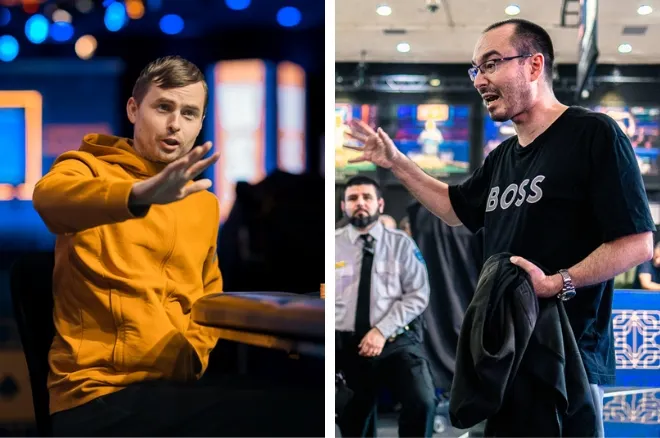
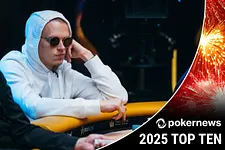
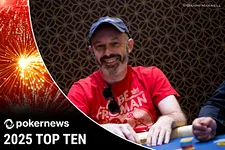
Hate them or love them, Martin Kabrhel and Will Kassouf were two of the most-talked-about players of the 2025 World Series of Poker. Kabrhel has been polarising for years, but this summer he somehow shifted into the role of a loveable rogue.
Between new catchphrases that have launched a new merch line, constant clock calls and even a mid-hand telling off from Daniel Negreanu, he became that rascally kid in class you can’t help but have a soft spot for.
Kassouf’s return was cut from a different cloth. The villain of the 2016 WSOP Main Event re-emerged nine years later with a deep run in Poker's World Championship and the same needle-heavy table presence that once split the poker world down the middle. His act generated millions of clicks, but also the familiar discomfort that comes with watching someone push the line just far enough for everyone to start asking the same question again: Is it good for poker?
Both men largely dominated conversation all summer, but does poker still need characters like this to thrive, or is their brand of theatre something the modern game has outgrown?
Kabrhel a Villain No More?
"I try to enjoy my life, I try to enjoy the poker. That's all I can do, right?" Martin Kabrhel said that to PokerNews once upon a time, and no one looked like they were enjoying the 2025 WSOP more than he was.
All summer, Horseshoe and Paris echoed with his now-famous lines. “Casino Royale,” “Not like that,” “This is embarrassment.” These "Martinisms" didn’t just become memes, they became the vocabulary of the Series. If this were the early 2010s, a Kabrhel soundboard app would have been the number-one download of the summer.
The clock was constantly called on him. He talked nonstop and pushed the table dynamics in every direction. But instead of pushing people away, the full Kabrhel experience somehow softened. The rough edges turned into something more mischievous than malicious.
Even the pros who used to seem the most irritated by him are seeing the act differently. On Chip Leader Coaching’s YouTube channel, Alex Foxen explained that he wants Kabrhel at his table.
"He makes other players play worse. Not just against him, against me as well. I think he benefits me. I think he's hilarious and a really smart guy. The hate people expect me to have for him is wrong."
Chance Kornuth also admitted his position has changed. "Used to hate him. Like him now. Once I stopped thinking he was cheating, I could understand what he's trying to do."
Kabrhel can also take a shot. Nick Schulman's “say my name, Martin” was one of the lines of the entire Series after the Hall of Famer windmilled a huge bluff in Kabrhel's face. Everyone at the table knew Schulman had won that exchange, and Kabrhel didn’t fight it.
What helps him resonate so strongly is how much he resembles the characters who made poker must-see TV during the boom years. The energy, the needling, the performance is all very Tony G. After busting Michael Moncek from the$250K Super High Roller, Kabrhel told him, “GG Mikey, good luck next bullet.” Moncek didn’t take offence. He posted on X that he found Kabrhel “super amusing” and added that “poker needs villains.”
The broader audience seems to agree. A PokerNews poll with more than 1,700 votes showed 44 percent of fans said he keeps them entertained. Thirty-eight percent found him annoying, and just 10 percent felt he created a hostile environment.
And buried beneath all the theatre is a world-class player. Kabrhel won the Mini Main Event in a 10,794-entry field for $843,140, added picked up his fifth bracelet at WSOP Europe in the $10K PLO Mystery Bounty and came close to the WSOP Player of the Year title before finishing fourth.
Kabrhel is messy, unpredictable, frustrating, and hilarious all at the same time. And whether you think he is a villain, hero, or something in between, poker has rarely been more entertaining for spectators in recent years than when he is on camera.
Kassouf Rolls Back the Years
If Kabrhel spent the summer walking the tightrope of table theatre, Will Kassouf charged straight through it. His deep run in the 2025 WSOP Main Event brought back the exact persona that made him infamous in 2016. Where Kabrhel turned into something akin to charming, Kassouf’s act swung back toward the version of himself that most of the poker world hoped had mellowed.
The hand that marked his return came on Day 2d of the Main Event, when he went into a ten-minute tank with the second nuts while unleashing a full barrage of table talk. “Wow, such a sick river,” “Not one we can just check down,” and “You’ve got the nuts and I’ve got the second nuts” all came pouring out as Sacha Cohen tried to get through the hand. Cohen eventually called the clock simply because, as he said, “I want a break.”
Kassouf made the correct call and doubled up, but the hand set the tone for the rest of his run. Every orbit brought another scene, another tank, another monologue. The problem wasn’t the entertainment but his impact on the game.
As Kassouf climbed toward Day 7, the antics escalated. He argued with players, argued with the floor, argued with Jack Effel, and repeatedly insisted he was being picked on. He was hit with a ten-second shot clock, then a round penalty, then another warning as staff tried to keep the tournament moving while still treating him fairly.
Effel tried to reason with him during a break, “I’m not worried about the coverage. I’m worried about everyone having a good time.”
But Kassouf saw it differently. “Americans can’t take it,” he told Effel. “There’s a method to my madness.”
The viewers had their say, too. PokerNews polls showed the community leaning strongly against him, with more than two-thirds saying his behaviour was bad for the game.
Yet he kept pushing, insisting he was reacting to how others treated him, claiming that players had threatened him, and stating that rulings were inconsistent. He compared himself to Donald Trump. He framed the criticism as a form of political tribalism. He insisted he was simply “built different” and running on two hours of sleep.
His elimination in 33rd place should have been a feel-good moment. A second deep Main Event run nine years after his original breakout, but instead, it ended in chaos. After losing a preflop all-in to Kenny Hallaert, Kassouf was confronted by tournament staff, informed he was banned from the remainder of the Series, and escorted from the WSOP gaming floor.
The rail serenaded him with “sha-la-la, hey hey, goodbye.” Security walked him out, and just like that, the most contentious storyline of the summer reached its conclusion.
Is It Good for Poker?
Poker became a phenomenon because players like Phil Hellmuth, Sammy Farha, Mike Matusow, and Tony G made every hand feel like a scene worth watching.
Kabrhel and Kassouf both tap into that lineage, but the industry’s reaction to each shows how much the game has evolved. Today’s audience still wants entertainment, tension, and table energy, but not at the cost of pace, fairness, or the atmosphere at the table.
Kabrhel pushes, prods, and irritates, but Kassouf is different. His style doesn’t just create theatre, but it stops the game entirely. Ten-minute tanks, relentless speech play, arguing with players, arguing with staff, multiple penalties, and eventually an unceremonious goodbye. It tarnishes the game, and for a significant portion of the poker community, that crosses a line.
And that’s where the louder, more critical viewpoint comes in, one voiced clearly by players like Seth Davies.
“Get out of here with this ‘Kassouf and Kabrhel are good for the game’ stuff." Davies posted on X in the summer. "Getting PokerNews more clicks isn’t good for the game. People are gonna see these guys on TV and then go emulate them in their local game and chase off half the poker room. Horrible for the game.”
This is the counter-argument that carries real weight. Not everyone watches poker to be entertained by disruption. At the grassroots level — the nightly $1/$3 games, the charity tournaments, the weekend dailies — behavior like this can make the environment worse, not better.
Newer recreational players already feel intimidated, and if they walk into a card room and see people mimicking Kassouf’s tanking or trash talk, they won’t stick around. And without them, the entire ecosystem shrinks.
So is this behaviour good for poker? Some of it is. Some of it isn’t.
The game benefits from personality, ego, flair, and the occasional villain. What it doesn’t benefit from is disruption so heavy that the game can’t function.