
 button in Safari
Best Starting Hands in Poker - What Hands Should Beginners Play?

If you’re new to playing poker, you've probably looked at your cards and wondered, “Is this good enough to play?” You’re not alone. Most beginner mistakes in poker happen before the flop, when players misjudge the strength of medium hands or overplay weak ones. It's all based on equity and the hand probabilities.
This guide focuses specifically on starting hands in Texas Hold’em - the two cards you’re dealt before the flop. It does not cover final five-card rankings. If you need a refresher on what beats what in poker or how hands rank at showdown, visit our Poker Hand Rankings hub.
Instead, this page is about making better decisions preflop. You’ll learn:
- The Best Premium Starting Hands
- The Worst Starting Hands in Poker
- Poker Opening Range Charts
- Top 5 Common Beginner Mistakes to Avoid with Starting Hands
- Where to Practice Starting Hands
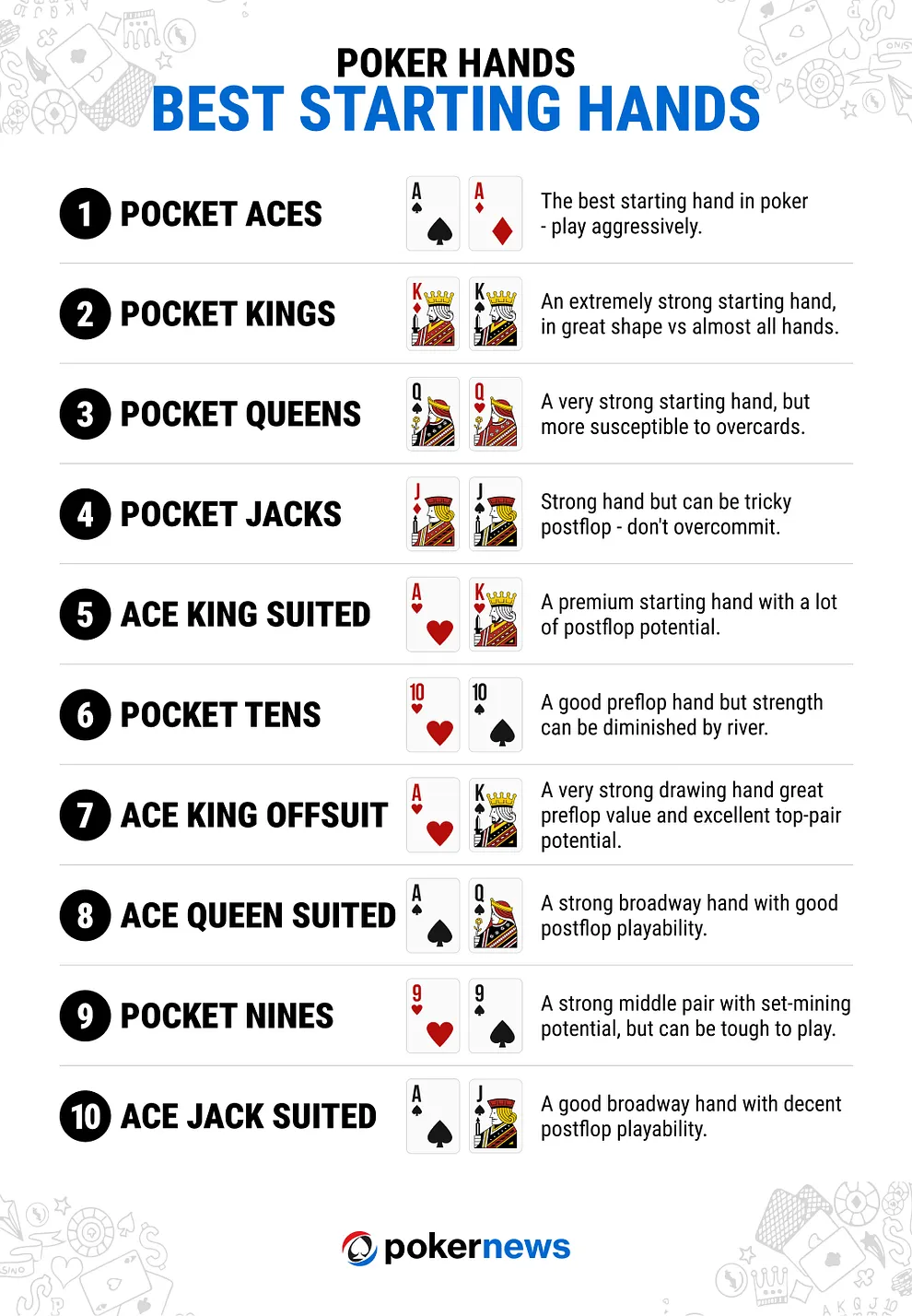
Top 10 Best Starting Poker Hands - At a Glance
Checkout the certified top 10 best starting hands in Texas Hold'em! Below is our own graphic showing the top starting hands in poker.
What Are Starting Hands in Poker?
In Texas Hold’em, every player is dealt two hole cards and these two cards are your starting hand. You combine them with five community cards to make your best five-card hand.
Starting hand selection is the foundation of long-term profitability. Strong players fold more hands than they play. Weak players do the opposite.
Not all playable hands are equally strong as some hands dominate others and some hands are easily dominated. That difference determines whether you win consistently or bleed chips slowly (or in an instant!). Think about the cards that have high potential to make a strong hand by showdown, postflop playability and even the value of your kicker.
Position also plays a critical role. Acting later in a betting round gives you more information and allows you to play more hands profitably.
| Rank | Hand | Example | Expected Value (+) | Odds of Being Dealt |
|---|---|---|---|---|
| 1 | Pocket Aces | A♠A♣ | 0.78 - 2.32 | 1 in 221 |
| 2 | Pocket Kings | K♥K♦ | 0.78 - 2.32 | 1 in 221 |
| 3 | Pocket Queens | Q♣Q♠ | 0.78 - 2.32 | 1 in 221 |
| 4 | Ace-King Suited | A♥K♥ | 0.78 - 2.32 | 1 in 332 |
| 5 | Ace-King Offsuit | A♠K♦ | 0.38 - 0.59 | 1 in 111 |
| 6 | Pocket Jacks | J♥J♦ | 0.38 - 0.59 | 1 in 221 |
| 7 | Ace-Queen Suited | A♣Q♣ | 0.38 - 0.59 | 1 in 332 |
| 8 | Ace-Queen Offsuit | A♥Q♠ | 0.38 - 0.59 | 1 in 111 |
| 9 | Pocket Tens | 10♣10♠ | 0.38 - 0.59 | 1 in 221 |
| 10 | Ace-Jack Suited | A♦J♦ | 0.38 - 0.59 | 1 in 332 |
The Best Premium Starting Hands
These hands should be played aggressively in almost all standard situations. They are strong before the flop and remain strong on most betting rounds and against most ranges.
Pocket Aces (AA)
The strongest starting hand in Hold’em is pocket aces. The hand - also known as pocket rockets - dominates every other hand preflop and is a significant favorite against two strong cards like ace-king.
They're great to raise and re-raise confidently, and even trap, but be wise to not slow-play aces excessively. Aces lose value and strength when multiple players see a flop.
WATCH: Amateur Folds Aces vs Pros on The Big Game
Pocket Kings (KK)
Pocket kings (AKA Cowboys) is the second-best starting hand and crush everything except AA. Play them aggressively preflop.
Against heavy action, you should usually still commit. Caution: when an ace hits the flop, slow down and reassess rather than blindly stacking off.
Pocket Queens (QQ)
Pocket queens is a premium holding and strong against most hands. Never limp in with queens and it is a hand strong enough to three-bet and four-bet.
Danger does appear when facing heavy preflop aggression or multiple overcards post-flop. Do not assume QxQx is unbeatable; but it is a hand you can confidently play in many spots.
Ace-King (AK Suited & Offsuit)
Often called “Big Slick,” ace-King is not a made hand but dominates many ace-x holdings. Ace-King performs slightly better as its easier to make flushes than ace-king offsuit.
Raise preflop, apply pressure and don't be afraid to go all-in preflop. However, if you miss the flop, turn and river, there's no need to keep playing aggressively. You can't win every hand you play. Even the strongest hands sometimes lose in poker.
Pocket Jacks (JJ)
Pocket jacks is a powerful hand but it can also be tricky to play. They perform well against weaker pairs and unpaired hands, so you should be raising and re-raising.
Nonetheless, if overcards appear on the flop, it can create difficult decisions. Avoid overplaying pocket jacks when facing strong resistance.
Strongest Non-Premium Starting Hands
These hands sit just below the true premiums. They are profitable long-term, but they demand discipline, and some positional understanding.
Pocket Tens and Pocket Nines (TT / 99)
Tens and nines are strong pocket pairs. Preflop, they are statistical favorites against unpaired hands like Ace-King, King-Queen, and Ace-Queen. They also dominate every smaller pair.
However, they are not invincible. In most pots, they will rarely remain an overpair by the river. Overcards appear frequently, and that changes their relative strength quickly. The key value comes when they improve to a set. When tens or nines hits three of a kind, they become extremely powerful hands capable of winning large pots against bigger pairs.
From early position, these hands require some caution but you should always be raising if the pot is unopened. From late position, they become far easier to manage because you can control the pot size more easily and gain information before committing chips. The mistake beginners make is treating tens and nines like they are premium pairs in every situation.
WATCH: The Worst Flop for Pocket Tens?
Ace-Queen (AQ Suited & Offsuit)
Ace-queen is one of the most misunderstood starting hands in poker. It dominates every ace-x other than ace-king. Suited versions gain additional value from flush their potential and against most hands, AxQx performs very well preflop.
The danger comes when facing stronger ranges. When opponents show strength, ace-queen can often up against ace-king or kings and aces when there's plenty of preflop betting. Beginners frequently commit too many chips with top pair, overlooking kicker problems.
Ace-Jack Suited (AJ)
Ace-jack suited has high-card strength along with potential to make flushes and straights. It can make strong top pairs and nut flushes, which is where it's main strengths come from.
Position does dramatically affect this hand. In any position, it can be used confidently to open the pot but you shouldn't be afraid to ditch the hand if you're facing three- or four-bets.
King-Queen Suited (KQs)
King-Queen suited is a well-rounded starting hand. It can make strong top pairs, nut straights, and strong flushes. It plays easily in position and benefits from seeing flops.
However, it is still behind stronger broadway combinations like ace-king and ace-queen. When facing clear strength from tight opponents, KQs should not be treated as a premium holding. The value of KQs comes from its playability, connectedness and draw potential.
Some non-premium hands, like suited connectors, offer strong postflop playability. Pocket kings can become tricky to play if an ace lands on the flop, especially after heavy preflop betting. But hands like 8-9 suited are easier to fold when they miss and can also connect in well-disguised, powerful ways when they hit.
Marginal and Speculative Hands
These hands can be profitable, but require constant reevaluation in each betting round.
Small Pocket Pairs (22–88)
Small pairs rely on hitting a set. When they miss, they are usually weak. They perform best in position and against deep stacks where implied odds justify calling. Beginners lose money by raising them early and refusing to fold when they miss.
Suited Connectors (e.g., 98s, 76s)
Suited connectors can make straights, flushes and straight flushes. They are profitable in later positions when playing deep. Playing with these hands in earlier positions is a mistake beginners often make.
Suited Aces
Suited Aces can make nut flushes, giving them strong implied odds. However, weak kickers create danger. See our guide on What Is a Kicker in Poker? to understand why dominated top pairs cost you money in the long run.
Broadway Hands (KJ / QJ)
Broadway hands look attractive but can frequently dominated, especially in three-bet pots. King-jack and queen-jack perform well in position but will be underdogs against strong ranges. Similar to suited aces, new players overvalue top pair without recognizing kicker problems these hands have.
Marginal hands like the ones above are speculative and it's not worth committing heavily with them preflop. However, if you can get to a flop fairly cheaply, there is potential for these hands to hit hard - making straights, flushes or three-of-a-kind. You can then reevaluate the hand's equity once you've seen the flop.
The Worst Starting Hands in Poker
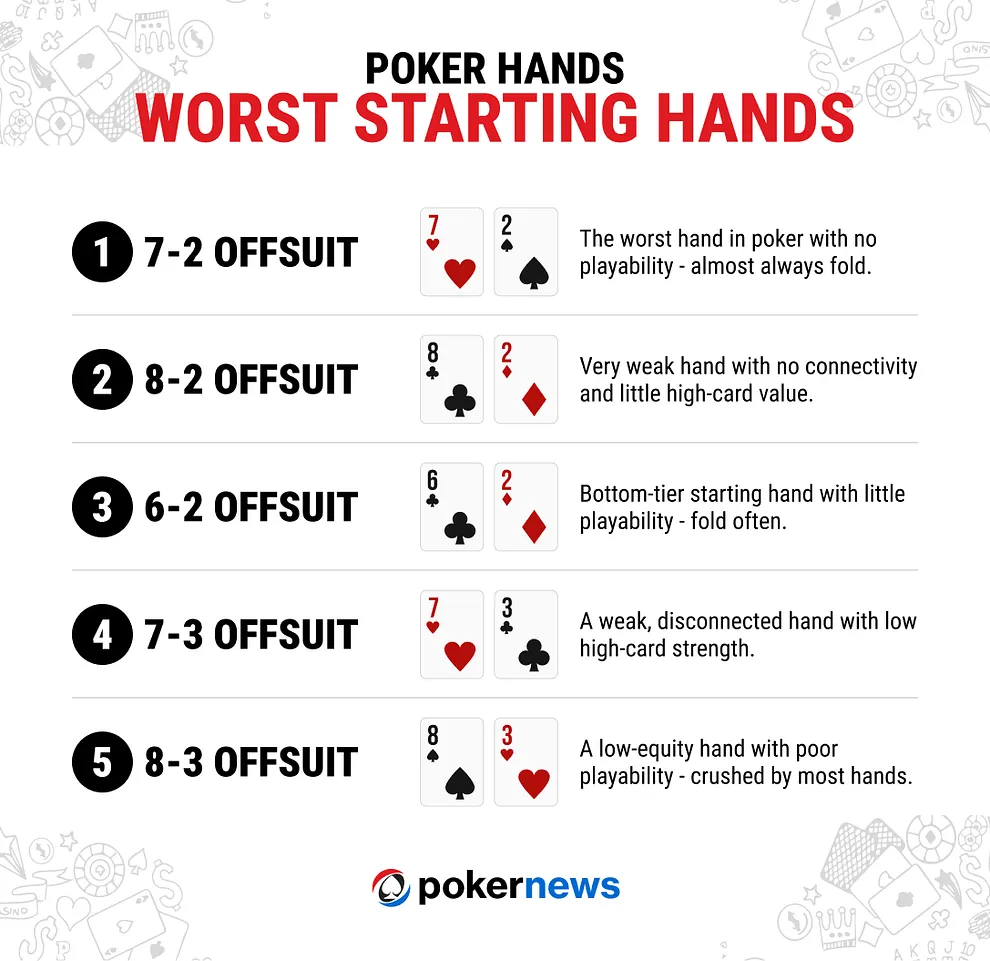
Some hands should almost always be folded. 7-2 offsuit is widely considered the worst starting hand. 8-3 offsuit and J-2 offsuit suffer the same problem. They lack connectivity, high-card strength, and flush potential.
Unconnected low cards create weak top pairs and second-best hands. Beginners play them because they are “suited” or contain a face card. That logic is flawed.
Folding weak hands is profitable. Discipline separates winning players from losing ones. If you are unsure, fold and wait for a better opportunity. You can't lose what you don't put in!
How Position Changes What Hands You Should Play
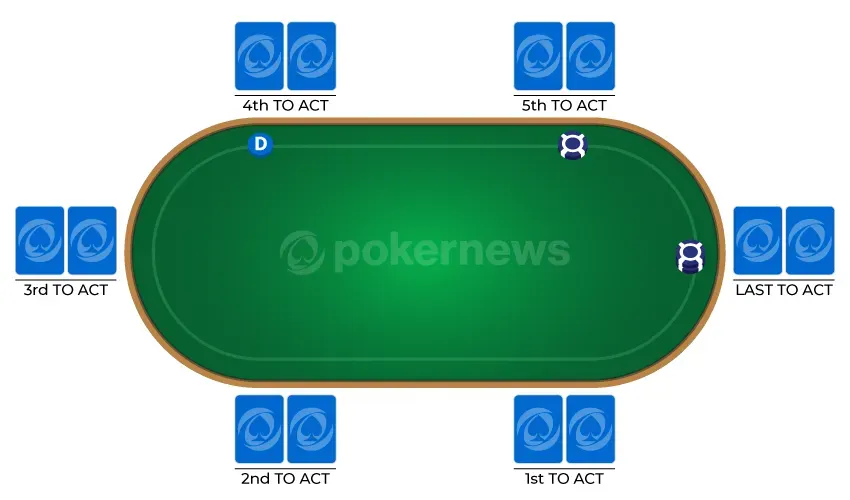
Playing hands from early positions (UTG & UTG+1) requires a tight range. You act first, and your opponents have positional and informational advantage. Play premium hands and strong pairs and always fold marginal holdings.
Middle positions (UTG+2 to lojack) allows you to play slightly wider. You can introduce stronger non-premium hands like AQ, TT, and some suited broadways.
Late position (cutoff and button) is where ranges widen significantly. Acting last gives you maximum information and this is where suited connectors and speculative hands become better to play
Blinds are difficult because you act first after the flop. You should rarely defend your small blind, but being in the big blind does allow you to play more hands as you will have good pot odds. Just be cautious post flop.
Just remember a simple rule. Play tight if you're in earlier positions and looser when you're one of the last players to act. For deeper fundamentals, see Poker Strategy Basics for Beginners.
Poker Opening Range Charts
At PokerNews, we have created several different open range charts for various stack and table sizes. So regardless of stack size, number of opponents or position at the table, we've got a guide to help you make informed decisions.
For example, the chart below shows you the shoving range (hands you should go all-in preflop with) for starting Texas Hold'em hands on a nine-player table, when you have a 15-big-blind stack. Firstly find the position from the top row, then move down to find a specific set of hands (E.g. King-high hands). The resulting box will then tell you the weakest hand you should be shoving from that position.
For instance, let's say you're under the gun and look down at 9-8 suited. That would classify as a nine-high hand, but the corresponding UTG - nine-high-hands box is blank, implying that you should fold the hand instead of shove.
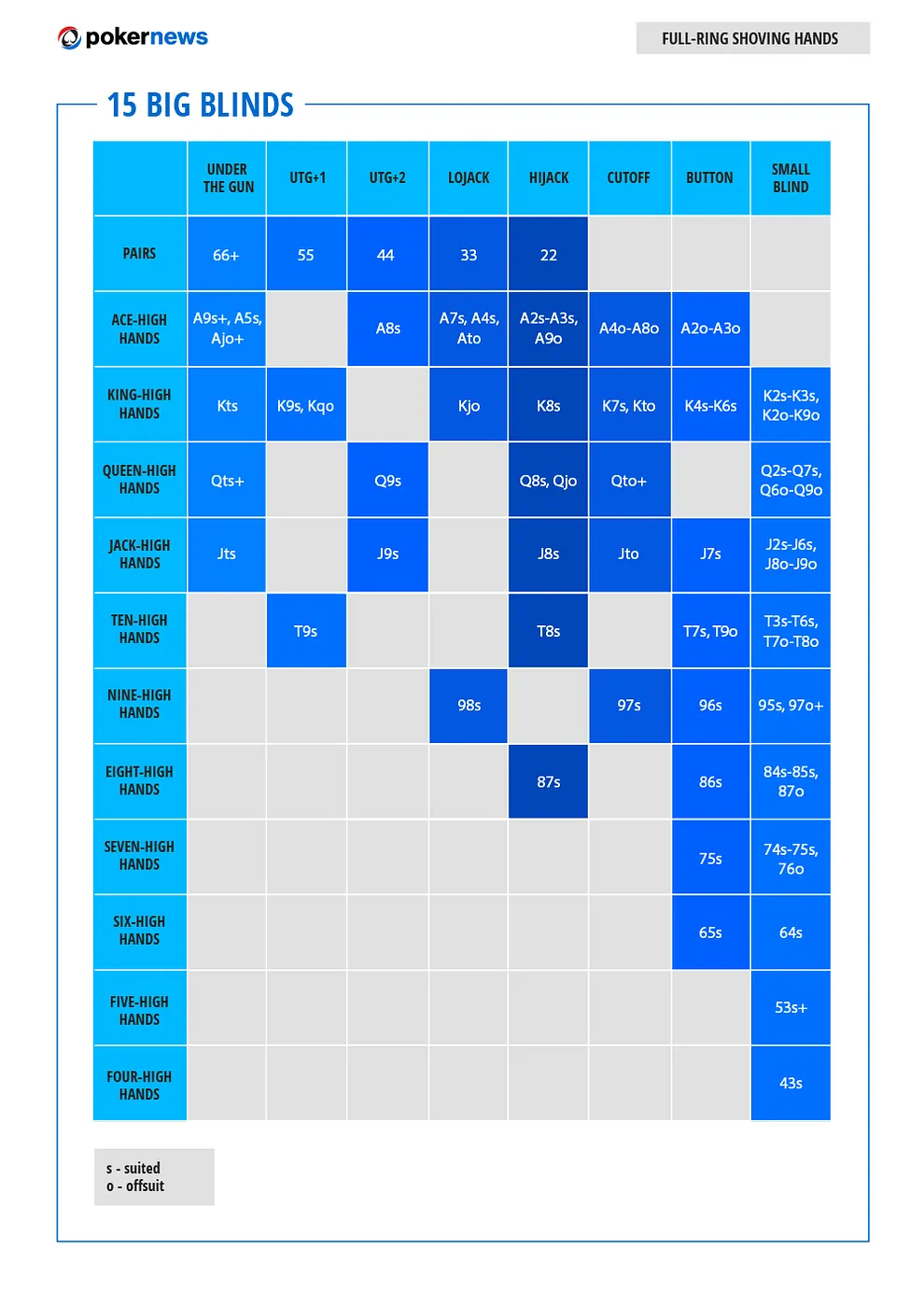
Use this as a baseline, but always adjust for position and table dynamics. We have several similar charts that you can view and download for free! Click the link below to check them out.
Top 5 Common Beginner Mistakes to Avoid with Starting Hands

Many beginners not only lose money because they play terrible hands, but because they misplay reasonable ones in the wrong situations.
Strong starting hand selection requires discipline, patience, and an understanding of how position works in poker. Below are five of the most frequent leaks new players struggle with.
- Playing too Many Hands
- Overvaluing Ace-X
- Ignoring Position
- Falling in Love with Small Pairs
- Overplaying in Multi-way Pots
1. Playing Too Many Hands
Beginners hate folding. But folding is essential to help your win-rate. Playing too many hands puts you in marginal spots where you are frequently second-best.
Strong players fold the majority of their hands and enter pots with a clear advantage. The more hands you play with weak holdings, the more difficult decisions you create. Tight, selective preflop play immediately improves results.
2. Overvaluing Ace-X
Ace-five or ace-nine often look playable, yet they are commonly dominated by stronger ace holdings.
When you pair your ace, you may still be behind. Understanding hand domination and reviewing concepts in What Beats What in Poker? helps clarify why not all top pairs are equal.
3. Ignoring Position
Playing the same hands from every seat at the table is a major leak. Early position requires tighter ranges because you're one of the players to act. Late position gives you information and a better chance to steal the blinds.
A hand like queen-nine suited may be profitable on the button but risky under the gun. Adjusting your range by position is essential to be winning poker player.
4. Falling in Love with Small Pairs
Small pairs (22–66) miss the flop most of the time. Their value comes from hitting a set. When they do not improve, they are usually weak one-pair hands.
Calling large bets without improvement is a common and costly mistake. If you miss, let them go.
5. Overplaying in Multi-way Pots
Hands like king-queen and ace-jack decrease in value when several players see the flop.
The more opponents in the hand, the higher the chance someone connects strongly. One pair is rarely enough in multi-way situations. Tighten up and avoid committing too heavily with medium-strength holdings.
Want to Learn More?
Looking to develop your poker knowledge further? Check out:
- Poker Hand Rankings
- Short Deck Poker Hand Rankings
- Probabilities in Poker
- What Beats What in Poker?
- Kicker in Poker
- Tied Poker Hands
- Poker Odds Calculator
- How to Play Texas Hold’em
- Beginner Poker Strategy Guide
Best Starting Hands in Poker FAQs
What is the best starting hand in poker?
Pocket Aces is the strongest starting hand in Texas Hold’em.
What is the second best starting hand in poker?
Pocket Kings rank second, losing only to aces preflop.
Should beginners only play premium poker hands?
Beginners to poker should start by playing tight. Focusing mainly on premium and strong hands while learning the strength of playing in position.
What are the worst starting hands in poker?
Hands like 7-2 offsuit and other unconnected low cards are generally the weakest and should always be folded.
Does position affect starting hand strength in poker?
Yes position in poker affects the strength of a starting hand. Hands gain value in late position because you act with more information.
Are suited cards always better in poker?
Suited cards add value due to flush potential, but weak suited hands can still be bad hands to play.
Are the best starting poker hands the same in Texas Hold’em as Omaha?
No. Omaha Poker uses four hole cards, which changes hand strength dramatically compared to Hold’em.