
 button in Safari
What Beats What in Poker? A Simple Guide to Winning Hands

You're not alone if you have ever had to pause mid-hand and wondered, "Does a flush beat a straight?" or "Which poker hand beats which?" Knowing what beats what in poker is a common sticking point for beginners.
This guide won't repeat the full ranking explanations that you'll find in our Poker Hand Rankings Guide. Instead, this page will become your go-to reference point for direct hand-versus-hand comparisons, while providing you with memory shortcuts, you can use at the tables.
By the time you finish this article, you'll have learned:
- How to Compare Poker Hands
- What Beats What in Poker
- Common "Does X beat Y" Questions
- Top 4 Tips for Learning What Beats What
- Where and How to Practice What Beats What in Poker
If your goal is to quickly understand what beats what poker-wise, you have come to the right place!
How to Compare Poker Hands
Understanding what beats what in poker starts with knowing that hands are ranked in a strict order. You don't compare individual hands at random when you reach showdown; you compare the categories of each hand. A Full House always beats a Flush, while a Straight will always beat Three of a Kind. The higher-ranked category wins every single time.
If both players hold the same type of hand, you then compare the strength of the cards. For example, a pair of kings versus a pair of tens. In this example, both players have made a pair, but kings are stronger than tens, so the player with a pair of kings wins the hand.
The key rule is simple: compare hand type first, then compare card strength. Poker hand comparison becomes automatic and much easier to remember at the table once you understand that structure.
Why Hand Comparisons Matter
Winning in poker isn't only about having good cards, but rather having a better hand than your opponents at showdown. This is why understanding poker hand comparison is crucial to success. There is no need to memorize long definitions because you only need to know which hands outrank each other.
Being able to compare hands quickly reduces hesitation, prevents costly mistakes, and helps build your confidence as you embark on your poker journey. Fast comparisons are especially important in online poker where you have less time to make decision than in the live poker arena.
One Hand Always Beats Another (With a Few Exceptions)
Poker follows a strict hand hierarchy; there are no gray areas between different hand types. The stronger category always beats a weaker category. For example, a Full House always beats a Flush.
On rare occasions, when both players hold the same category and the same card strength, or when the five community cards play for everyone, the showdown can result in a tie. We will touch on these rare situations later when discussing kickers and high-card scenarios.
What Beats What in Poker?
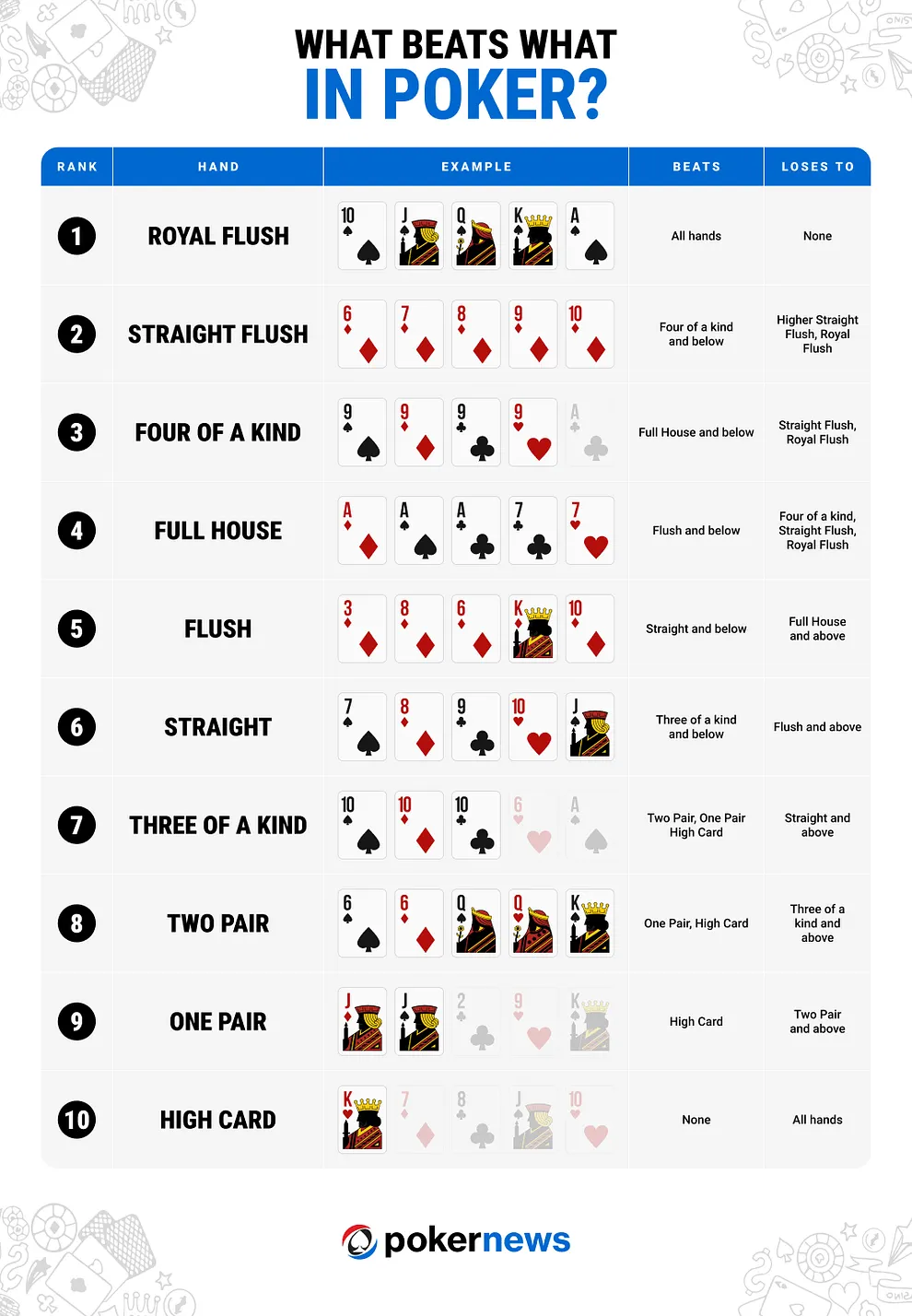
The visual above shows which poker hands beat others at-a-glance. For the full hand hierarchy, see our Poker Hands Rankings Guide.
Royal Flush
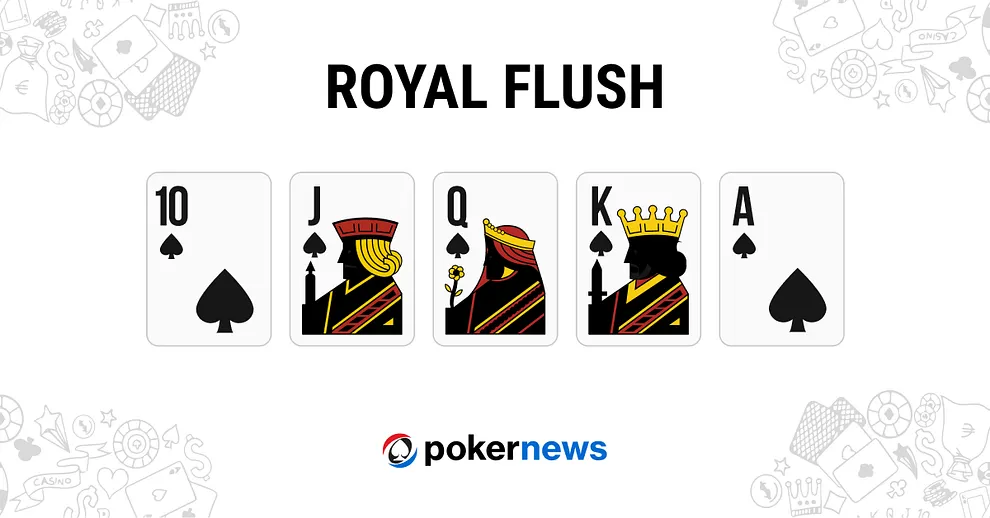
A Royal Flush is the strongest possible poker hand, which is made up of A-K-Q-J-T of the same suit. You are guaranteed to win the hand if you make a Royal Flush.
| What it Beats | What Beats it |
|---|---|
| A Royal Flush beats every other hand. | A Royal Flush is not beaten by any other hand. |
Straight Flush
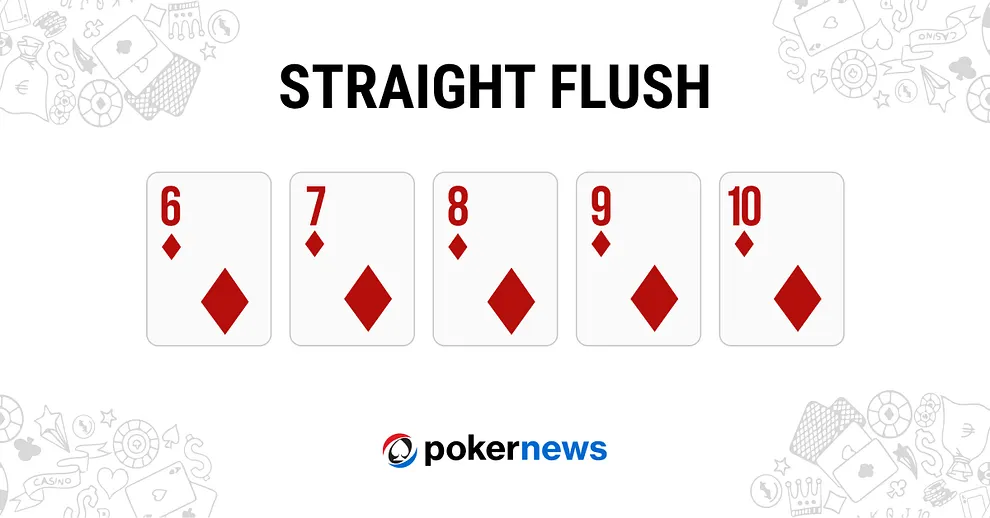
A Straight Flush is a very strong hand consisting of five consecutive hands of the same suit, such as 10♠9♠8♠7♠6♠.
| What it Beats | What Beats it |
|---|---|
| A Straight Flush beats all other hands (including Four-of-a-kind, Full Houses and Flushes), apart from a Royal Flush. | A Straight Flush is only beaten by a Royal Flush. |
Four of a Kind
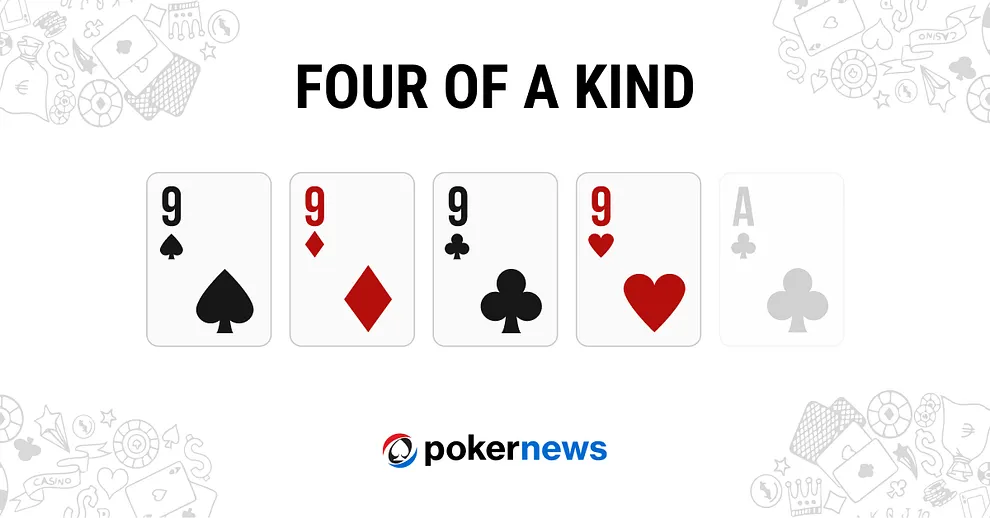
Four of a Kind, also called "Quads," contains four cards of the same rank, such as 6♣6♦6♠6♥.
| What it Beats | What Beats it |
|---|---|
| Four-of-a-Kind beats Full Houses, Flushes, Straights, Three-of-a-Kind, Two Pair, One Pair and High Cards. | Four-of-a-Kind is only beaten by Straight Flushes and Royal Flushes. |
Full House
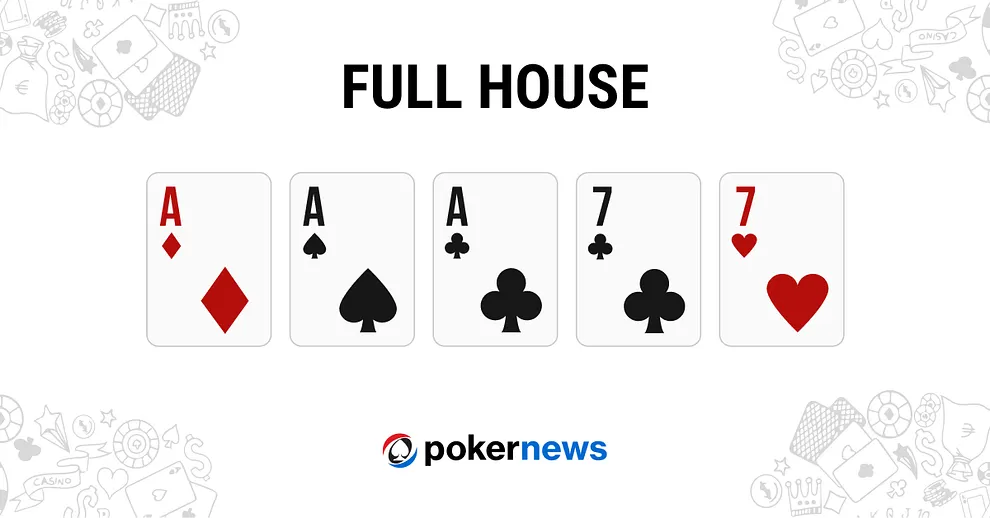
A Full House consists of three cards of one rank and two of another, like K♠K♣K♦8♥8♣.
| What it Beats | What Beats it |
|---|---|
| A Full House beats Flushes, Straights, Three-of-a-Kind, Two Pair, One Pair and High Cards. | A Full House is beaten by Four-of-a-Kind, Straight Flushes and Royal Flushes. |
Flush
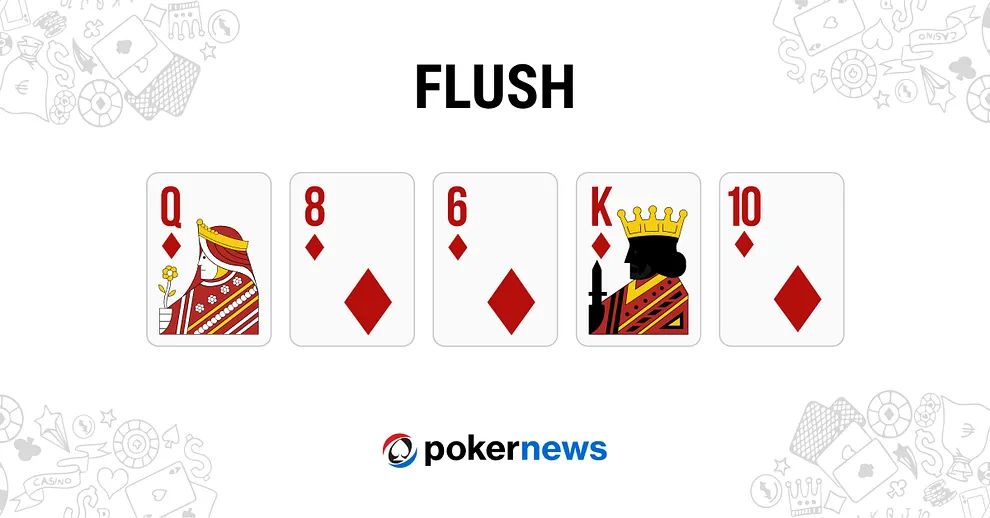
A Flush is a hand made up of five non-consecutive cards of the same suit. For example, A♠Q♠9♠6♠2♠.
| What it Beats | What Beats it |
|---|---|
| A Flush beats Straights, Three-of-a-Kind, Two Pair, One Pair and High Cards. | A Flush is beaten by Full Houses, Four-of-a-Kind, Straight Flushes and Royal Flushes. |
Straight
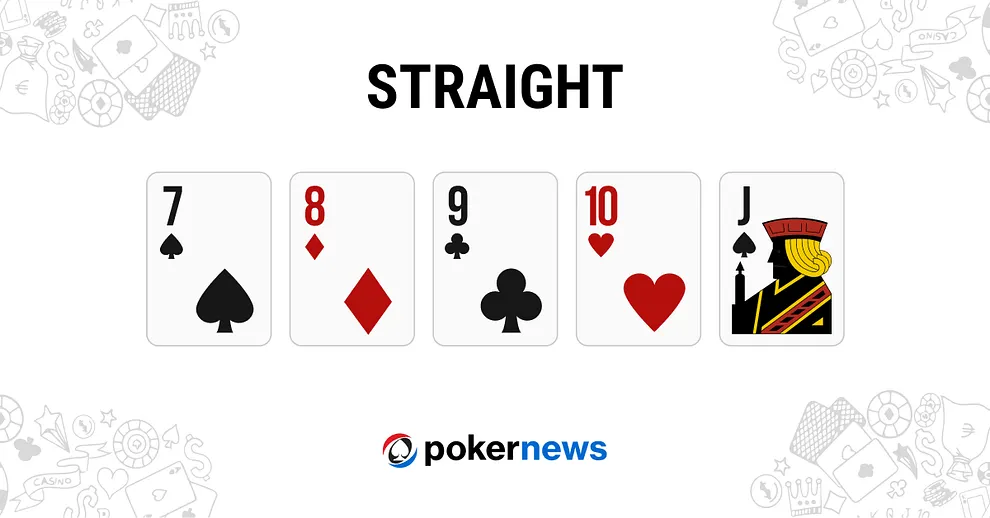
A Straight is a hand consisting of five consecutive cards of mixed suits, such as 10♣9♦8♦7♠6♥.
| What it Beats | What Beats it |
|---|---|
| A Straight beats Three-of-a-Kind, Two Pair, One Pair and High Cards. | A Straight is beaten by Flushes, Full Houses, Four-of-a-Kind, Straight Flushes and Royal Flushes. |
Three-of-a-Kind
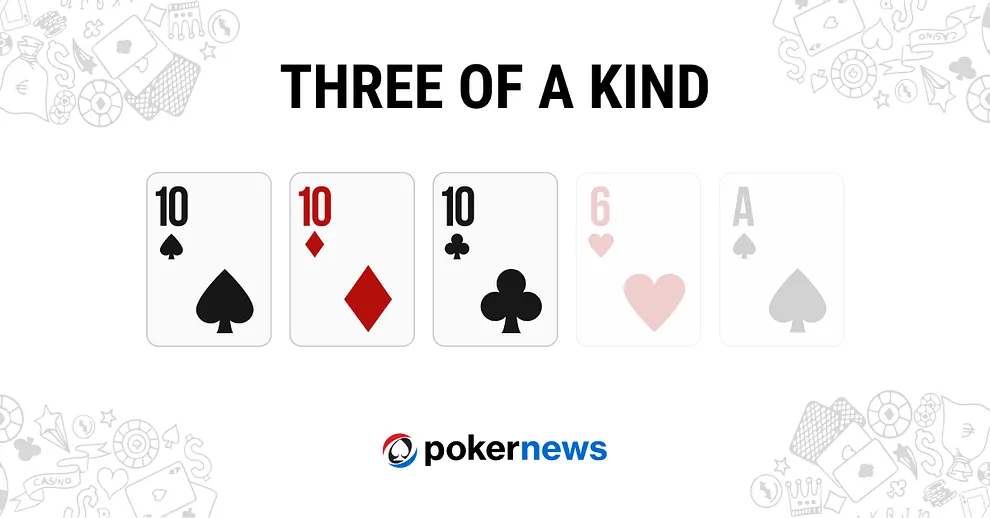
Three of a Kind includes three cards of the same ranks, like 7♦7♥7♣. Three of a Kind can be called a "set" if you make Three of a Kind using a pocket pair and a third card from the community card. This hand is called "trips" if you make Three of a Kind using one of your hole cards and two of the same rank from the board.
| What it Beats | What Beats it |
|---|---|
| Three-of-a-Kind only beats Two Pair, One Pair and High Cards. | Three-of-a-Kind is beaten by Straights, Flushes, Full Houses, Four-of-a-Kind, Straight Flushes and Royal Flushes. |
Two Pair
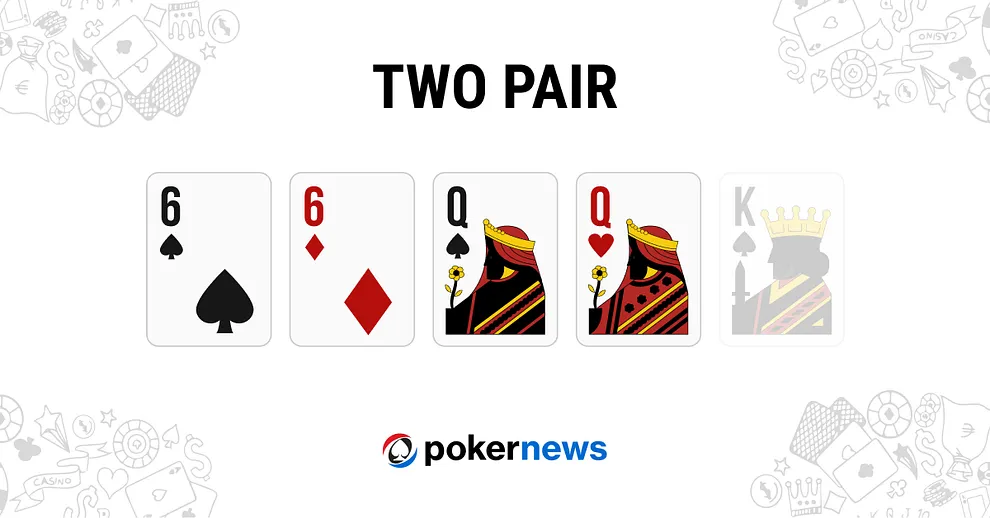
Two pair consists of two different pairs, such as Q♠Q♦6♣6♥.
| What it Beats | What Beats it |
|---|---|
| Two Pair only beats One Pair and High Cards. | Two Pair is beaten by Three-of-a-Kind, Straights, Flushes, Full Houses, Four-of-a-Kind, Straight Flushes and Royal Flushes. |
One Pair
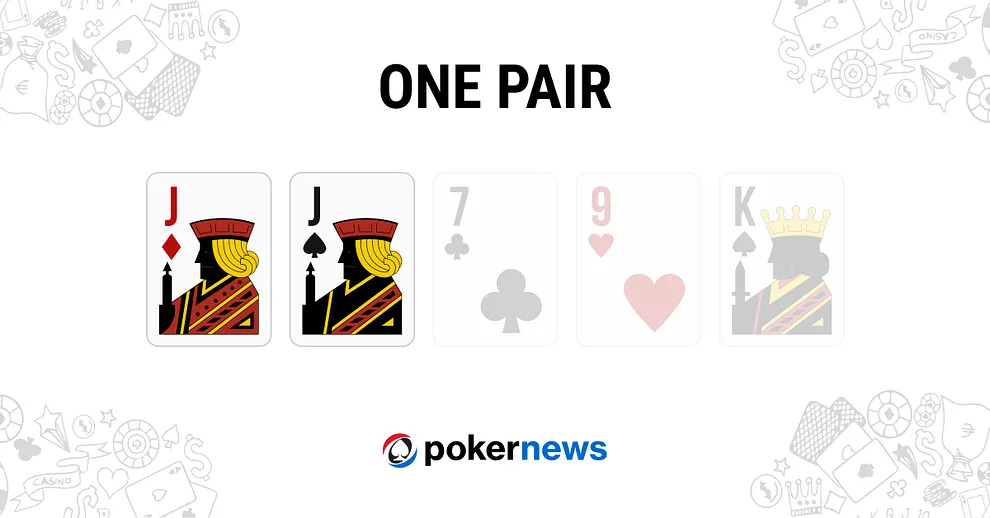
One Pair is a hand containing two cards of the same rank.
| What it Beats | What Beats it |
|---|---|
| One Pair only beats High Cards. | One pair is beaten by Two Pair, Three-of-a-Kind, Straights, Flushes, Full Houses, Four-of-a-Kind, Straight Flushes and Royal Flushes. |
High Card
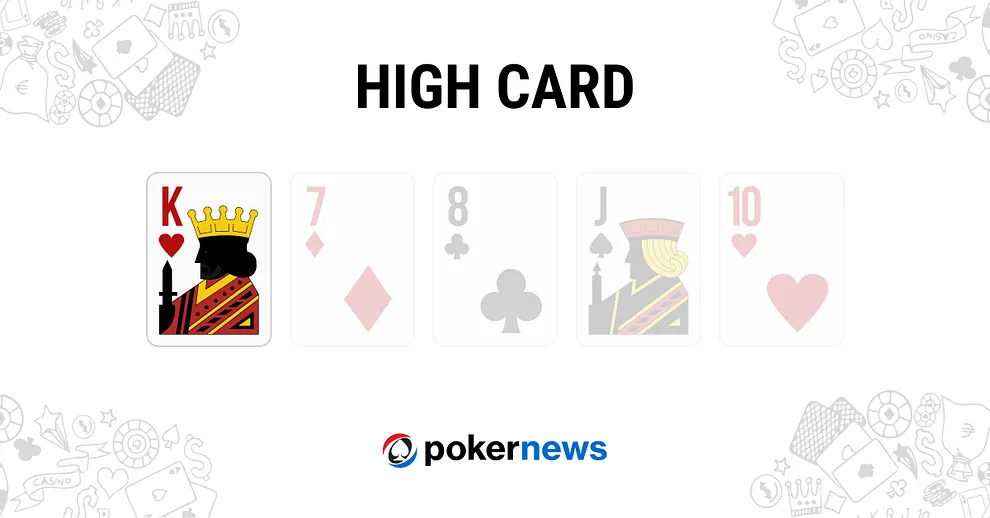
A High Card is when you do not make even One Pair. The highest card determines the winner.
| What it Beats | What Beats it |
|---|---|
| A High Card doesn't beat any other hand. | A High Card is beaten by all other hands. |
Common "Does X Beat Y?" Questions
Let's get more specific. Below are some of the most common queries when it comes to what poker hands beat each other. Checkout each clear, simple definition below.
Does a Flush Beat a Straight?
Yes, a Flush always beats a Straight because suited hands rank above sequential mixed-suits hand in the poker hand hierarchy. If both players have a Flush, the higher card determines the winner. Learn more about Flushes.
WATCH: Do People at the WSOP Know What Wins - A Flush or a Straight?
Does a Full House Beat a Flush?
Yes, a Full House always beats a Flush. The combination of three matching cards plus a pair outranks five suited cards. Should two players have a Full House, the higher three-of-a-kind portion of the hand determines the winner. Learn more about a Full House.
Does Three-of-a-Kind Beat Two Pair?
Yes, Three-of-a-Kind outranks Two Pair every time. Although Two Pair contains four cards, a combination of three matching ranked cards are statistically stronger than two separate pairs. If both players have Three of a Kind, the higher cards win. Learn more about Three-of-a-Kind.
Does Two Pair Beat One Pair?
Yes, Two Pair always beats One Pair. If both players hold Two Pair, the player with the highest pair wins. For example, A♠A♣3♦3♥ beats K♠K♥Q♦Q♠. Learn more about Two Pair.
Does a High Card Ever Win?
Yes, having only a High Card hand can sometimes be enough to win, but it is quite rare due to how many ranked hands beat it. If two or more players get to showdown with a High Card, the highest-ranking card wins, with aces always considered to be high in this scenario. Learn more about High Cards.
WATCH: Spraggy's Outrageous Call with Ace-High
Top 4 Tips for Remembering What Beats What
It's common to feel overwhelmed when you first start learning what beats what in poker, especially when you are trying to learn a thousand other things at the same time. You don't need to worry because all that's required are a few smart memory shortcuts.
Poker's hand rankings follow a logical structure. Once you understand the patterns, comparisons become second nature. The techniques below will help you lock the order into your long-term memory.
- Simple Mnemonics for Poker
- Visual Patterning Tricks
- Common Memory Mistakes to Avoid
- The Only Part Most Players Forget
While knowing what beats what in poker is crucial, don't be put if you're struggling at the start. For most players, things will suddenly click and before you know it you'll not even have to think about which hand is best. Persevere and it will quickly become easier.
1. Simple Mnemonics for Poker
Mnemonics are a great way to commit things to memory because they reduce information into simple, easy-to-remember verbal hooks. Something as simple as "Full beats Flush" is easy to remember, with the similar wording helping you instantly recall that a Full House outranks a Flush. Similarly, "Feeling Flush against a Straight" could help you remember that a Flush beats a Straight.
Another memory technique is known as anchoring. Always remember the extremes first: a Royal Flush is the best, High Card is the worst. Once you have those fixed in your mind, start to add the next best and hands to the sequence.
Thinking in tiers is also helpful for remembering what beats what in poker. For example, you use grouping logic to place hands in tiers. Such tiers may be:
- Monster hands – Royal Flush and Straight Flush
- Powerful hands – Four of a Kind and Full House
- Good hands – Flush and Straight
- Pair-Based hands – Three-of-a-kind, Two Pair, and One Pair
- Nothing – High Card
2. Visual Patterning Tricks
You will come to notice that poker hands follow a kind of visual logic, one where the stronger hands have stronger patterns.
Four of a Kind looks powerful because four cards are the same, and that visual uniformity signals strength. Similarly, a Full House combines two visible groups (three plus two) which is why it outranks a Flush.
When you make a Flush, which is five cards sharing the same suit symbol, your hand looks visually clean. Compare that to a straight, a sequence of five consecutive cards that your brain recognizes as being orderly but less visually dominant than matching suits.
Don't just name the various hands, try to imagine their shapes. Four matching ranks look stronger than three. The three plus two combination of a Full House looks stronger than the five mixed numbers of a Flush.
3. Common Memory Mistakes to Avoid
One of the most common mistakes that a beginner makes is confusing if a Flush beats a Straight. Remember that matching suits beat consecutive numbers. If all the symbols match, the hand outranks a run of numbers.
Overvaluing Two Pair is another frequent error. Two Pair feels like it should be much stronger than it actually is. In reality, it is is the third-weakest poker hand ranking, beaten by Three of a Kind, a Straight, A Flush, a Full House, Four of a Kind, a Straight Flush, and a Royal Flush! That is a lot of potential hands that can beat Two Pair.
Finally, many player forget about kickers. These players correctly identify the hand category but overlook the side cards that come into play in the event of a tie. For example, a pair of Aces with a King kicker beats a pair of Aces with a Ten kicker.
By eliminating this trio of common mistakes, you'll eliminate much of the beginner confusion.
4. The Only Part Most Players Forget
Most players already know the best and worst poker hands. The only part you really need to remember is the middle. This is where the confusion starts.
We all know a Royal Flush is the strongest hand, but middling hands like Flushes and Straights can get lost in the rankings, and it’s easy for beginners to confuse which one is valued higher.
If you memorise the chain in the order shown in the above visual, the entire middle section becomes crystal clear. Everything above it (Royal Flush) is stronger, while everything below it (Three of a Kind and weaker) is lower.
Think of it as like a descending ladder. Once you know a particular step, you automatically know the steps above and below it. Having a mental chain to follow helps to remove hesitation and makes it much easier to compare poker hands in real time.
What Happens if Both players Have the Same Hand?
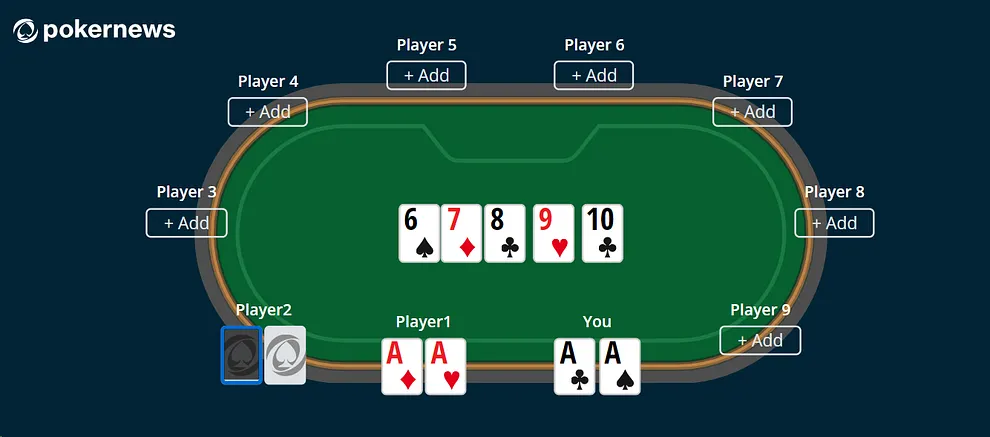
Sometimes, two or more players will reach showdown with the same category of hand. This is more common with weaker holdings, such as High Card, One Pair, and Two Pair because fewer cards are used to make those hands.
When this happens, poker uses precise tie-breaking rules to determine the winner. If you're unsure of how this works, we recommend reviewing the Poker Hand Rankings Guide, although here is a simplified version.
Kickers and Tie-Breakers
So let's talk more about kickers in poker. Imagine you get to showdown of a board reading A♠10♣8♠4♥2♥. Your opponent reveals A♣Q♦ and you turn over A♥K♥. You both have One Pair, a pair of aces. However, you win the hand thanks to having a king-kicker.
As the aim of poker is to make the best five-card poker hand, your hand is actually A♥A♠K♥10♣8♠4♥ while your opponent holds A♣A♠Q♦10♣8♠4♥. Your king, which wasn't used to make a pair, but it comes into play to determine the best five-card poker hand. In this example, your king is the kicker.
When is the Pot Split?
Sometimes, the pot is divided equally (split) because both players have identical five-card hands. This is most common when the best possible hand is entirely on the board.
For example, if the board shows A♠K♠Q♠J♠10♠, every player at showdown holds the same Royal Flush, which nothing beats! No kicker can improve it, so the pot is split evenly.
Straight and Flushes on the board can also result in split pots if players do not hold a card that is higher in rank than the five community cards. Another example that will result in a tie is when both players make the same hand and also have the same kicker, or have the same pocket pair in their hand.
QUIZ: What Beats What in Poker?
Ready to put what you've learned into practice? Compare Hero's hand with the Opponent's and decide who wins, or whether the pot should be split.
Practice Makes It Stick
Reading a guide a few times may help you understand which poker hand beats which, but it is repetition that makes your thought processes become automatic. You will find that your recognition of poker hands become much faster and more accurate once you start to compare hands in realistic situations.
When you repeatedly see scenarios like Flush vs Straight or Two Pair vs Three of a Kind, your brain starts to recognize patterns. Before you know it, you are not consciously thinking about whether a Full House beats a Flush because you instantly know it does.
The fastest way to remember what beats what is to practice making decisions. Try different types of tools, such as…
1. Free PokerNews Tools
So we've established that without a doubt, the fastest way to remember what beats what is to practice making decision. Trying different types of tools is a great place to start. These enable you to test your knowledge and quickly learn what beats what in poker.
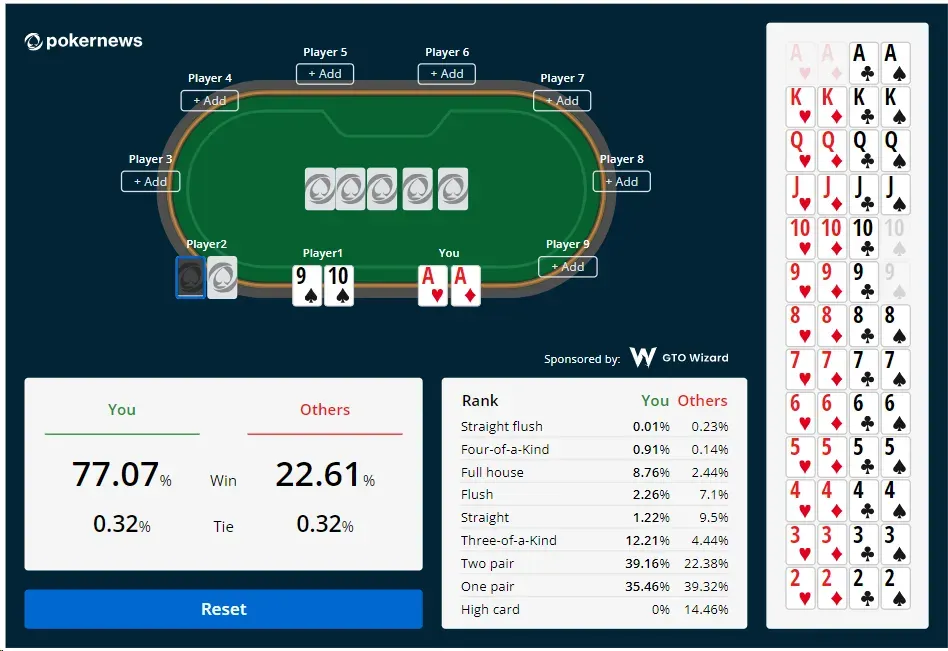
You can also learn via another useful tool on our site - the PokerNews Odds Calculator. This is another excellent free tool that you can play around with, which instantly calculates your equity (chance of winning the hand) in any given situation in Texas Hold'em. You can pick up to nine other opponents' hands, as well as your own and see the real, accurate probability of your aces being cracked!
2. GTO Wizard
Those wishing to delve even deeper into the nuances of the numbers behind poker hands should look at GTO Wizard. Regarded as the best poker solver, GTO Wizard helps you explore how hand strength affects optimal decisions in real game situations.
Don't be alarmed by the complex-looking graphs and in-depth details. GTO talks you through everything in simple terms, making it very usable for both beginners and experienced players. The information GTO Wizard provides can be truly game-changing, and will help you take your poker skills to the next level. If you're looking to take poker more seriously and improve your long-term win rate, GTO Wizard is one of the best options out there - and they even offer a load of FREE resources!
3. Real Online Poker - Free Play, Freerolls and Low-Stakes Games
Once you understand how poker hands compare, the best way to reinforce that knowledge is by playing.
What better way to learn than trying the real thing? Online poker is fast-paced and you can see hundreds of hands an hour. This creates repetition in a real poker environment, which makes comparing hand rankings stick far faster than practicing or reading about them. Even freeroll tournaments or the lowest-stakes games provide valuable exposure to hand comparisons in action.
If you are ready to apply what you have learned in this guide, you should check out our online poker partners. These carefully selected online poker rooms offer a platform where you can play in a safe and regulated environment. They all offer real-money cash games and tournaments with low-stakes and bankroll-boosting welcome bonuses for new players that are perfect for building experience.
Those who are ready to test their knowledge but aren't quite ready to put some money on the line should start by playing freeroll tournaments, or join one of our free-to-play partners. Many online poker sites offer freeroll tournaments, which are free-to-play tournaments that have real-money prizes. Free poker rooms allow you to test and improve your skills using coins that have no monetary value, so you never put any of your bankroll at risk.
Sorry, no real money games are currently available in your region, but you can play these Free Online Games






Learn More About Poker Hands
Mastering what beats what in poker is just the beginning. The deeper your knowledge is of hand structure and probability, the stronger your overall poker skills become. The legendary late Mike Sexton once said of Texas Hold'em that it is "a game that takes minutes to learn but a lifetime to master."
What better way to build on the solid foundations you've laid by reading this poker hand comparison guide than exploring the following detailed guides:
- Poker Hand Rankings
- What is a Kicker in Poker?
- Poker Tie-Breaker Rules
- Poker Hand Probabilities Guide
- Best Starting Hands in Texas Hold'em
- Short Deck Poker Hand Rankings
- How to Play Texas Hold'em (Ultimate Guide)
- Poker Strategy Basics for Beginners
Once you have read, digested, and apply what you learned from the above guides, we highly recommend checking out PokerNews' strategy section. Here, you will find hundreds of free poker strategy articles written by professional players and PokerNews' experts that touch on a massive variety of subjects that will help take your game to the next level.
What Beats What in Poker FAQs
What is the highest hand in poker?
A Royal Flush is the highest possible poker hand. It consists of A-K-Q-J-10 all in the same suit and cannot be beaten. If two players somehow have a Royal Flush, the pot is split.
What hand beats a flush?
A Full House, Four-of-a-Kind, Straight Flush, and Royal Flush all beat a Flush. A Flush beats a Straight and any lower-ranked hand.
Does a flush beat a straight?
Yes. A Flush always beats a Straight in standard poker hand rankings because five cards of the same suit are ranked higher than five cards in sequence
Can two players both have a full house?
Yes. When two players both have a Full House, the winner is determined by the highest Three-of-a-Kind portion first. If those are equal, the pair determines the winner. If both combinations are identical, the pot is split.
What happens if both players have the same poker hand?
If two players have the same hand ranking, the winner is determined by kickers (the highest unused cards). If the five-card hands are completely identical, the pot is split evenly.
Does suit matter in poker?
In most poker games, suits do not determine the winner when comparing hands of equal rank. Suits only matter when forming hands like Flushes and Straight Flushes.
What beats a full house?
Only Four-of-a-Kind, a Straight Flush, or a Royal Flush can beat a Full House.