button in Safari
888poker Gives 7 Tips For Transitioning From Online to Live Poker Easier


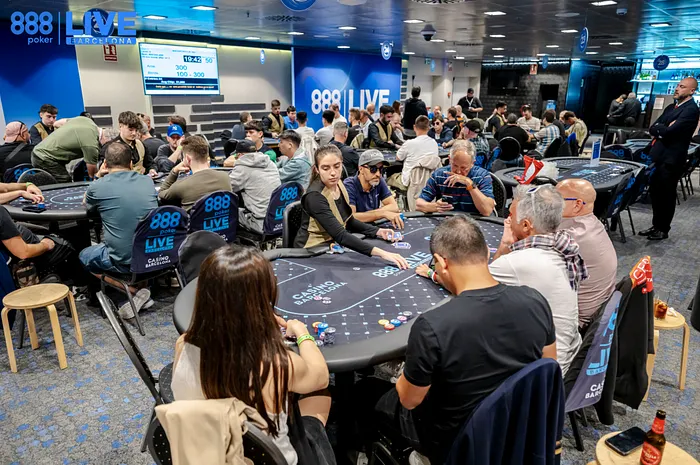
There are many poker players who have only ever played the game online. Some of those players may have followed the action from the 888poker LIVE or 888poker LIVE UK Poker League (UKPL) events and now have a live poker itch that needs scratching.
You're in luck if that describes you, because the 888poker Blog recently posted a strategy article detailing seven tips for those looking to transition from the world of online poker into the live arena.
Be Aware of the "One Chip" Rule
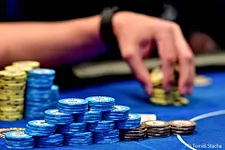
Almost all the rules are identical for online and live poker, with one notable difference: the One Chip rule. At a live poker table, using a single chip without a verbal declaration is always ruled as a call, as the 888poker Blog explains.
"If someone raises to 400 and you throw in a single 1,000-denomination chip in silence, it's a call. To raise, you must either verbalize your intention first ("raise to 1,000") or put in the correct number of chips in a single motion. Verbal declarations are binding, so state your action clearly before your chips cross the line.
Keep Track of the Pot's Size
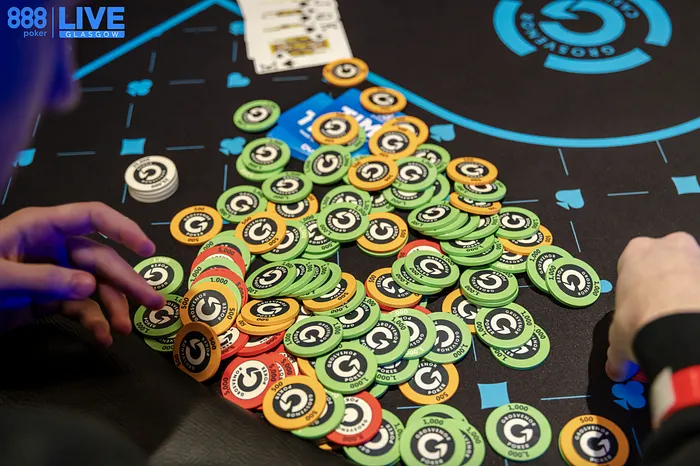
Those whose main poker experience stems from playing at 888poker or other online poker sites may struggle to keep track of the pot's size when they play in a live setting. Unsurprisingly, there is no HUD or software that tells you the pot's exact size when you are sitting in a live poker room.
Knowing how many chips are in the pot is crucial for proper bet sizing. Try keeping a running tally from the moment the first chips go into the pot. Don't worry if you lose count or forget to count because the dealer can help you.
"You're entitled to ask the dealer to spread the pot so you can recount it."
While that is true, dealers are not allowed to tell you how many chips are in the pot; they can only spread the pot around so you can count the chips more easily.
Make Adjustments for the Slower Pace
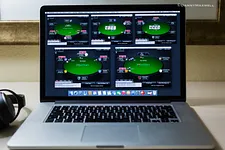
The primary difference between online and live poker is the much slower pace of live poker. Online, you may see 70-90 hands per hour, more if you play multiple tables. In a live poker game, expect to see 20-30 hands per hour.
This slower pace is why you often see players at the table scrolling through their phones, watching television, and constantly chatting between hands. Instead of falling into this trap of distraction, utilize the slower pace to keep tabs on your opponents.
"Use the downtime to study your opponents – their betting patterns, physical habits, and reactions to the board cards."
Watching all your opponents like a hawk is challenging, especially if you are new to live poker. PokerNews suggests studying the players seated two to your left and two to your right if you are struggling to take in the information from eight opponents. This is because the players to your left will be in the blinds when you have the button. Conversely, those two to your right will be on the button when you are in the blinds.
Estimate All of Your Opponents' Stack Sizes Before Each Hand
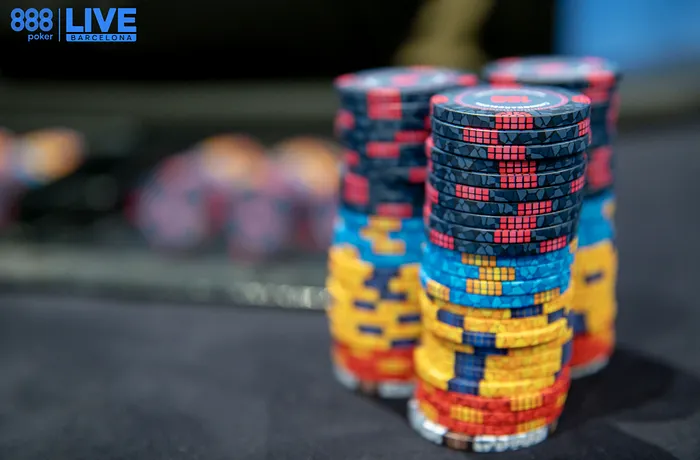
In a similar vein to keeping track of the pot's size, you should make a habit of checking the stack sizes of your opponents before each hand. Chip stacks are clearly visible in online poker games, but you'll have to do some mental mathematics when you play live.
You don't want to get into a spot where you raise and are priced in to call a short-stack's shove, or call with a small-to-medium pocket pair hoping to hit a set, only to later discover that the pot odds weren't there.
Most of your opponents will stack their chips in towers of 10 or 20. Twenty is preferred because that's how many chips fit in a chip rack when you transport chips to a different table.
"You're within your rights to ask an opponent to tidy a messy stack, and you can ask the dealer or floor staff to enforce this if needed."
Live Tells Are Very Real
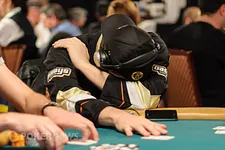
The two most prominent online poker tells that players give off are the size of their bets and how quickly they act during a hand. Live poker is a minefield because the opportunity to unintentionally reveal information about your hand is always there.
"Most beginners overestimate their ability to read tells in others, and underestimate how much they're giving away themselves. The safest approach is consistency: act the same way in every hand, regardless of your holding. Put chips into the pot the same way every time. Fix your gaze on one spot on the table while waiting for opponents to act. Avoid chatting when you're active in a hand."


Manage Your Table Image
This next tip is not something I personally think is true, but I will include it, seeing how the 888poker Blog thought it was worthy of discussing. The 888poker Blog says you should manage your table image and be aware of what your attire and accessories say about you to your opponents.
It claims that sitting with headphones on signals you're on autopilot, and that recreational players dress for a night out rather than in the so-called "grinder uniform" of a hoodie and sweatpants. It also suggests that using poker terms like "three-bet" and "triple barrel" signals that you're well-studied and take the game seriously, which can make less experienced players uncomfortable.
In my opinion, these are dangerous assumptions to make. Live poker players come in all shapes and sizes and with vastly different appearances. The saying "never judge a book by its cover" is true in the live poker world. Not everyone who is dressed like a stereotypical poker player is good at the game, while not everyone dressed for a night on the town is going to be a massive fish.
Interact With Your Fellow Players

The seventh and last tip continues discussing table image through betting and conversation.
"Controlling your table image goes beyond appearances. How you bet and how you interact at the table sends constant signals about the kind of player you are and directly affects whether recreational players stay or leave."
Again, some of the statements are inaccurate, such as "always raising or folding from the small blind and never limping reads as tight and kills table energy." This is wrong because always raising in the small blind wouldn't signal that you were tight; it would convey the message that you were aggressive. Furthermore, in a full-ring cash game, you should be open-limping from the small blind in around 32% of your hands, which again isn't tight.
The one part that does make plenty of sense is to be sociable at the tables.
"Banter is part of live poker. Smile, make conversation, crack a joke when it fits."
If you do enter a conversation with your fellow poker players, be aware of what you are saying and what information your words are giving away. For example, depending on what you say, you could invertedly tell a foe your level of poker experience, how likely you are to make a move on the bubble, or if you're willing and able to run big bluffs or make thin value bets for all of your stack.