button in Safari
Bryn Kenney Bets Nearly Twice the Pot. Would You Call With Bottom Pair?


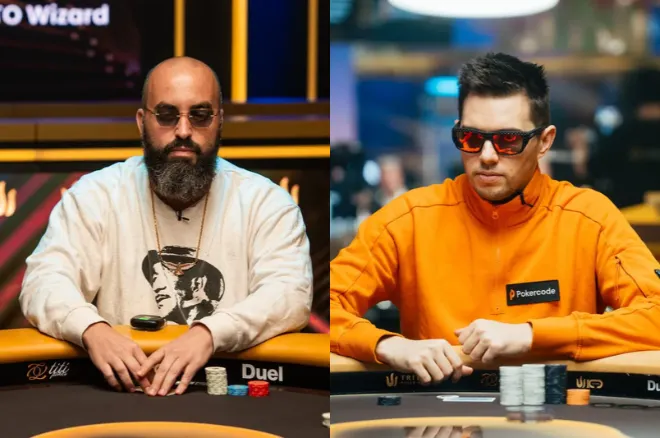
Calling a massive river overbet with bottom pair is never an easy decision, especially when you're playing in a $200,000 buy-in tournament against one of poker's biggest names.
But that's exactly what Matthias Eibinger did against Bryn Kenney during the Triton Invitational at the 2026 Triton Super High Roller Series in North Cyprus.
With just bottom pair, Eibinger faced a 178% pot overbet from Kenney on the river. After a lengthy spell in the tank, the Austrian made the call, only to be shown an overpair.
Kenney scooped a 102,500 pot, but was Eibinger's hero call really a mistake? And should Kenney have been betting so big?
With the help of GTO Wizard, they've break down the hand street by street to see why Kenney's enormous river bet works and whether Eibinger was right to pay him off.
The Hand
Blinds were 1,000/1,500 with a 1,500 big blind ante. Just two players had been eliminated from the 78-player field, with Eibinger sitting on 289,000 (192 BBs) in the lojack and Kenney holding 231,000 (154 BBs) in the big blind.
Eibinger opened to 3,000 with A♠3♠, and Kenney defended with J♥J♣.
The 10♥5♦3♣ flop gave Eibinger bottom pair, while Kenney held an overpair. Both players checked.
The 2♥ arrived on the turn and Kenney led for 7,000 into 8,500. Eibinger called with his pair of threes and a gutshot straight draw.
The river brought the 2♣, pairing the board for a second time. With 22,500 in the middle, Kenney fired a massive 40,000 bet, worth 178% of the pot.
Eibinger went deep into the tank before eventually calling with A♠3♠.
Kenney revealed his pocket jacks for two pair, and Eibinger mucked. The American collected the 102,500 pot.
Why Doesn't Kenney Three-Bet Pocket Jacks?
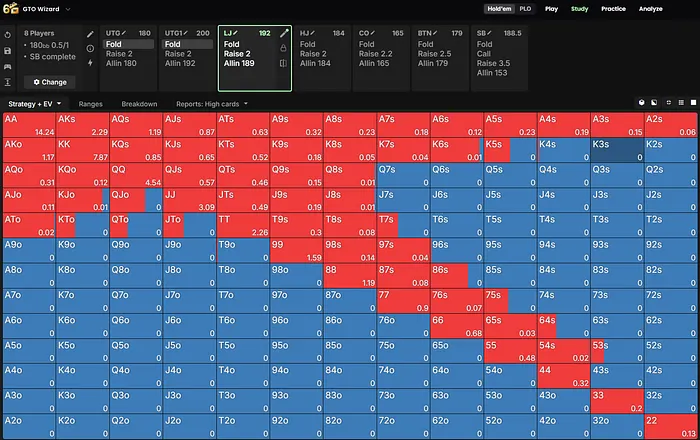
Both players get the GTO Wizard seal of approval preflop.
Eibinger's raise to 3,000 with A♠3♠ is all good, with the solver recommending a pure raise to two big blinds with all suited ace-x combinations.
Kenney's decision is a little more interesting as pocket jacks are usually a strong candidate for a value three-bet, but with both players sitting on more than 150 big blinds, the solver actually prefers calling.
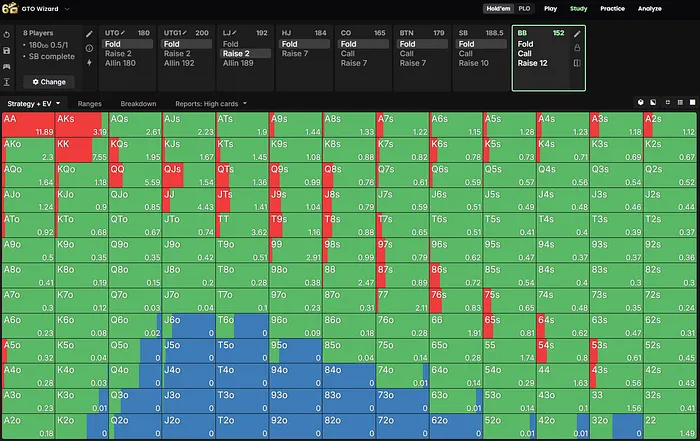
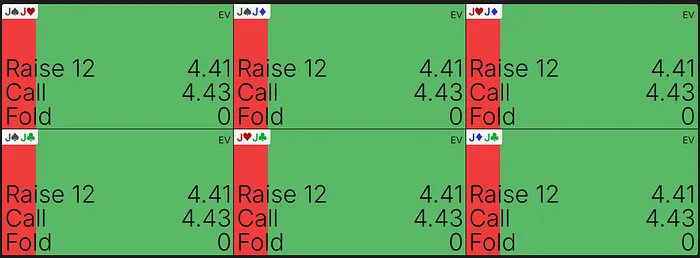
GTO Wizard does occasionally three-bet to 12 big blinds, but calling generates slightly more EV, 4.43 compared to 4.41.
Playing so deep makes calling more attractive because it keeps weaker hands in the pot while avoiding building a huge pot out of position against a strong opening range.
So while Kenney could have raised, his decision to disguise the strength of his pocket jacks was the most profitable option.
Should Eibinger Have Bet Bottom Pair on the Flop?
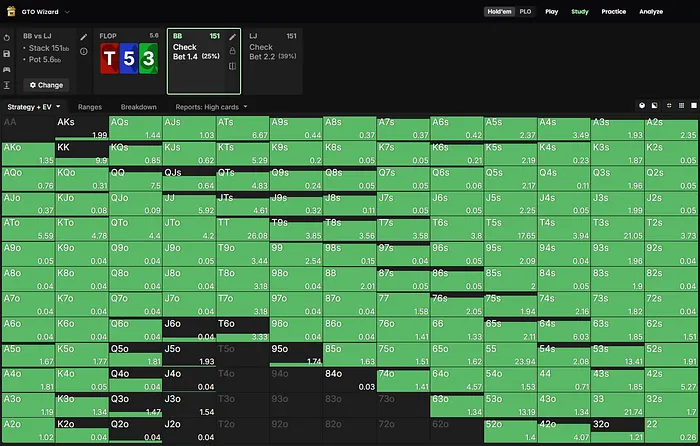
The 10♥5♦3♣ flop keeps Kenney ahead and Eibinger made bottom pair.
Kenney checks, which is exactly what GTO Wizard recommends. In fact, the solver checks its entire big blind range on this board, including every pocket jacks combination.
Eibinger checks behind, but this is where the solver would have preferred a different approach.
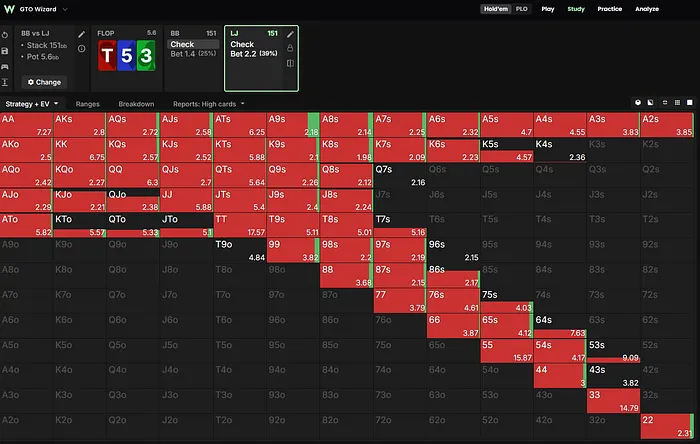
Despite holding just bottom pair, Eibinger has a significant range advantage on this flop.
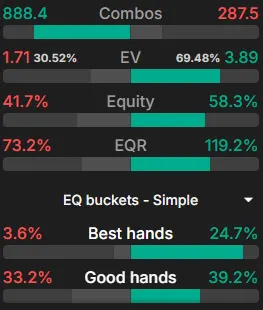
GTO Wizard gives the lojack 58.3% of the equity and 69.48% of the EV, along with a much greater proportion of the strongest hands, 24.7% compared to just 3.6% for the big blind.
Add in Eibinger's positional advantage, and it's easy to see why the solver wants him betting so frequently.
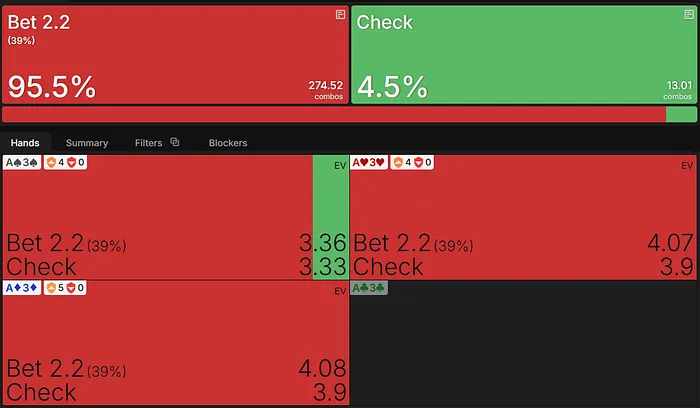
GTO Wizard recommends continuation betting 95.5% of the lojack's range, generally using a small 39% pot sizing.
That includes A♠3♠, although the solver does occasionally check the hand at a very low frequency.
Eibinger's check is therefore still solver approved, but betting would have generated more EV.
To examine the rest of the hand, GTO Wizard adjusted the lojack's strategy to check 10% of its range, allowing the solver to account for Eibinger's actual flop decision.
Kenney Takes the Lead on the Turn
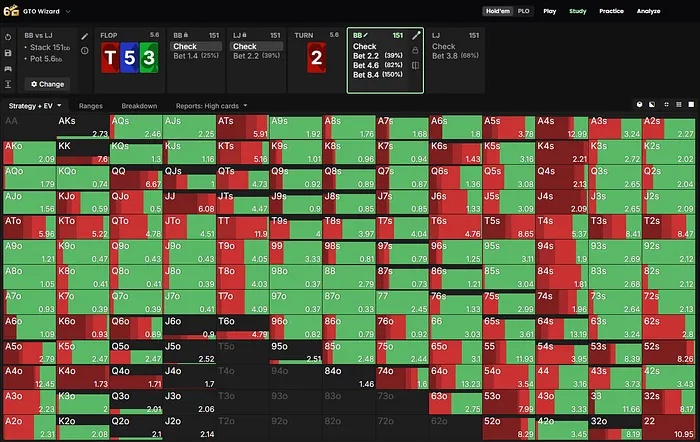
The 2♥ arrives on the turn, and Kenney decides it's time to start building the pot.
He bets 7,000 into 8,500 with J♥J♣, a sizing worth around 82% of the pot.
GTO Wizard approves, although the solver mixes between several different bet sizes with pocket jacks.
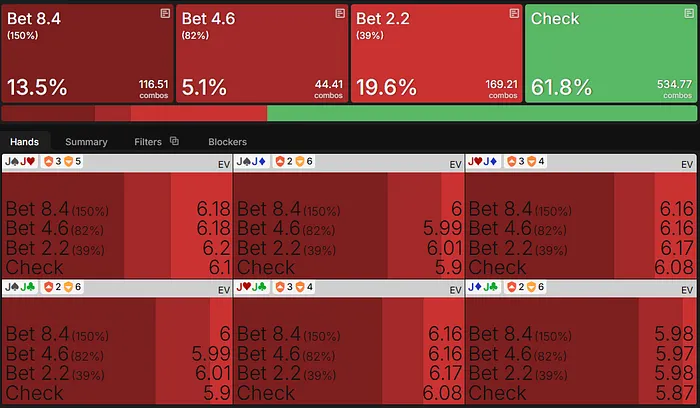
It slightly prefers either a smaller 39% pot bet or a much larger 150% overbet but the EV differences are almost nonexistent.
Eibinger now has a decision with A♠3♠. He holds bottom pair, but the turn has also given him a gutshot straight draw, with any four completing a wheel.
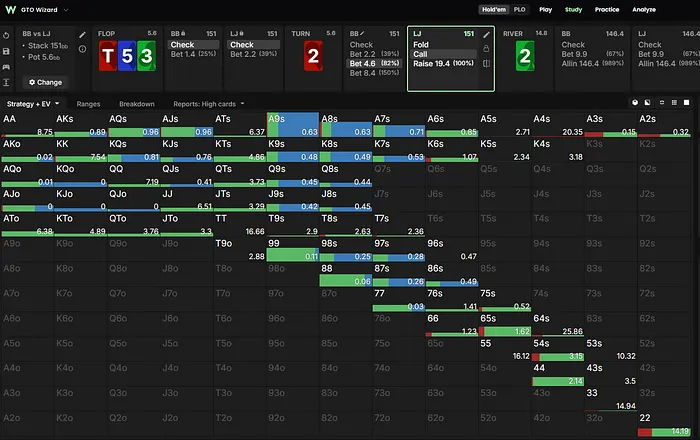
GTO Wizard recommends calling.
Against Kenney's bet, the solver calls 57.6% of the lojack's range, folds 39.4% and raises just 3%.
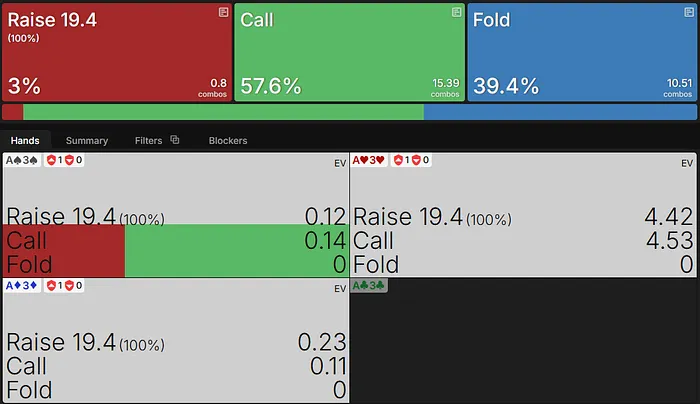
Raising with ace-three would turn a hand with showdown value into a bluff, while folding would give up on a hand that still has ways to improve.
Calling keeps Kenney's weaker hands and potential bluffs in the pot, making it the most profitable decision.
Why Does Kenney Overbet the River With Pocket Jacks?
The 2♣ completes the board, leaving Kenney with jacks and deuces and Eibinger with threes and deuces.
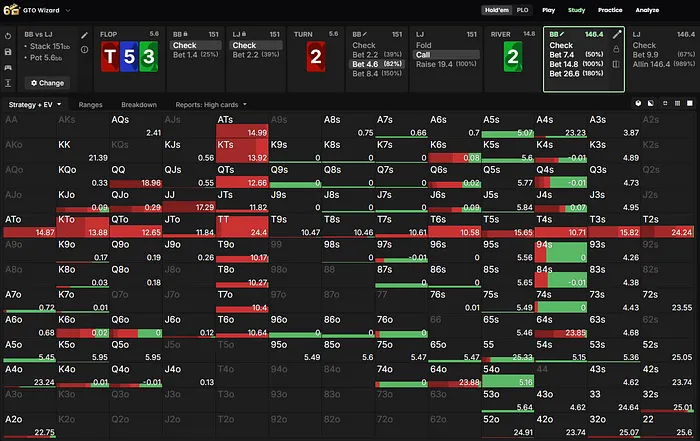
With 22,500 in the middle, Kenney fires 40,000, an enormous 178% pot overbet and GTO Wizard loves it.
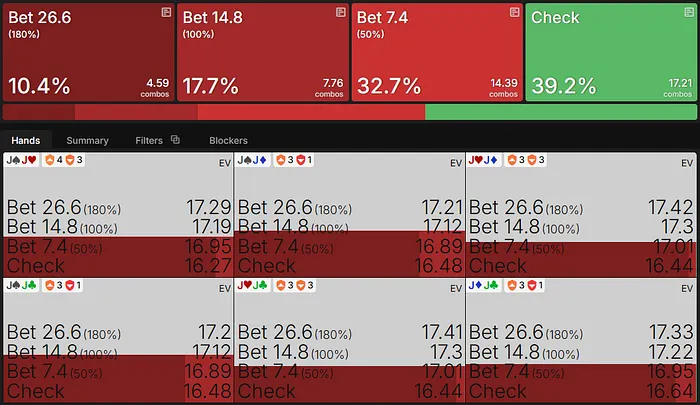
The solver recommends a mixed betting strategy with pocket jacks, with the largest 180% pot sizing generating the highest EV.
Specifically, the overbet produces 17.42 EV with J♥J♣, compared to 17.30 for a pot-sized bet and 17.01 for a half-pot bet.The difference isn't enormous, but the larger sizing is the most profitable option.
So why does the solver want Kenney betting so much? One important factor is Eibinger's decision to check back the flop.
By doing so, the Austrian arrives at the river with a somewhat capped range, containing fewer overpairs and other very strong hands than he would have if he had bet the flop.
That allows Kenney to apply considerable pressure with a polarized range containing strong value hands and bluffs.
Pocket jacks are firmly in the value category, and the solver wants Kenney extracting as much as possible from Eibinger's bluff-catchers.
The American's decision to fire almost twice the pot was therefore right on the money.
Was Eibinger's Bottom-Pair Hero Call Too Loose?
Facing a 40,000 river bet with just A♠3♠, Eibinger has a difficult decision.
Kenney has taken an aggressive line on the turn and river, and the Austrian can beat only a bluff.
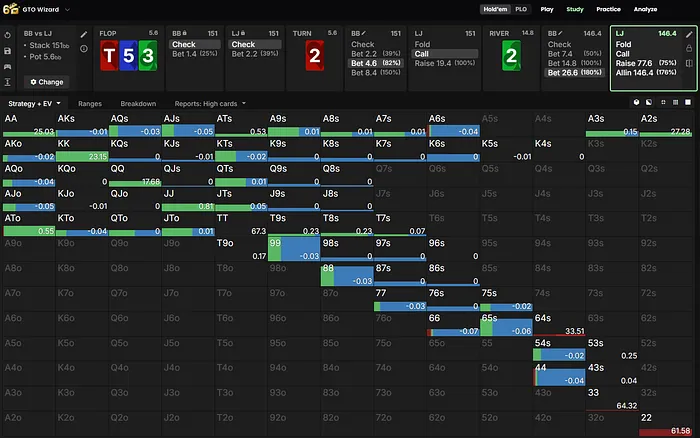
After spending a considerable amount of time in the tank, Eibinger eventually puts in the chips.
Kenney shows pocket jacks, and Eibinger loses the pot.
But according to GTO Wizard, the call was correct.
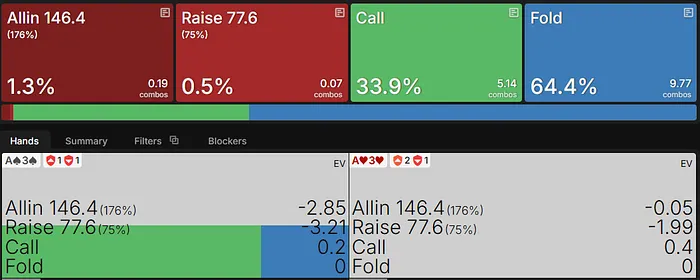
The solver folds 64.4% of the lojack's range against the 180% pot overbet and calls just 33.9%.
Yet ace-three suited is among the hands that continue at a high frequency.
To understand why, we need to look at the hands Kenney can be betting this big with.
His river overbetting range contains strong value hands such as pocket jacks, pocket tens and pocket deuces, alongside bluffs including king-jack offsuit, queen-jack offsuit and missed straight draws such as J4s, Q4s, K4s, J6s, Q6s and K6s.
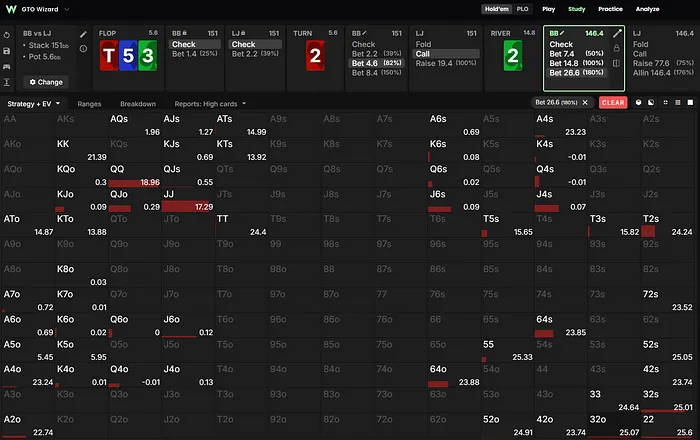
Eibinger's exact hand also has some useful properties for making the call. Holding an ace and a three blocks certain value combinations, including A2s and pocket threes, while leaving many of Kenney's potential bluffs unblocked.
That makes A♠3♠ a better bluff-catcher than its absolute hand strength might suggest.
Eibinger's flop check also matters. Because his range contains fewer strong hands by the river, he cannot simply fold every weak pair when facing a large bet.
He needs to defend with some hands that look uncomfortable to call with, and ace-three is one of them.
So while the result didn't go his way, Eibinger's decision was backed up by the solver.
What Can We Learn From the Hand?
This hand shows why a river call cannot be judged solely by whether it wins or loses.
Kenney played his pocket jacks well throughout the hand. His preflop call kept weaker hands in the pot, his turn bet built value and his massive river overbet was the solver's preferred sizing.
Eibinger, meanwhile, made a series of defensible decisions despite eventually losing a substantial pot.
His flop check wasn't the solver's favorite option, but it was still part of the strategy. His turn call with bottom pair and a gutshot was correct, and his river hero call remained profitable against Kenney's balanced overbetting range.
The key is understanding how both players arrive at the river. Kenney can have enough bluffs to justify an enormous bet, while Eibinger's range is sufficiently capped that he must sometimes call with relatively weak hands.
It's not every day that calling almost twice the pot with bottom pair is the right decision, but against a player capable of finding the necessary bluffs, folding everything except strong hands would be a costly mistake.
Kenney won the chips, but GTO Wizard gave both players plenty of credit for how they played the hand.