button in Safari
Was This King-High Call GTO Genius or a Punt Gone Right? GTO Wizard Explains

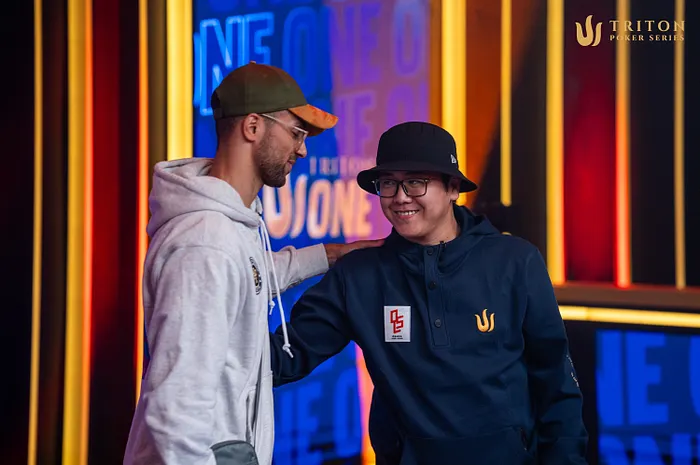
In September, former footballer [Removed:546] beat the pros to win the inaugural Triton ONE Main Event for $975,225.
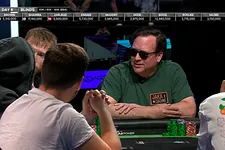
While [Removed:547] took the trophy from the 1,046 entry field, there was one hand from the final table that left the eventual champion a bit red in the cheeks. [Removed:547] tried to bluff Japan’s Daiki Shingae off of a pot with jack-high but was snap-called by nothing more than king-high.
Our friends at GTO Wizard were very interested in the spot and decided to break it down to see if Shingae’s call was a stroke of genius or simply a costly punt.
Hand Overview
Daiki Shingae opened to 2,000,000 on the button with K♥10♣ and [Removed:546] defended the big blind with J♥10♥.
The flop came Q♣8♣6♦ and both players checked. The turn was the 6♣, where [Removed:547] bet 1,700,000 and Shingae called.
The river brought the 7♠. [Removed:547] bet 3,000,000 and Shingae snap-called. [Removed:547] showed his jack-high, while Shingae revealed his non-paired hand to win the 8,900,000 pot with king-high.
Hand Context
- Players Left: 5
- Blind Levels: 500,000/1,000,000 – 1,000,000 (BB Ante)
Payouts (before heads-up deal agreed):
- $1,367,000
- $814,000
- $573,000
- $431,000
- $328,000
Stacks at the start of the hand:
- Ruogo Wen (HJ) – 43,000,000 (43bb)
- Punnat Punsri (CO) – 78,000,000 (78bb)
- Daiki Shingae (BTN) – 54,000,000 (54bb)
- Dajie Zhuo (SB) – 47,500,000 (48bb)
- [Removed:546] (BB) – 38,000,000 (38bb)
Preflop
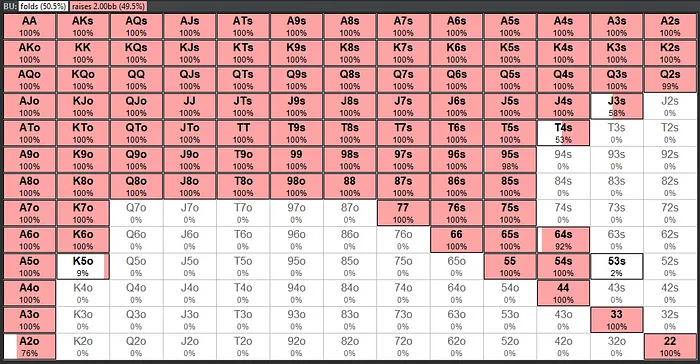
There's nothing too much to discuss in regards to the preflop action. Both plays are perfectly in line with solver-approved ranges.
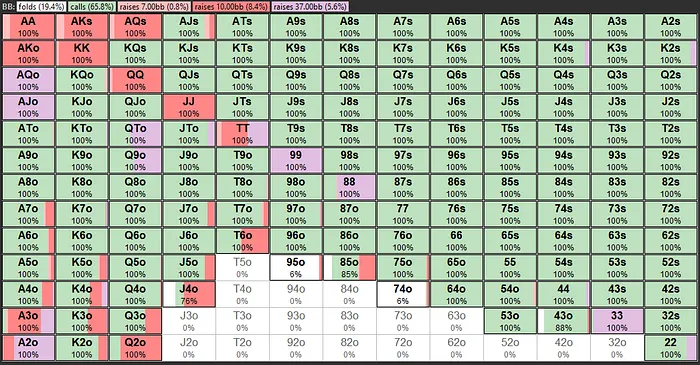
From the button, king-ten offsuit is a clear open. On the big blind side, the solver’s approach leans heavily on a polarised three-betting strategy — using the very top of the range, along with some of the weaker offsuit AxXx, KxXx, and QxXx holdings — while calling with the middle-strength hands. Jack-ten suited falls squarely into the calling portion, making [Removed:547]’s defend absolutely standard.
Flop
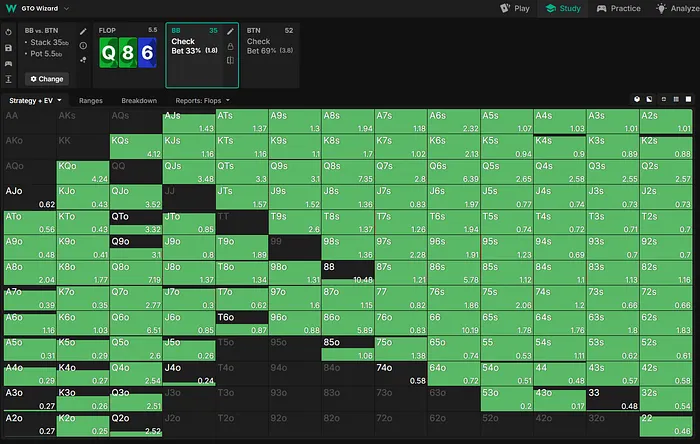
Both players missed the Q♣8♣6♦ flop and the action checked through. From the big blind, [Removed:547]’s decision to check is exactly what the solver prescribes. On this texture, the solver recommends zero donk-betting.
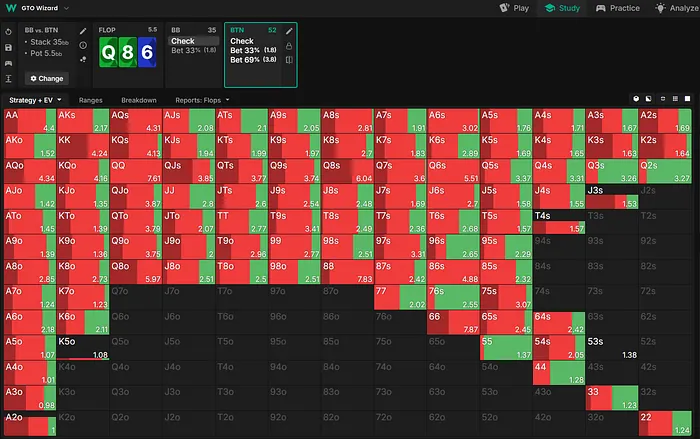
Shingae’s check-back is also solver-approved, though less frequently so. On this flop, the button holds the range advantage and should bet aggressively, often c-betting with a large portion of holdings.
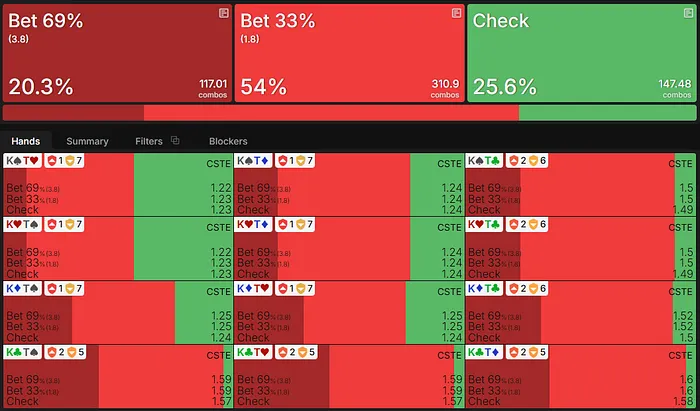
King-ten without backdoor clubs, however, does fall into the solver’s low-frequency check-back range. Checking occasionally is important for balance, as betting 100% of holdings may allow sharp opponents to adjust and punish overly aggressive strategies.
Turn
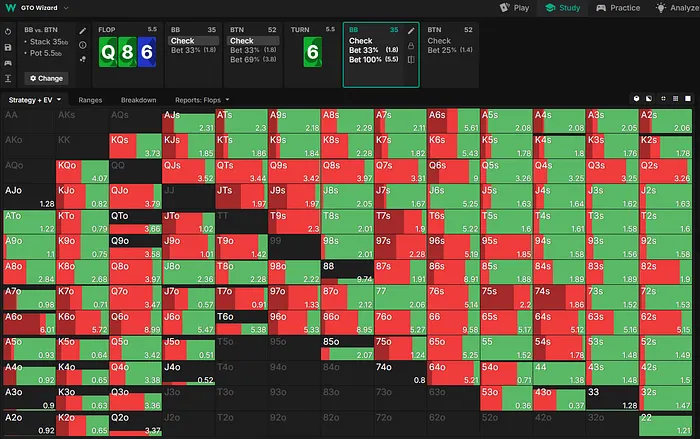
The board paired on the 6♣ turn and the flush draw came in. [Removed:547] led for 1,700,000 into 5,500,000. Solver output shows that the big blind plays a mixed strategy here, splitting between checks, small bets, and large polarised bets.
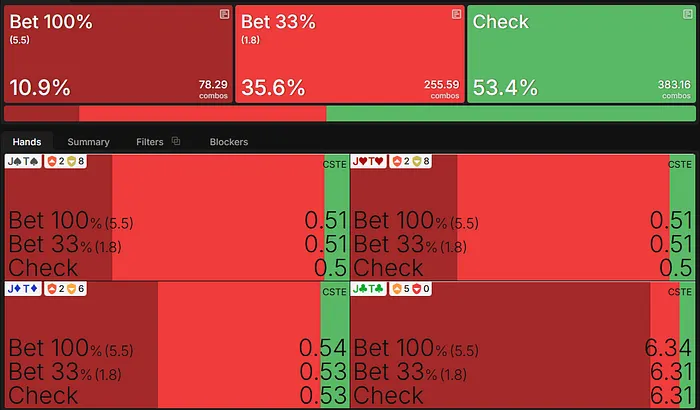
This is because the big blind’s range now contains many boats (hands like 86s, 66, and even some 6x combos) and flushes, which favour large bets, while trips and certain top pairs prefer smaller sizing. To avoid imbalance, the solver spreads bluffs across both bet sizes.
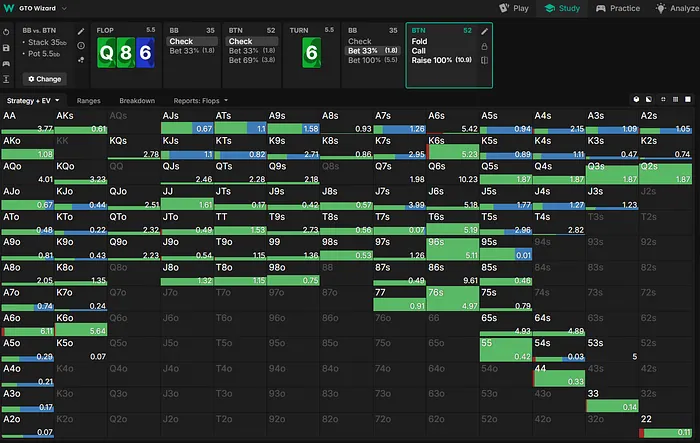
Jack-ten of hearts fits neatly into this structure, mixing between small bets and checks. The 1.7 million sizing aligns with solver output, making [Removed:547]’s decision theoretically sound.
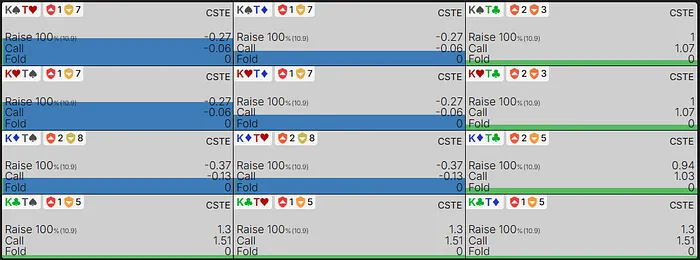
Shingae called, also solver-approved. The solver does suggest folding some king-ten combinations on this turn, specifically those without a club, but never folding when holding a flush draw. All of the king-ten combos with a club simply call, which generates the highest EV. In other words, Shingae’s decision to continue was correct.
River
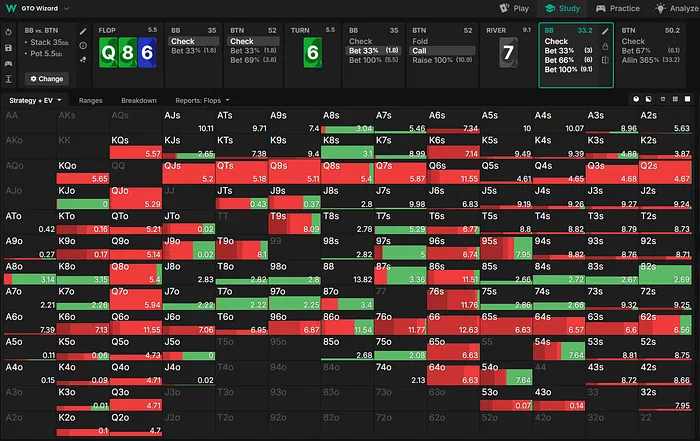
The 7♠ completed the board for it read Q♣8♣6♦6♣7♠. [Removed:547] fired out 3,000,000 into 8,900,000. At first glance, this may look like a thin spot to bluff, but solver analysis shows jack-ten suited is a legitimate candidate.
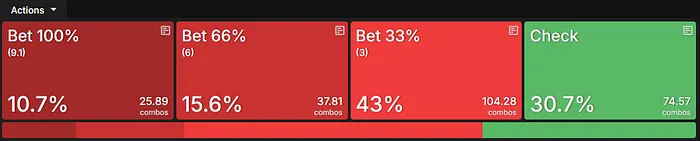
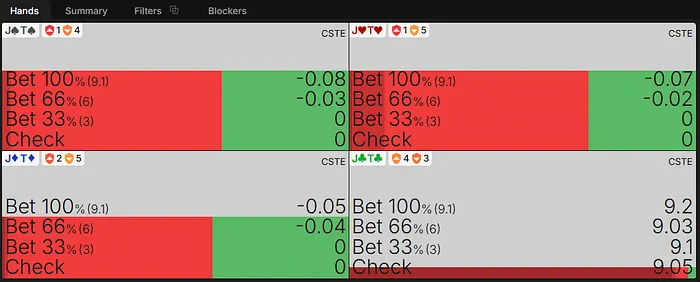
With no showdown value, it falls into what GTO Wizard categorises as “trash hands,” the natural bluffing part of the range. Crucially, the solver shows that the big blind has very few worse holdings in this spot. By selecting J♥10♥ as a bluff, [Removed:547] was following correct solver-approved theory.
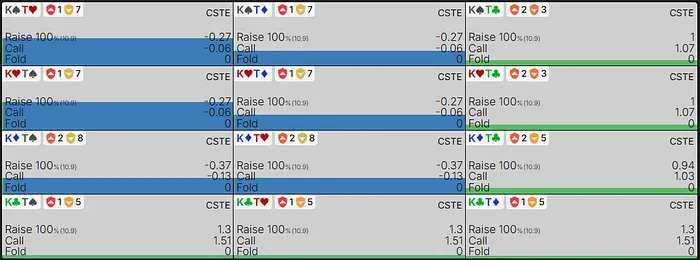
Shingae’s snap-call with king-high, however, is where the paths diverge. Solver output disapproves of the call. King-ten offsuit is supposed to fold to this sizing. The button has plenty of stronger bluff-catchers available, and king-ten blocks many of the offsuit KxXx combos that would otherwise appear in [Removed:547]’s bluffing range. By holding a king, Shingae reduces the number of natural bluffs his opponent can have, which makes calling worse in expectation.
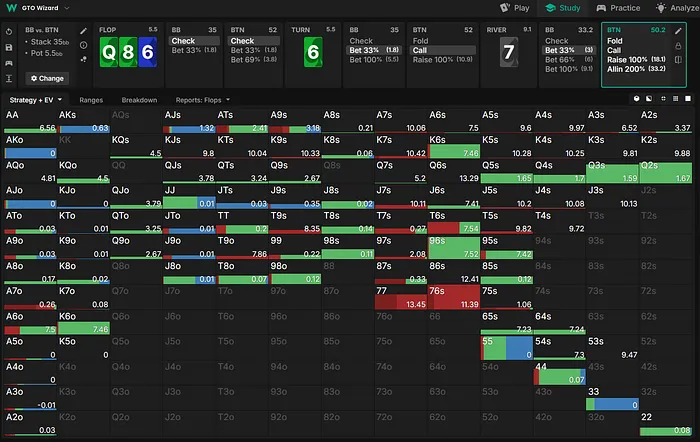
The solver also notes that folding produces higher EV than calling, and at extremely low frequency, even shoving all-in can outperform folding though only marginally. From a strict GTO perspective, king-ten should have gone into the muck.
Conclusion
To conclude this high-level, complex hand, both players followed solver-approved lines up until Shingae ’s river call. That said, the solver’s recommendation is only a baseline, and in-game, Shingae may have had additional reasoning, such as live tells, which the solver cannot account for.
Understanding the GTO strategy in spots like this is invaluable, but if Shingae noticed a tell from [Removed:547] suggesting he was bluffing, then calling with his hand would therefore be the best decision in that context, since his hand does in fact beat all of Joshua’s bluffs.
Either way, these two didn’t hold back on such a massive final table, and that deserves full respect.
If you want to learn GTO and improve your final table game, download GTO Wizard for free using the link below.