button in Safari
How to Play Against Limpers in Live Poker Tournaments


Have you ever wondered what the optimal strategy is when playing against limpers in live poker tournaments? If so, this article is for you.
GTO Wizard has recently introduced a new multiway preflop AI solver that allows you to solve preflop spots instantly with up to nine players involved.
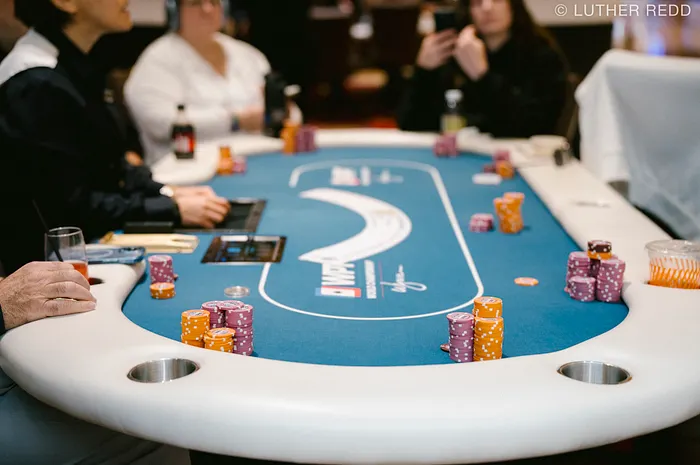
While playing live poker recently at the Dublin Poker Festival, I noticed that even in an $800 buy-in event there were still a lot of players open limping. In online poker, you mostly see limps in micro and low-stakes tournaments, and now that I primarily play mid-stakes events, open limping is something I encounter quite rarely.
Live poker, however, is different. Even in relatively high buy-in tournaments you still find many players open limping, along with far less isolation raising than theory recommends.
If you are new to some of the fundamentals of tournament poker, you may want to review the basics such as poker hand rankings or brush up on the rules of Texas Hold’em before diving into solver-based strategy.
So in this article I will run a series of tests using GTO Wizard's new multiway preflop AI solver to find out what the optimal strategy looks like when playing against these types of players.
One important thing to note is that this feature currently only allows two options when facing a limp: isolation raising or folding. The only exceptions are from the blinds. Just in case you are wondering why the solver is not recommending any calls.
100bb vs UTG Limp
When we solve this spot while giving UTG the option to limp, you will notice the solver wants to mix most combos, even premium hands like AA, KK, QQ, and AK. This is because the solver is trying to remain balanced with both its limping and raising ranges. Otherwise, it would be too easy for opponents to exploit.
In reality, however, players do not limp this way. One useful feature in GTO Wizard is the ability to nodelock ranges and adjust them to reflect how players actually behave in game. This allows us to create a more realistic scenario and see what the optimal strategy looks like against the ranges players are likely to use in practice.
Nodelocked UTG Range:
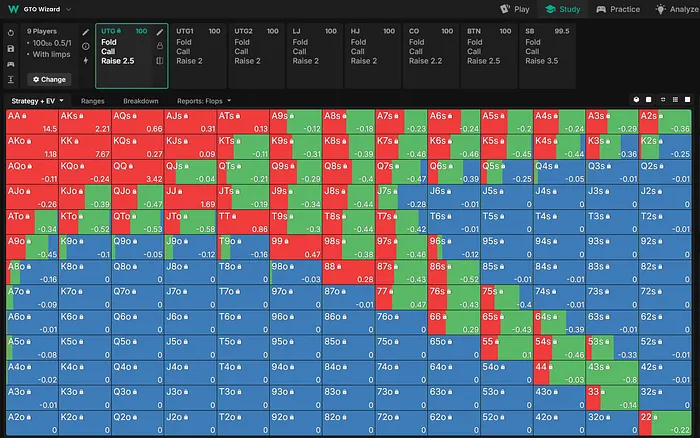
- Red = Raise
- Green = Limp
- Blue = Fold
Based on my experience, this is a rough estimate of the type of range a player who likes to open limp might use. They will still raise their strongest hands but tend to limp many of their weaker holdings.
Now let’s take a look at the optimal strategies for playing against this type of limping range.
100bb UTG1 vs UTG Limp
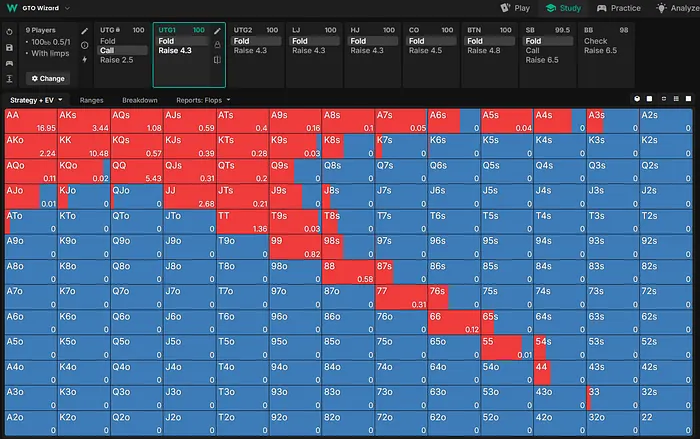
The first thing that immediately stands out is the 4.3bb raise size being used. This is not a size I would typically use myself, and it is also one I rarely see players use when isolating a limper.
I usually use around 3.5bb as a standard iso-raise size when in position vs a limp across most stack depths, so it is interesting to see that the solver prefers a larger size when playing 100bb deep.
For those wondering, I also tested other raise sizes for this spot. However, 4.3bb produced the highest EV with this range, which is why it is recommended by the solver.
100bb UTG Response vs UTG1 Raise
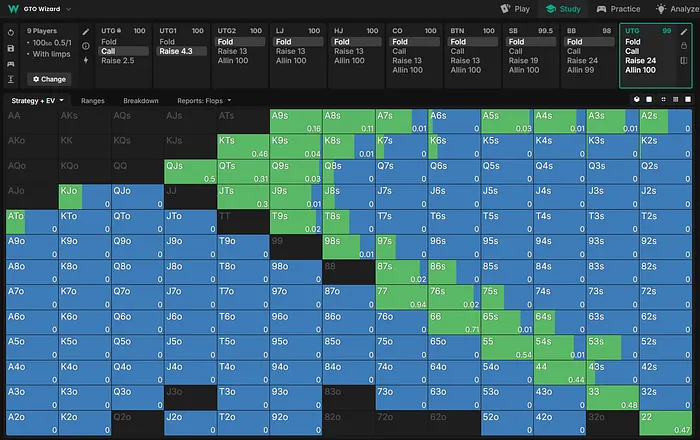
The solver then recommends this as the optimal strategy for UTG when facing the iso-raise. In my opinion, this looks like a fairly reasonable calling range compared with what the population tends to use after limping.
Of course, some players will overfold while others will call too wide in this type of spot.
The key when studying situations like this is to first understand the optimal strategy, and then nodelock the ranges to better reflect how players actually behave in game.
When reviewing spots like this away from the table, tools such as a poker odds calculator or structured poker range charts can also help visualise how different ranges interact.
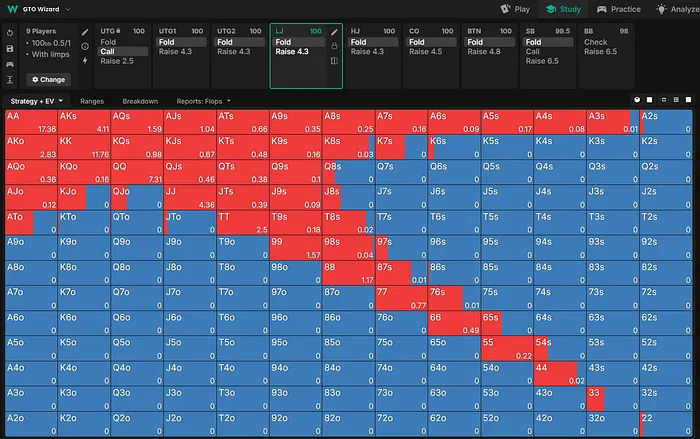
Now let’s take a look at the strategy for the other positions when facing this 100bb UTG limp.
100bb LJ vs UTG Limp
100bb BTN vs UTG Limp
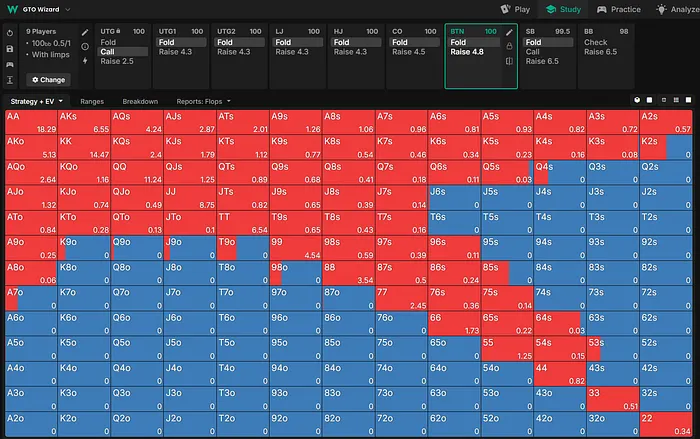
100bb SB vs UTG Limp
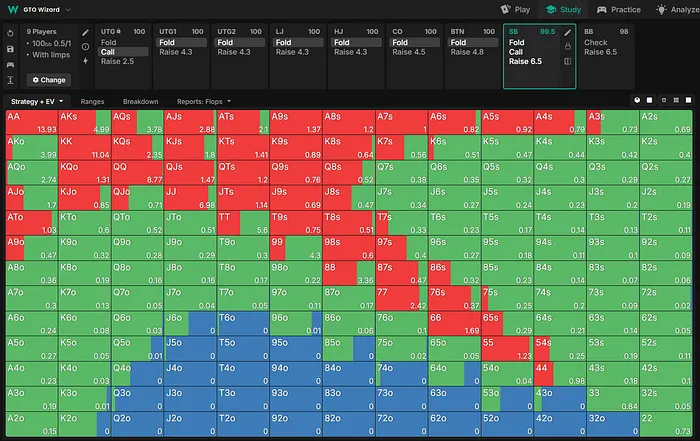
In general, the optimal strategy when facing a limp is to iso-raise with many hands. However, the small blind is a unique case because you have already invested 0.5bb.
This means you are getting a very good price to overlimp, which is why the solver shows such a high frequency of overlimping from this position.
100bb BB vs UTG Limp
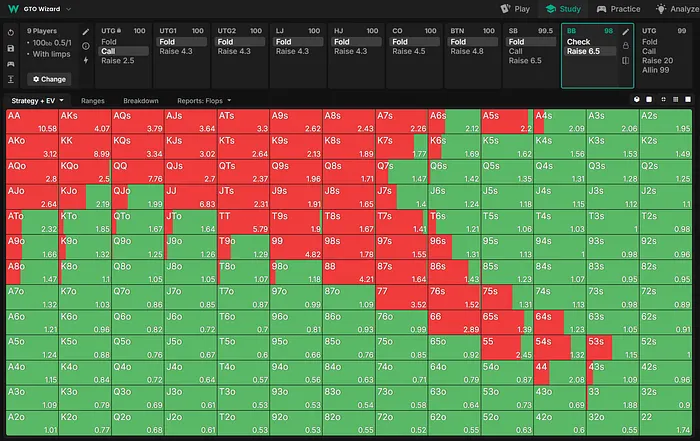
One of the most important takeaways when playing 100bb deep vs a limp is the raise sizes recommended by the solver: 4.3bb, 4.5bb, 4.8bb, and 6.5bb. These sizes are significantly larger than what most players currently use when isolating a limper.
Because of this, it is very useful to see what the truly optimal iso-raise sizes look like when analysing the spot with this new feature.
Let’s now take a look at how things change when playing 50bb deep. For this example, I will keep the UTG range exactly the same.
50bb UTG1 vs UTG Limp
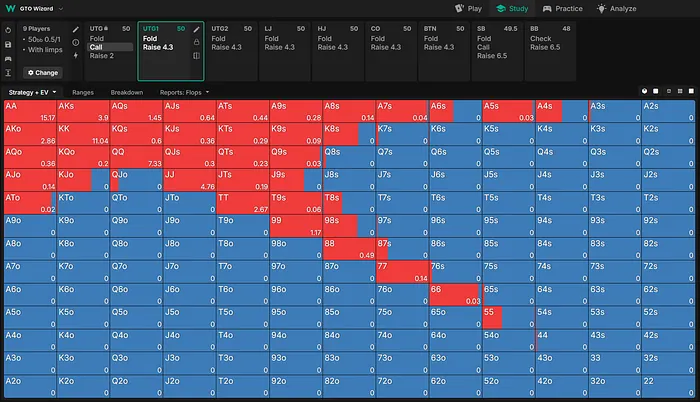
The first interesting thing to note is that the raise sizes have not changed from the 100bb scenario.
I also tested other sizing options, but the ones recommended by the solver are indeed optimal, as they produce the highest EV.
50bb LJ vs UTG Limp
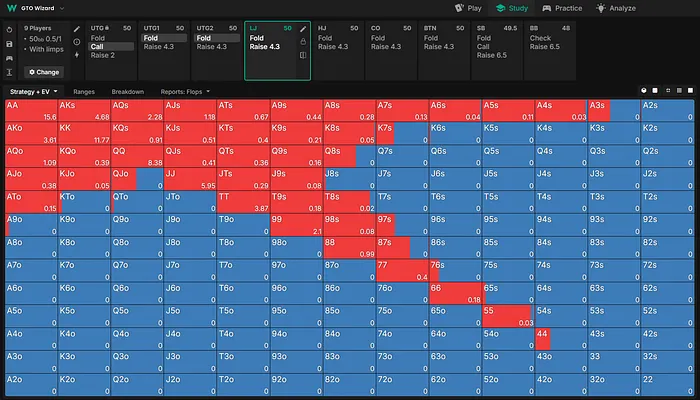
50bb BTN vs UTG Limp
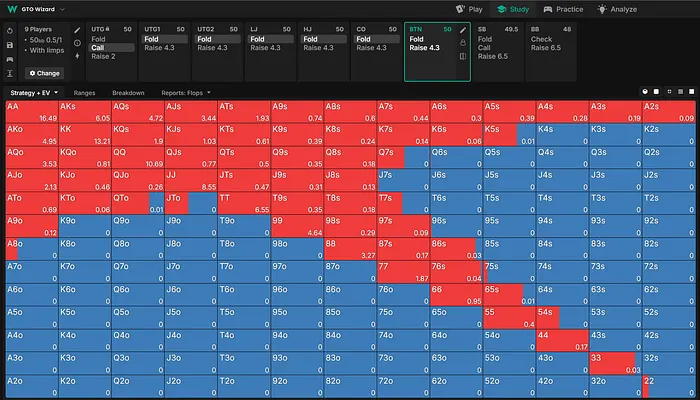
50bb SB vs UTG Limp
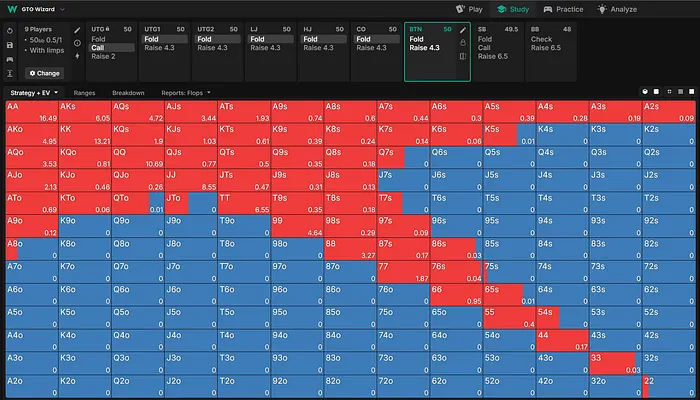
One important takeaway from this range is which hands are being folded. Personally, I was calling more of the offsuit combos from the small blind, so it is useful to see what the optimal strategy actually looks like in this spot.
50bb BB vs UTG Limp
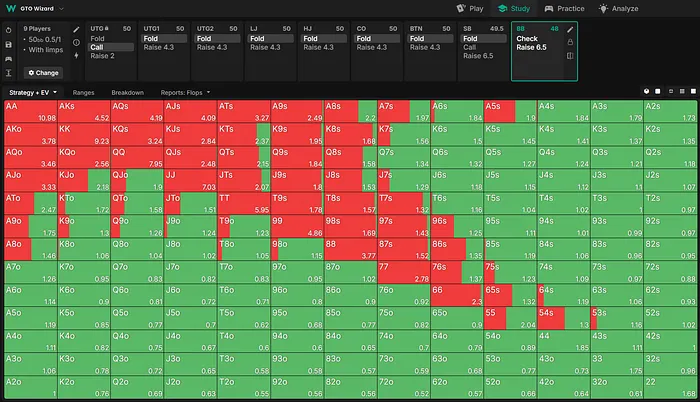
Let’s now take a look at how things change when playing 25bb deep. For this example, I will adjust the UTG range to account for the much shorter effective stack.
25bb UTG Nodelocked Range
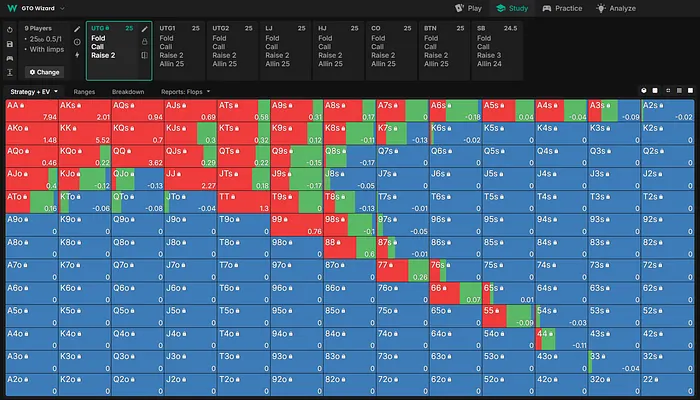
Again, this is a rough estimate of the type of range a player who likes to open limp might use with 25bb.
25bb UTG1 vs UTG Limp
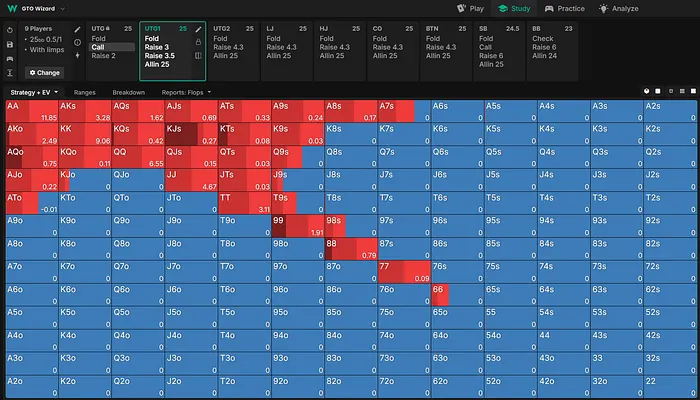
The solver recommends a split raise sizing of 3bb and 3.5bb, which are sizes that the population commonly uses when isolating a limp, including myself. So it is good to know I was not a million miles away.
Interestingly, you can also see a very small percentage of hands jamming, highlighted in dark red.
25bb LJ vs UTG Limp
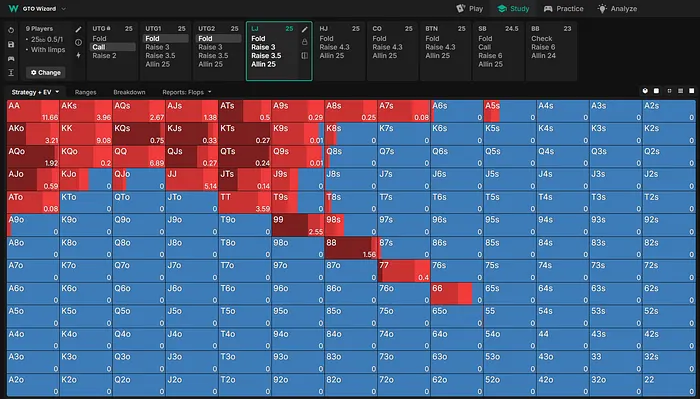
There is a 3.9% jamming frequency vs a UTG limp.
25bb BTN vs UTG Limp
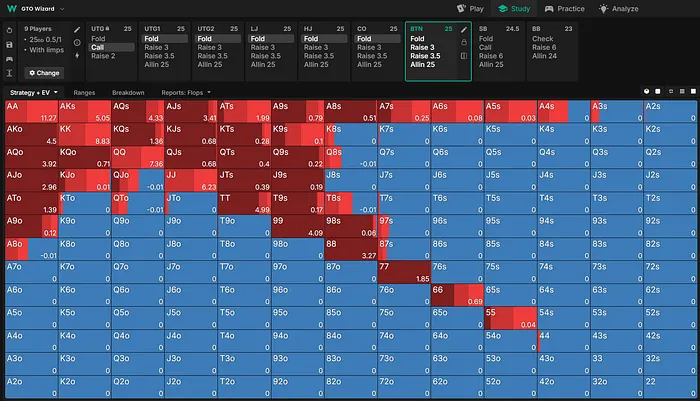
We now see a significant increase in jamming, rising to 11.2%. Let’s look at UTG’s calling range to understand why this happens.
UTG Response vs BTN All-in
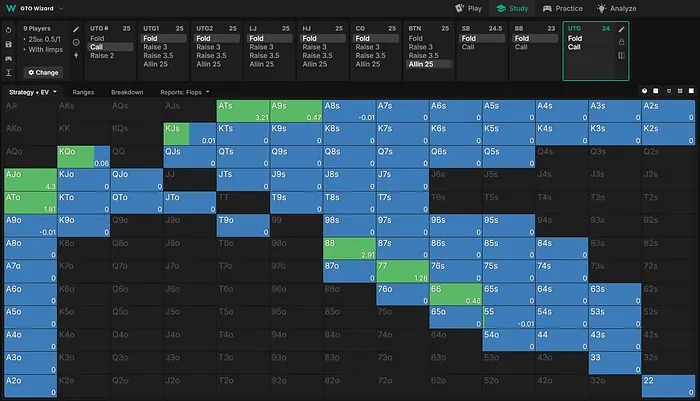
Because UTG is open-raising all of their strongest hands, their limping range is much weaker. This allows the button to jam 11.2% of hands, as UTG cannot call very often with the range they arrive with in this spot.
25bb SB vs UTG Limp
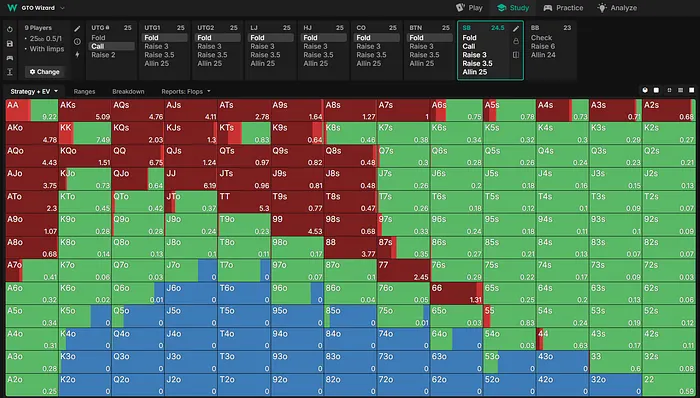
Similar to the button, the small blind can now jam a high percentage of hands (17.2%) vs the UTG limp. In this spot, the solver only recommends continuing with either a call or an all-in.
25bb BB vs UTG Limp
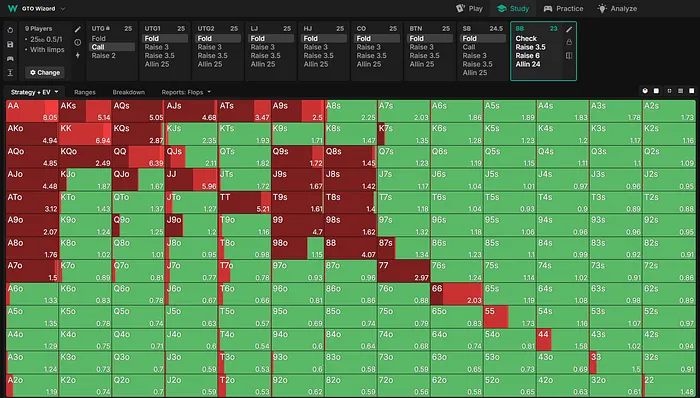
The solver also recommends an all-in option from the big blind, but it still mixes in some non-all-in iso-raises, with 6bb being the most optimal size.
Key Takeaways
- Isolation raise sizes vs limps are often larger than most players currently use, especially when playing deep stacked. The solver consistently prefers raise sizes between roughly 4bb and 6bb when isolating a limp at 100bb.
- As stack depths decrease, jamming becomes a much bigger part of the strategy. This is largely because limping ranges tend to be weaker and cannot comfortably call off against shoves.
- Position plays a major role when attacking limps. Late position and the blinds can apply significant pressure, particularly when stacks fall below 30bb.
- Use solver outputs as a baseline, then adjust for population tendencies. Study the optimal strategy first and then nodelock ranges to reflect how real players actually limp and respond in practice.
- Many live players under-isolate limpers. Increasing your iso-raise frequency and using stronger sizing can be a simple way to exploit common tournament tendencies.
If you want to try this new feature on GTO Wizard for yourself, click the link below.
You can also explore additional study resources in the PokerNews poker tools section.