button in Safari
Did WSOP Main Event Champ Michael Mizrachi Play GTO Poker Back in 2013?


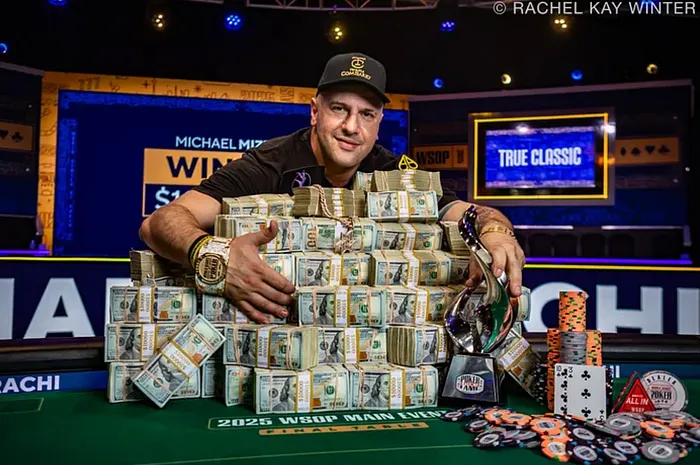
Long before GTO solvers became part of everyday poker study, players relied on experience, feel, and pattern recognition at the table.
PokerNews Ambassador Lukas “RobinPoker” Robinson went back to a hand from Day 3 of the 2013 WSOP Main Event to see how those instincts stack up against modern theory.
Using GTO Wizard and poker tools, Robinson wanted to find out whether 2025 champ Michael Mizrachi was already making solver-approved decisions more than a decade ago, long before GTO theory became part of the modern poker vocabulary.
The Hand
The hand took place on Day 3 of the 2013 $10,000 WSOP Main Event. A total of 962 players remained from an original field of 6,352, with 648 players set to be paid. The average stack was 198,000, while both Steinberg and Mizrachi sat comfortably above 425,000, giving them roughly 180 big blinds each.
With the money bubble approaching and both players among the bigger stacks in the room, ICM pressure was beginning to matter, especially in confrontations between players capable of eliminating one another.
With the blind's at 1,200/2,400 and a 400 ante, Max Steinberg opened to 9,000 from UTG+1 holding K♣10♣. Mizrachi defended from the big blind with 7♥6♣.
The flop came 10♠8♣4♣. Mizrachi checked, Steinberg continuation-bet 13,000, and Mizrachi called.
The turn was the 5♠. Steinberg completed a king-high flush, while Mizrachi made an eight-high straight. Mizrachi led out for 25,000, Steinberg raised to 70,000, and Mizrachi called.
The river brought the 6♦. Mizrachi checked, Steinberg bet 120,000, and Mizrachi called. Steinberg’s flush was good, winning the pot.
Pre-Flop Analysis
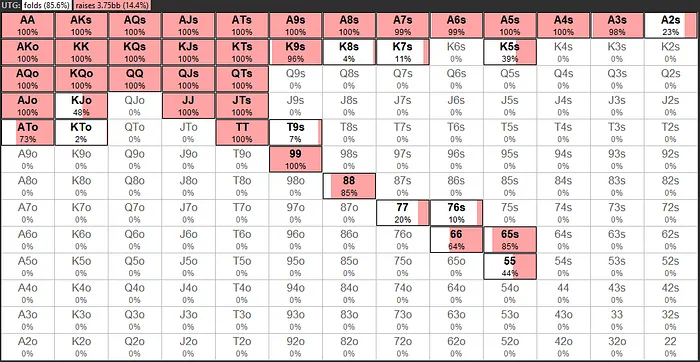
Steinberg’s open with K♣10♣ is solver-approved, though the sizing stands out. At 3.75 big blinds, it is larger than modern solver-preferred sizes, which usually sit between 2x and 2.5x.
However, once Steinberg’s range is nodelocked to this larger open size, the solver confirms that his hand selection is sound. In effect, Steinberg was using a strategy that still holds up under modern analysis.
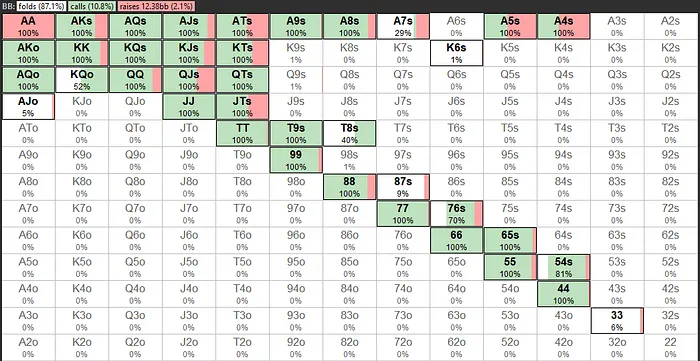
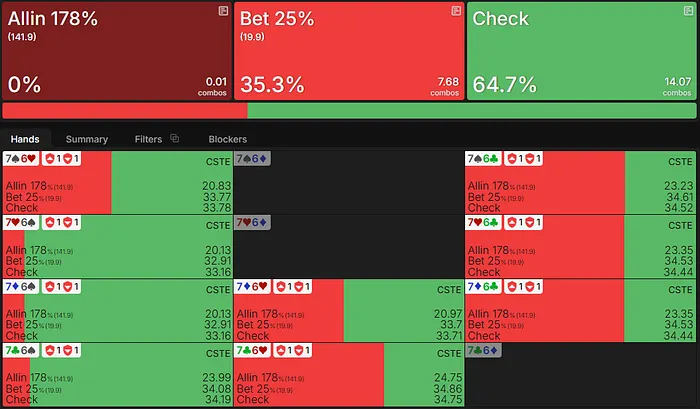
Mizrachi’s defense with 7♥6♣ is where the solver first objects. Facing a larger-than-standard open from UTG+1 and with ICM pressure building near the bubble, the big blind is expected to defend much tighter. In theory, seven-six offsuit is not part of the calling range and loses roughly $199 in expected value (EV).
To make the post-flop analysis realistic, Mizrachi’s pre-flop range was nodelocked to reflect the wider, real-world defense he actually used.
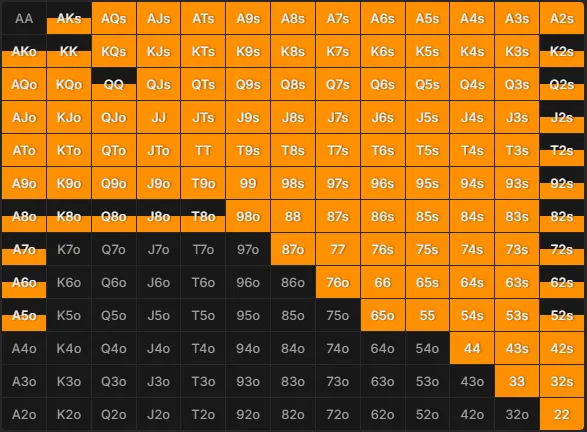
If you want a baseline for how modern ranges compare in common spots, check out our poker range charts.
Flop Analysis
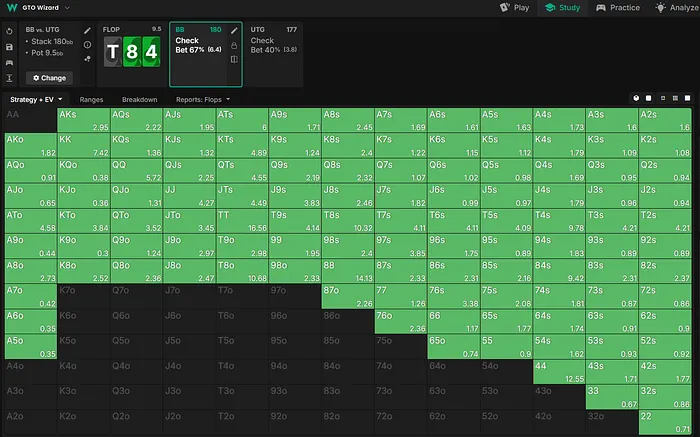
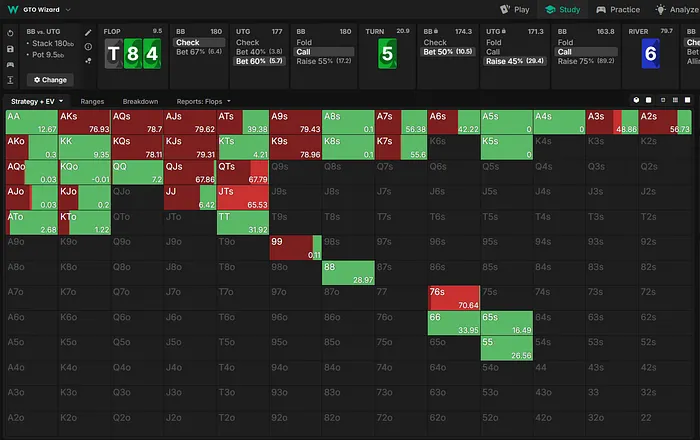
On the 10♠8♣4♣ flop, Mizrachi checked his double-gutter, which is solver-approved. The big blind plays a pure checking strategy on this board.
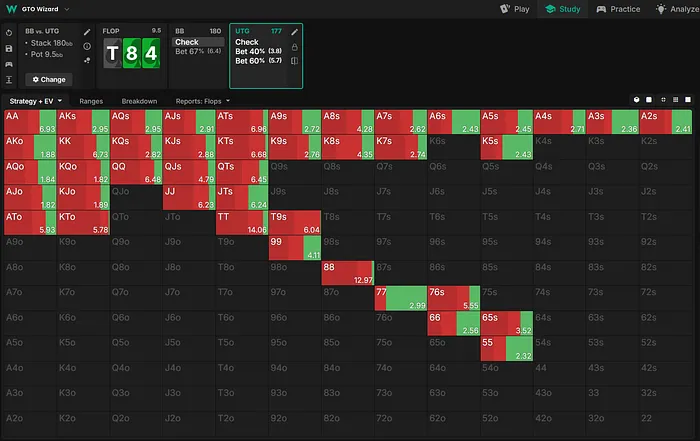
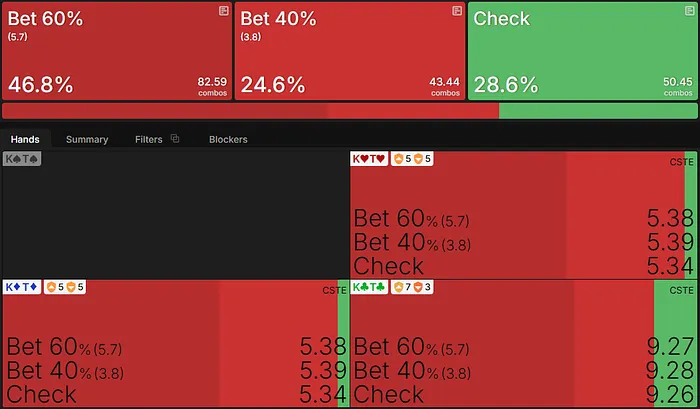
Steinberg’s continuation bet of 13,000 with top pair and a flush draw is also approved. From UTG+1, the solver recommends a heavy betting strategy on this texture. With K♣10♣ specifically, the solver mixes between medium and larger sizes, favouring a 60% pot bet across the overall range while allowing some checks at low frequency.
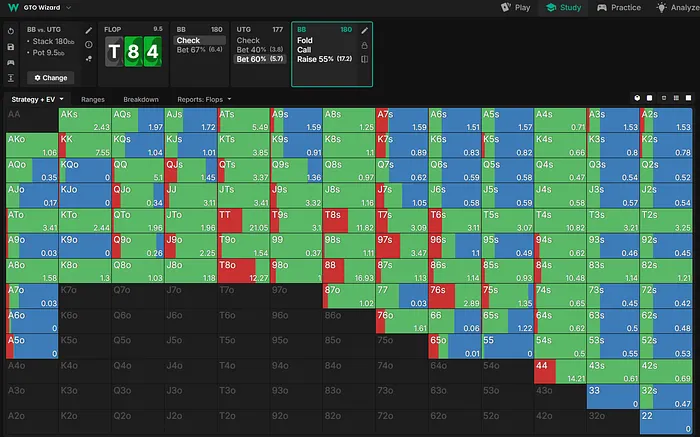
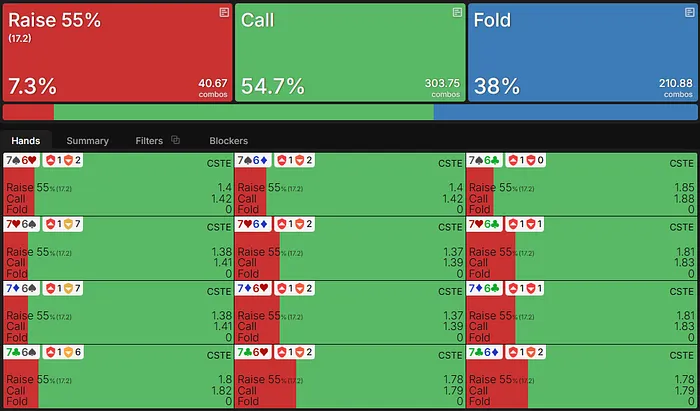
Mizrachi’s call with 7♥6♣ is correct. The solver prefers calling with this hand, mixing in only a small number of raises at very low frequency.
Turn Analysis
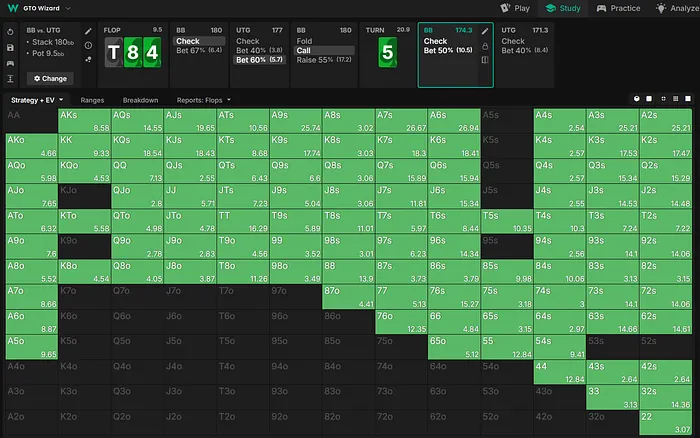
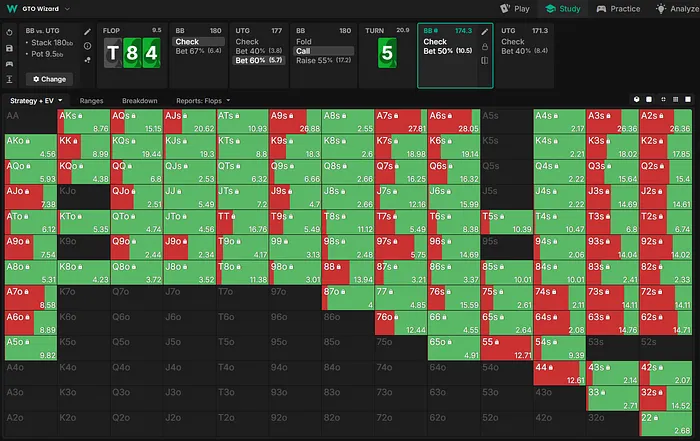
The 5♣ turn is the defining card of the hand. Steinberg completes a flush, while Mizrachi makes a straight. Despite this improvement, the solver strongly disapproves of Mizrachi’s donk-bet for 25,000.
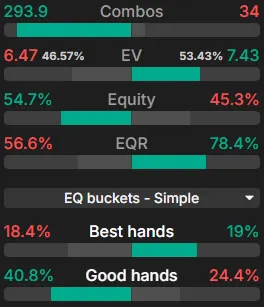
Even though Mizrachi now has a made hand, the UTG+1 range still dominates in terms of nut advantage and overall equity. Because of that, the big blind should continue checking rather than leading into the pre-flop raiser.
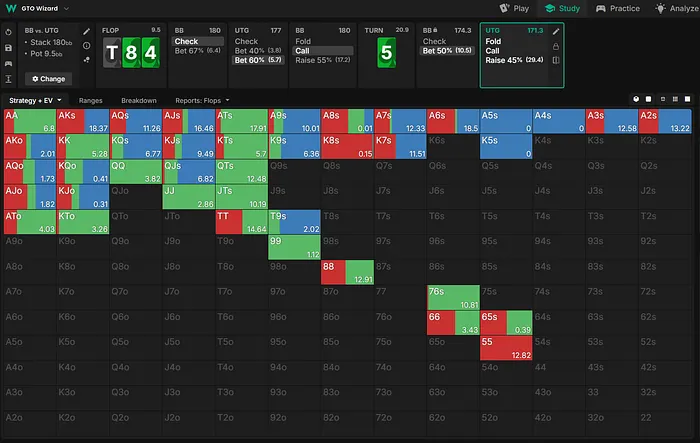
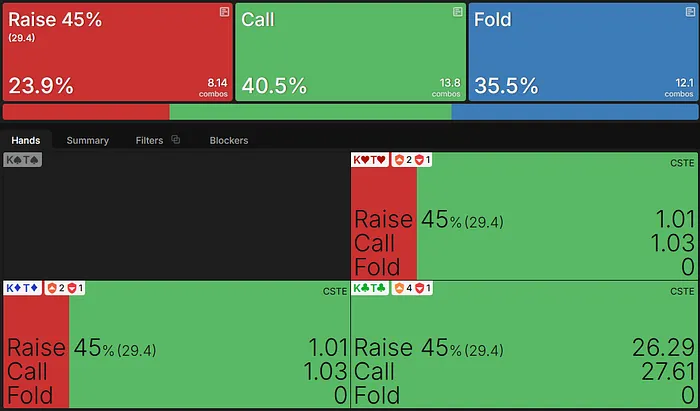
Steinberg’s raise to 70,000 with the king-high flush also loses EV. The solver prefers calling on the turn with K♣10♣, keeping weaker hands and in Mizrachi’s range and allowing them to put more money in on later streets.
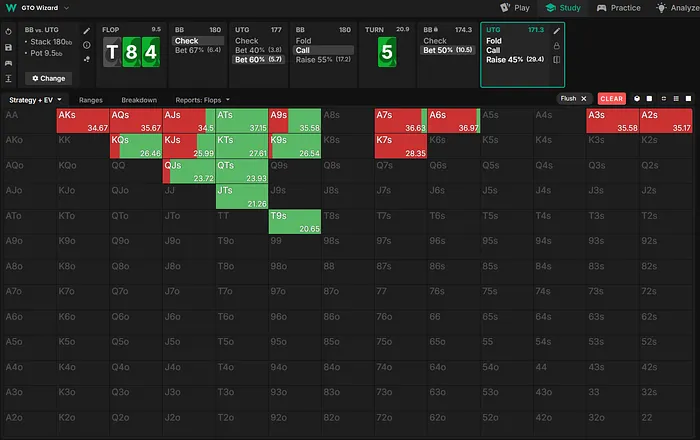
Most of the solver’s raising range on the turn consists of nut flushes. Additionally, Steinberg blocks 10♣Xx combinations, which make up a significant portion of the big blind’s calling range.
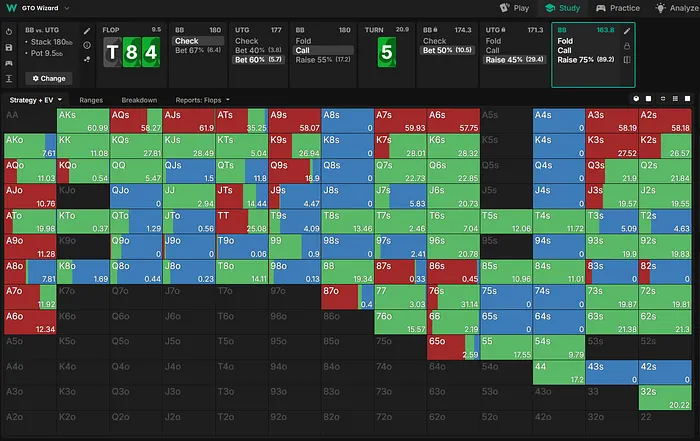
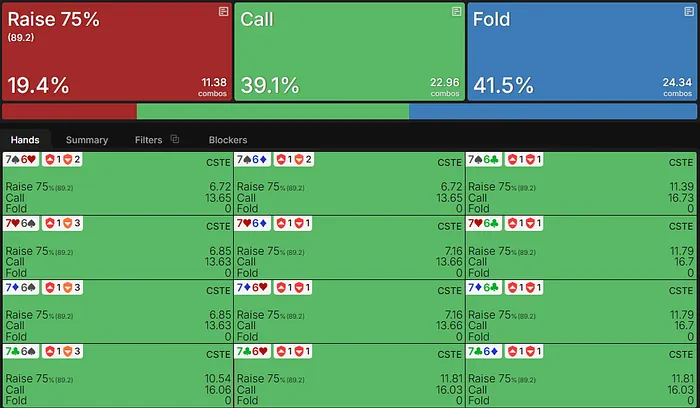
Mizrachi’s call is solver-approved. All 7x6x combinations perform best by calling rather than folding or re-raising.
River Analysis
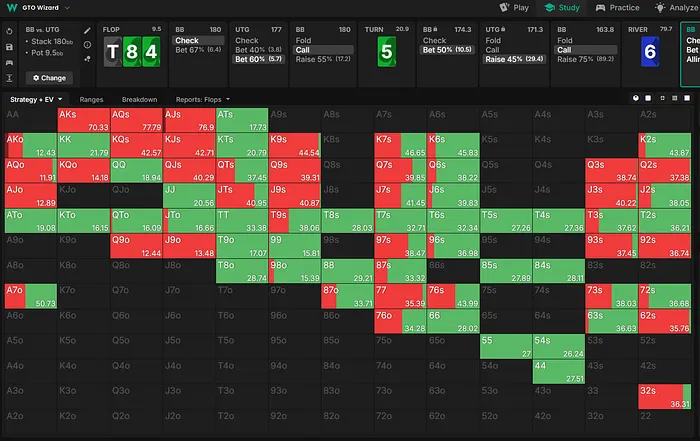
The 6♦ river completed the board. Mizrachi checked, which is solver-approved. While the big blind can now incorporate some small block bets on this card, checking remains a standard option.
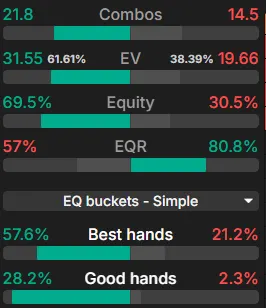
Steinberg’s bet of 120,000 into 188,800 is solver-disapproved. With king-high and ace-high flushes, the solver strongly prefers a polarised all-in sizing on the river.
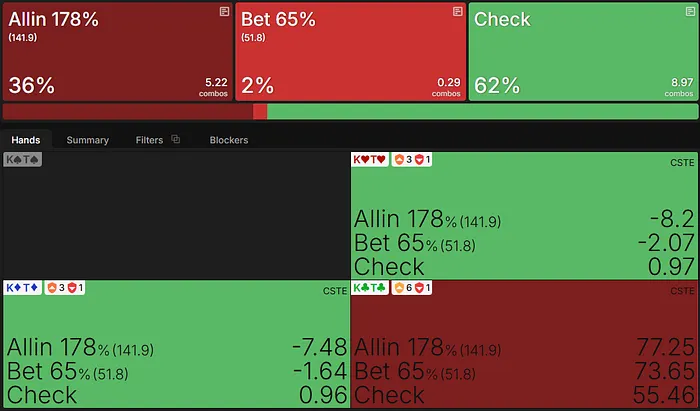
Shoving maximises value against worse flushes and strong straights, while the 65% pot size Steinberg chose leaves EV on the table.
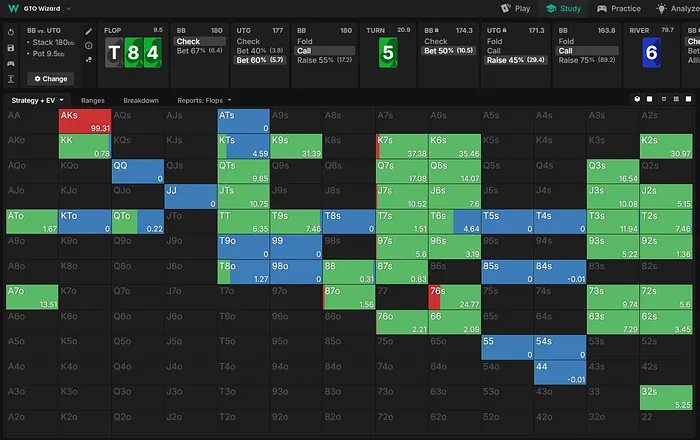
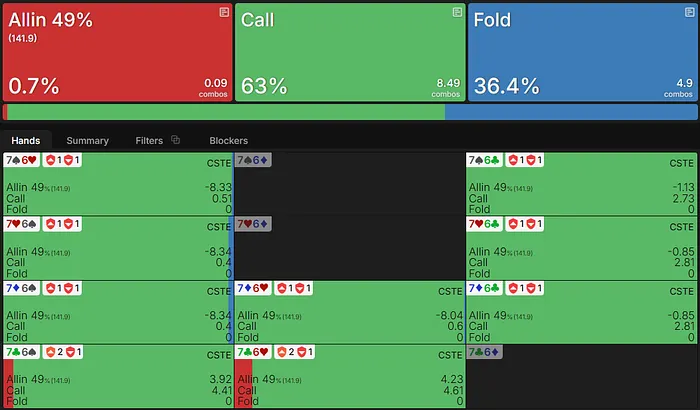
Despite losing the hand, Mizrachi’s call with a straight is solver-approved. Against this sizing, calling is the highest-EV option, especially when holding a club that blocks some flush combinations.
Final Thoughts
While Mizrachi would eventually capture the WSOP Main Event title in 2025, it was Steinberg who aligned more closely with modern GTO strategy in this particular hand.
That said, Mizrachi’s career success reinforces an important point. GTO provides a powerful baseline, but experience, instincts, and exploitative adjustments still matter. Those traits have defined Mizrachi’s career and helped earn him the nickname “The Grinder.”
For players who want to revisit classic hands or analyse their own decisions through a modern lens, GTO Wizard offers an invaluable way to bridge poker’s past with its present.
If you want a refresher before diving into solver work, our Texas Hold’em rules page is a handy starting point.