button in Safari
GTO Wizard: Was Suarez’s AQ Call Too Thin at the EPT Barcelona Final Table?


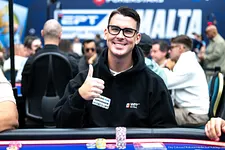
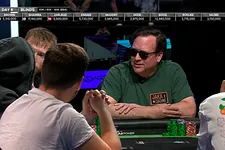
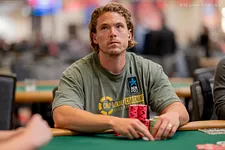
At the final table of the €5,300 EPT Barcelona Main Event, Anton Suarez faced a nightmare river decision against eventual champion Thomas Eychenne. Holding top pair, top kicker with ace-queen, Suarez found himself staring down an all-in shove for his tournament life after making a big river bet.
Six players remained, with €1.4 million up top and €291,800 guaranteed. Suarez eventually called, and it cost him his tournament. But was the call actually wrong? Using GTO Wizard, broke down every street to see where theory and reality diverged.
The Hand
Suarez opened the button for 500,000 holding A♥Q♣. Eychenne defended his big blind with 5♥4♥.
The flop came 10♥5♦3♠. Both players checked.
The turn brought the Q♥, giving Suarez top pair and Eychenne a flush draw with a pair. Eychenne checked, Suarez bet 750,000, and Eychenne called.
The river paired the board with the 5♣. Eychenne checked his trips, Suarez fired 2,500,000 into 2,875,000, and Eychenne responded with a shove. Suarez used three timebanks before calling off his remaining 1,030,000. Eychenne tabled his winning hand and eliminated Suarez in sixth place for €291,800.
Event Information
- Event: 2025 €5,300 EPT Barcelona Main Event
- Players Left: 6
- Blinds: 125,000/250,000/250,000
- 1st: €1,436,000 | 2nd: €898,350 | 3rd: €641,200 | 4th: €493,250 | 5th: €379,350 | 6th: €291,800
Pre-Flop Analysis
Suarez’s button open with A♥Q♣ is standard. The solver fully approves this raise, especially with six players remaining and a wide button range.
Eychenne’s call with 5♥4♥ is also solver-approved. Against a 2 big blind button open, defending suited connectors from the big blind maintains proper pot odds and playability. Both players began the hand on solid theoretical footing.
Flop Analysis
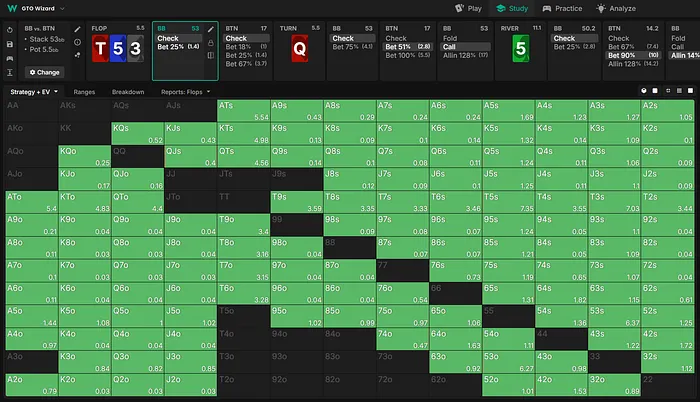
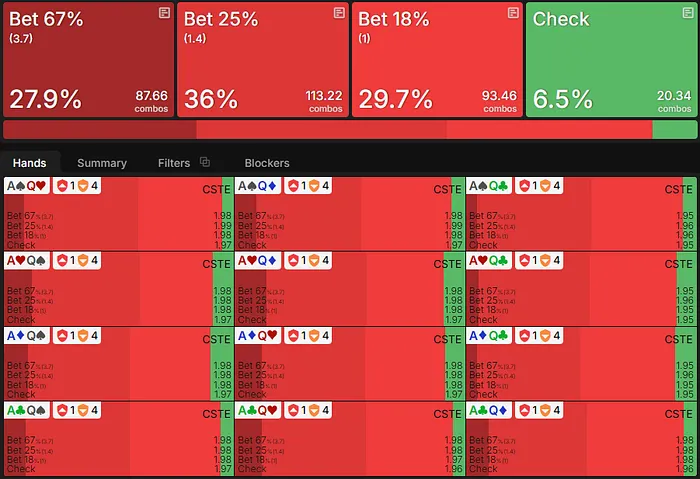
The flop of 10♥5♦3♠ went check-check. Eychenne's check is GTO approved but solver output shows that Suarez’s check-back with A♥Q♣ is slightly off-book.
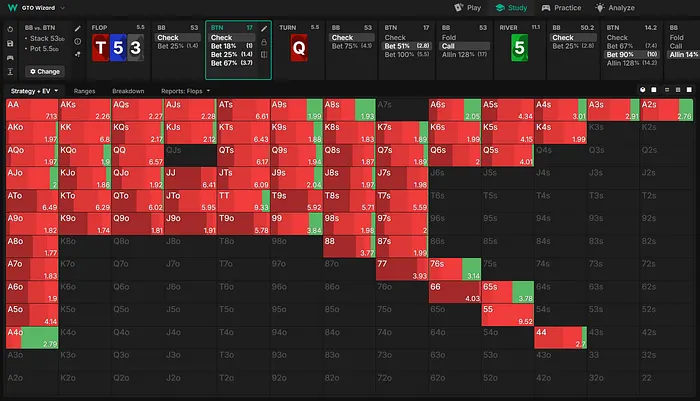
GTO Wizard prefers continuation betting on this texture at small to medium sizes, roughly 18%, 25%, or 67% pot.
Checking isn’t a major mistake, as you can see from the small EV difference above, but betting helps you balance your entire range on the flop. This makes the board much easier to play, since in-game it’s difficult to keep your checking range balanced, especially when it’s only 6.5% of your range that is recommended to check, and you don’t want to end up checking only weak holdings, as this would be very easy to exploit.
In short, betting the flop would simplify the hand and protect Suarez’s range.
Turn Analysis
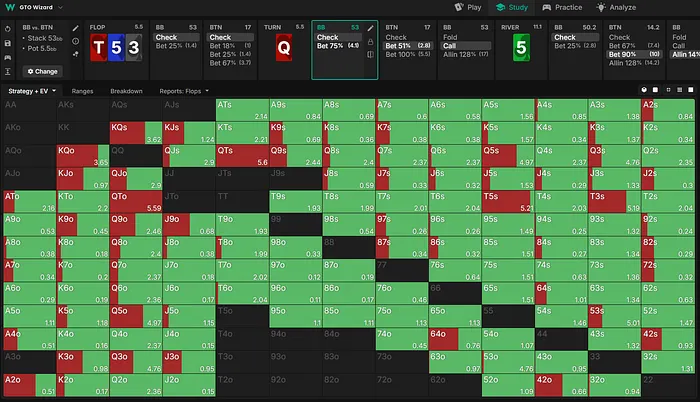
The Q♥ improves Suarez to top pair, top kicker and gives Eychenne additional equity with a flush draw and middle pair.
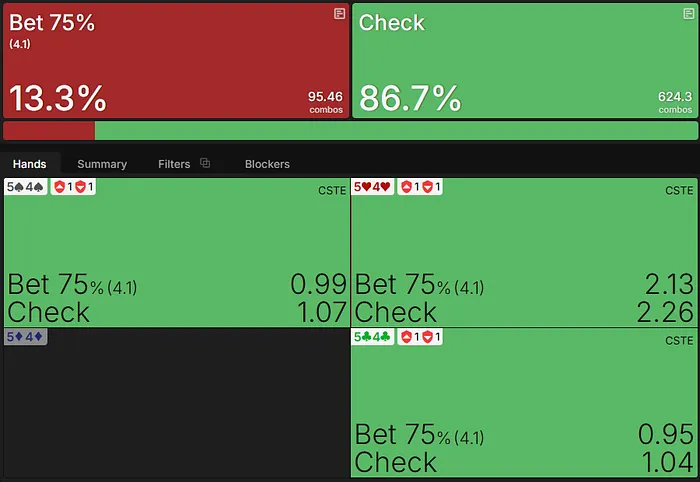
Eychenne’s check is solver-approved as the big blind’s range is still behind the button’s on this card.

Suarez’s decision to bet the turn is correct, but the sizing isn’t ideal. GTO Wizard recommends a 100% pot bet, not the 50% sizing Suarez chose. The larger bet achieves higher EV and better sets up a geometric river shove.
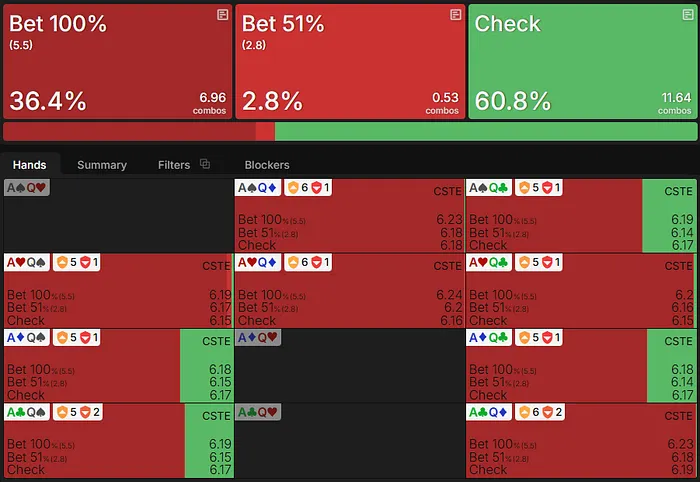
A geometric bet size keeps your street-by-street sizing consistent so stacks naturally go in by the river, which is optimal when your range is polarised. Suarez’s smaller sizing reduces fold equity and leaves awkward stack depth for the river.
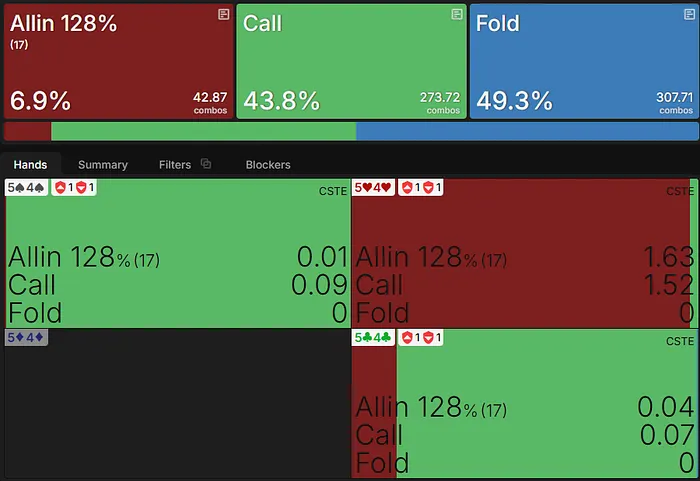
Eychenne’s call is approved. The solver often mixes between calls and raises with 54s, occasionally jamming to balance value hands and bluffs.
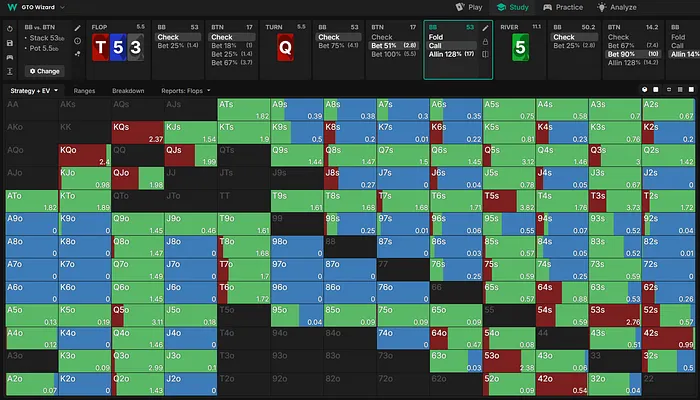
Combo draws like this are used because they retain enough equity when called, while holding a pair also blocks some of the top of the calling range, such as sets and two pairs. There’s also a small chance that 5♥4♥ gets called by a worse hand like K♥9♥ or J♥9♥, which adds to the EV of the play.
River Analysis
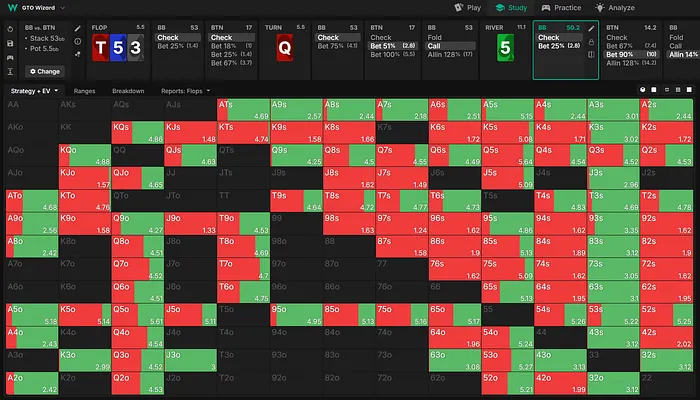
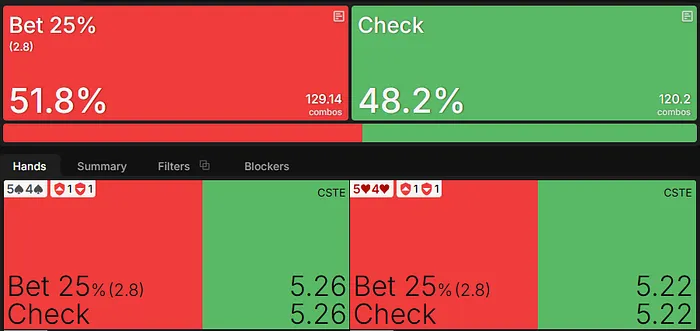
The 5♣ pairs the board, giving Eychenne trips. GTO Wizard shows that the big blind can incorporate small donk bets on this card because it connects more with their range than the button’s. However, checking remains perfectly fine, as Eychenne did.
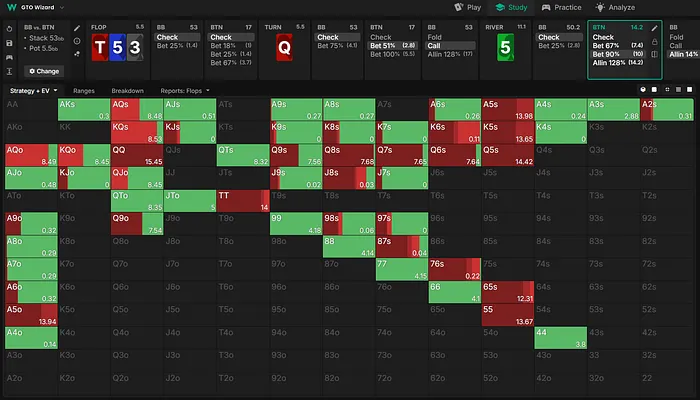
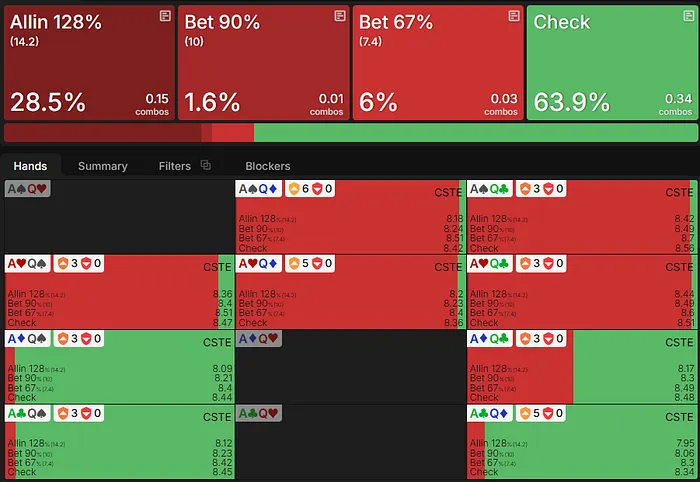
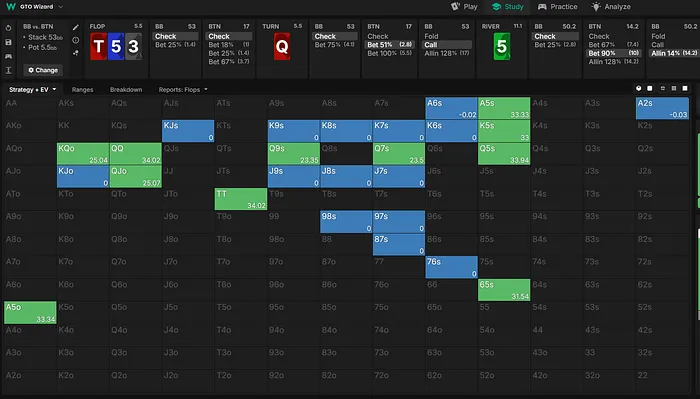
Suarez’s 2,500,000 bet into 2,875,000 (around 90% pot) is solver-disapproved. The model shows AQo either checking or betting smaller (around 67%) to extract value from weaker queens and mid-pairs while avoiding over-committing against strong check-raises. The 90% size narrows his perceived range to strong hands and bluffs, which makes it easier for opponents to play perfectly against him.
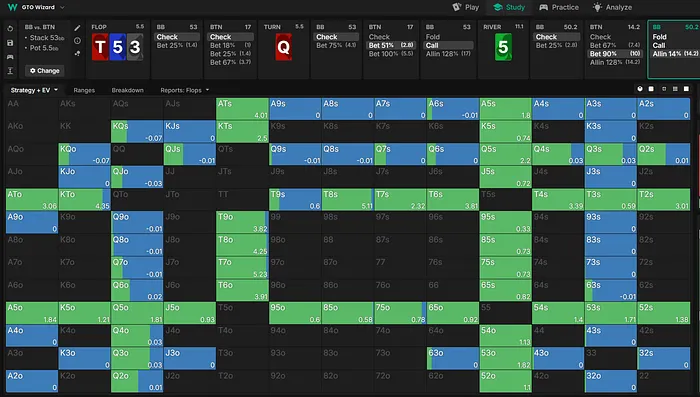
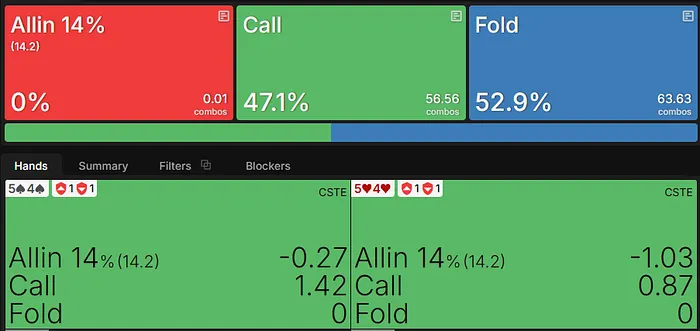
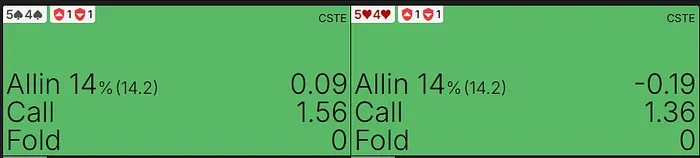
Eychenne’s shove also loses EV compared to calling. Despite making three-of-a-kind, the solver prefers a flat call. With only the button containing the nut combinations (10x10x or QxQx), over-jamming doesn’t increase expected value and carries risk under ICM.
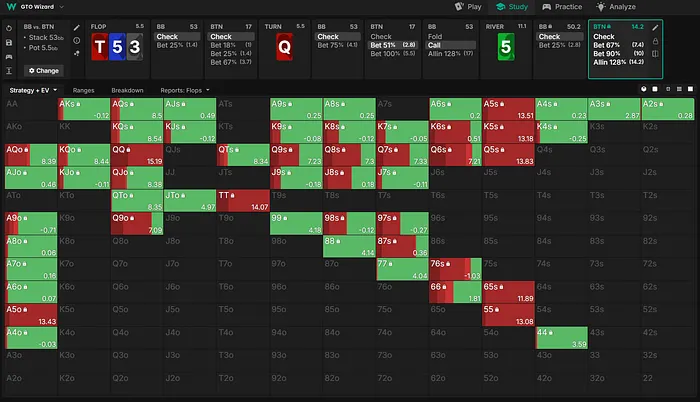
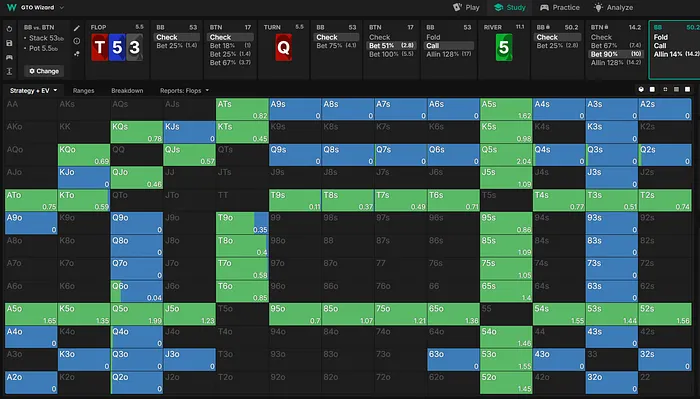
Finally, Suarez’s river call with AQo is solver-disapproved. The hand should have checked or used smaller sizing earlier, which would have avoided this spot altogether. Even against a nodelocked range that includes larger turn bets, AQo struggles to justify a call when facing this all-in.
Conclusion
This hand highlights a classic case of range distortion through sizing. While both players made largely solver-approved decisions throughout the hand, the river was where things diverged.
- Suarez’s 90% river bet size was never recommended and the solver much prefers a smaller size or check with AQo combos.
- Eychenne’s river shove with trips also loses EV compared to calling, since the BTN’s range is polarised and unlikely to pay off with worse.
The final takeaway: Eychenne did end up getting paid off by worse though, which is a great in-game example of using GTO theory as a baseline. If you can exploit your opponent when they make plays like calling AQ on the river to an all-in, you need to identify these opportunities to make the highest EV decisions overall.