button in Safari
GTO Wizard: Is This River Jam Too Thin with Queens?

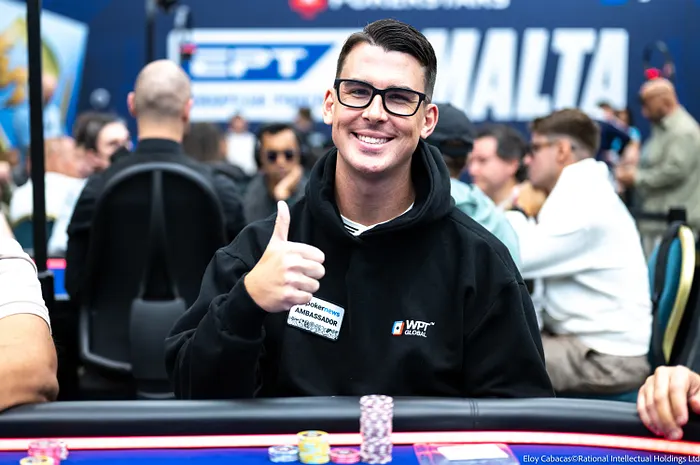
I’m playing Day 1 of the €5,300 EPT Malta Main Event, seated at a table full of crushers. One of them is Spanish pro Gerard Carbo, fresh off a second-place finish in the €1,650 EPT Malta Open Main Event for €264,650.
We’ve been battling all day. I’ve bluffed him twice in big pots, and both times he’s gone deep into the tank before finding impressive calls. Despite those setbacks, I’m still in the tournament and grinding away when I look down at pocket queens. I open the action, and once again, Carbo responds with a 3-bet.
Let’s get into the hand, starting with the basics.
Hand Basics
Event: 2025 €5,300 EPT Malta Main Event Day 1
Blind Levels: 400/800 - 800 (BB Ante)
Stack Sizes and Positions
Me (CO): 60,000 (75bb)
Gerard Carbo (SB): 85,000 (106bb)
Preflop Action
I open to 1.6K in the CO holding Q♥Q♦. Gerard Carbo three-bets to 6,400. I four-bet to 14,000 and Carbo calls.
Postflop Action
Flop (30,000 Pot): 6♥6♦2♦
Action: They check. I bet 7,500. They call.
Turn (45,000 Pot): 7♠
Action: They check. I bet 15,000. They call.
River (75,000 Pot): J♦
Action: They check. I jam for 23,500. They call. I show my Q♦Q♥. They show A♠A♥ and win to knock me out of the tournament.
Was my river value bet too thin versus this sicko? Let’s find out what the GTO Wizard solver says, and I will explain my thought process on every street.
Preflop Analysis
I opened to 1,600 in the cutoff with Q♦Q♥: GTO Wizard approved.
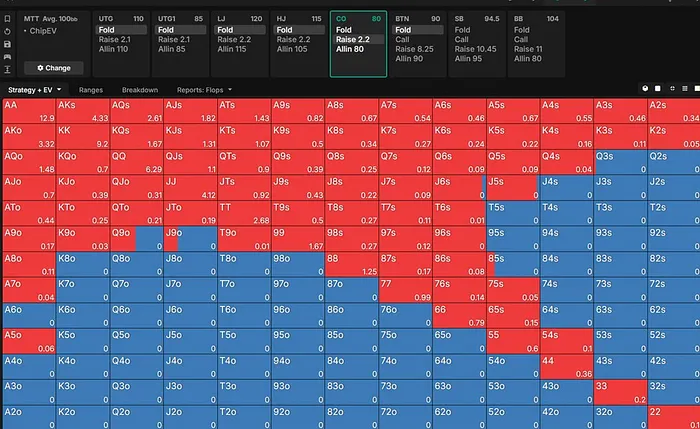
Gerard Carbo three-bet to 6,400 with A♠A♥: GTO Wizard approved.
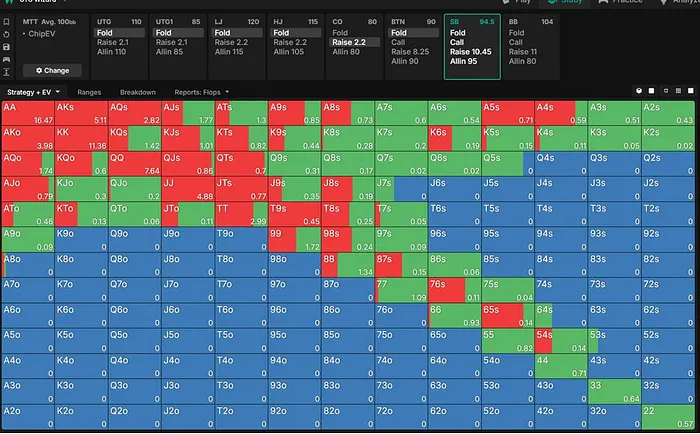
I four-bet to 14,000 with Q♦Q♥: GTO Wizard approved.
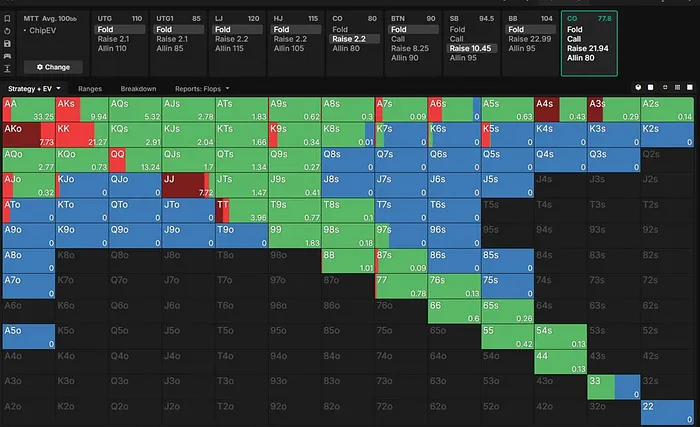
The solver recommends a mixed strategy with pocket queens, splitting between call and four-bets. Expected value (EV) of pocket queen combos versus three-bet:
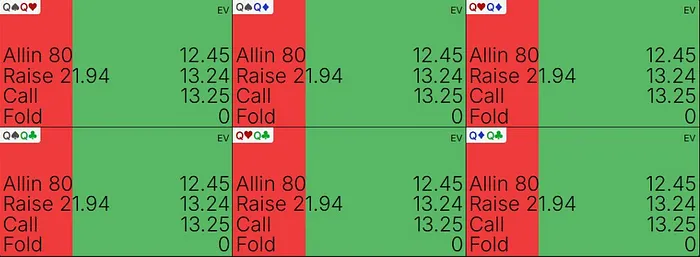
The EV of calling and raising to 21.94 big blinds is effectively identical.
Gerard Carbo calls my four-bet with A♠A♥: GTO Wizard approved.
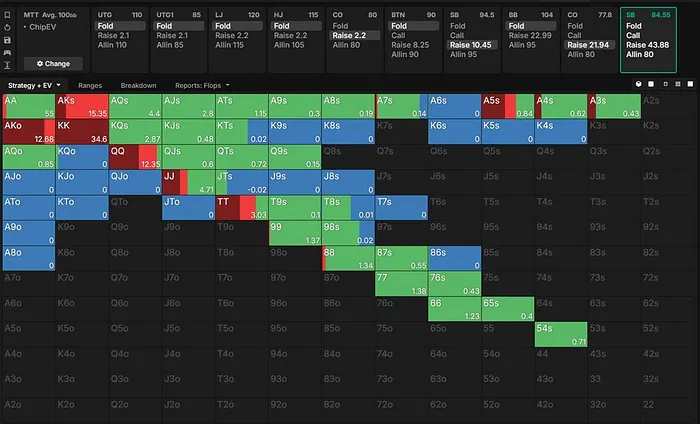
Gerard Carbo played this spot perfectly, sticking to GTO principles by just calling my four-bet. While many players in the population would simply move all in here, aces make for an excellent call. The hand dominates much of my bluffing range and can still comfortably get the chips in post-flop on many boards when I hold hands like queens.
Flatting aces in this spot also helps balance a player’s three-bet calling range, preventing them from being overly weighted toward medium-strength hands. It’s a sharp adjustment that keeps opponents guessing and allows for maximum value against aggressive players like me.
Before diving into the preflop analysis, it’s important to nodelock my four-betting range to reflect what I actually played in the game, rather than strictly following the solver’s suggestions. This allows me to analyze the hand from a realistic, in-game perspective and see how my decisions aligned with GTO principles.
Solver Four-Betting Range from the Cutoff
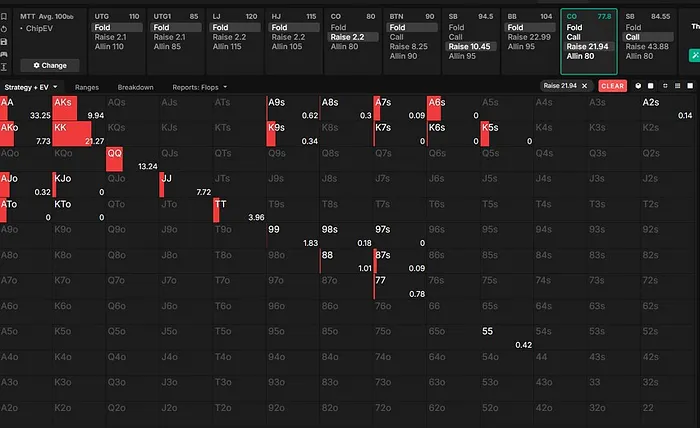
My In-Game Four-Betting Range
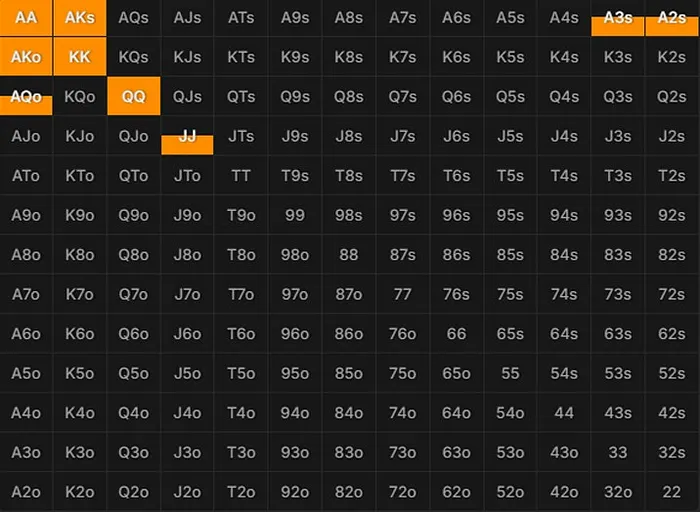
The nodelocking AI feature in GTO Wizard is an incredible tool for reviewing your own hands. By nodelocking ranges to reflect the hands you would actually play in a live game, you can see how your range behaves post-flop. This makes the overall sim far more useful for improving your own decision-making and understanding how your real-game tendencies interact with GTO principles.
Gerard Carbo Nodelocked Calling Range Versus Four-Bet
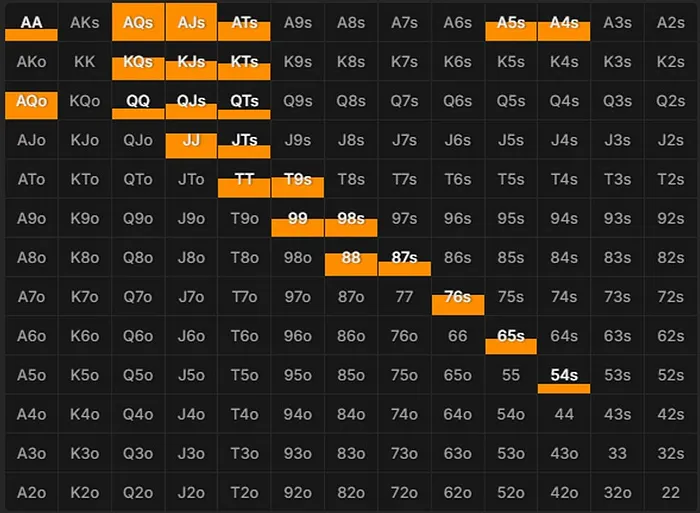
I also nodelocked Carbo’s calling range versus my four-bet to better reflect how he would realistically play in a live game.
Postflop Analysis
Flop (30,000 Pot): 6♥6♦2♦
Carbo checks: GTO Wizard approved.
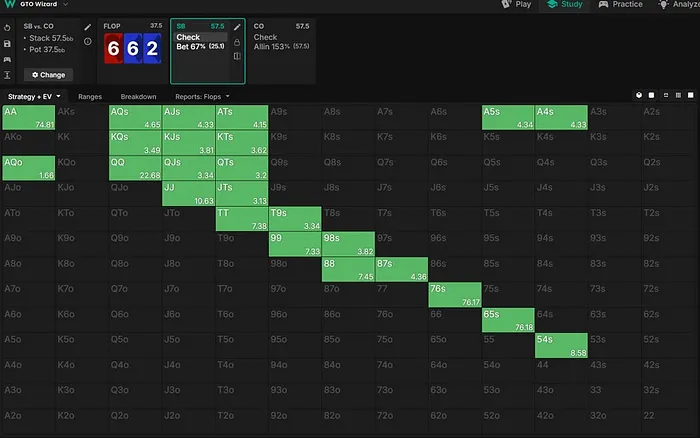
No donk-betting on the flop from the small blind.
I bet 7,500 with Q♦Q♥ on the flop: GTO Wizard approved.
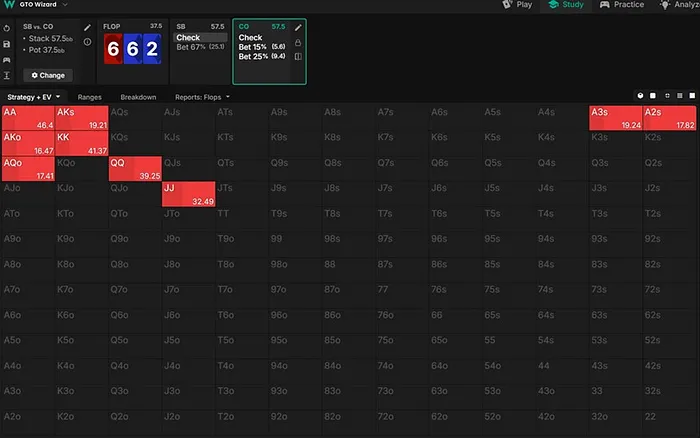
On the flop, the solver recommends betting small with your entire range. This approach maximizes efficiency and keeps your range balanced, allowing you to apply pressure across both value hands and bluffs while controlling pot size.
Recommended Bet Sizes and EV for Pocket Queens
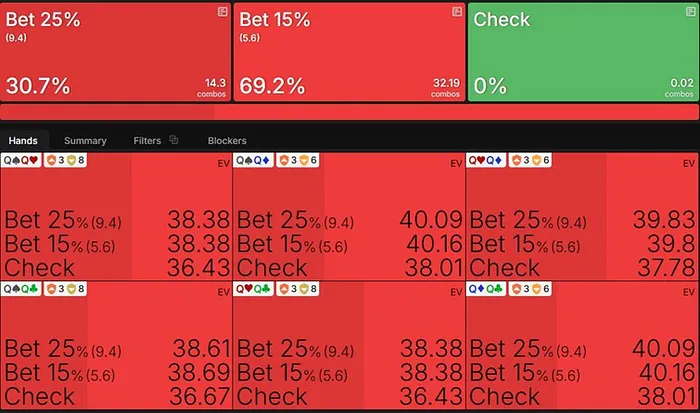
The solver suggests using two continuation-bet sizes on the flop: 25% and 15% of the pot. With Q♦Q♥ it prefers the 25% sizing, but the hand still mixes between both sizes.
Carbo calls the 7,500 bet on the flop with A♠A♥: GTO Wizard approved.
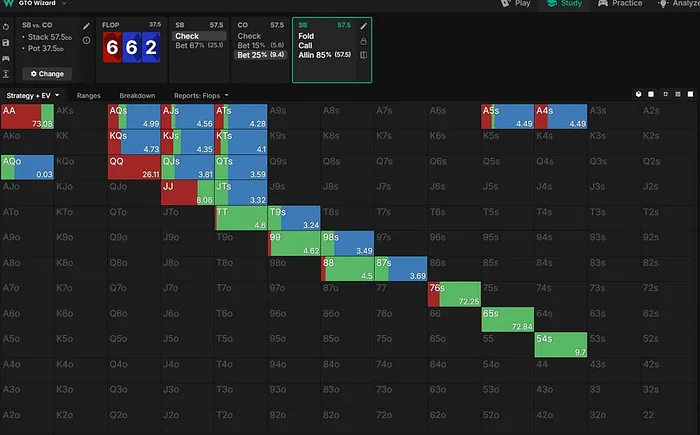
The solver recommends mostly continuing with a call on this turn, but it does include some all-in bluffs or value jams from hands like QQ, JJ, and strong flush draws.
Recommended Bet Sizes and EV for Pocket Aces
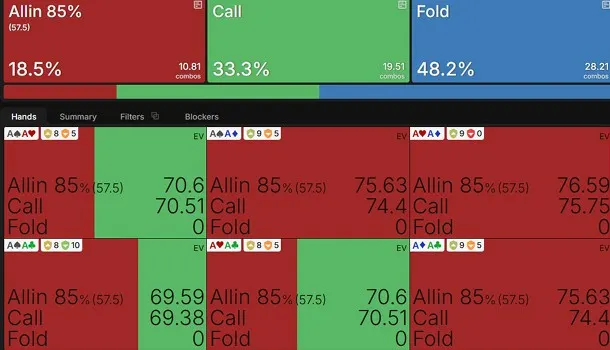
With A♠A♥ on the flop, the solver recommends mixing between a call and jamming all-in. This balanced approach allows you to extract value when your opponent has weaker hands while still protecting your range and applying pressure with strong holdings.
Turn (45,000 Pot): 7♠
Carbo checks the turn with A♠A♥: GTO Wizard approved.
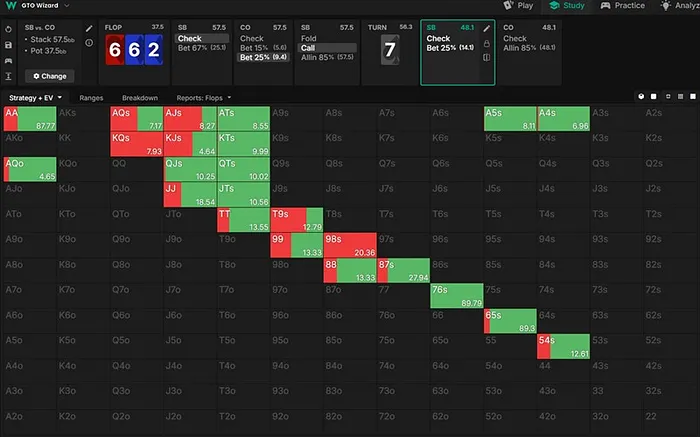
Interestingly, the solver does suggest some donk bets on the turn. In practice, however, I think almost all players at this table would check their range in this spot. For a more realistic simulation, I decided to nodelock them to a pure check on this turn card.
I bet 15,000 on the turn with Q♦Q♥: GTO Wizard approved (barely).
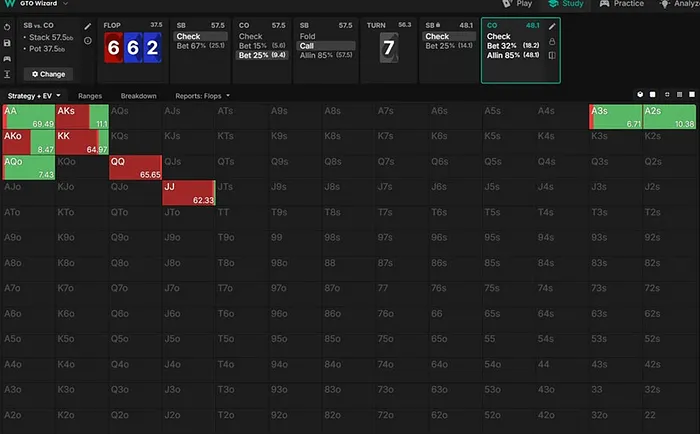
As shown above, the solver’s recommended strategy on the turn is either check or jam all-in. While there are some smaller bets included, they occur at a very low frequency and are effectively negligible in practical play.
Recommended Bet Sizes and EV for Pocket Queens
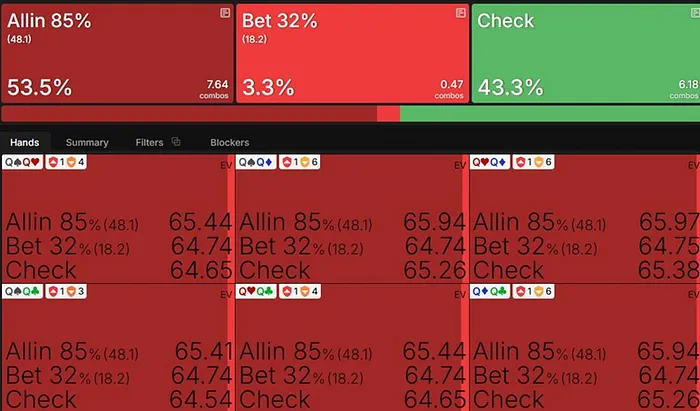
You can see that the 32% geometric bet is used at a very low frequency from all QQ combos on the turn. In fact, checking the turn with Q♦Q♥ actually produces more EV than making the 32% bet.
My nodelocked turn range:
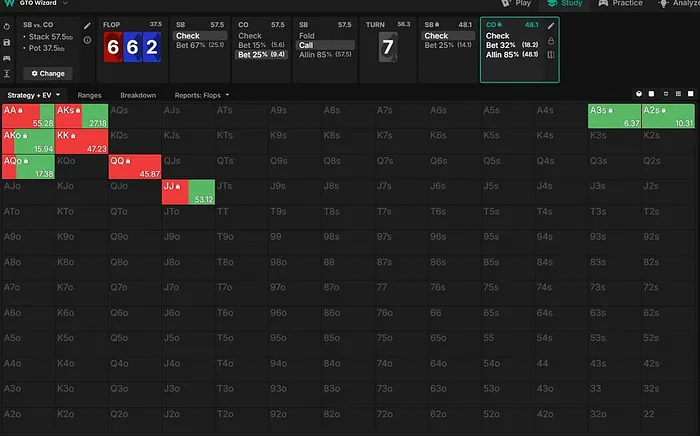
It’s valuable to identify where you deviated from the solver’s recommended strategy. However, once you play off-tree and take a different line on one street, it becomes essential to nodelock that street to the strategy you actually used in-game. This allows you to see how the solver recommends your range plays on the next street. In situations like this hand, nodelocking with the GTO Wizard AI feature is especially crucial, as it provides a realistic and actionable analysis of your decisions.
Carbo calls the 15,000 bet on the turn with A♠A♥: GTO Wizard approved.
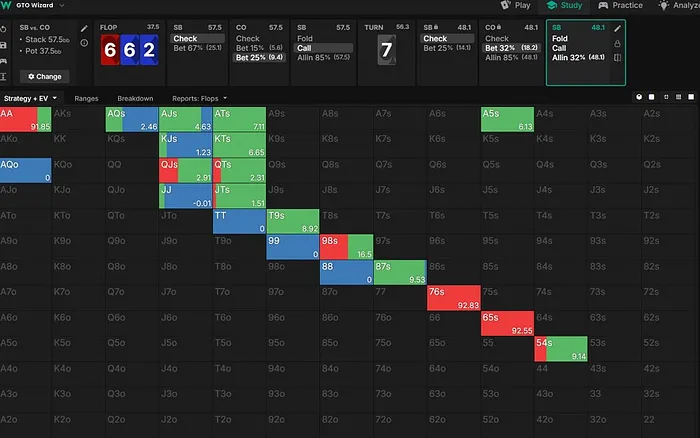
The solver recommends mostly calling with your continuing range on the turn, but there are also some all-in lines from hands like AA, trips, and strong flush draws. This mix helps balance your range and ensures that opponents cannot easily exploit your turn strategy.
Recommended Bet Sizes and EV for Pocket Aces
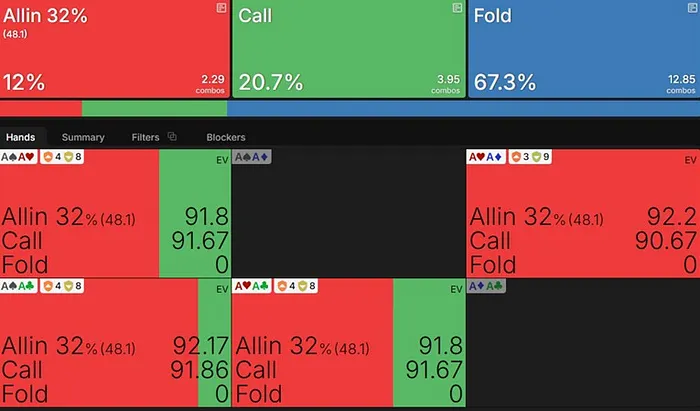
Here, going all-in with A♠A♥ produces the highest overall EV, but the solver still recommends mixing between a call and an all-in.
River (75,000 Pot): J♦
Carbo checks the river with A♠A♥: GTO disapproved.
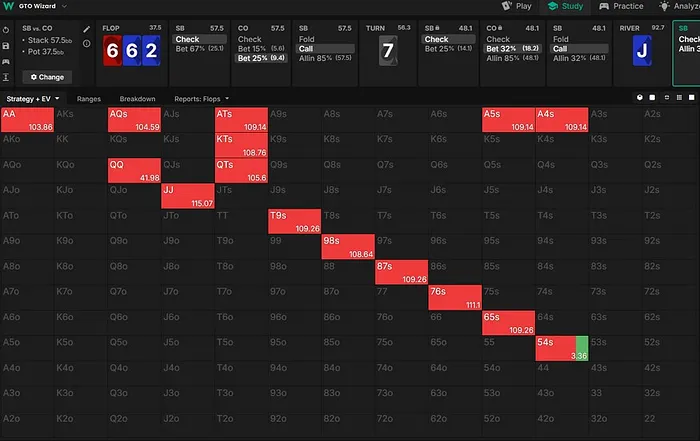
The solver now recommends that the small blind donk bet all-in on this river card. Why is that? Let’s take a closer look at the reasoning behind this line.
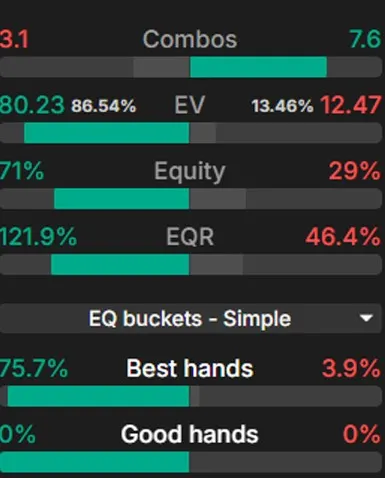
Using GTO Wizard’s range comparison feature, you can see that this specific river card shifts EV and equity heavily in favor of the small blind’s range compared to the cutoff’s range. The small blind now holds all the flushes, whereas I do not, since I never bet flush draws on the turn. This disparity helps explain why the solver prefers a donk-shove in this spot.
I jam for 23,500 on the river with Q♦Q♥: GTO Wizard disapproved.
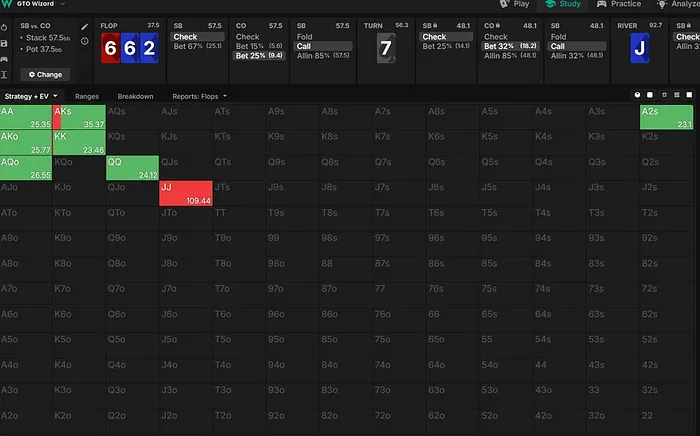
The solver only recommends to go all in for value with A♦K♦ and pocket jacks.
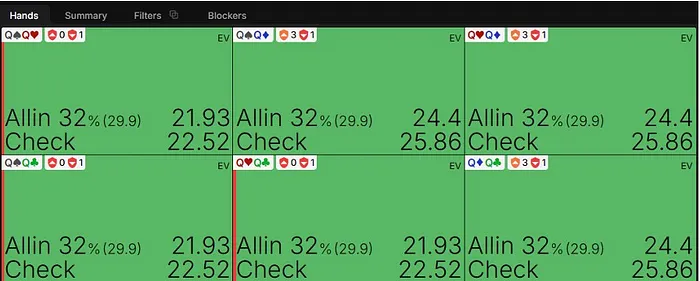
The solver shows that checking all QQ combos on the river produces higher EV than betting all-in.
Carbo calls my river all in with A♠A♥: GTO Wizard approved.
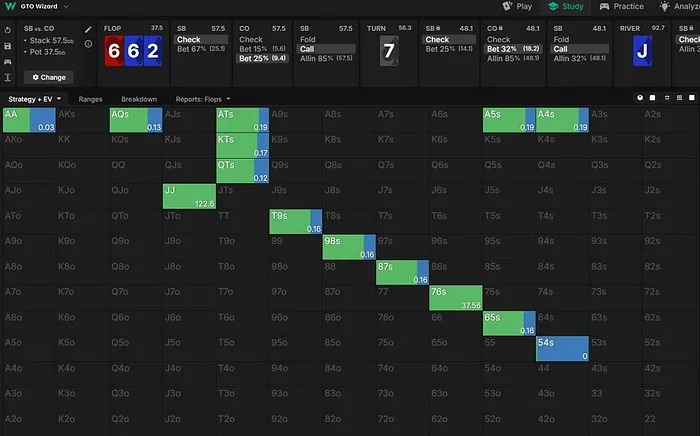
At this point, almost no hands make it to the river that will pure fold to an all-in, with the exception of 5-4 suited. This highlights how thin a river value-bet with QQ really is in this spot.
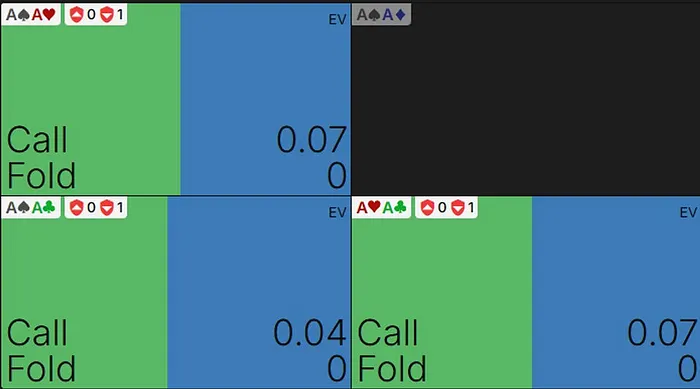
The solver actually recommends mixing between calling and folding with A♠A♥ on the river vs an all in, but calling produces the highest overall EV. This was a very well-played hand by Carbo, perfectly aligned with GTO Wizard’s solver guidance.
Question: Why did I decide to go all-in with Q♦Q♥ on the river here? Let me break down my thought process.
On the river, I had to decide whether jamming with Q♦Q♥ would get called by any worse hands. I am behind all flushes, trips, and even JJ, so the potential for value is very narrow. In my read, the main hands I could realistically get value from were TT and 99.
Against most players, I would have checked the river, as TT and 99 would likely fold to an all-in. Carbo, however, is different. He’s a very strong player who understands he must call TT and 99 on the river if I have bluffs such as AK or AQ with a diamond. Given our previous history, where I bluffed twice on the river and he hero-called correctly both times, he knows that I can have bluffs in this spot.
If I didn’t hold a diamond, I likely would have checked back QQ even against Carbo, since this gives him more flush combos in his range. In the heat of the moment, I failed to fully account for the number of flushes he could have. I assumed many suited connectors that now made a flush on the river would have folded preflop or on the turn.
Even if we remove those combos from his range, the solver recommends folding TT and 99 on the turn anyway, meaning these were the only worse hands that could call an all-in on the river and they aren’t actually in his range at this point.
Conclusion
The main question I wanted to answer using the GTO Wizard solver was: Is my river jam too thin with Q♦Q♥? The answer is most definitely yes.
Gerard Carbo played this hand nearly perfectly according to the solver, while I did not. This hand demonstrated both in-game and in post-hand analysis that there are multiple levels to this game. Carbo is operating at a very high level, and his results speak for themselves. I, on the other hand, have plenty of areas to improve, and that’s perfectly fine.
The key is to be honest with yourself, identify your leaks, and use tools like GTO Wizard to study and grow your game.