button in Safari
888poker's Guide to Crushing Your Next Poker Tournament Final Table


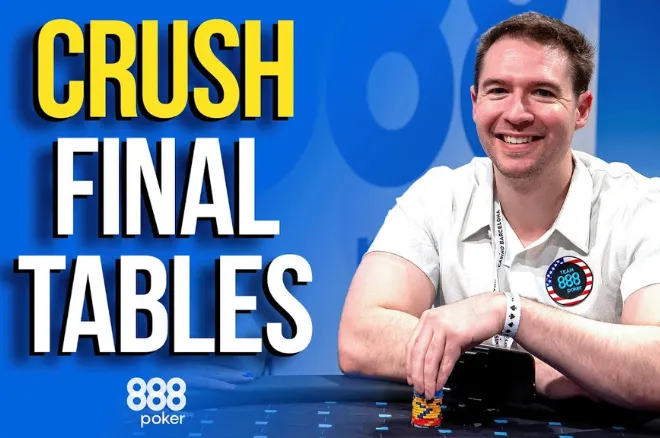
Table Of Contents
Final tables are where tournaments are remembered, and where a lot of players quietly give money back.
In a recent 888poker strategy video, ambassador Aaron Barone broke down why so many solid tournament players struggle when the lights are on, and what actually changes once the payouts start to matter.
What Makes Final Tables Different?
The difference between an earlier tournament table and a final table is obvious. Every spot you move up is worth real money, with the biggest reward reserved for first place.
Earlier in a tournament, most players operate in chip EV mode. The goal is to accumulate as many chips as possible, take thin edges, and build a stack capable of making a deep run. Survival matters, but chip accumulation comes first.
That’s why final table strategy is most important for players grinding online poker tournaments, where high volume means you will encounter these ICM-heavy situations again and again.
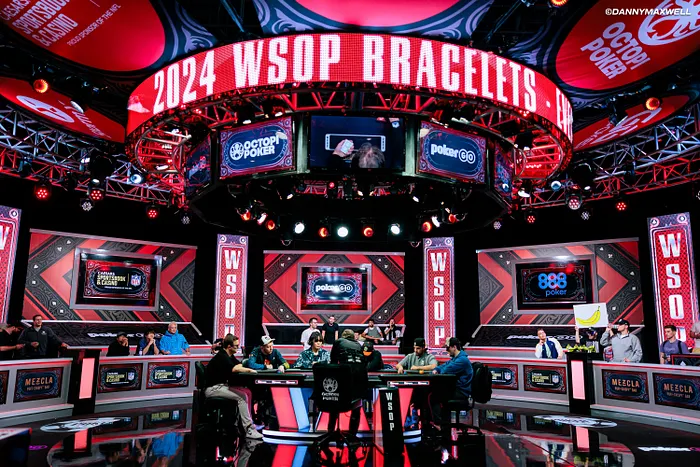
At a final table, that balance flips. While you still want to win, your strategy becomes far more focused on survival. Every time you fold, there is a chance two other players collide, and you move up the payout ladder without risking your stack. That reality alone forces a strategic adjustment.
Adjust Your Strategy
One of the most common final table mistakes Barone sees is players refusing to change gears. They continue playing the same aggressive, chip-hungry style they used earlier in the tournament.
The irony is that final tables often reward patience. By tightening up slightly and letting other players bust, you can “print money” through laddering alone. Small edges that made sense earlier lose value when pay jumps become significant.
This does not mean playing scared or refusing to take spots. It means recognizing that the value of each decision is no longer measured purely in chips, but in payout equity.
Pay Attention to the Situation
Final table poker is heavily situational. Stack sizes, player tendencies, and payout structure all matter more than your actual cards.
Barone compares final table play to the bubble phase earlier in a tournament. You want to avoid confrontations with the biggest stacks that could end your run, while applying pressure to medium and smaller stacks, especially those capable of folding.
Identifying who is too tight and who is too loose is critical. Tight players become prime targets. Loose players, especially big stacks, are often better avoided unless you have a clear edge. You should focus on avoiding unnecessary risk at the wrong time.
How Does ICM Affect Decisions?
ICM, or Independent Chip Model, is one of the most misunderstood concepts in tournament poker, and it shows most clearly at final tables.
Imagine two massive stacks at the final table, with several very short stacks behind them. Even if you are a slight favorite in a big all-in, taking that spot can be a mistake.
Busting when multiple players are hanging on for dear life costs far more than the chips you might gain.
In chip EV terms, getting the money in might be correct. In ICM terms, survival often outweighs marginal chip gains. Sometimes the best play is folding a profitable hand and allowing the short stacks to bust, locking up multiple pay jumps without risking elimination.
Prepare for Heads-Up Play
According to Barone, heads-up poker is one of the biggest edges available to tournament players, and one of the most neglected.
Many players avoid studying heads-up because they rarely reach it, or because they are already satisfied with second place money. That mindset leaves a huge amount of value on the table.
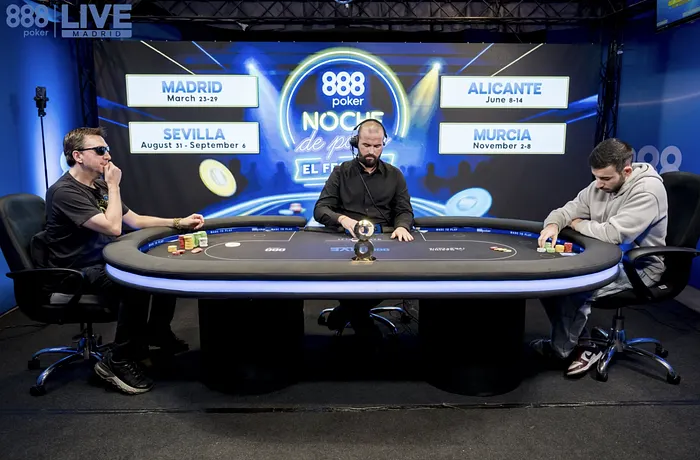
The difference between first and second can be massive. It might be hundreds of buy-ins, tens of thousands of dollars, or even more in major events. Improving your heads-up skills can easily translate into a 20 to 30 percent increase in winnings when those spots arise.
Barone credits deliberate heads-up practice as a key part of his own development, preparing him to capitalize when those moments finally came.
For players looking to sharpen that part of their game away from the table, the PokerNews hub of poker tools is a good place to start.