button in Safari
How to Pick Your First World Series of Poker Event

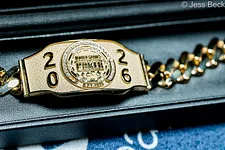
The 2026 World Series of Poker (WSOP) will be here before you know it. The 100-event schedule offers players plenty of choice, and bracelet hopefuls and grinders from all around the world are already getting ready for their version of summer camp.
But a percentage of those flocking to Las Vegas this summer will be entering Sin City for the first time for their first WSOP.
That could be fresh-faced players ready to jump into the deep end, online tournament grinders dipping their toe into the live poker arena for the first time, or those who have loved poker for years and finally have the chance to cross off what is likely the No. 1 item on their poker bucket list.
Many will be chasing WSOP bracelets. For others, it’ll be about simply saying they played at the WSOP.
So how do you actually choose the right event? These are the things you want to think about before locking in your first WSOP tournament.
Pick the Right Event (Not Just the Cheapest)
The biggest mistake first-timers make is picking an event based purely on price. It’s tempting to scroll down the schedule and circle the cheapest buy-in you can find, but cheaper doesn’t always mean better.
Lower buy-in events often attract massive fields. We’re talking thousands of players, packed rooms, and some very long days. Events like the Colossus or Mystery Millions are fantastic experiences, but they’re also marathons that require patience and stamina.
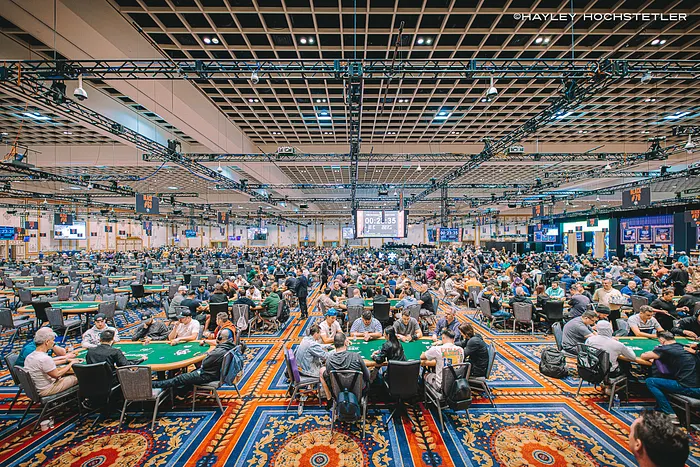
It’s also worth checking how long the blind levels are. Many of the lower buy-in events run with 30-minute levels, and if it’s been your dream to play a WSOP event, it might not make sense to jump into a structure similar to what you can find at your local casino. Take the $600 Deepstack as an example. It runs with 30-minute levels throughout, and while it’s one of the more affordable WSOP events, you might feel like you’re not getting as much bang for your buck.
If you enjoy playing Pot-Limit Omaha (PLO), the $1,000 PLO event offers 40-minute levels on Day 1, followed by 60-minute levels on Days 2 and 3, giving you more room to play. For No-Limit Hold’em (NLH) players looking for slower structures, events like the $1,500 Monster Stack and $1,500 Millionaire Maker feature 60-minute levels. They’ll still draw huge fields, but the slower pace can make the experience far more enjoyable than some of the faster, lower buy-in options.
Check out the PokerNews WSOP Hub for the full schedule, latest news, and everything you need to plan your summer.
Play Your Favorite Game
If you want the best experience, it shouldn’t come as a surprise that one of the simplest pieces of advice is to play your favorite poker game.
While NLH and PLO dominate the schedule, there’s a wide range of variants available throughout the summer.
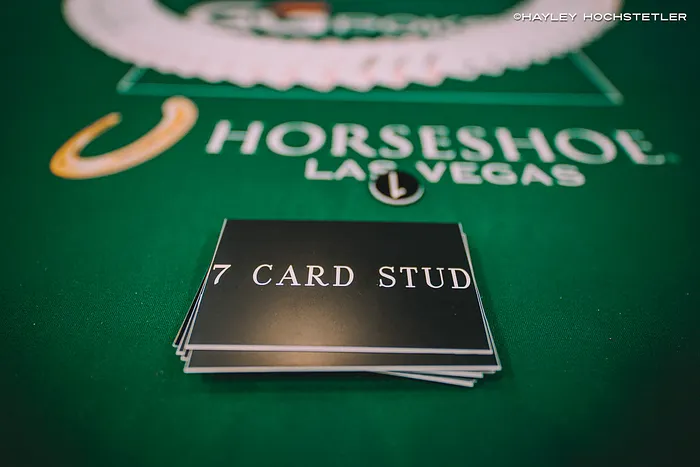
If you love games like HORSE, Badugi, Draw, or Stud games, there are ample $1,500 buy-in options for this that give you the chance to enjoy the WSOP.
Don’t feel pressured to play NLH events just because they offer big prize pools at lower buy-ins. If this ends up being your first and possibly only WSOP, play the game you’ll enjoy the most. That alone can make the experience far more memorable.
Are You Worried About Bankroll?
For serious grinders, bankroll management is the biggest factor for planning their schedule. It’s easy to get caught up in the excitement of the WSOP and stretch beyond your limits. You’ve travelled all the way to Las Vegas, and temptation can creep in when you’re surrounded by all the poker tables; those bigger buy-in events don't seem so scary.
But your WSOP budget isn’t just about buy-ins. You also need to account for flights, hotels, food, transport, and the inevitable temptation to jump into extra events or cash games.
A $600 tournament rarely costs just $600. By the time the trip is over, it can easily turn into a few thousand dollars. That’s why many experienced players suggest planning your full trip budget first, then deciding how many tournaments fit comfortably within what’s left.
If bankroll isn't something you're particularly too worried about then do whatever you think will bring you the best time. m
You’ll also need a plan for busting, because chances are you will. Factor re-entries into your thinking. If you’re more of a one-bullet-and-done type of player, sticking to freezeout tournaments at a price point you’re comfortable with can make a lot of sense.
Freezeouts level the playing field. Once you're out, you're out. You won’t be facing players with bigger bankrolls firing multiple bullets and taking wild risks just to build stacks. And it can be frustrating to run into someone willing to re-enter again and again while your tournament is finished.
If playing even one event feels like a financial stretch, it might not be the right event for you. Poker is far more enjoyable when you’re not worrying about the money.
What Vibe Do You Want?
Not every WSOP event feels the same, and that’s something a lot of first-timers don’t realise until they walk into the room.
Some events feel serious from the moment cards are in the air while others feel more like a carnival.
So ask yourself this: are you looking for a serious poker experience, or something more social and fun?
Events like the Tag Team, Mystery Millions, and the new Mini Mystery Millions are going to have more of a party atmosphere. If you’ve got a buddy joining you and you're looking for fun more than anything else, the Tag Team is probably one of the first events you should circle on the schedule.
For many first-timers, that kind of relaxed atmosphere can take the pressure off and make the experience far more enjoyable.
On the other hand, if you're looking for something more serious and want to test your game against sharper players, then a standard NLH event or one of the deeper structured tournaments might be a better fit.
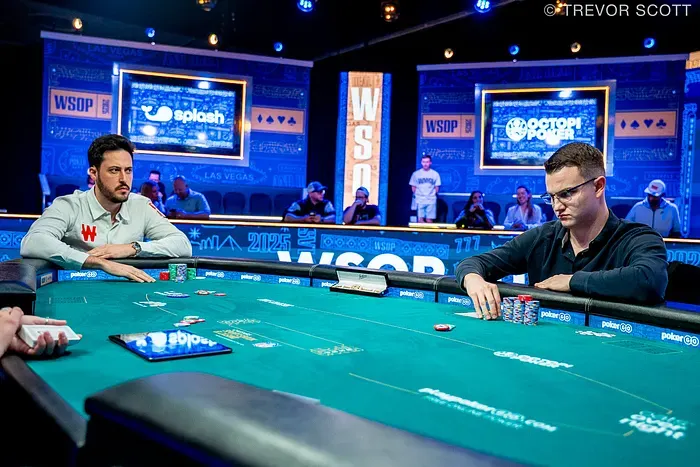
Those fields tend to attract players who are there to compete. The mood is quieter and that can be exactly what some players want, especially if they’ve spent years studying the game and want to see how they measure up.
There’s no right or wrong choice here. Some players want the buzz and chaos of the big spectacle. Others want the challenge of a tougher, more technical field. The key is making sure the event you pick matches the experience you actually want.
Honest Advice for First-Timers
If this is your very first WSOP, a great strategy is:
- Play one "main" event you really care about
- Play one smaller side event for experience
- Leave room in bankroll for flexibility
There’s plenty of poker available during the WSOP season, and not just at the WSOP itself. Across Las Vegas, you’ll find hundreds of daily tournaments running, along with championship-style events at other venues that often come with friendlier buy-ins and excellent structures. If a WSOP bracelet event feels like too big a leap straight away, these can be the perfect way to ease yourself in.
You’ll remember your first WSOP event no matter how it ends. So pick carefully, plan smart, and make sure the one you choose gives you the experience you actually want.