button in Safari
Netflix’s The Prediction Games: A Prediction Market Trader’s Review

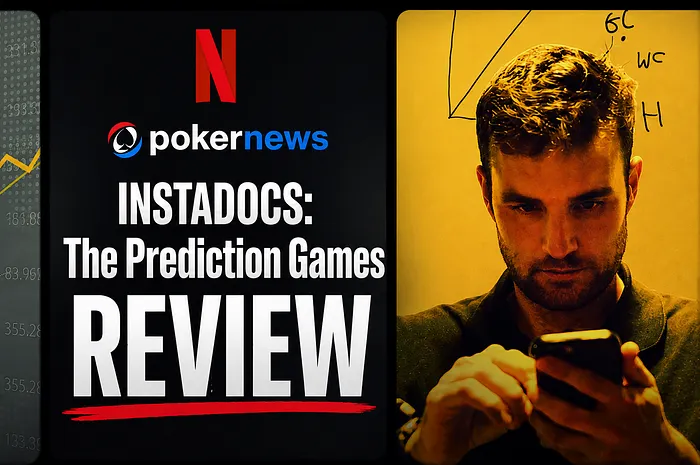
Table Of Contents
Netflix’s new documentary about prediction markets raises legitimate concerns about gambling and market manipulation, but its disputed portrayal of a Kalshi trade also reveals the limitations of its approach.
Netflix’s new documentary about the rapid growth and potential dangers of prediction markets has been pulled into the kind of dispute it asks viewers to consider: whether competing incentives and selective information can distort reality.
Instadocs: The Prediction Games, which premiered on July 26, examines how prediction market platforms including Kalshi and Polymarket have allowed millions of people to trade on everything from elections and weather to wars and sporting events.
Two days before the documentary’s release, Kalshi sent Netflix a cease-and-desist letter accusing the streaming company of featuring a fabricated trade receipt in its promotional trailer.
Kalshi Challenges $5,000 Spain Trade
The disputed scene was filmed during a World Cup watch party in Las Vegas. One participant says he likes betting on Kalshi before displaying what appears to be a receipt for a $5,000 trade on Spain to win the tournament.
Kalshi claims the receipt could not have come from its platform.
According to the company’s letter, the image is dated May 16, 2025, more than a year before the gathering was filmed. The top of the phone screen also displays the word “Crop,” suggesting the participant was showing the filmmakers a saved image rather than an active position inside the Kalshi app.
The terminology shown on the receipt presents another problem. It includes phrases such as “Bet Slip,” “Bet ID” and “wager,” none of which Kalshi says have ever appeared on its platform.
Kalshi also claims its Spain market had recorded less than $600 in total trading volume by the end of May 2025, making the apparent $5,000 position impossible.
Kalshi marketing lead Brandon Beckhardt said the image looked nothing like the company’s interface.
“It’s either photoshopped or AI-generated,” Beckhardt wrote on X.
The company also argues that the trailer leaves viewers with the impression that the trade was placed in Nevada during the 2026 World Cup. A state court order has prohibited Kalshi from offering sports, election and entertainment event contracts in Nevada since May.
Kalshi demanded that Netflix remove the trailer, issue a public correction and preserve documents and communications related to the documentary’s production.
“Netflix had a chance to make a genuinely interesting documentary about prediction markets,” Beckhardt said.
He instead characterized the finished product as a sensationalized portrayal built around fiction.
Netflix Denies Fabricating Footage
Netflix has denied fabricating the scene, although its response confirms the image did not show a trade being placed during the Las Vegas gathering.
“No footage in Instadocs: The Prediction Games was fabricated,” a Netflix spokesperson told TheWrap.
The company said the participant displayed a screenshot of a position from May 2025, before the Nevada court order took effect. Netflix added that the underlying trades were between the participant and the platform on which they were placed.
That response leaves a narrower dispute unresolved. Netflix maintains that it filmed a participant showing what he represented as an earlier trade. Kalshi argues that the receipt itself was fabricated and that the trailer misleadingly presented it as evidence of activity on its platform.
According to Kalshi, a Netflix employee involved in editing the trailer acknowledged not initially noticing the 2025 date or the “Crop” label. The company claims the employee agreed not to include the image in the finished documentary but declined to remove it from the already-released trailer.
Netflix’s response addresses whether its footage was fabricated but does not independently establish that the screenshot provided by the participant represented a genuine Kalshi trade.
Nevada Dispute Complicates Kalshi’s Argument
The authenticity of the receipt is separate from the broader question of whether prohibited trading occurred through Kalshi in Nevada.
On July 24, the Nevada Gaming Control Board announced that Kalshi had admitted state investigators were able to enter prohibited event contracts from inside Nevada after the court order took effect.
“The Court required Kalshi to stop offering covered event contracts in Nevada, and Kalshi violated that order,” Nevada Gaming Control Board Chairman Mike Dreitzer said.
Kalshi agreed to implement a third-party geofencing system by Aug. 12 or face penalties of $120,000 per day.
Those separate transactions do not establish that the $5,000 receipt shown in Netflix’s trailer was real. They do, however, complicate Kalshi’s broader argument that the trailer falsely suggested its platform remained accessible for prohibited trading in Nevada.
Netflix Examines the Darker Side of Prediction Markets
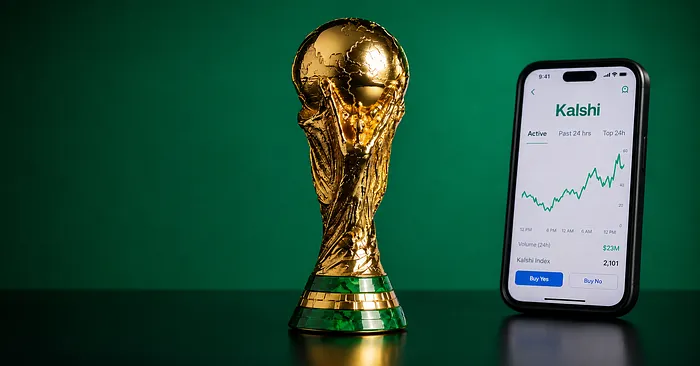
The 37-minute documentary is the second installment in Netflix’s quick-turn Instadocs series. It features interviews with Kalshi CEO Tarek Mansour, Polymarket CEO Shayne Coplan, Commodity Futures Trading Commission Chairman Michael Selig and The Wisdom of Crowds author James Surowiecki.
Netflix says more than $5.6 billion was traded on the 2026 World Cup final through Kalshi and Polymarket. Its description of the documentary focuses heavily on the risks created as prediction markets expand into sports, politics, entertainment, weather and armed conflict.
Surowiecki identifies three principal dangers: insider trading, attempts to manipulate the information used to settle a market and what he calls altering reality.
That final risk occurs:
“When the existence of a prediction market actually changes what people do,” Surowiecki says in the documentary.
The film examines allegations that traders pressured war reporters to change their reporting and artificially generated Spotify streams in attempts to influence the outcome of related markets.
It also includes traders discussing the financial and psychological consequences of excessive trading. One participant, identified as Daniel, describes borrowing money from his roommate, losing nearly all of it and falling behind on rent.
“I haven’t paid my rent for a month because of this specifically,” he says.
Prediction market analyst Dustin Gouker argues that the legal classification of event contracts does not necessarily reflect how customers use them.
“It may not be legally gambling, but what is happening is 100% just gambling,” Gouker says.
Industry Should Not Dismiss the Documentary
The receipt controversy does not resolve the wider debate raised by the documentary.
If Kalshi’s claims about the image, terminology and trading volume are accurate, Netflix included a highly questionable piece of evidence in a film about the manipulation of information. The fact that the image appeared in the trailer rather than the finished documentary would not eliminate concerns about how the film was promoted.
At the same time, none of the documentary’s broader concerns about problem gambling, influencer marketing, insider trading or attempts to alter market outcomes depends on the authenticity of that receipt.
After reviewing the finished documentary, NEXT Predict organizer Stuart Crowley argued that the industry would still be making a mistake by dismissing it.
“Netflix found a real consumer-risk story and a real market-integrity story,” Crowley wrote.
However, Crowley argued that the documentary allowed those stories to dominate its portrayal of a category with more varied uses.
Prediction market platforms can reasonably challenge inaccurate or misleading portrayals while still confronting harmful behavior among some users. Addressing those problems will likely require stronger platform safeguards, industry self-policing and regulation, regardless of whether prediction markets are ultimately treated more like financial exchanges or gambling operators.
Prediction markets involve risk and are not suitable for everyone. While many of the best prediction platforms offer tools to make informed trades, outcomes are never guaranteed, and users should never risk more than they can afford to lose. Always trade responsibly. Additionally, platform availability and legal status vary by region. It is your responsibility to check local laws and verify that you are legally allowed to use a given platform before participating.