button in Safari
Struggling in Multiway Pots? GTO Wizard Shows the Answer in this Triton $250K Hand


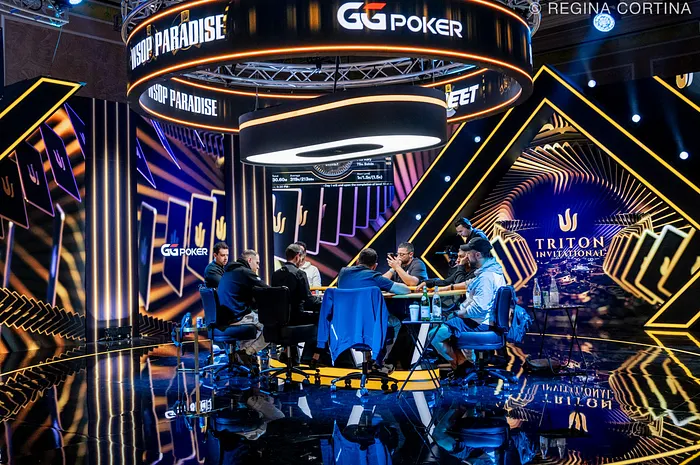
Multiway pots have long been one of the toughest areas to study in poker. Deep stacks, multiple ranges, and complicated board interactions make these spots difficult to solve, and until recently, running accurate simulations could take hours.
WPT Global streamer Lukas “RobinPoker” Robinson revisited a fascinating hand from the Triton WSOP Paradise $250K Invitational and used the new multiway AI feature in GTO Wizard to break down the action.
With three players seeing the flop at over 200 big blinds deep, the hand offered a perfect example of how modern tools can now solve situations that once felt impossible to analyse.
Event Context
The hand took place early in the $250K buy-in tournament, with 98 players remaining and blinds at 500/1,000 with a 1,000 ante.
All players involved were extremely deep-stacked, with each holding well over 200 big blinds. Multiway pots at these stack depths create complex decision trees, especially when ranges widen and positional advantages become more important.
Because the new multiway solver currently supports stack depths up to 250 big blinds, each player’s stack was adjusted to that level to simulate the hand accurately.
The Hand
Cong Pham opened to 3,000 from the cutoff holding Q♣9♦. Armin Ghojehvand called on the button with 8♥6♥ before David D’Alessandro three-bet to 10,000 from the small blind with A♦J♦.
Both Pham and Ghojehvand called, creating a three-way pot.
The flop came Q♥8♣5♦. D’Alessandro checked, Pham bet 16,000, and both opponents called.
The turn brought the 8♦. D’Alessandro checked again, Pham bet 25,000, and both opponents called once more.
The river fell 4♥. After two checks, Ghojehvand bet 55,000 with trip eights. D’Alessandro folded, while Pham called and mucked after seeing the winning hand.
Pre-Flop Analysis
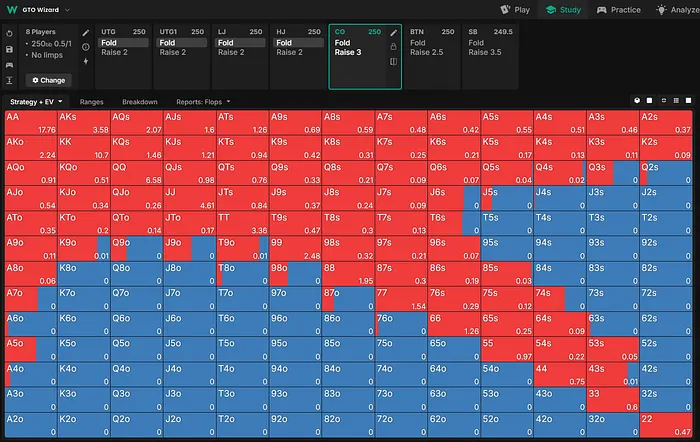
Pham’s open with Q♣9♦ is solver-approved, although at a very low frequency. Most of the time, Q9 offsuit folds from the cutoff, but mixing in occasional raises helps keep ranges balanced.
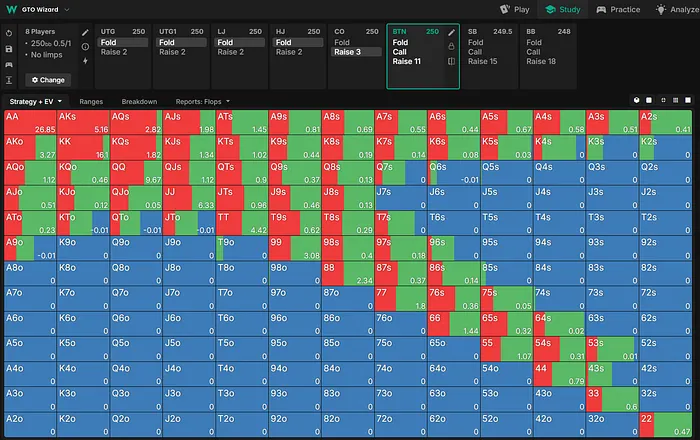
Ghojehvand’s call with 8♥6♥ on the button is also approved. Suited connectors perform well in position, and the solver frequently mixes between calling and three-betting with this type of hand.
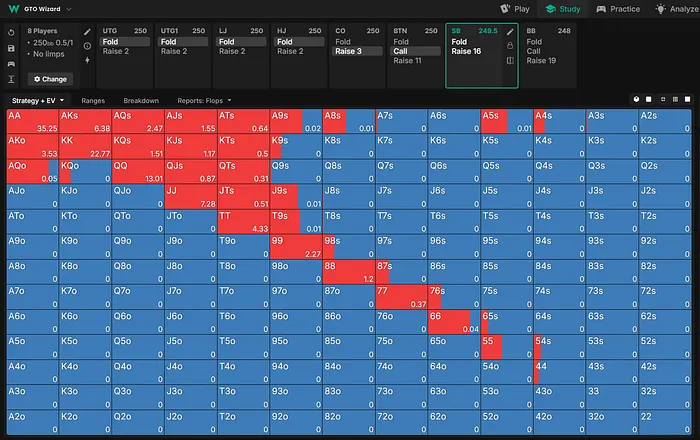
D’Alessandro’s three-bet with A♦J♦ is fully solver-approved, but the sizing is slightly too small. When playing deep stacks out of position against multiple opponents, the solver prefers larger three-bet sizes to make it harder for callers to realise equity.
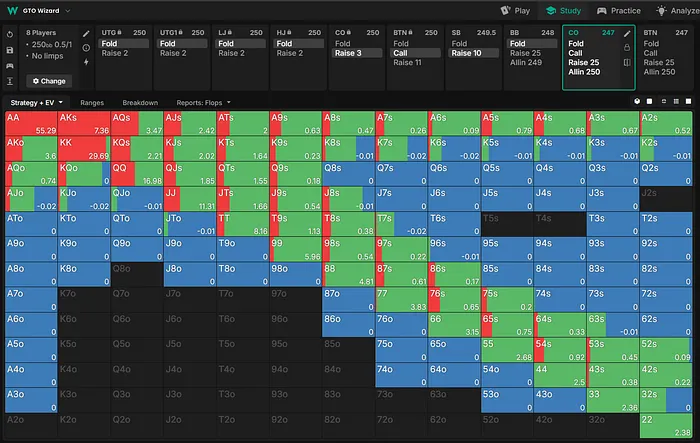
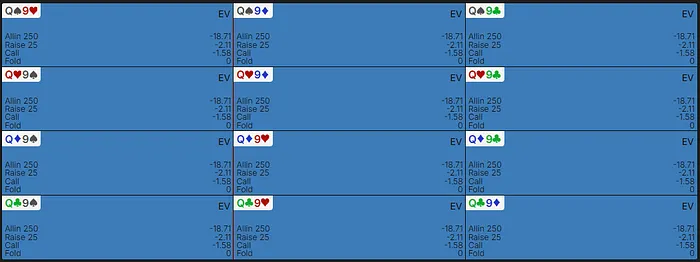
Pham’s call of the three-bet is the first major mistake in the hand. Even against the smaller three-bet size, Q9 offsuit should be a pure fold. Calling loses around 1.58 big blinds in expected value.
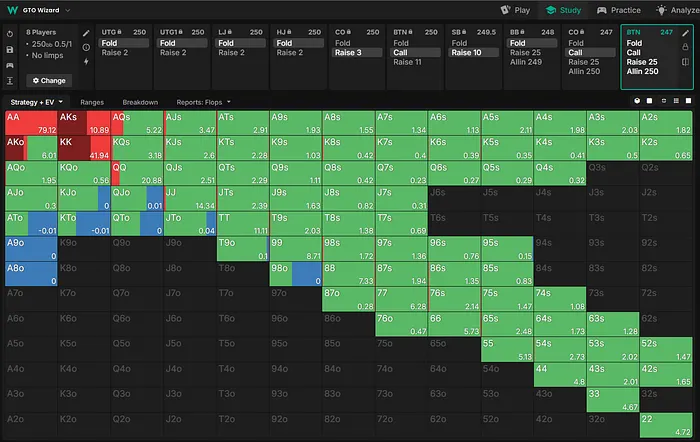
Ghojehvand's call was GTO-approved due to the wider calling range from the CO versus the 10bb three-bet from the small blind. The button is now able to call much wider, as they are getting a very good price in position against both players.
To continue analysing the hand realistically, Pham’s range was nodelocked to include wider calls than the solver would normally allow.
Flop Analysis
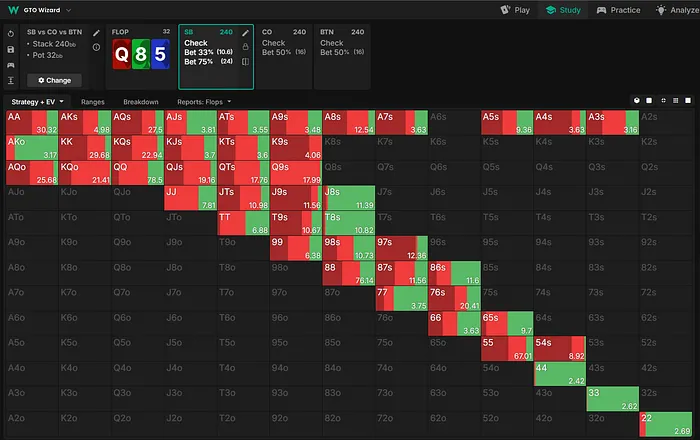
The Q♥8♣5♦ flop gave top pair for Pham and middle pair plus backdoor potential for Ghojehvand.
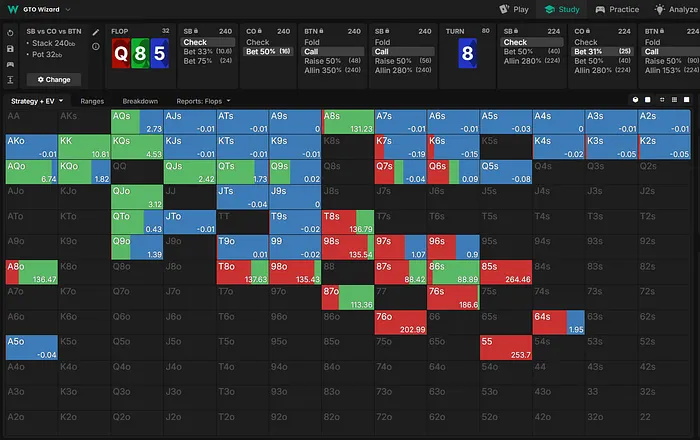
D’Alessandro’s check with A♦J♦ is solver-approved. Out of position in a multiway pot, the solver prefers checking most of the time, especially without a made hand.
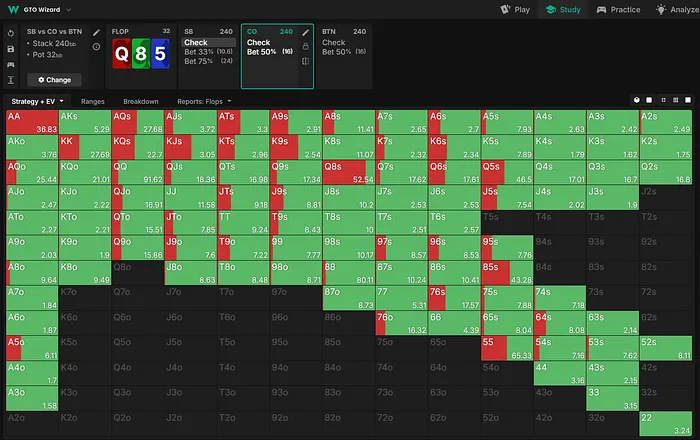
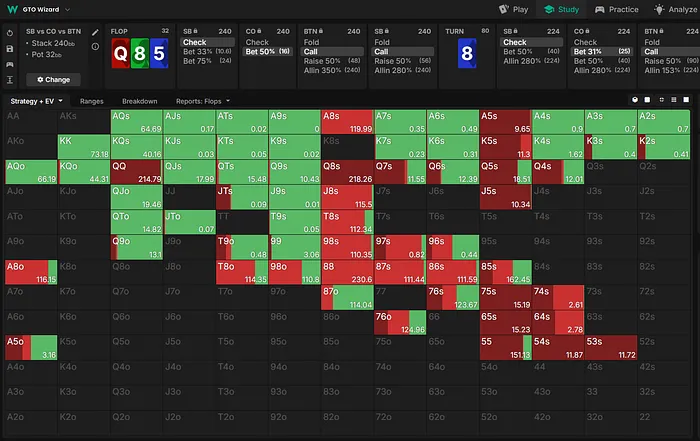
Pham’s bet of 16,000 with Q♣9♦ is solver-approved at low frequency. In multiway pots, betting frequencies drop dramatically, and the solver recommends betting only around 11.7% of hands here.
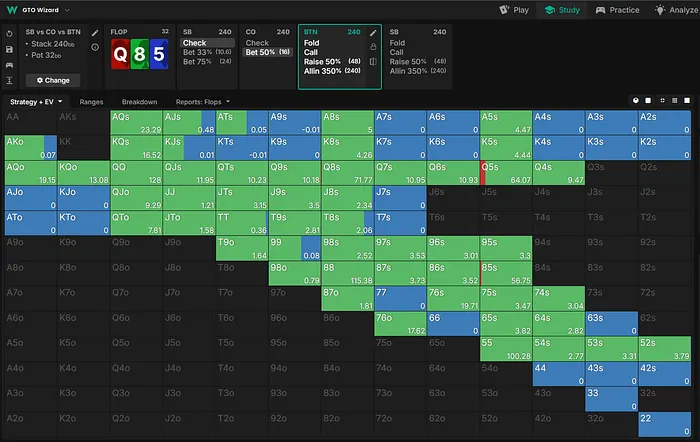
Ghojehvand’s call with 8♥6♥ is standard. With middle pair and backdoor potential, calling is clearly profitable.
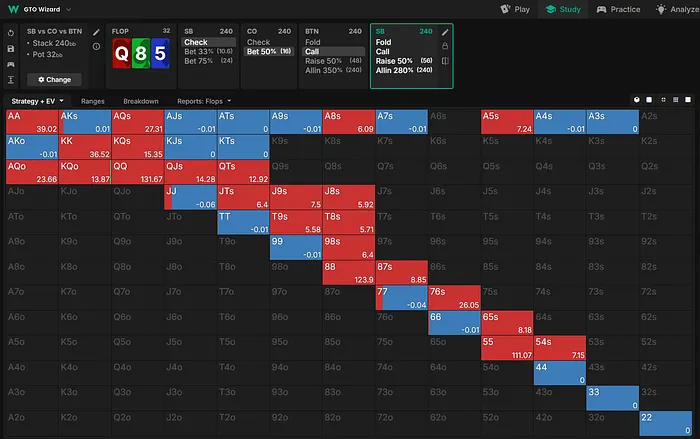
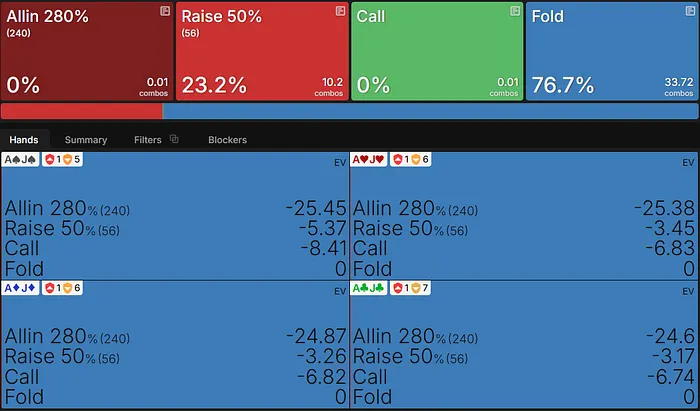
D’Alessandro’s call is the second major mistake. The solver strongly prefers folding in this spot, as continuing with ace-high against two opponents loses significant expected value (EV).
Turn Analysis
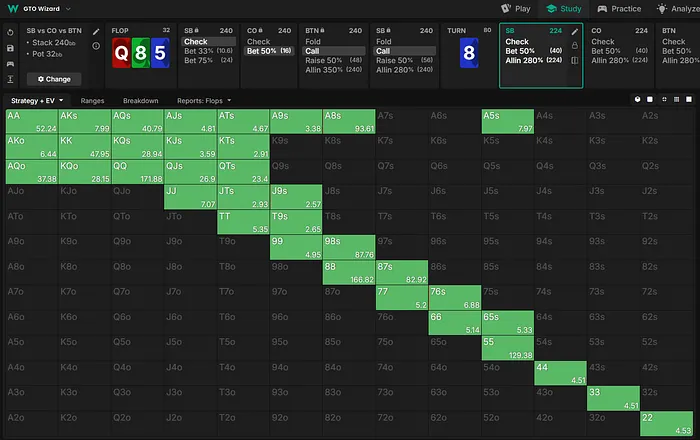
The 8♦ on the turn significantly changes the hand. Ghojehvand improved to trips, while Pham still held top pair. D’Alessandro also picked up the flush draw.
D’Alessandro checked again, which remains solver-approved.
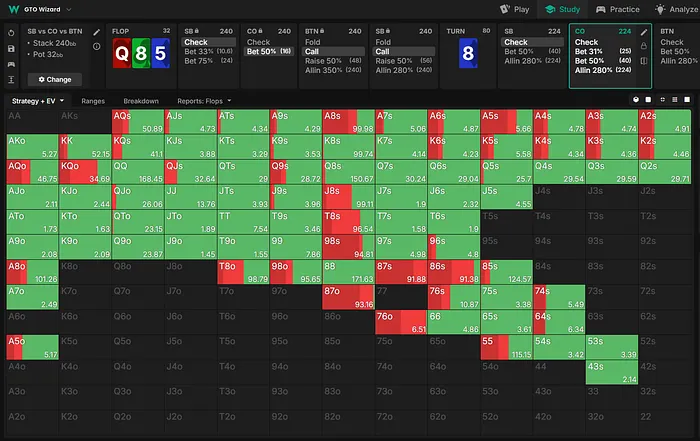
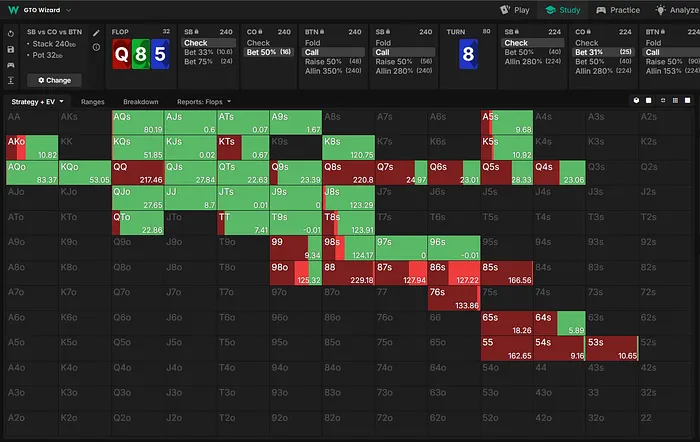
Pham’s second barrel of 25,000 is solver-disapproved. While some betting is allowed, the solver strongly prefers checking with this specific hand, as betting risks value-owning against stronger ranges in a multiway pot.
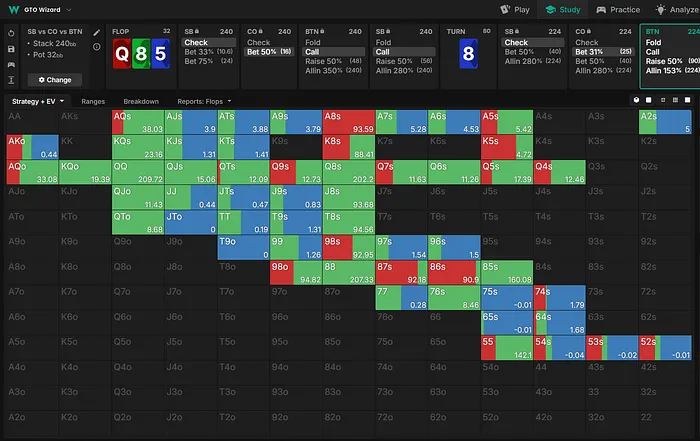
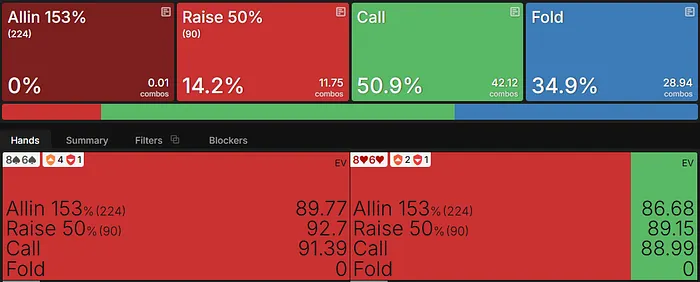
Ghojehvand’s call is correct, though solver output shows raising produces even higher EV. Raising to a much larger size would maximize value and pressure weaker holdings.
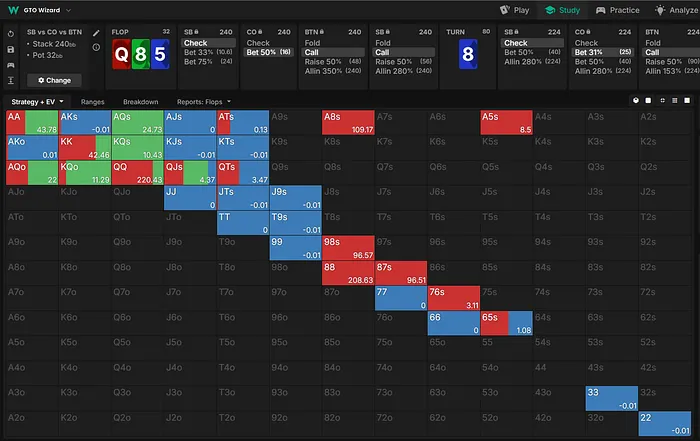
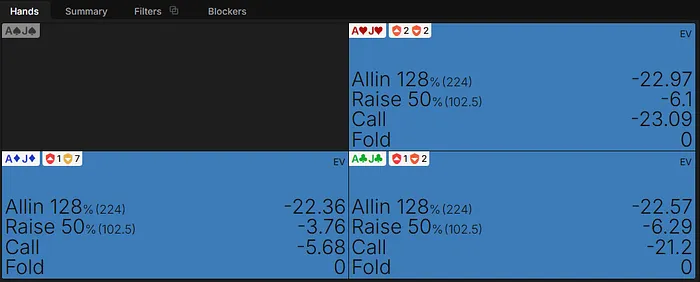
D’Alessandro’s call is another clear mistake. Even with a flush draw, the solver prefers folding, as continuing loses over five big blinds in EV.
River Analysis
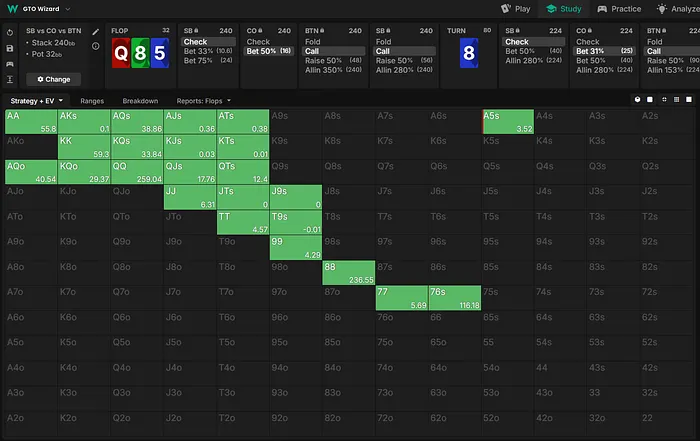
The 4♥ completed no meaningful draws, leaving Ghojehvand with trip eights and Pham holding a weak top pair.
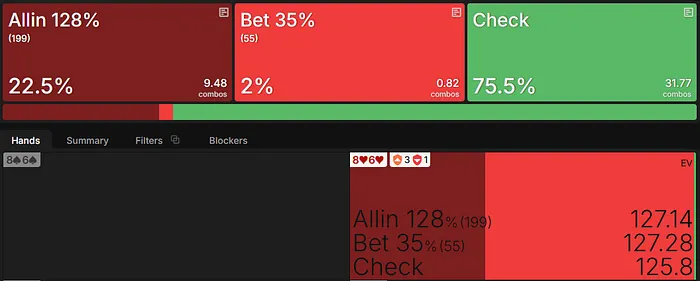
After both opponents checked, Ghojehvand fired 55,000 into the pot. This river bet is solver-approved and closely matches optimal sizing strategy. While the solver frequently uses all-in sizing in similar spots, this bet still captures strong value against worse hands.
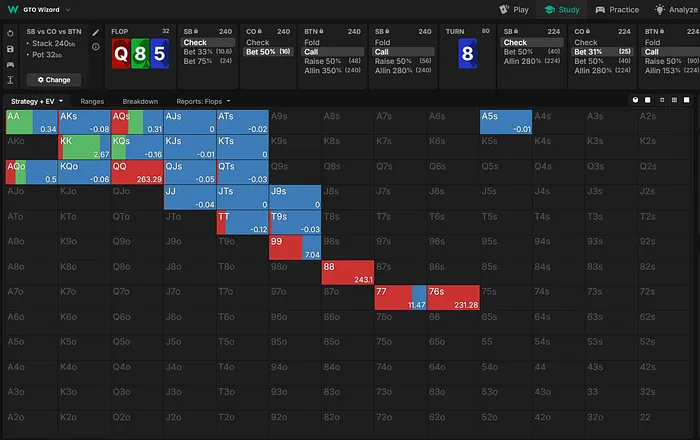
D’Alessandro’s fold is straightforward and solver-approved.
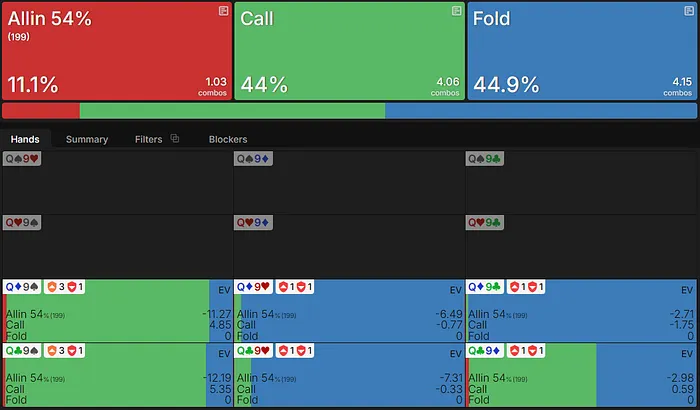
Pham’s call is solver-approved at mixed frequency. Interestingly, calling generates slightly higher EV than folding, winning around 0.59 big blinds more in expected value.
Why This Hand Matters
Multiway pots like this have historically been difficult to analyse, especially at deep stack depths. The introduction of AI-driven multiway solvers now allows players to evaluate these complex situations quickly and accurately.
One of the most powerful features highlighted in this hand is nodelocking, which allows players to adjust ranges based on real-world mistakes rather than assuming perfect GTO play. This makes solver study more practical and far more relevant to actual gameplay.
This hand shows just how complicated multiway pots can become, and how small mistakes compound across streets.
Pham’s pre-flop call created a difficult post-flop situation, while D’Alessandro’s continued calls lost significant value throughout the hand. Meanwhile, Ghojehvand’s line stayed close to optimal, ultimately resulting in a well-earned pot.
With tools like GTO Wizard’s new multiway AI solver, these once-impossible spots are now easier than ever to analyse and offers players a clearer path to improving their decision-making in complex multiway scenarios.