button in Safari
Was Kristen Foxen's Infamous Fold With Pocket Kings GTO-Approved?


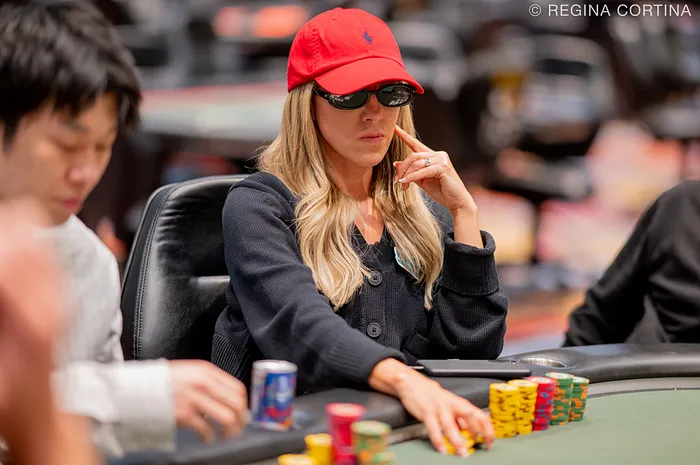
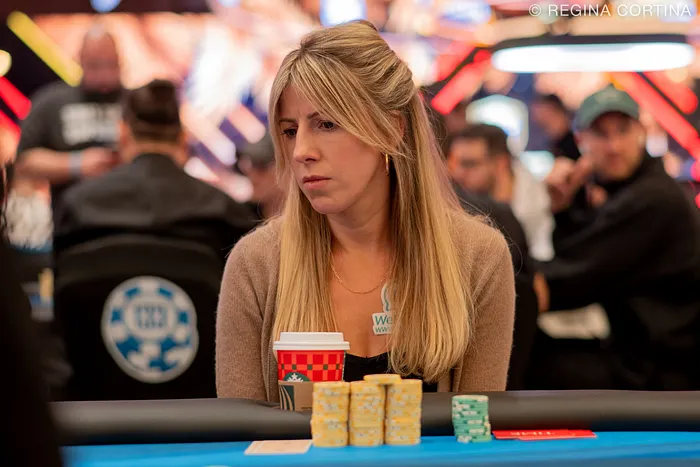
High-stakes crusher and reigning GPI Female Player of the Year Kristen Foxen made a big fold with pocket kings deep in the Triton Poker Jeju $100,000 buy-in Main Event that had the whole poker world talking.
Many players had their thoughts on the fold, which ended up being the wrong move as she had the best hand in what would have been a three-way all in, but what does the math say? Let's investigate using GTO Wizard.
Event Information
Event: $100K Triton Jeju Main Event Final Table
Players Left: 9/178
Blind Levels: 75,000/150,000 (150,000 BB ante)
Payouts:
1st: $3,766,000
2nd: $2,535,000
3rd: $1,787,000
4th: $1,449,000
5th: $1,146,000
6th: $870,000
7th: $635,000
8th: $464,000
9th: $385,000
Stack Sizes and Positions
- Felipe Ketzer (UTG): 7.83bb (1,175,000)
- Elton Tsang (UTG+1/EP): 35.8bb (5,375,000) Not 28bb
- Punnat Punsri (UTG+2/MP1): 34.3bb (5,145,000)
- Philip Sternheimer (UTG+3/MP2): 25.3bb (3,800,000)
- Tom Fuchs (HJ): 23.3bb (3,500,000)
- Kristen Foxen (CO): 19.3bb (2,900,000)
- Sean Winter (BTN): 31.3bb (4,700,000)
- Xu Yang (SB): 26.7bb (4,000,000)
- Ben Tollerene (BB): 88.7bb (13,300,000)
Preflop Action
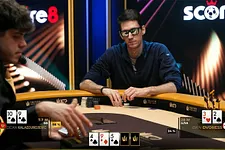
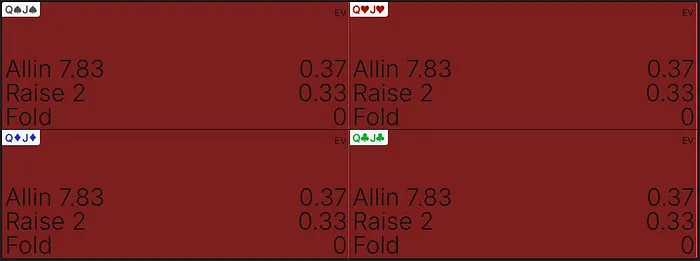
Felipe Ketzer starts the hand by moving all-in for 1,175,000 (7.83bb) from UTG with Q♠J♠.
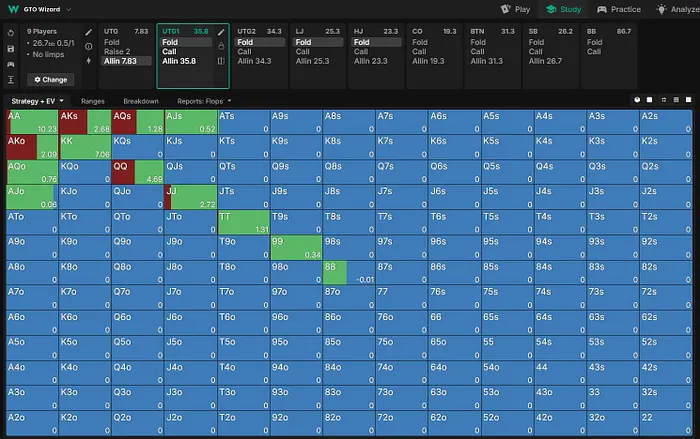
Elton Tsang, next to act from UTG+1, looks down at 10♦10♥ and elects to flat-call with a stack of 5,375,000 (35.8bb).
Action folds around to Philip Sternheimer in UTG+3 (MP2), who finds J♣J♦ and decides to reshove for 3,775,000 (25.3bb).
That leaves Foxen in the CO, who looks down at K♣K♠ with 2,900,000 (19.3bb). After going deep into the tank, she eventually finds a fold.
The action folds back to Tsang, who also decides to fold his pocket tens.
Felipe Ketzer: Q♠J♠
Philip Sternheimer: J♣J♦
Flop: 9♣5♥2♥
Turn: K♦
River:2♠
Sternheimer wins the 3,900,000 pot with two pair, jacks and twos, while Ketzer is eliminated in ninth place for $385,000. Foxen would have won with a set of kings.
Check out the full hand here:
Folding kings was obviously incorrect in game, but was it actually the right play in theory according to the solver?
Before analysing the spot from an ICM perspective, I will first use GTO Wizard’s new multiway preflop AI feature to see how this hand should be played in chip EV.
UTG Range
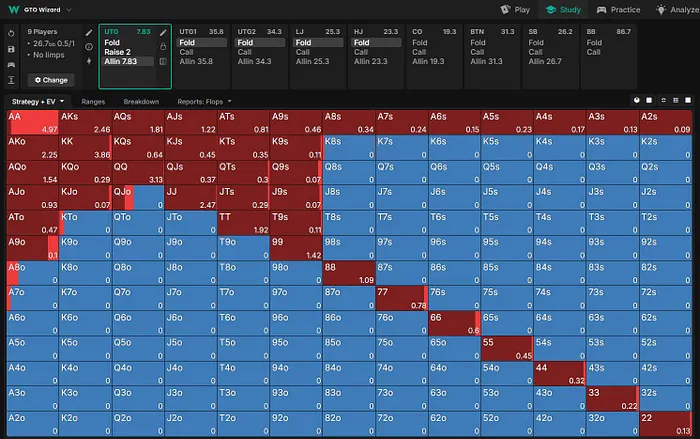
QJs EV
UTG+1 Response
TT EV
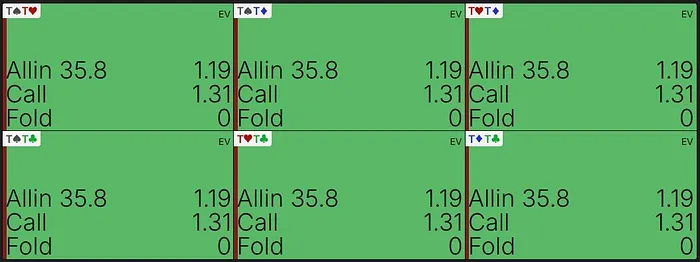
UTG+3/MP2 Response
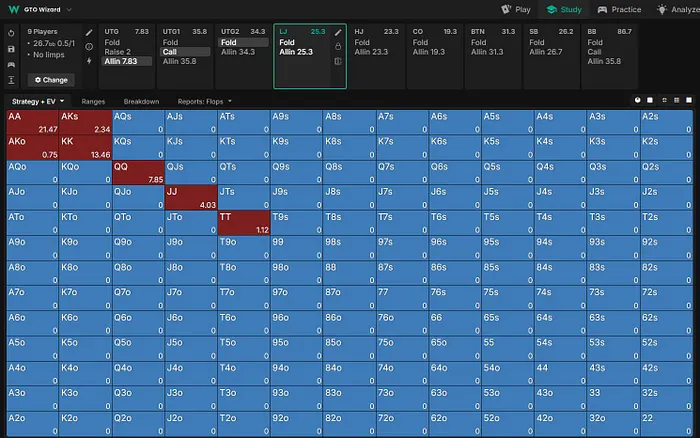
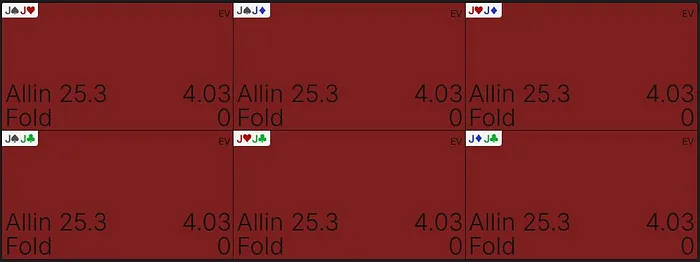
JJ EV
CO Response
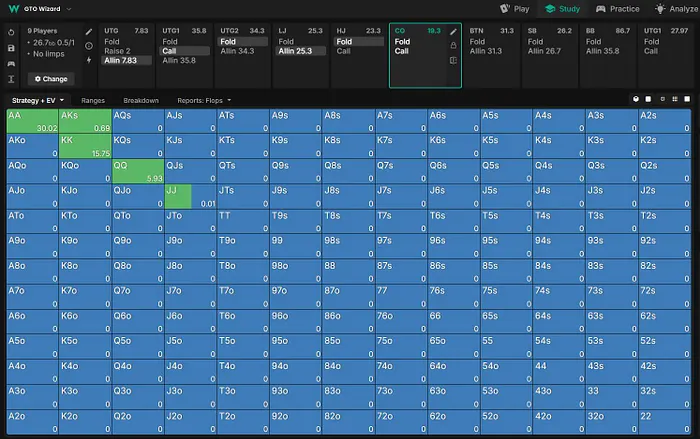
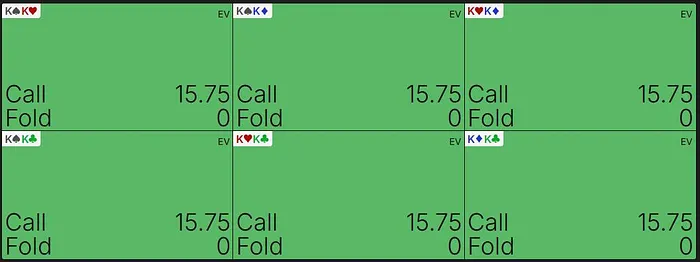
KK EV
UTG+1 Response vs UTG & UTG+3 All-ins
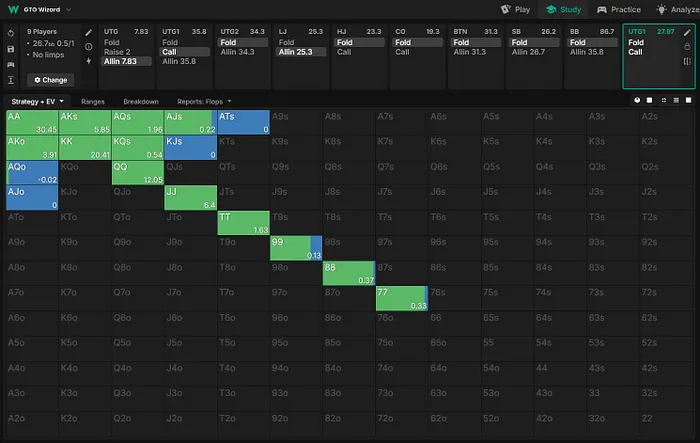
TT EV
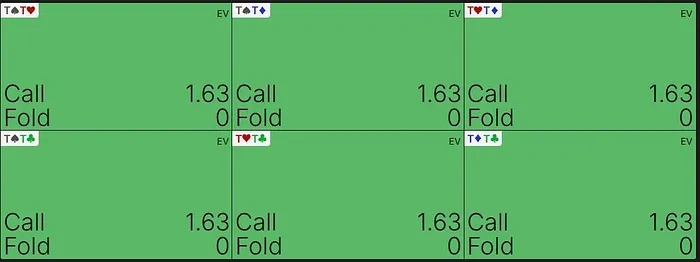
Without ICM considerations, kings would never be a fold, and as played, tens would not be either when facing the two all-ins. QJs and JJ were both played correctly according to chip EV.
But let’s see how this changes once ICM is taken into account.
ICM Solution
Before we look at the recommended strategies from the ICM solver, let’s first examine the bubble factors, which have a massive impact on the players’ overall strategies in this spot.
Bubble Factors
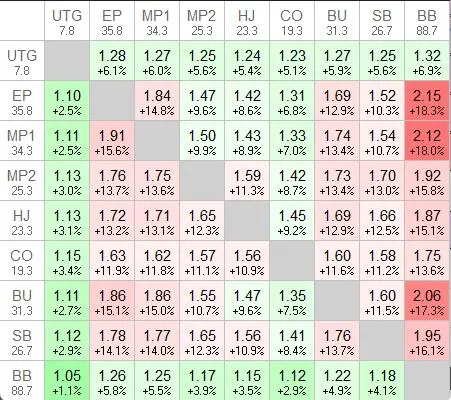
What is a Bubble Factor and Risk Premium in Poker?
Bubble Factor:
- Measures how much a player’s strategy should tighten when they are close to a payout (the “bubble”).
- A higher bubble factor means losing chips is very costly, so you need stronger hands to play big pots.
Risk Premium:
- The extra equity a hand needs to continue in a spot because losing chips is more expensive than usual.
- In other words, it’s the penalty for risking chips under ICM, the higher the risk premium, the stronger your hand must be to play aggressively.
UTG Range
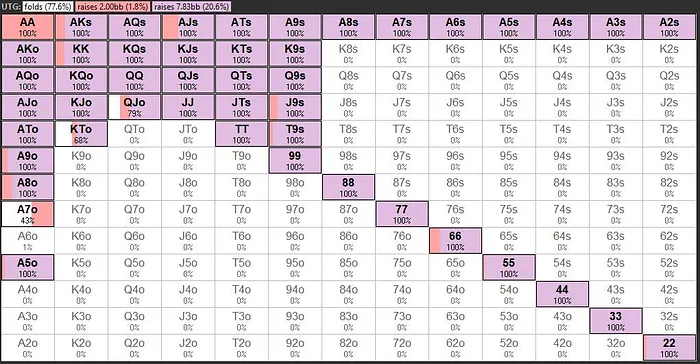
QJs is still a profitable jam under ICM.
QJs $EV
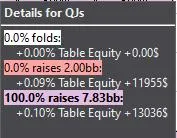
Jamming all-in is the highest $EV play, generating +$13,036.
UTG+1 Response
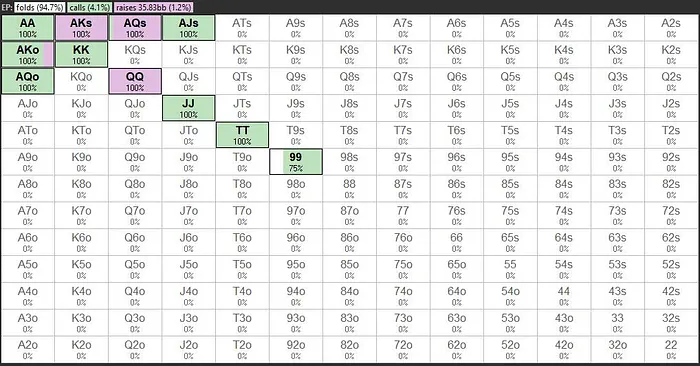
Tens is still a profitable call under ICM.
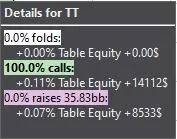
TT $EV
Calling is the highest $EV play, generating +$14,112.
UTG+3/MP2 Response
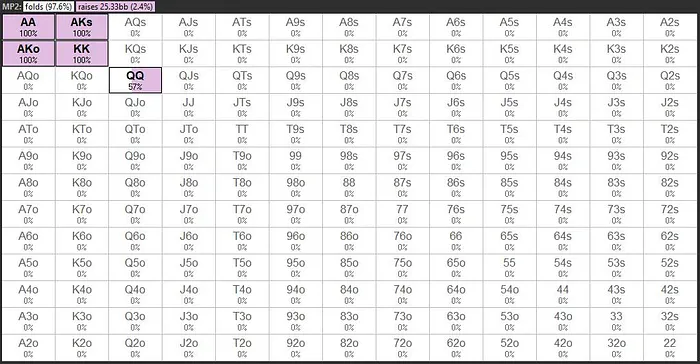
The first mistake in the hand occurs here, as JJ is a pure fold in this spot.
JJ $EV
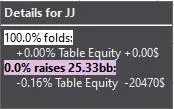
Calling is the lowest $EV play, losing $20,470.
Now for the moment you’ve been waiting for… is KK a fold in this spot according to the solver?
CO Response
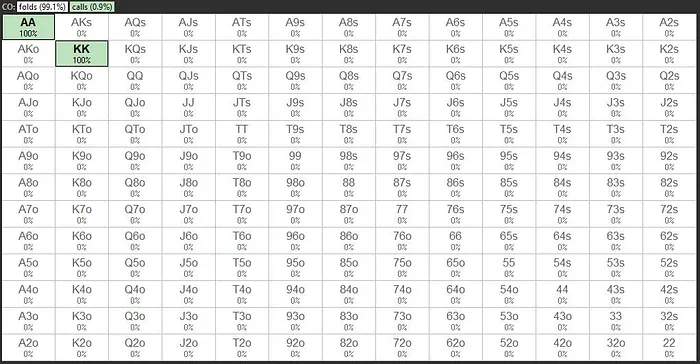
The answer, unfortunately for Foxen, is that KK is a pure call in this spot.
KK $EV
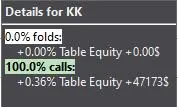
Calling is the highest $EV play, generating +$47,173, meaning her fold cost her $47,173 in EV.
UTG+1 Response vs UTG & UTG+3 All-ins
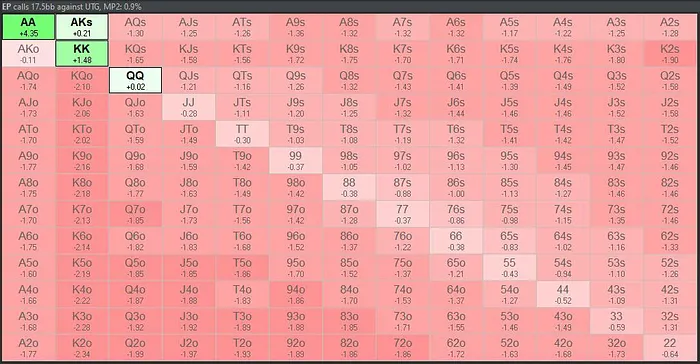
Tens is no longer a profitable call under ICM.
TT $EV
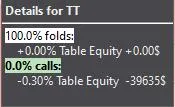
Folding being the highest $EV play and calling would lose -$39,635.
Conclusion
Was KK the correct fold according to the solver? Unfortunately for Foxen, it was not. Folding KK in this spot cost her $47,173 in EV.
It is also worth noting that this analysis assumes a UTG+3 range that does not include JJ. If JJ were included in that range, calling with KK would become even more profitable in terms of $EV.
This hand highlights the complexity of ICM and shows that even the best players in the world can make mistakes at the table. That said, Foxen is one of the best for a reason, and we are sure she will learn from this spot and continue to perform at future Triton final tables.
If you would like to improve your ICM game and minimize costly mistakes at the final table, use the link below to try GTO Wizard for yourself.