button in Safari
A GTO Wizard Breakdown of the 2025 WSOP Main Event Final Hand

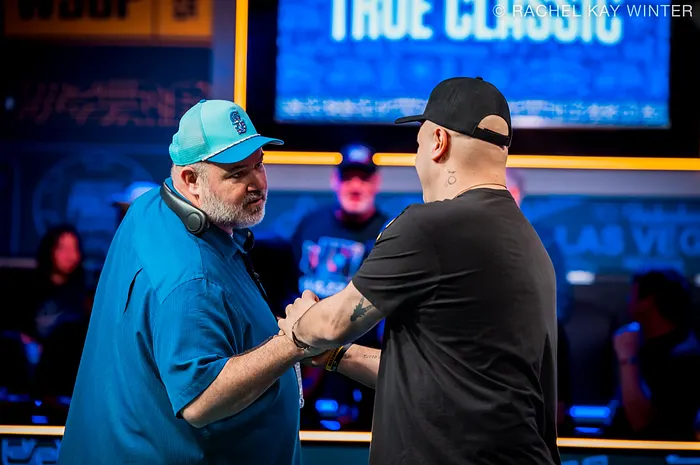
The 2025 World Series of Poker (WSOP) Main Event produced a finale that will be remembered for years.
After more than a week of grueling play at Horseshoe and Paris Las Vegas, the $10,000 buy-in tournament that drew thousands of hopefuls came down to a heads-up clash between two very different players: recreational player John Wasnock and four-time Poker Players Championship winner Michael Mizrachi, known around the world as The Grinder.
In the end, Mizrachi walked away with the bracelet every poker player dreams of and an eight-figure payout, while Wasnock banked a life-changing $6,000,000. The final hand was one of the most entertaining of the entire final table, which makes it a perfect spot to put under the microscope with a GTO Wizard breakdown.
Preflop
- Wasnock (SB): 75,500,000 (30.2bb)
- Mizrachi (BB): 509,000,000 (203.6bb)
With blinds at 1,000,000/2,500,000 and a 2,500,000 big blind ante, Wasnock began the hand with just over 30 big blinds. From the small blind, he raised to 5,000,000 holding A♠9♦.
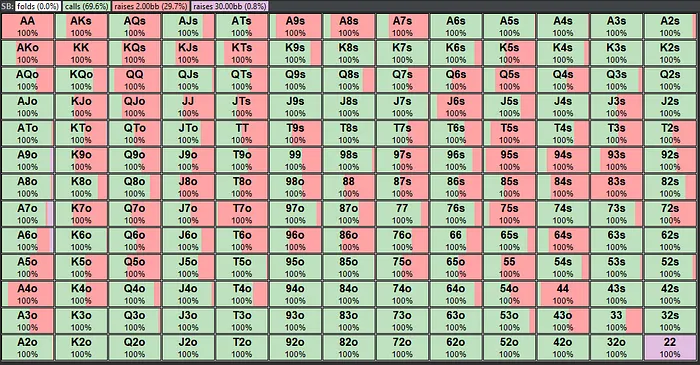
While it looks like a natural open in such a huge spot, the solver actually leans toward a different approach. With this stack depth, ace-nine offsuit prefers limping, mixing into a passive range that protects it from being too weak overall. Raising is not catastrophic, but it doesn’t maximize expected value.
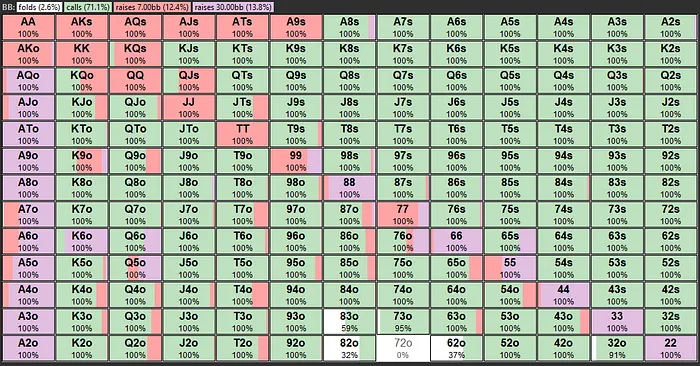
Mizrachi defended his big blind with 10♣3♣, which theory absolutely approves. In these spots, every suited hand is meant to continue, and ten-three suited is a pure call.
Flop
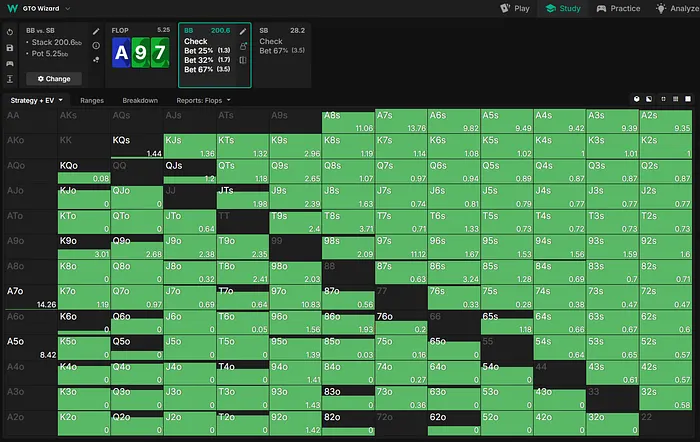
The flop came A♦9♣7♣, giving Wasnock top two pair and Mizrachi a flush draw. Mizrachi checked, which is completely in line with solver strategy. From the big blind, range-checking is entirely acceptable against the small blind’s stronger distribution.
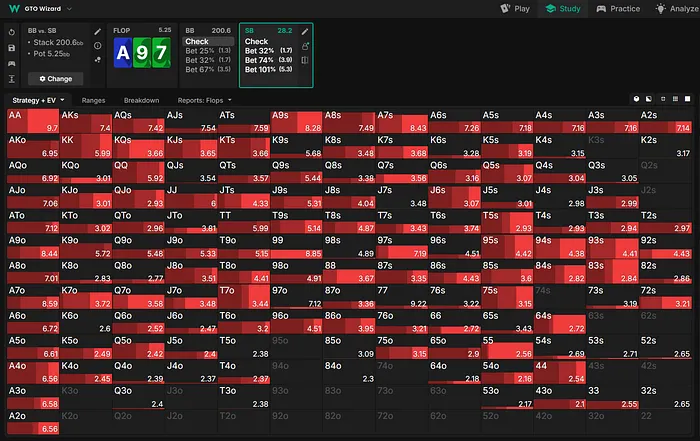
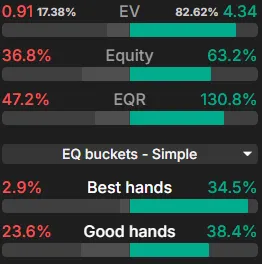
Wasnock, however, checked back, and this is where theory disagrees. With such a strong hand on a dynamic board, the solver wants him to bet at a very high frequency.
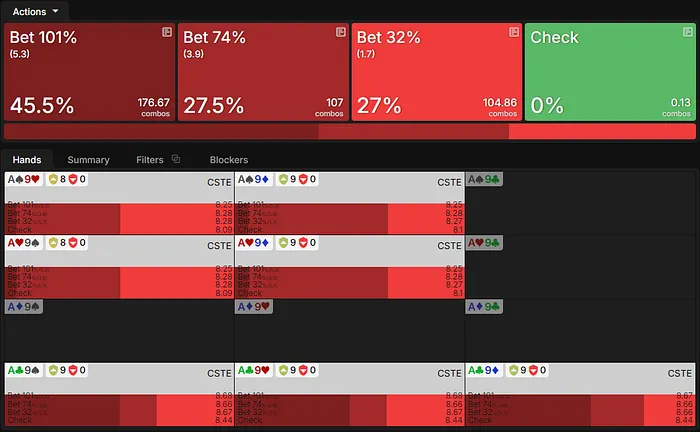
Betting not only builds the pot but also denies equity to weaker hands, particularly flush draws. The solver shows that every bet size produces more expected value than checking here, making this a clear mistake.
Turn
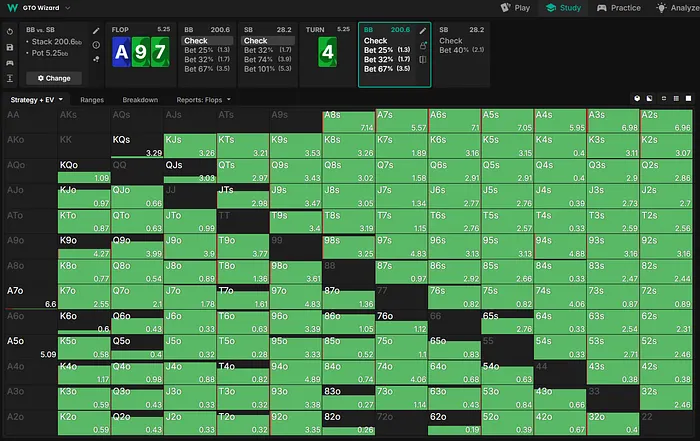
The 4♣ on the turn completed Mizrachi’s flush. He checked again, and the solver supports this choice. Continuing to check range makes sense, especially since Wasnock had shown he could slow-play by checking back on the flop.
Wasnock then fired 10,000,000 into 12,500,000, a bet that theory does not favor. Betting with A9 after the flop check is fine in principle, but the sizing is too large.
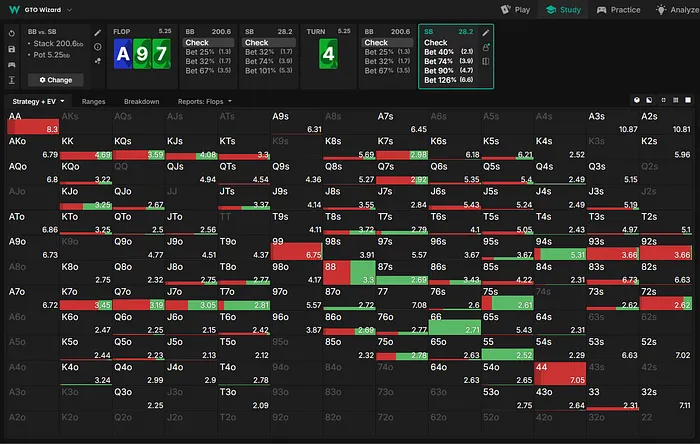
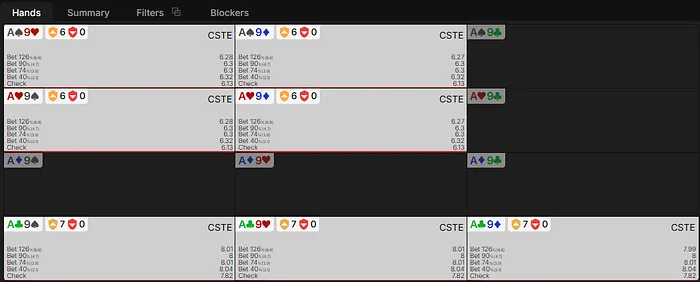
The solver prefers something closer to 40% of the pot. The smaller bet size extracts value from worse hands, keeps ranges balanced, and avoids playing directly into flushes. By choosing a 90% sizing, Wasnock polarized himself unnecessarily and set himself up for trouble.
Mizrachi raised to 30,000,000, which fits solver-approved strategy. Theory likes fast-playing some of the weaker flushes while slow-playing the strongest ones.
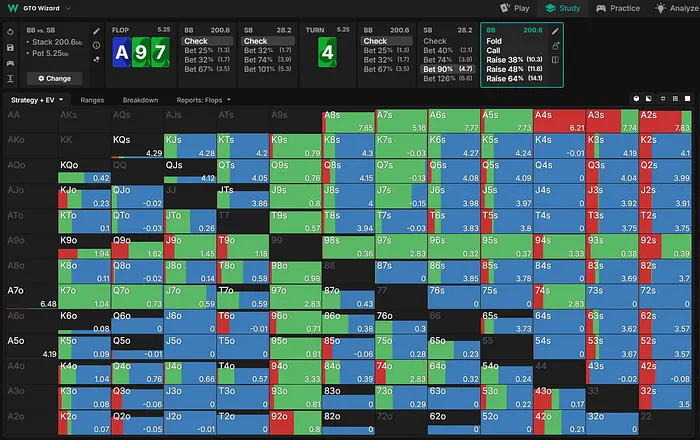
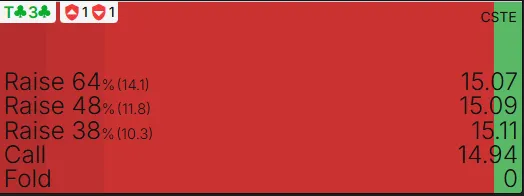
His choice of sizing was on the larger side, but the solver shows little difference in expected value between 2.5x and 3x raises.
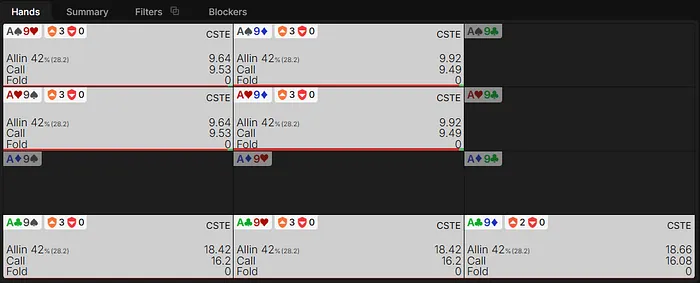
Wasnock then moved all in for his remaining stack, and Mizrachi snap-called. From a GTO perspective, both players were correct at this stage. All combos of A9 are meant to jam, and flushes that raise the turn are pure calls against a shove.
The river brought the 5♣, sealing the checkmark for Mizrachi. The Grinder was once again a WSOP champion, this time walking away with the most prestigious bracelet of all and $10,000,000.
The Verdict
The solver gave Mizrachi near-perfect marks. From defending preflop to checking flop and turn, and then raising and calling correctly, he played the hand in textbook fashion.
Wasnock, on the other hand, faltered in two areas. His flop check left money on the table, and his oversized turn bet made his range unbalanced and too easy for a flush-heavy opponent to exploit.
But it’s easy to criticize with solvers in hindsight. In the moment, under the weight of a $10 million decision, Wasnock relied on instinct, and his run still earned him one of the biggest prizes of the summer.