
 button in Safari
Straight Draw in Poker: Definition, Outs & Odds of Winning

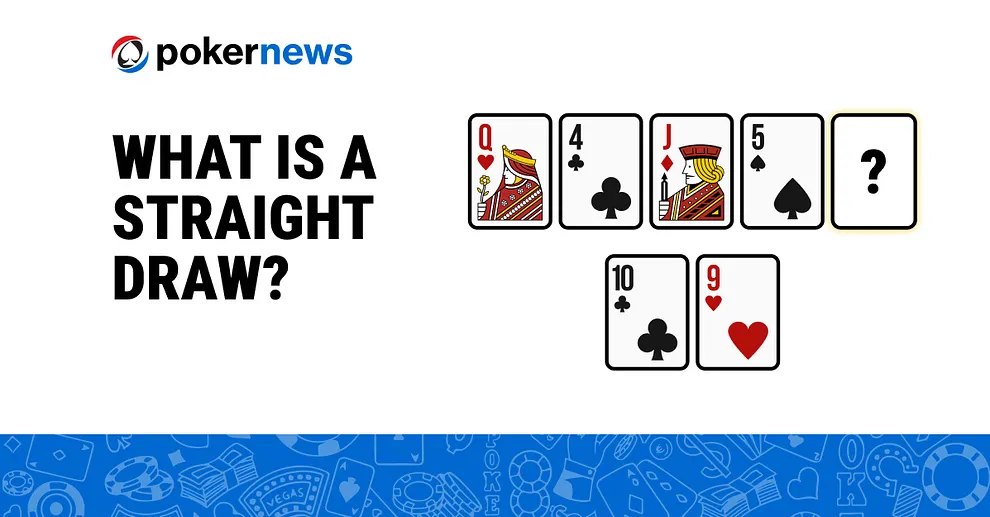
A straight draw is one of the most common and important drawing hands in poker.
In this guide, we explain what a straight draw is in poker, how it works in Texas Hold’em, and break down straight draw outs and odds so you can make better decisions at the table.
For a full overview of hand strength, visit our Poker Hands Rankings page.
- What is a Straight Draw in Poker?
- How Many Outs Does a Straight Draw Have?
- Straight Draw Odds
- Example of a Straight Draw
- How to Play a Straight Draw in Poker
- Straight Draw FAQs
What is a Straight Draw in Poker?
A straight draw in poker is a hand that is one card away from completing a straight.
In Texas Hold’em, a straight draw means you have the potential to complete a five-card sequence by the turn or river. It is not a made hand, but it carries strong upside if you hit your card. Some straight draws are powerful enough to justify aggressive play, especially when combined with flush draws.
Example of a Straight Draw
Board: 10♥ 8♥ 2♦
Hole Cards: J♣ Q♠
Here, you already have four out of the five cards needed for a straight (8-10-J-Q), meaning any 9 completes your draw and gives you a straight.
There are different types of straight draws you can have. We will go through each one below in more detail.
What is an Open-Ended Straight Draw?
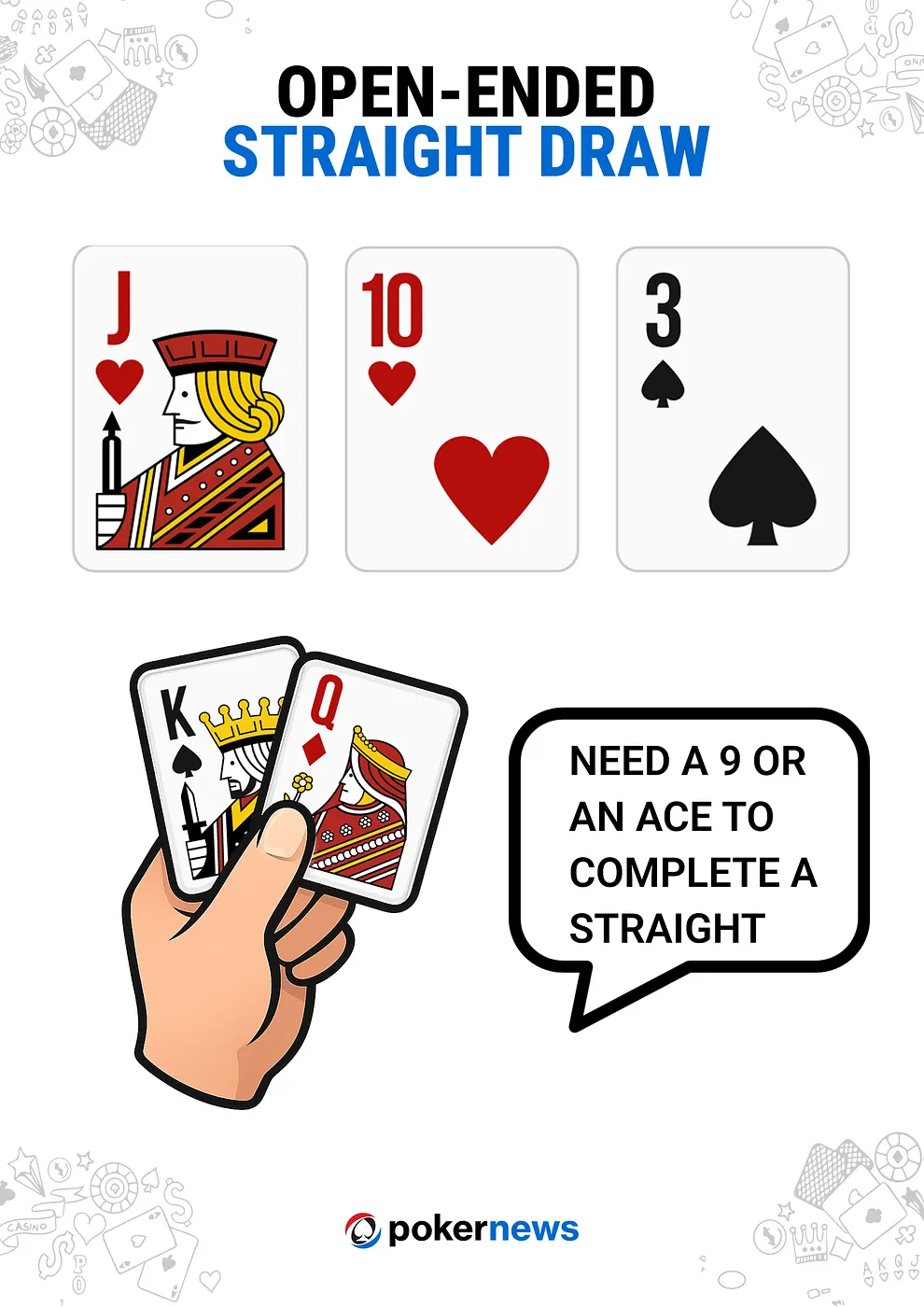
An open-ended straight draw is when you can complete a straight with one of two possible ranks.
This gives you eight outs, making it one of the strongest drawing hands in poker. For example, holding K-Q on a J-10-3 board means any ace or 9 completes your straight.
Example of an Open-Ended Straight Draw
Board: J♥ 10♥ 3♠
Hole Cards: K♠ Q♦
An open-ended straight draw is stronger than a gutshot or inside straight draw. By holding four consecutive cards (10-J-Q-K), you have eight different cards you can hit to complete your straight.
What is an Inside (Gutshot) Straight Draw?
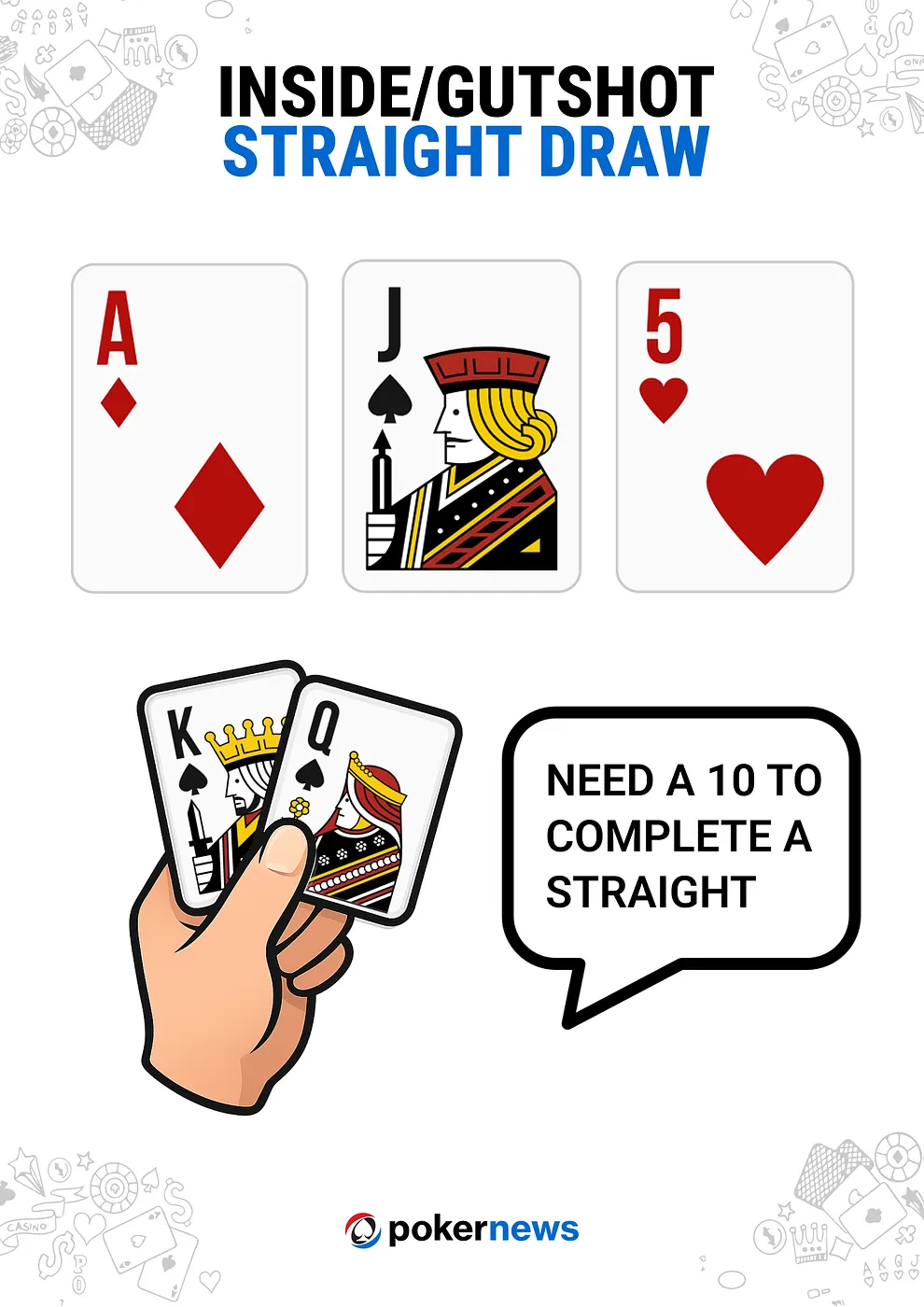
An inside straight draw (or gutshot) is when only one specific rank completes your straight.
This gives you four outs, making it weaker than an open-ended draw. For example, holding K-Q on an A-J-5 board where only a 10 landing will complete your straight.
A double gutshot occurs when two different ranks complete the straight, effectively giving you eight outs. An example would be holding Q-10 on an A-J-8 flop where a king or a 9 would give you a straight.
What is a Backdoor Straight Draw?
A backdoor straight draw requires two perfect cards on the turn and river to complete a straight.
This type of draw has very few outs and low probability, making it the weakest form of straight draw. For example, holding K-Q on an A-J-5 board.
Straight Draw vs. Flush Draw
Straight draws and flush draws are often compared because both are common drawing hands, but they differ slightly in strength and probability.
Flush draws are generally stronger because they have more outs and slightly better odds of completing by the river. However, straight draws can still be powerful, especially open-ended ones.
These are typical values and may vary depending on factors such as dead outs or backdoor possibilities:
| Straight Draw | Flush Draw | |
|---|---|---|
| Number of Outs | 8 | 9 |
| Chance to hit on Turn + River | ~31.5% | ~35% |
| Chance to hit on River Only | ~17.4% | ~19.6% |
| Hand Strength Ranking | Straight (#6) | Flush (#5) |
For more comparisons, see our What Beats What in Poker guide.
How Many Outs Does a Straight Draw Have?
Understanding outs is key to playing straight draws correctly.
An out is any unseen card that improves your hand to what is likely the winner.
- Open-ended straight draw: Typically 8 outs. For example, holding 6-7 on a 5-8-A board means four 4s and four 9s complete your straight.
- Inside (gutshot) draw: Typically 4 outs, since only one rank completes the straight.
- Dead outs: Some outs may already be in opponents’ hands, reducing your actual chances.
- Board texture caution: When multiple cards are connected on the board (e.g. 8-9-10-J), your straight could be beaten by a higher one.
For more info on probabilities and ranks, check out our Poker Hands Probabilities page.
Straight Draw Odds
Straight draw odds tell you how likely you are to complete your hand.
From flop to river:
- Open-ended: ~31.5%
- Gutshot: ~16.5%
From turn to river:
- Open-ended: ~17.4%
- Gutshot: ~8.7%
Many players use the Rule of 2 and 4 to estimate these quickly. Multiply your outs by 4 on the flop, or by 2 on the turn, to get an approximate percentage.
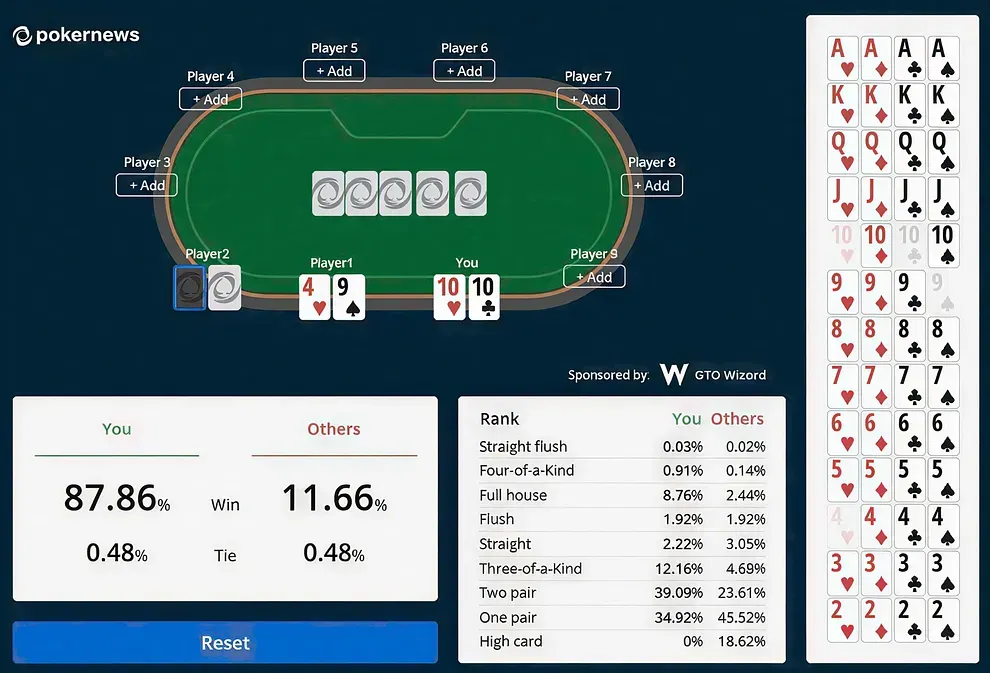
Texas Hold'em Poker Odds Calculator
Want to go deeper into straight draw poker odds? Check out our Poker Odds Calculator.
Example of a Straight Draw
You're holding J♠10♠ and the flop comes 8♦9♣2♥.
You now have an open-ended straight draw. Any 7 or Q completes your straight. That gives you eight outs.
If your opponent bets, you can now weigh your pot odds against your chances of hitting, which is roughly 31.5% by the river.
How to Play a Straight Draw in Poker
Straight draws can be played in different ways depending on the situation.
- Playing aggressively is usually the more optimal play.
- You have a greater advantage when you're in position.
- Be wary of 'dead outs,' which might mean you have fewer outs if opponents hold some of your outs.
Open-ended draws are strong enough to play aggressively, especially in position. Betting or raising can apply pressure while still giving you equity if called. Gutshots, on the other hand, are weaker and often better played cautiously unless combined with other draws.
Be aware of dead outs and situations where your straight may not be the best hand. For example, if the board is heavily connected, an opponent could already have a higher straight.
In many cases, straight draws benefit from semi-bluffing. This allows you to win the pot immediately or build it for when you hit.
Want to learn more about poker hands? Check out our other content:
Straight Draw FAQs
How many outs does a straight draw have in poker?
An open-ended straight draw has 8 outs, while a gutshot straight draw has 4 outs.
Why does an open-ended straight draw have eight outs?
Because two different ranks complete the straight, and there are four cards of each rank remaining in the deck.
What’s the difference between an open-ended straight draw and an inside straight draw?
Open-ended draws can be completed from either end of the sequence, while inside draws require one specific card.
Should you play straight draw aggressively?
Open-ended draws can often be played aggressively, especially as semi-bluffs, while gutshots should be played more selectively.
Is a straight draw a good hand in poker?
It is not a made hand, but it has strong potential, particularly open-ended draws with good odds and implied value.