
 button in Safari
Playing the Board in Poker: Meaning & Examples

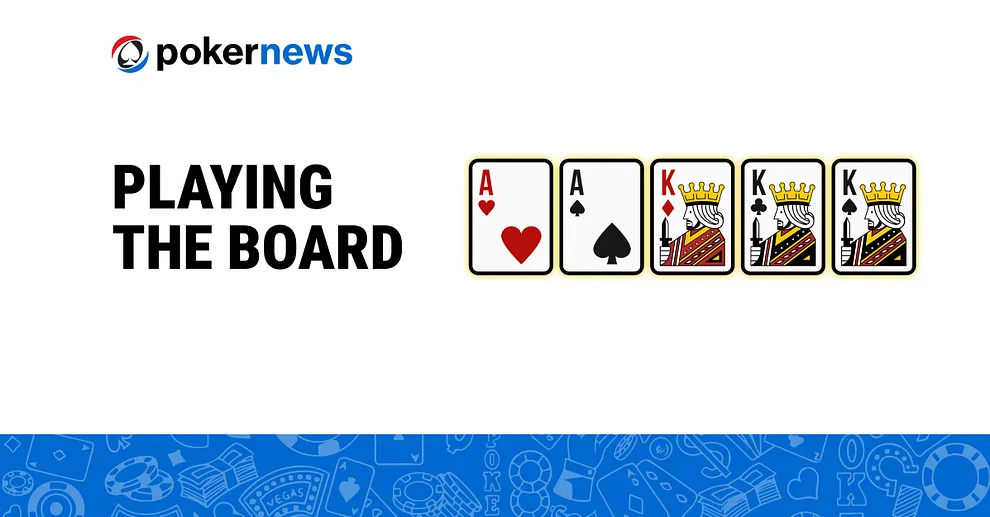
In poker, specifically in community card games like Texas Hold'em, "playing the board" is where your hole cards become completely irrelevant. This occurs when the five community cards dealt in the center of the table constitute the best possible five-card hand you can make.
While you technically still have a poker hand, you are essentially tying the hand with everyone else who stays in until the showdown, provided nobody can use their hole cards to form a superior combination.
This guide will tell you when the board plays in poker, what happens if the board plays and will give examples.
Read on to find:
- What Playing the Board Means
- When the Board Plays
- What Happens if the board Plays
- Example of When the Board Plays
- Playing the Board FAQs
What Does Playing the Board Mean in Poker?
Playing the board occurs when a player's best possible five-card poker hand consists entirely of the five community cards, making their private hole cards irrelevant.
Occasionally, the five cards dealt in the center of the table are so strong that they cannot be improved by swapping any of them with the cards in your hand. In this situation, you are "playing the board." Because every active player has access to those same five cards, if the board represents the best hand for everyone, the pot is split equally among all players remaining at the showdown
When Does the Board Play?
The board "plays" whenever the five community cards represent the strongest possible five-card combination available to a player. In these instances, your hole cards are effectively discarded because they cannot improve the ranking of the hand already sitting in the center of the table. All players at the table technically hold the same invincible hand.
The board plays when the community cards make up one of the following hands:
Straight already on the Board
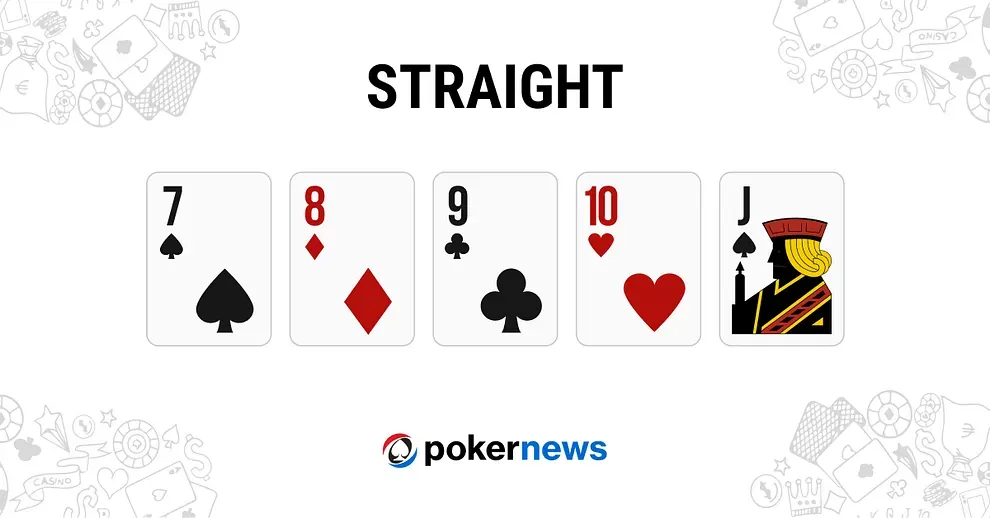
If the community cards show a sequence like 7-8-9-10-J, and no player holds a Q or a higher connector to extend the sequence, the board plays. Since a straight is a complete five-card hand, everyone remaining in the pot shares this identical ranking, leading to a split.
Flush already on the Board
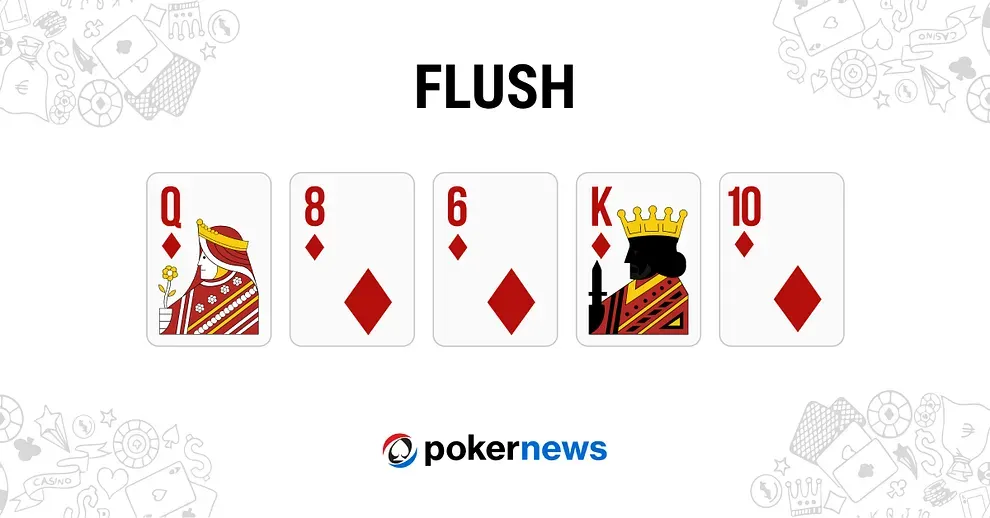
When all five community cards are of the same suit - for example, five hearts - the board is a flush. If no player holds a heart higher than the lowest card on the board, everyone plays the board. However, if someone holds even a single higher heart, they would "beat the board."
Full house on the Board
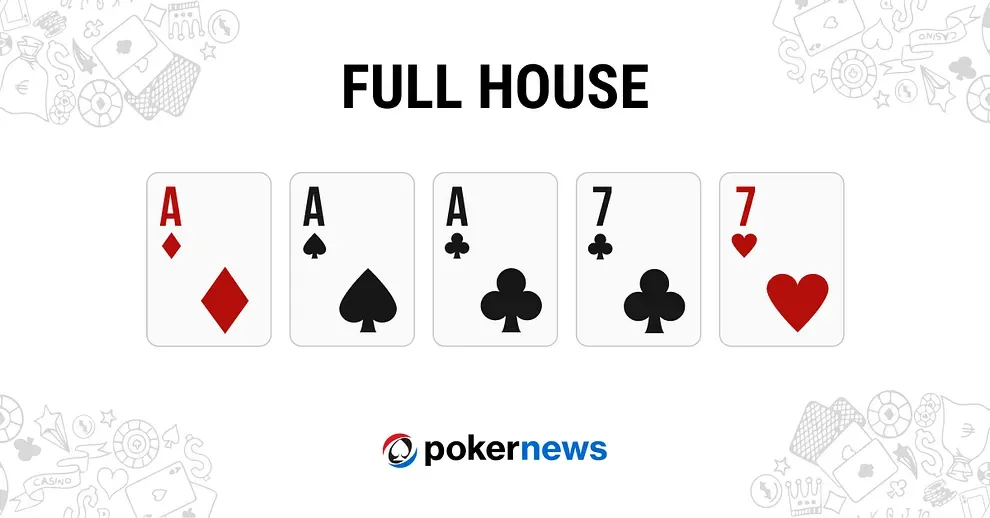
A board showing A-A-A-7-7 is a full house. If your hole cards are lower than the "Kicker" (the sevens), you cannot improve the hand. Unless a player holds a pocket pair of sevens or an ace to make four-of-a-kind, or a pocket pair higher than sevens to make a better full house, the table splits the pot.
Straight Flush / Royal Flush on the Board
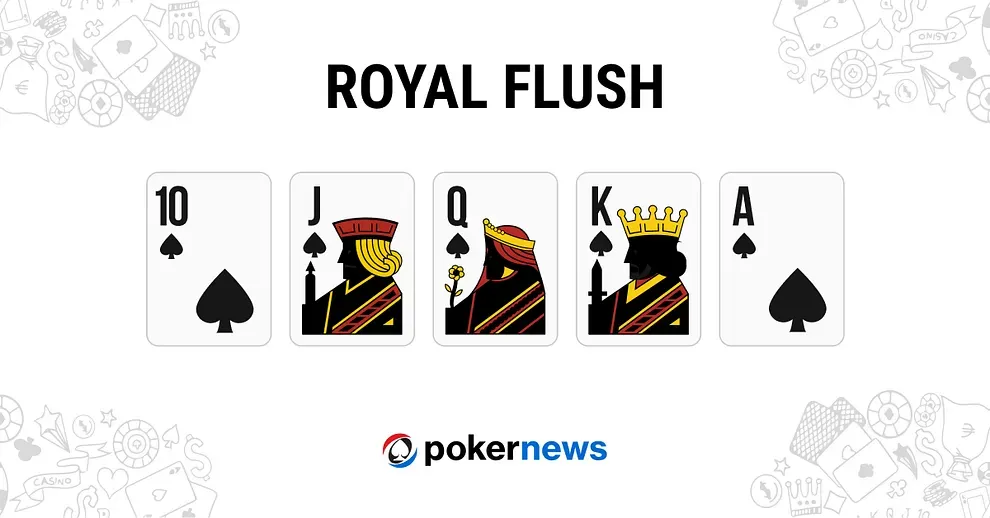
This is the rarest "playing the board" scenario. Because a straight flush or royal flush is the unbeatable ceiling of poker rankings, no hole cards can possibly improve it. Since it is impossible to have a "higher" version of the same five cards, every active player technically holds the same invincible hand.
When Does the Board Not Play?
The board does not play if any player can use one or both of their hole cards to create a hand stronger than the five community cards.
In Texas Hold'em, the goal is to form the best five-card combination possible. If your private cards - even just one of them - can replace a lower card on the board to improve a straight, flush, or full house, you have successfully "beaten the board."
This most commonly happens with the kicker. For example, if the board shows a pair of Aces with a Jack high, but you hold an Ace and a Queen, your Queen replaces the Jack. Because your five-card hand is now statistically stronger than the board's version, you win the entire pot while others "play the board" and lose.
What Happens if the Board Plays?
When you play the board, the final outcome depends entirely on whether another player’s hole cards can beat the five community cards. The two outcomes are outlined below.
Summary of Outcomes
| Scenario | Result |
| No player improves the board | The pot is split equally among all active players. |
| One player improves the board | That player wins the entire pot; the others lose |
No Player Improves the Board - Split Pot
If no player can use their cards to form a hand stronger than the board, the hand results in a split pot. In this case, the total chips in the middle are divided equally among all active players remaining at the showdown.
One Player Improves the Board - They Win the Pot
However, if even one player can improve the board - by using a hole card to create a higher pair, a better kicker, or a superior flush - they win the entire pot. Even a single card difference can prevent a split, leaving those who are "playing the board" with nothing.
In poker, when the board plays for you in a hand, you cannot win the whole pot unless you bluff. That's risky, as they might have a better hand that can easily call. But if the board also plays for your opponent, a big bet puts them in a tricky spot - risk a lot to only win half of the pot.
Example of Playing the Board
To illustrate how this works in a real game, let’s look at two different examples where your hand isn't enough to beat the community cards, resulting in you playing the board.
Hand Walkthrough: Straight on Board
In this example, there is a straight on the board. No player can create a bigger straight, with both players playing the board.
- The Board: [5♣ 6♠ 7♥ 8♣ 9♠]
- Player A: [A♣ K♠]
- Player B: [5♥ 6♦]
Hand Walkthrough: The Counterfeit Two Pair
In this example, the board has paired twice, creating a strong "two pair" combination that overshadows the individual hole cards held by the players.
- The Board: [K♣ K♦ 7♠ 7♥ J♣]
- Player A: [6♣ 6♥]
- Player B [8♣ 9♠]
QUIZ: Can You Read the Board?
Time to put your hand-reading skills to the test. Compare Hero with the Opponent, use the community cards to make each player's best five-card hand, and decide who wins, or whether the board leaves them tied.
Famous Example: 1998 WSOP Main Event
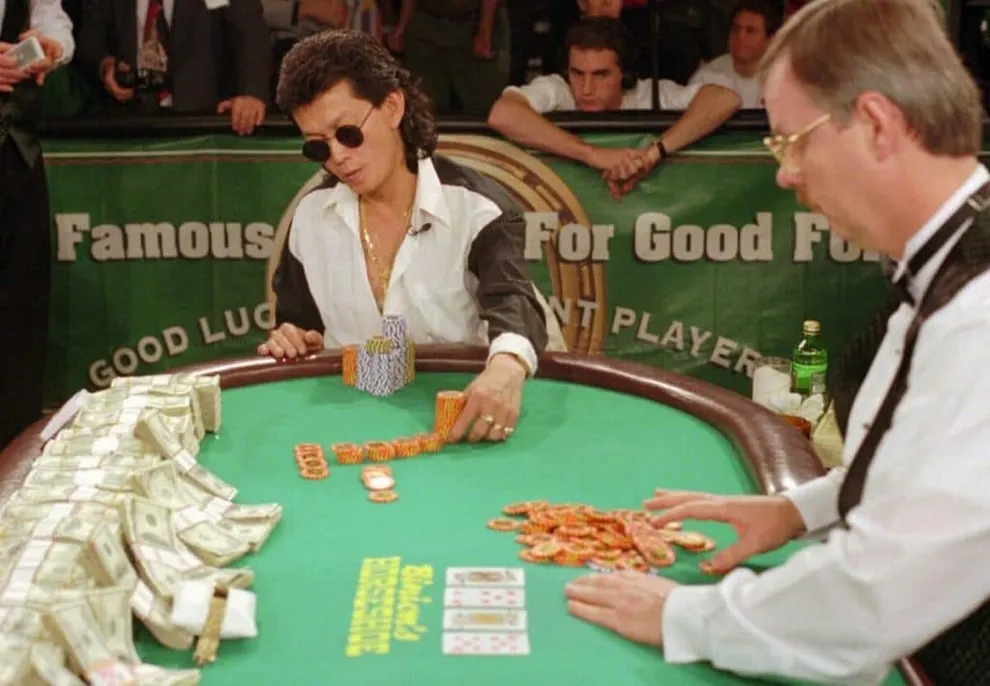
One of the most legendary examples of "playing the board" came during the final hand of the 1998 WSOP Main Event between Scotty Nguyen and Kevin McBride. However, it all went wrong for McBride.
The two players were heads-up for the title. McBride, an amateur player, was facing the seasoned pro Scotty Nguyen.
- The Board: 8♣ 9♦ 9♥ 8♥ 8♠
- The Action: By the river, the board showed a full house (Eights full of Nines). On the final card, Scotty Nguyen moved all-in.
Before McBride could act, Scotty stood up, took a puff of his cigarette, held up a bottle of beer, and uttered the most famous line in poker history:
"You call, gonna be all over, baby!"
McBride looked at the board and saw three Eights and two Nines. He realized that with the cards he was holding (Q♥ 10♥), he was "playing the board." He assumed that since the board was such a high full house, the only way he could lose was if Scotty had a nine (for a higher full house) or the case eight (for four-of-a-kind).
McBride said, "I call. I play the board," believing the most likely outcome was a split pot.
However, Nguyen turned over J♦ 9♣. While McBride played the board with "Eights full of Nines," Scotty used the 9 in his hand to make "Nines full of Eights." Because Nines are higher than Eights, Scotty’s full house beat the board's version.
Want to learn more about poker hands? Check out our other content:
- Poker Hand Rankings
- Tied Poker Hands
- What Beats What in Poker?
- Poker Probabilities
- Kickers in Poker
- Best Starting Hands
- Short Deck Hand Rankings
Playing the Board FAQs
What does playing the board mean in poker?
It means your two hole cards are weaker than the five community cards. Your best possible hand consists entirely of the shared cards, making your own two cards irrelevant to the final ranking.
What is the best strategy when the board plays in poker?
Make sure to check the cards that are in front of you. Avoid folding if the board is unbeatable (like a royal flush). Some players bet aggressively to "bluff the board," hoping you’ll fold so they can take the entire pot instead of splitting it.
What happens when the board plays in poker?
If all active players are playing the board, the pot is split equally. However, if even one player can use a hole card to improve the board's rank or kicker, they win the whole pot.
Is it common for the board to play in Texas Hold’em?
It is relatively rare. It typically only happens during specific "board textures," such as when a high straight, full house, or four-of-a-kind appears and no player holds a card that can improve it.