
 button in Safari
Split Pot in Poker: What are Split Pots & How do They Work?

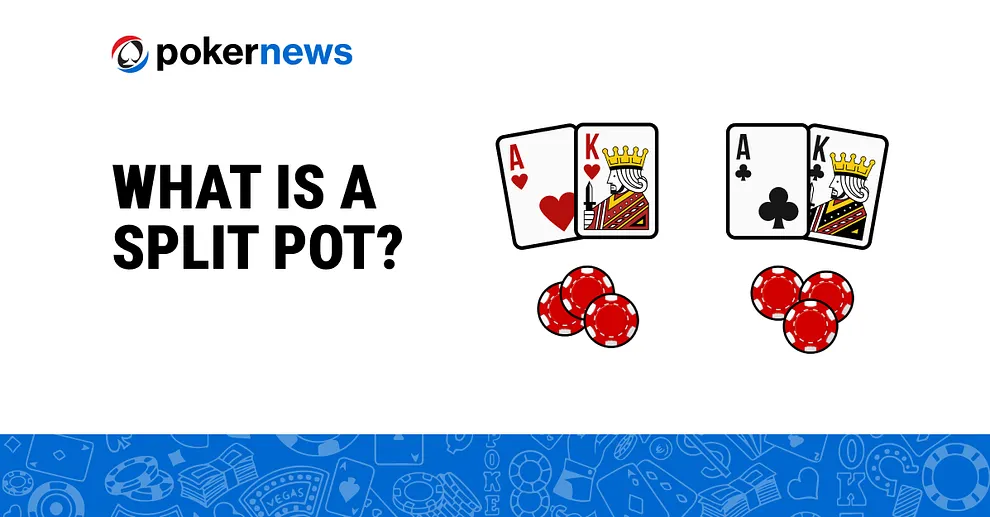
A split pot in poker occurs more often than you might think. It's a common situation in Texas Hold'em and especially Pot-Limit Omaha, when two or more players have equal five-card hands, meaning the pot is divided between them.
It sounds straightforward, but there are certain scenarios where things can get complicated. Multi-way split pots, for instance, can be confusing for newer players especially when the board plays or kickers are involved. Understanding all split-pot situations is crucial if you want to fully understand poker hands.
In this guide, we explain in detail what a split pot is in poker, how split pots work and go through common examples so you can better understand tied hands at the table.
Quickly navigate to the relevant section on this page:
- What is a Split Pot in Poker?
- When Does a Split Pot Happen?
- Example of a Split Pot in Poker
- Split Pot FAQs
What is a Split Pot in Poker?
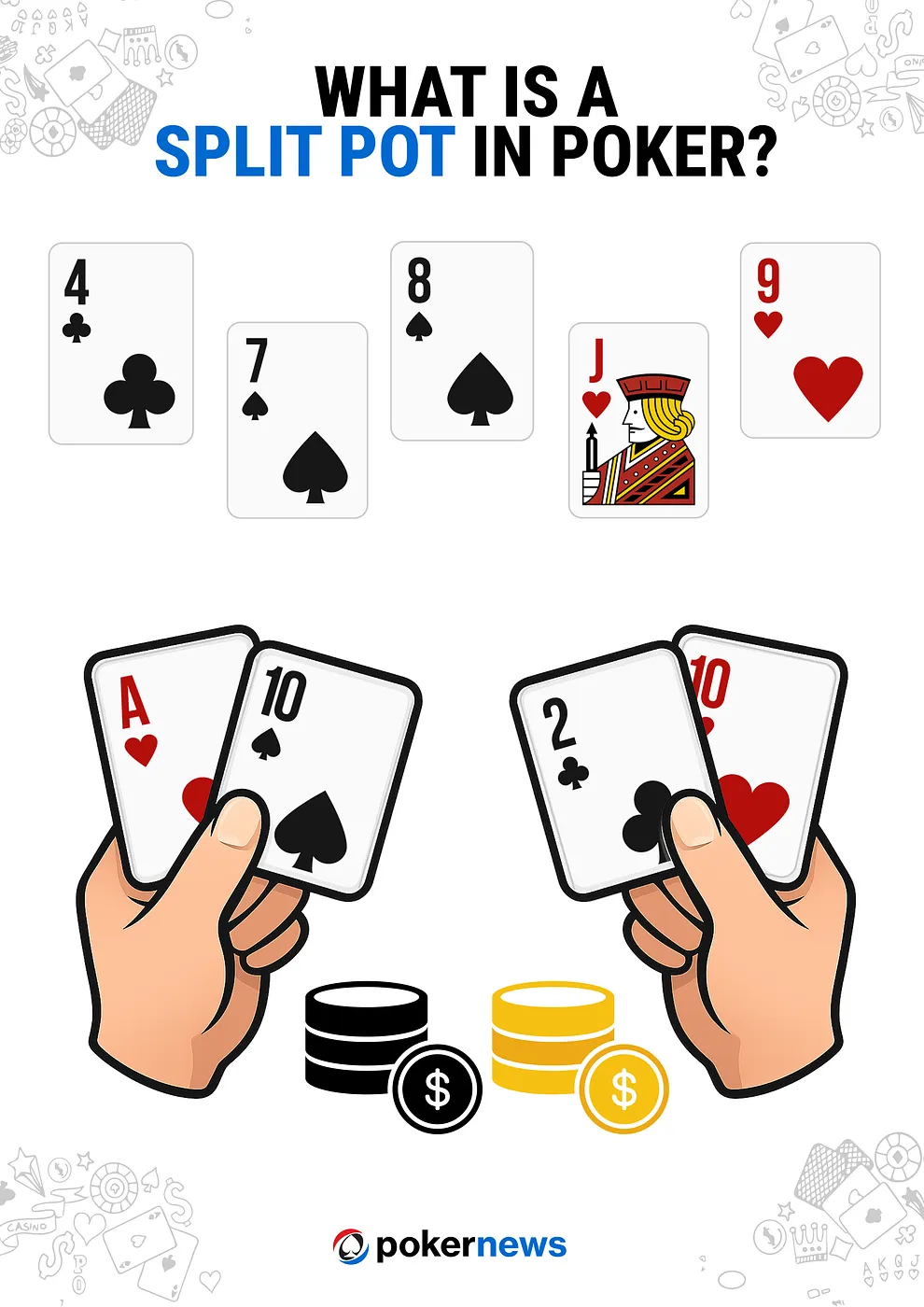
A split pot in poker is where two or more hands are tied in value, so all the chips in the pot are shared equally.
Players must exactly make the best five-card hand possible, using a combination of the five community cards and two hole cards. In Texas Hold'em especially, ties are common, meaning multiple players have the same best five-card hand.
It's possible for more than one player to win the pot. If the hands cannot determine a single winner, then all the chips are distributed equally to all remaining players in the hand that have the same, best five-card hand.
Quick Example:
Board: A♠ K♠ Q♠ J♠ 10♠
In this example, everyone has a royal flush. Hole cards in this scenario are irrelevant, as no cards can improve this hand, so the pot is split.
When Does a Split Pot Happen?
Split pots can occur in several different situations. The most common are outlined below:
- When multiple players have identical hands (hole cards)
- When the board plays
- When players have the same overall hand with the same kickers
Split Pot - Identical Hands
When two or more players have two identical hole cards, the pot can often be split. This only relates to card value rather than suit, as there can only be one exact card in play - you cannot have both players holding the ace of spades in their hole cards. If both players hold ace-king, suit is only relevant if one player makes a flush.
All suits are equal, which means there is no advantage to holding two hearts, compared to holding two spades. The only time this becomes relevant is when cards of that same suit land on the board, giving the potential for flush-draws.
Assuming no Flushes are possible, if the two players hold AK and get to showdown: The pot is split.
Split Pot - When the Board Plays
The most common type of split pot happens when the board plays. This means that the five community cards make up the best five-card hand, and no remaining players' hole cards can improve the hand.
Using an extreme example, imagine if a royal flush lands on the board. A♦ K♦ Q♦ J♦ T♦. Looking at the probabilities in poker, this is very rare but if and when it does happen, no other card can improve the hand. This means every player remaining in the hand has a royal flush, and so can't be beaten.
The pot is consequently split equally among all remaining players at showdown.
Split Pot - Same Hand with Same Kickers
This scenario is in sorts, a mixture between the previous two. Let's say one player has AJ and the other player has AT - two strong starting hands. The board might run out Q♦ Q♠ Q♣ K♦ 8♥. This means three-of-a-kind is on the board, but unlike the royal flush example in the previous situation, players' hole cards can affect who has the best hand here.
Both players have trips, but that only makes up three of the five cards needed for a poker hand. On the board, the fourth and fifth cards are a king and an 8. However, both players have a card higher than those (their aces) which means the board doesn't completely play.
The best possible five-card hand for both players is made up of the three queens on the board, the king on the board and then each players' ace. The pot is split, with the ace and king being kickers to the main three-of-a-kind hand.
QUIZ: Should the Pot Be Split?
Think you understand when a poker hand ends in a split pot? Put your knowledge to the test. Compare Hero's hand with the Opponent's and decide who wins, or whether they have identical five-card hands and should split the pot.
How is Split Pot Divided in Poker? Examples of Split Pots
On the face of it, splitting a pot seems like it should be simple. Half goes to one player, the other half goes to the other player. However, there are a few situations where things become far more complex. Let's start off easy though.
Example of what happens when the pot can be split equally between two players in a pot
Pot Size: $1,000
Player A Wins: $500
Player B Wins: $500
That's straightforward. An equal amount goes to each player and the dealer simply shuffles up and deals the cards again for a new hand. But what about when the pot is not an even amount? In this situation, one extra chip of the smallest possible denomination goes to the player closest to the dealer (although the rules here might vary depending on the house rules).
This might seem unfair, but in reality one single extra chip of the smallest denomination is such a small amount that it barely makes difference either way. The example below assumes the smallest chip denomination is $1.
Example of what happens when the pot cannot be split equally between two players in a pot
Pot Size: $505
Player A (Closest to the Dealer) Wins: $253
Player B Wins: $252
Again, not too difficult to get your head around. But things can get difficult when one player is all-in and in a pot against multiple other players. The 'at risk' player can only win the amount they're all-in for from each player (plus the blinds).
For instance, if Player A is all-in for $500 playing a six-handed game, they can only win a maximum pot of $3,000 (their $500 stack size x the stacks of all possible players in the hand + plus the blinds). That's only if all players commit the full $500 in the hand, regardless of whether or not these other players reach showdown.
Let's say Player A, B and C all reach showdown with the same hand, the pot is then split three ways - but not equally. Assuming all six players have added $500 to the pot but three of them folded before showdown, this means that $3,000 (+ blinds) will be split three ways - with Player A, B and C all winning $1,000. Player B and C then equally split all the remaining chips in the pot.
The example below outlines this (excluding the big blinds):
Example of what happens when one player is all-in against two others in a split pot
Pot Size: $10,000
Player A (All-in) Wins: $1,000
Player B Wins: $4,500
Player C Wins: $4,500
The bottom line is that while some of these situations can get very complicated, if you're playing in a tournament or a cash game at a casino, it's not your problem to handle. Dealers are trained for this type of thing and know exactly how to split the pot in any given situation. Just be patient with them. As you've seen, things can get very tricky, so give them time to work it out.
If you're playing a Home Game and need to do this for yourself, just remember a few simple things that will help you know what to do:
- The pot is split when one or more player has the same hand
- If the pot cannot be split exactly, the extra chip goes to the player closest to the dealer button (house rules may vary)
- If a player is all-in, they can only win the amount they've committed to the pot from each player
These examples are for Texas Hold'em, but it's a similar concept with other games. The only real exceptions are Hi-lo games like Pot-Limit Omaha Hi-lo and Stud 8. In these poker variants, there are two pots to be won every hand, so splitting becomes a completely different ball game. We won't go into these here, but check out our poker rules section for more info.
➡️ Pot-Limit Omaha Hi-lo Rules
Want to learn more about poker hands? Check out our other content:
- Poker Hand Rankings
- Tied Poker Hands
- What Beats What in Poker?
- Poker Probabilities
- Kickers in Poker
- Best Starting Hands
- Short Deck Hand Rankings
Split Pot FAQs
Which poker games do you split the pot?
Almost all poker games have the potential to split the pot. Presuming two or more players can have the same hand and you cannot differentiate the two, the pot will be split.
What are the rules for split pots in poker?
Split pot rules are complex. On the face of it, you split the remaining chips equally between all remaining players at showdown, however, if one player is all-in things can get more complicated. Read our examples above for more clarification.
What happens when the pot is split in poker?
When the pot is split in poker, it just means that all chips in the pot are divided among all remaining players in the hand.
How do you split a pot in a poker hand?
To get to a split-pot situation in a poker hand, two or more players must have identical hands. To split the pot, you just divide the chips equally between all players with identical hands.
Who gets the extra chips in a split pot?
If there is an uneven amount of chips in a split pot, the extra chip typically goes to the player that's closest to the dealer. This rule can vary though, depending on the casino or site you're playing at.