
 button in Safari
What is Four-of-a-Kind (Quads) in Poker? Definition & Examples

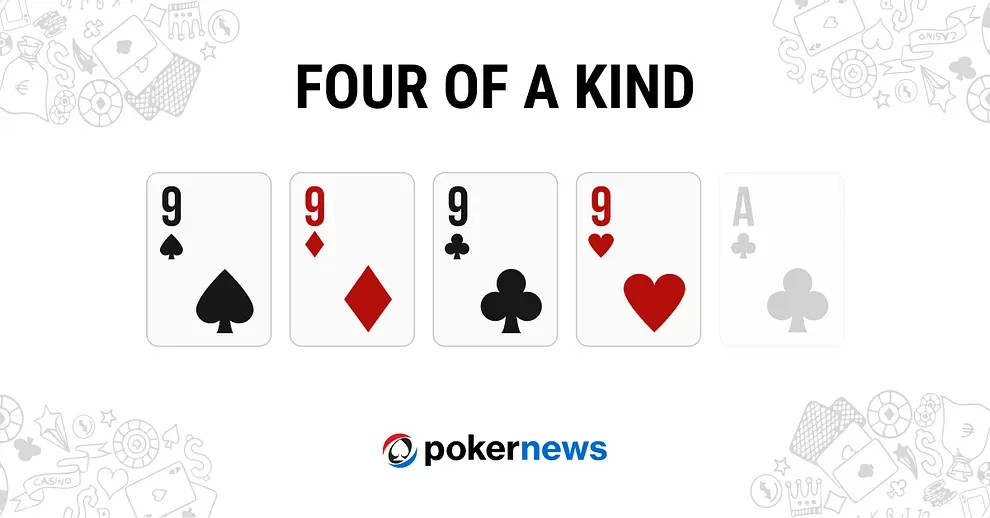
Four-of-a-kind in poker is a hand that contains four cards of the same rank - E.g. 9♠9♦9♣9♥A♣. It is a very strong hand, placed third in the poker hand rankings.
Skip to the relevant section on this page:
- What is Four-of-a-Kind in Poker?
- How Four-of-a-Kind Ranks
- Four-of-a-Kind vs Other Hands
- How to Play Four-of-a-Kind in Poker
- Four-of-a-Kind FAQs
What is a Four-of-a-Kind in Poker?
A four-of-a-kind is a very powerful poker hand that consists of four cards of equal rank and one unconnected card. It's very rare, given you need all four cards of one rank, but you'll make four-of-a-kind far more than royal or straight flushes.
The value of four-of-a-kind is significant if you hold a pocket pair, as the hand is more concealed. If, however, three of the four cards needed for four-of-a-kind are on the board, opponents will be far more suspicious of someone holding that hand.
What are Quads in Poker?
Quads in poker is just another name for four-of-a-kind. You can use the two terms interchangeably, for instance 'I've got quads' to declare you have four-of-a-kind.
See the full Poker Hand Rankings Chart
How a Four-of-a-Kind Ranks in Poker Hands
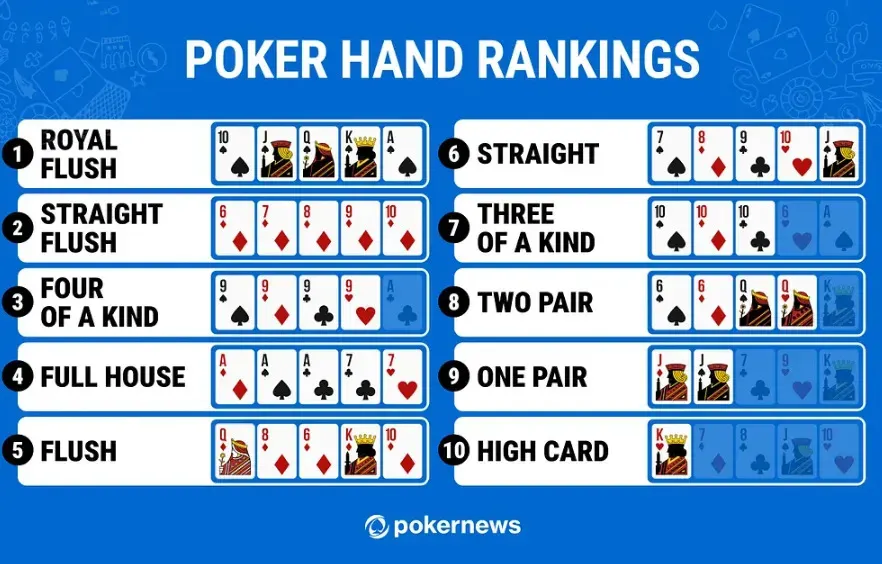
Four-of-a-kind is the third-strongest hand you can make in Texas Hold'em, Omaha, and Seven-Card Stud (as well as most other poker formats, excluding lowball games). A player holding four-of-a-kind beats other strong hands like a full house, a flush and a straight.
While four-of-a-kind loses to a straight flush, and a royal flush, these hands are much rarer, and it's unlikely you'll come up against these holdings - though it is possible.
Check out the list below to see exactly where four-of-a-kind sits in the poker hand rankings.
- Royal Flush: A-K-Q-J-10, all the same suit
- Straight Flush: Five consecutive cards of the same suit (not A-K-Q-J-10)
- Four-of-a-Kind: Four cards of the same rank
- Full House: Three of a kind plus a pair
- Flush: Five cards of the same suit (not in sequence)
- Straight: Five consecutive cards, mixed suits
- Three-of-a-Kind: Three cards of the same rank
- Two Pair: Two sets of two cards the same rank
- Pair: Two cards the same rank
- High Card: Five cards where none of the hands above can be made
Four-of-a-Kind vs Other Poker Hands
Four-of-a-kind is the third-best hand in poker, and when you make it, you're very likely to win the hand unless you're on the wrong end of a horrible cooler.
A straight flush and royal flush are the hands that beat four-of-a-kind, but they are extremely difficult to make. Here's how four-of-a-kind stands against the strongest poker hands.
Four-of-a-Kind vs Four-of-a-Kind - Which Hand Wins?
While four-of-a-kind is rare, occasionally, two players might have quads in the same hand. In Texas Hold'em, it's possible for two players to have different four-of-a-kind hands. In this instance, the quads that have the higher rank (of the four cards) will win.
For example, A♠A♦A♥A♣2♦ beats K♠K♦K♥K♣3♦, because the four aces are a higher rank than the four kings. In this example, the fifth card (here it's the 2♦ and the 3♦) are irrelevant, but that's not always the case.
If both players hold the exact same four-of-a-kind, the pot isn't instantly split. The tie-breaker in the hand goes down to the fifth card - which is known as the kicker. Whichever player has the higher kicker will win the pot. For example, if both players have quad aces but one has A♠A♦A♥A♣2♦ and the other has A♠A♦A♥A♣K♦, the second player with the king kicker will win the hand. If both kickers are equal, the pot is split.
| Hand | Which Wins? | Example |
| Four-of-a-Kind | ✅ Wins | A♠A♦A♥A♣K♦ |
| Four-of-a-Kind | ❌ Loses | A♠A♦A♥A♣2♦ |
Four-of-a-Kind vs Straight Flush
Four-of-a-kind always loses against a straight flush. While quads are difficult to hit, you're far more likely to make a four-of-a-kind than a straight flush. This means straight flushes are one position higher than four-of-a-kind in the hand rankings.
| Hand | Which Wins? | Example |
| Four-of-a-Kind | ❌ Loses | A♠A♦A♥A♣K♦ |
| Straight Flush | ✅ Wins | J♠10♠9♠8♠7♠ |
Four-of-a-Kind vs Full House
Four-of-a-kind always beats a full house. Players often have these two holdings against each other in the same hand due to some shared characteristics. A full house must contain three-of-a-kind (combined with a pair), which contains three of the same four cards needed for four-of-a-kind. So while losing to quads with a full house seems like an awful bad beat, it makes a lot of sense why this happens more than you'd think.
| Hand | Which Wins? | Example |
| Four-of-a-Kind | ✅ Wins | A♠A♦A♥A♣K♦ |
| Full House | ❌ Loses | K♠K♥K♣J♣J♥ |
How Rare is Four-of-a-Kind?
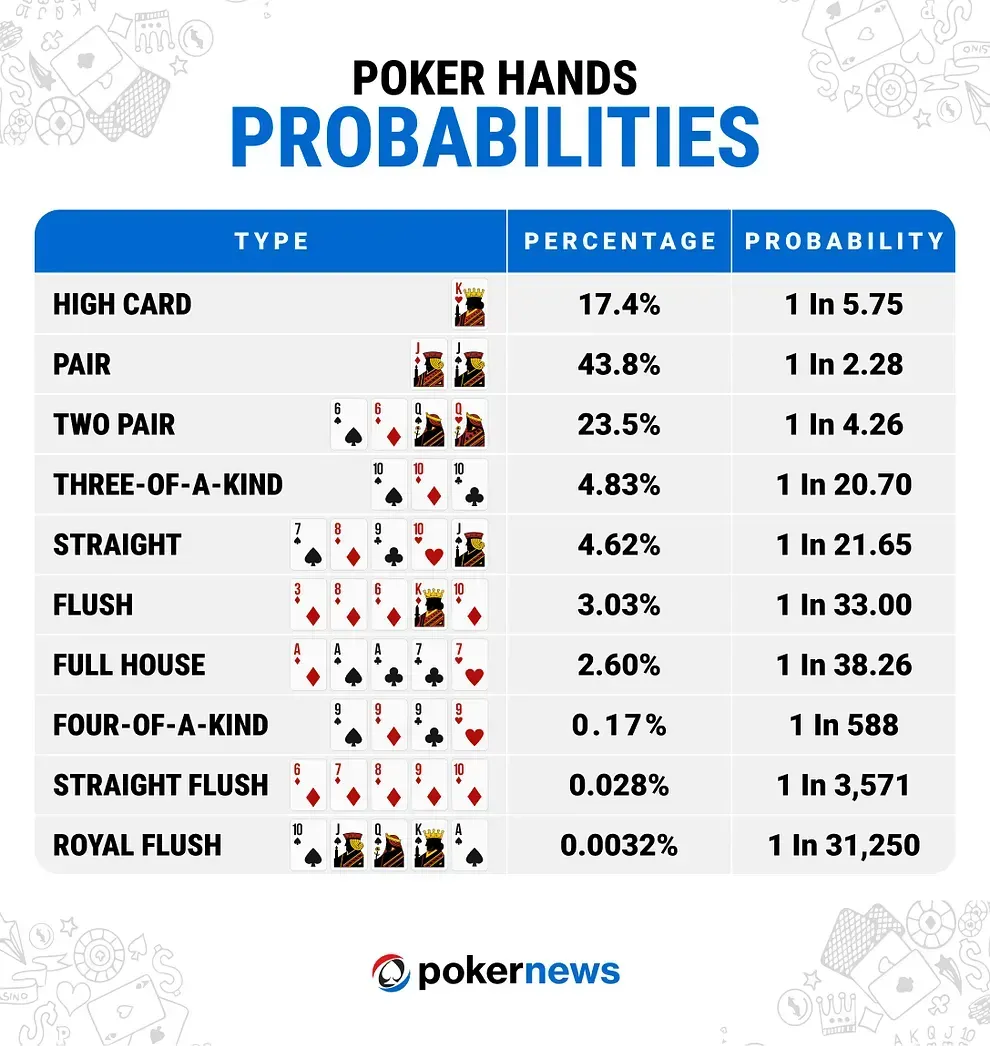
Four-of-a-kind is rare in comparison to other poker hands, but you can still expect to make the hand from time to time over the course of a few online sessions. You can expect to make it once every 588 hands, with the probability being 0.17%. Playing live, quads is far less common compared to online as the number of hands you can play per hour is significantly lower.
In the online poker circles, some streamers regularly use the term 'daily quads,' which shows you that making four-of-a-kind once every session isn't unheard of. If you play other variants like Pot-Limit Omaha and Short Deck Hold'em, four-of-a-kind is way more common given the specific, different dynamics those games have.
Taking into account the seven cards involved in a hand of Texas Hold'em, you can expect to make four-of-a-kind:
• Once every 595 hands
• 0.168% probability
Playing and Maximizing Value with Four-of-a-Kind
Four-of-a-kind is a very strong hand, so your main thought when you make it is to get maximum value from your opponents. That's easier said than done, so here are a few tips on how best to play four-of-a-kind at the tables.
Build the Pot Early
Four-of-a-kind is one of the strongest hands in poker, so your priority should be getting as many chips into the pot as possible. Unless the board is extremely scary or likely to kill the action, don't be afraid to bet for value.
Many opponents won't want to fold strong holdings such as full houses, overpairs or even trips, especially at lower stakes. Your quads completely outrank these hands. If you think your opponent has connected with the board, continue betting confidently and focus on extracting maximum value rather than worrying about protecting your hand or disguising your strength.
If an opponent has a hand to call with, or thinks you're bluffing, you holding back on the bet sizing isn't likely to significantly alter their decision. Don't be stingy with your chips or overly cautious.
Think About Your Opponent's Range
When you make four-of-a-kind, the strength of your opponent's hand matters far more than the strength of your own. Consider what hands they could realistically have based on the betting action and the board.
If they've shown aggression throughout the hand, they may have a full house, trips or another hand they're unwilling to fold. Against these opponents, larger value bets are often the best option. Slow playing can alternatively be a good option if your opponent is nitty, or if they've implied they are weak in the hand.
One main advantage of having quads is that only two hands beat you, and it's easy to determine whether or not it's possible for those hands to be made. For instance, if there aren't three suited cards of sequential rank (E.g. 9♠10♠J♠) on the board, it's impossible for opponents to have you beat with a royal flush or a straight flush. They can still beat you with a better four-of-a-kind, or the same four-of-a-kind with a better kicker - but again, it's often clear if you're at risk of losing by showdown.
Understand When the Board Kills the Action
Not all four-of-a-kind hands are equally profitable. If the board itself contains quads, every player has at least four-of-a-kind, making it much harder to win a large pot unless you hold the best possible kicker.
Likewise, boards that contain three of four cards of the same rank often discourage opponents from putting significant chips into the pot. Let's say you have quads aces, with three of the four aces on the board. All players have at least three-of-a-kind, but even if one has a full house, they will know that they are beat if anyone has the remaining ace.
Before deciding how much to bet, think about how the board looks from your opponent's perspective. The less obvious the strength of your hand, the more likely you are to get paid by other strong holdings.
See the best poker apps for mobile today, and discover which site is best to play on directly from your phone.
Four-of-a-Kind in Poker FAQs
Are quads the same as four-of-a-kind?
Yes, quads and four-of-a-kind are the same. Quads is just a shorter way of describing a four-of-a-kind hand
How does four-of-a-kind rank in poker hands?
Four-of-a-kind ranks third in Texas Hold'em poker and most other common variants, including Omaha.
What beats a four-of-a-kind?
Four-of-a-kind is only beaten by a straight flush and royal flush.
How do you compare two four-of-a-kind?
Whichever player has the highest-ranking four-of-a-kind wins the pot. If both are equal, the tie-breaker goes to the kicker (fifth cards). If that's also equal, the pot is split.
Is four-of-a-kind ranked the same in all poker variants?
No, four-of-a-kind is not ranked the same across all variants. In games like Hold'em and Omaha, it is one of the strongest hands. However, in lowball games (where the aim is to intentionally make low-card hands like a wheel), four-of-a-kind is one of the worst holdings.
How rare is four-of-a-kind?
Four-of-a-kind is rare compared to many other hands, but is still frequently made. How frequent exactly depends on how many tables you're playing at once, whether you're playing online or live and also the variant you're playing - four-of-a-kind is a lot more common in Pot-Limit Omaha than Texas Hold'em.